







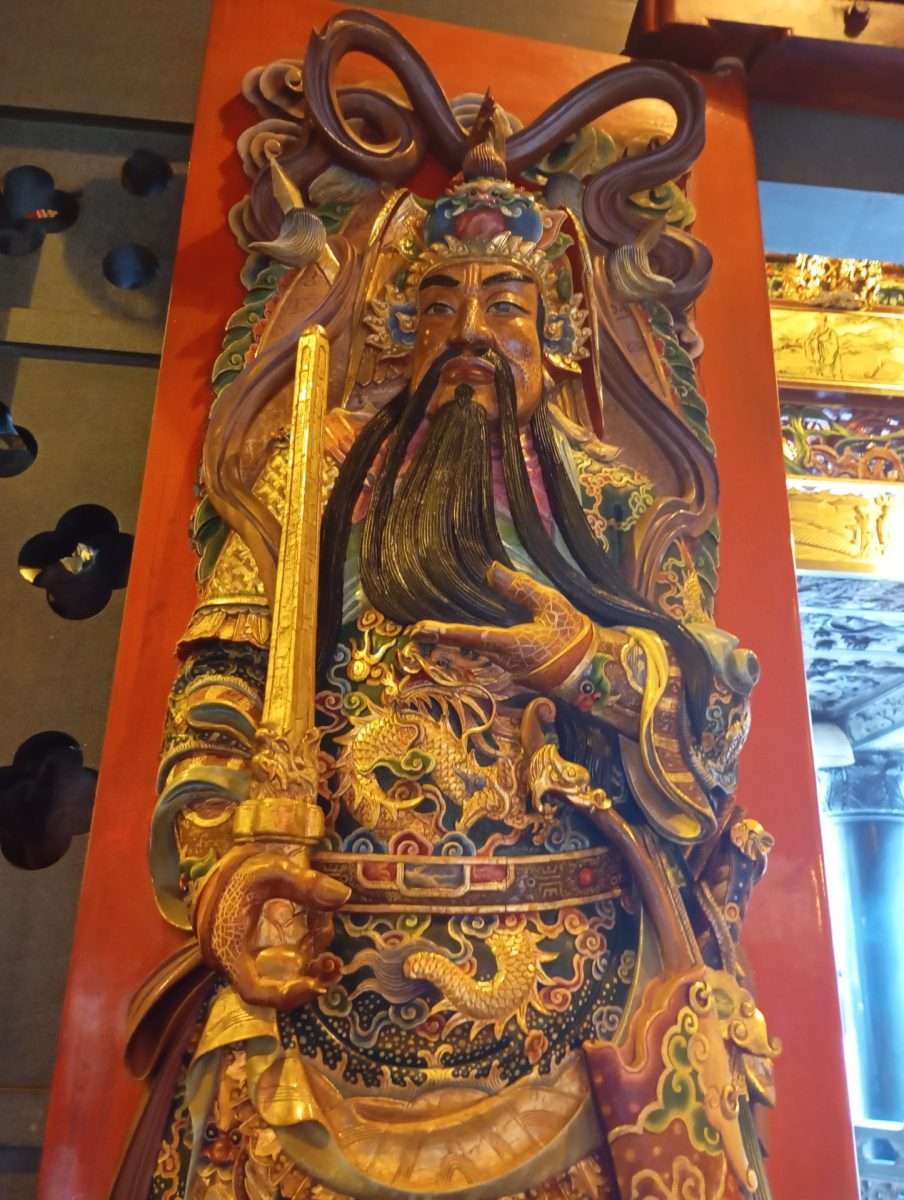
A JOURNEY FROM FO GUANG SHAN TO MIAOKOU
A route to understand what you are seeing, not just to take photographs
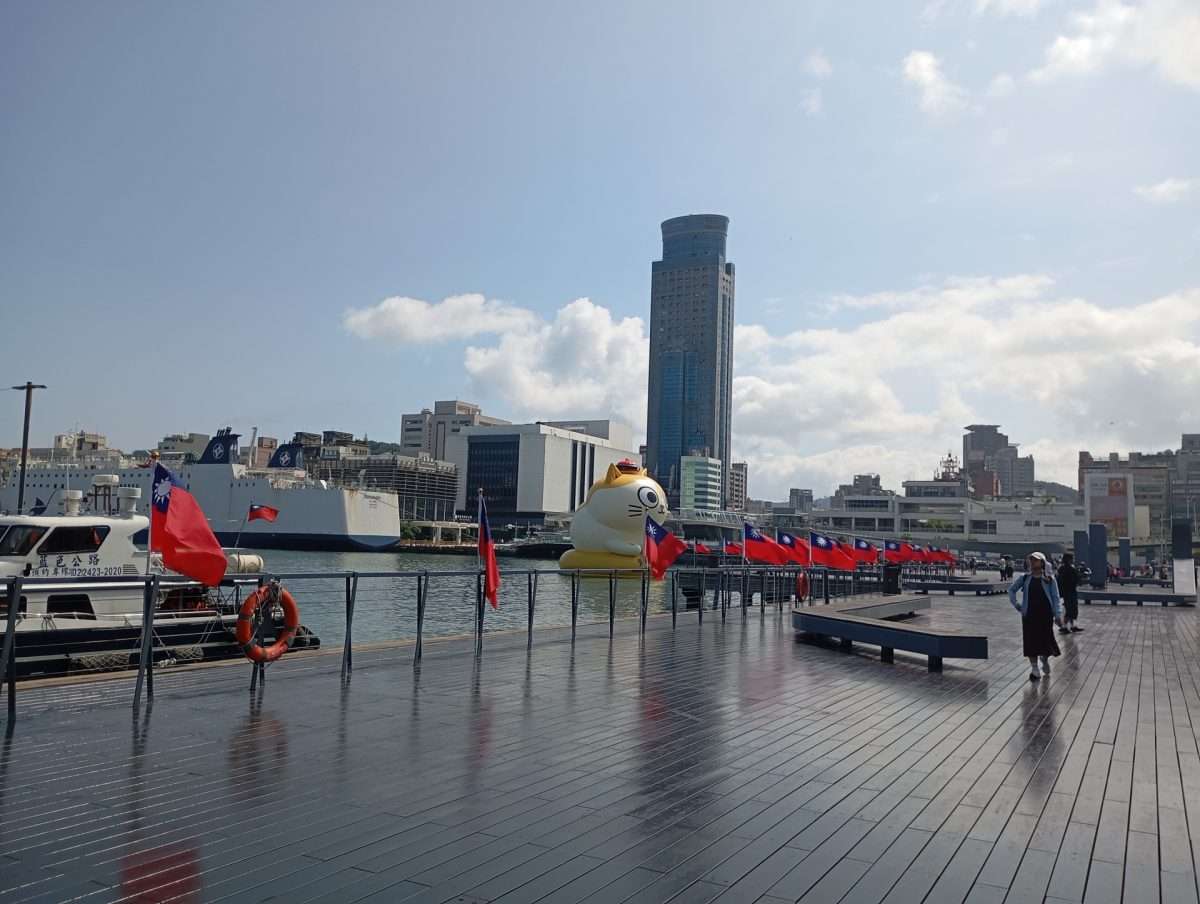
In the previous article, we talked about a city built around the sea and how its history is connected to the people who arrived here, the communities they formed, and the beliefs that gradually shaped life in Keelung.
Now we can explore its temples of Keelung.
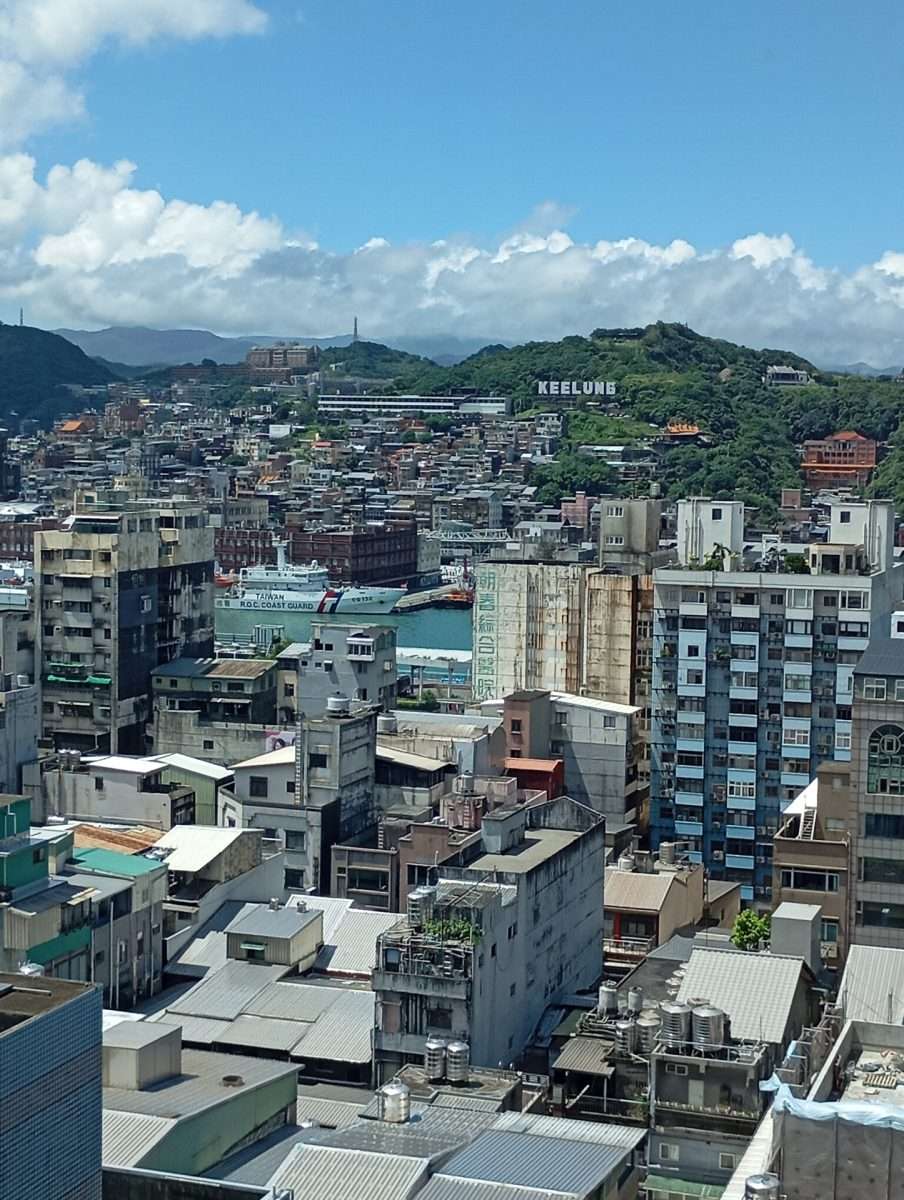
The idea is simple: to walk through some of the most interesting temples and religious spaces in central Keelung, while learning how to observe as we go.
You do not need to be Buddhist, Taoist, or have any previous knowledge of Taiwanese religion. You do not even need to enter a temple to pray.
You simply need to observe.
And if this is your first time visiting a temple in Taiwan, there is something important to remember: not all temples work in the same way. Some are Buddhist, others are connected to Taiwanese folk religion and Taoist traditions, and many combine different religious and community elements.
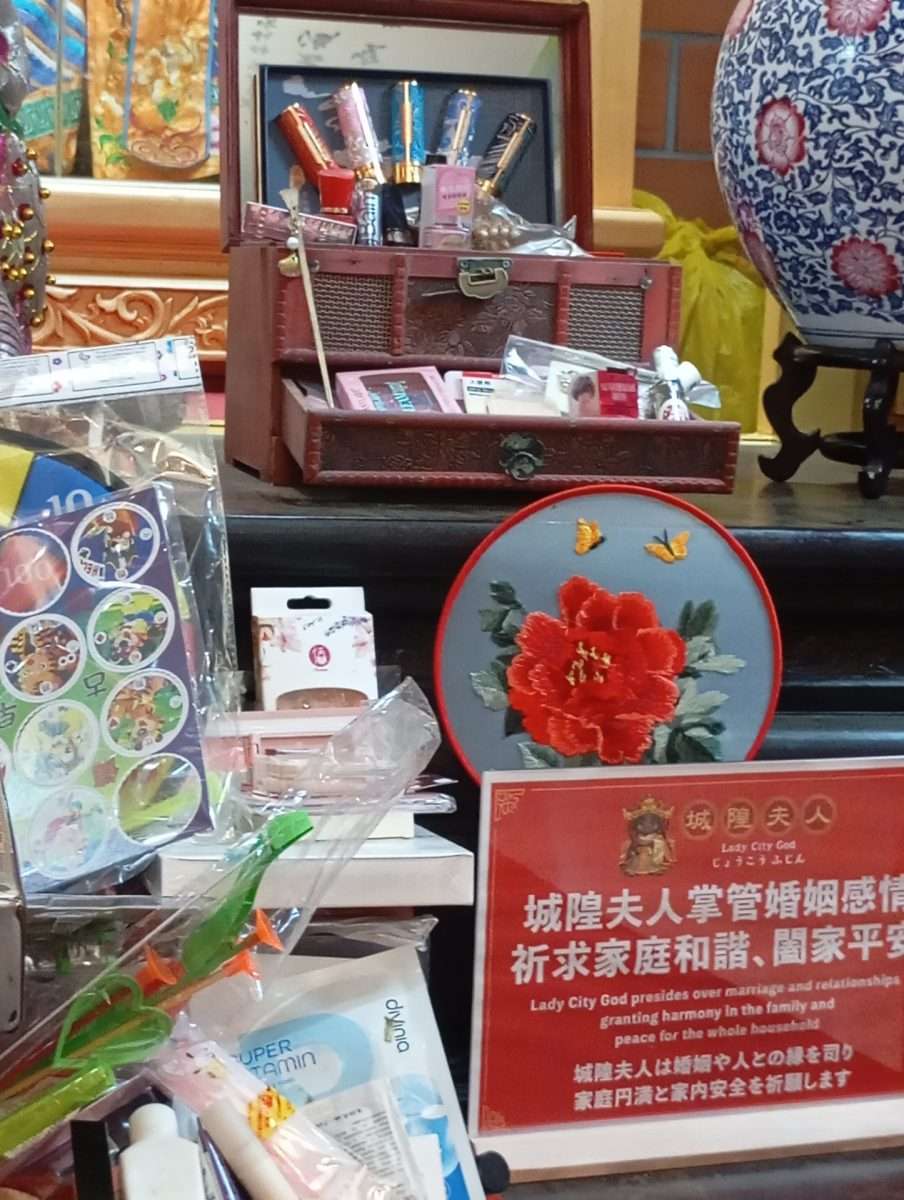
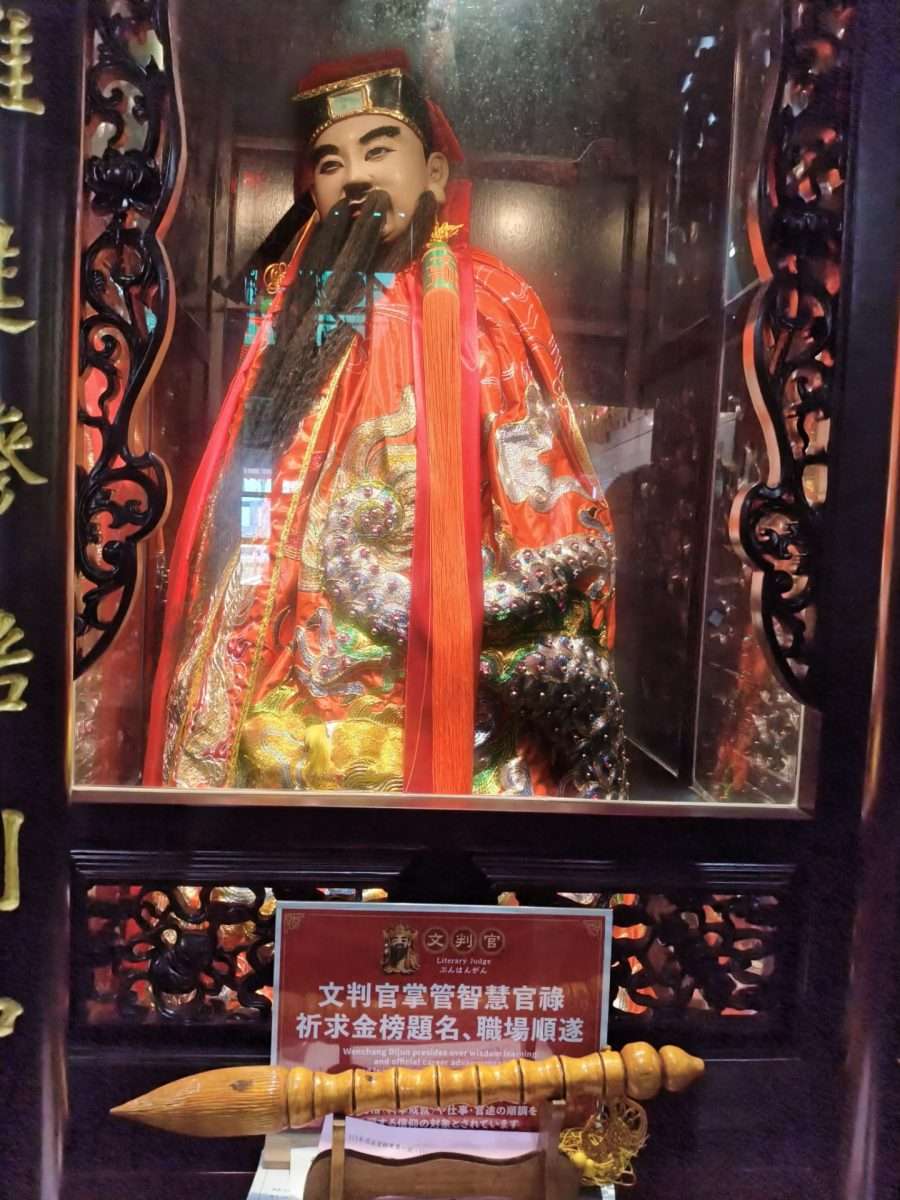
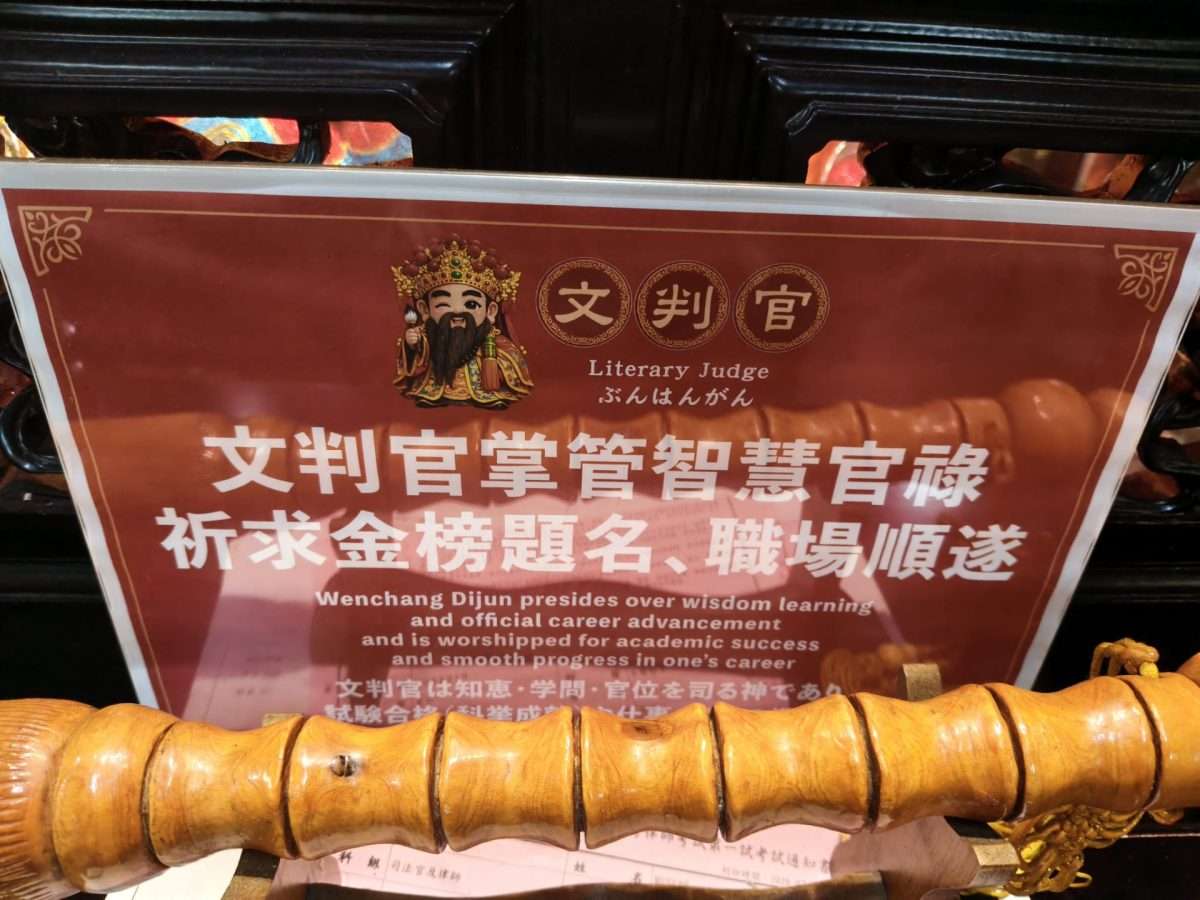
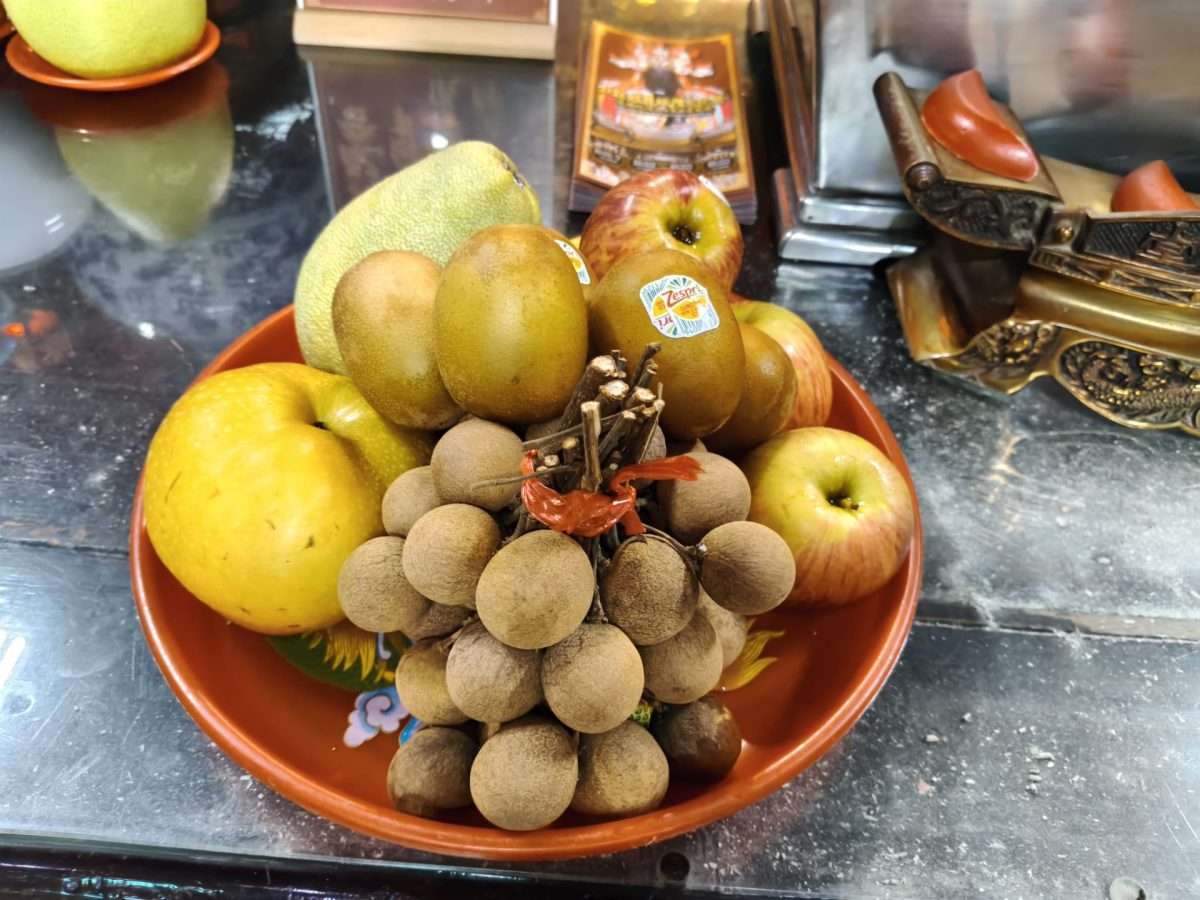
Taiwanese folk religion is polytheistic and pragmatic. This can be seen in the existence of specific deities associated with different aspects of life: wealth (God of Wealth), examinations (Wenchang Emperor), or love (Yue Lao). Here, offerings can be an expression of respect, a channel of communication, or an exchange through which people ask for protection, health, and prosperity.
That is why, on this route, we are not going to treat all temples as if they were the same.
Before beginning the walk: Essential rules and etiquette for visiting temples
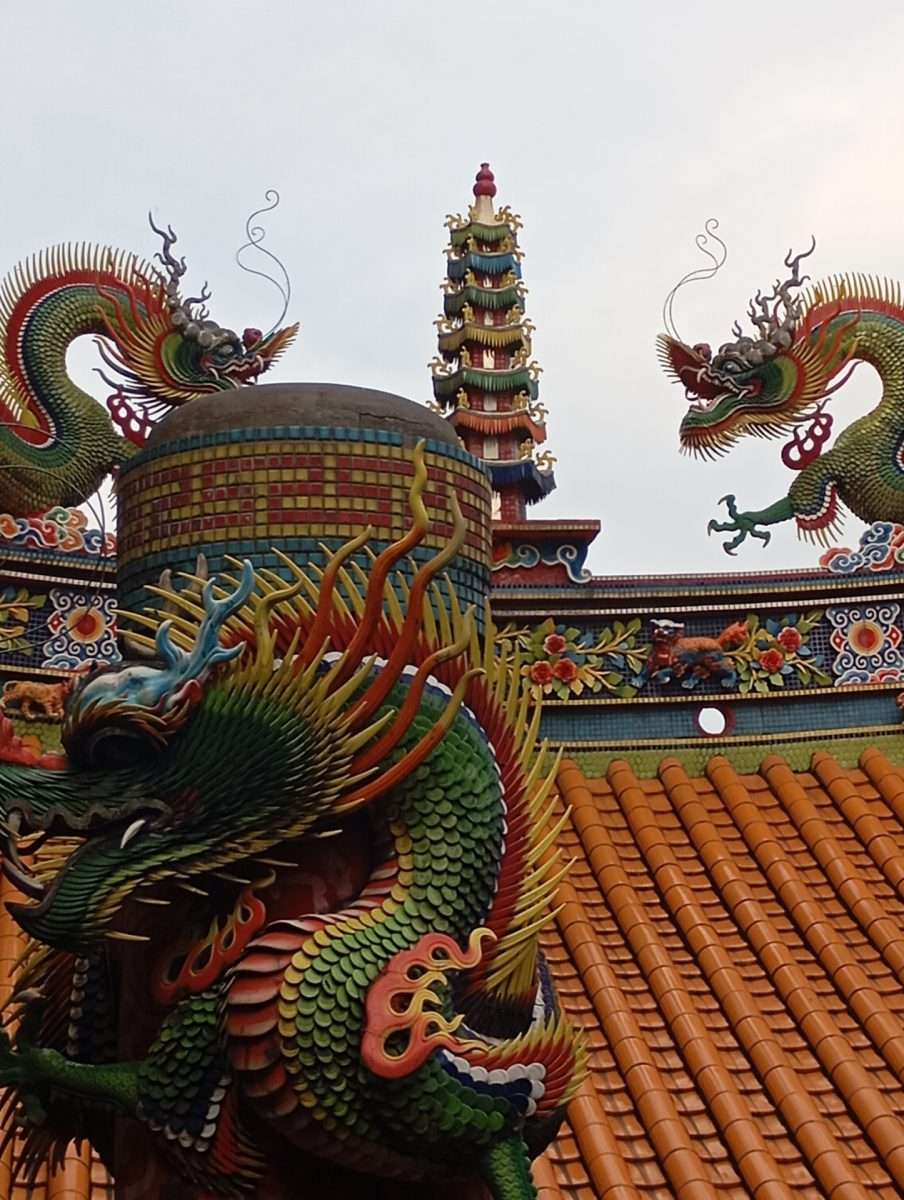 Can I enter if I’m not religious? Yes. Temples are active religious spaces, but they also welcome visitors. You can walk around, observe, sit for a few minutes, or simply get to know the place.
A good rule of thumb for any temple is: observe first, then participate — if you genuinely want to.
There are, however, certain etiquette rules that apply to both men and women. Here’s a quick guide to what you should wear and what you should avoid:
What you SHOULD wear
- Long trousers or skirts (at least below the knee)
- Covered shoulders
- Footwear that is easy to remove: In some areas of Buddhist temples (such as meditation halls or certain altars), you’ll be asked to take off your shoes. Wear comfortable shoes and bring socks (don’t enter barefoot).

What you should NOT wear
- Revealing clothing: Avoid low necklines, spaghetti straps, sleeveless tops, or garments that leave your back exposed.
- Very short clothing: Shorts, bermuda shorts, and miniskirts are not allowed (especially in Buddhist temples).
- Clothing that is too tight or see-through: Avoid very tight leggings or transparent fabrics.
A practical tip is to carry a shawl in your bag. That way, if your clothing is a little revealing, you can easily cover your shoulders before entering.
You don’t need to imitate other people’s rituals. You can observe, walk around quietly, or sit for a few minutes.
A visit to a temple can also be just that: sitting for a few minutes, observing, and experiencing the space without immediately turning it into a tourist activity.
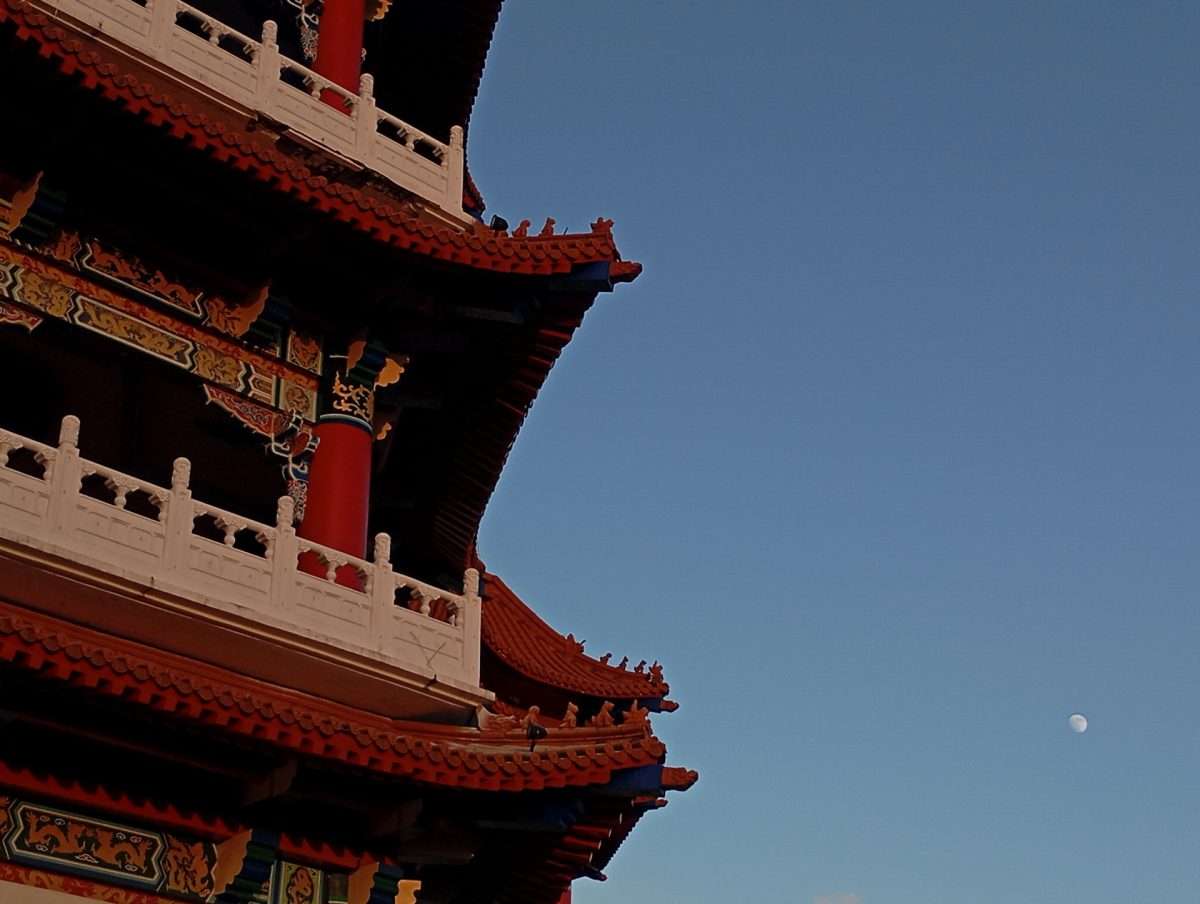
1. Fo Guang Shan Ji Le Temple: Starting with Humanistic Buddhism
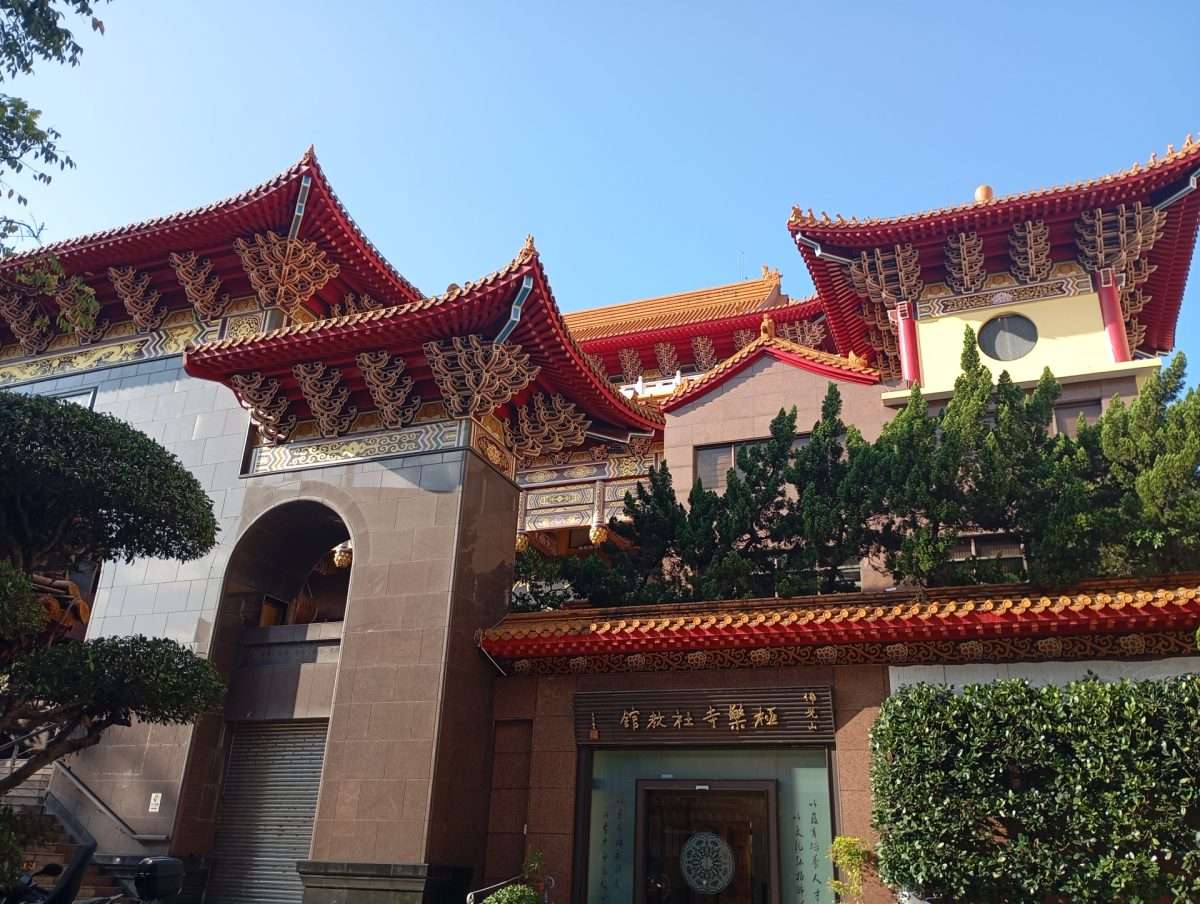
Location: No. 270, Xin 2nd Road, Xinyi District, Keelung. It is next to Keelung Hospital and directly at the foot of Zhongzheng Park. View Fo Guang Shan Ji Le Temple on Google Maps
If this route begins here, it is not by chance.
For me, Fo Guang Shan also has a personal meaning: it was the community that welcomed me to Asia when I arrived in the Philippines, and my first experience of living closely with the everyday life of a Buddhist monastery. So beginning this route at Fo Guang Shan also means beginning from a place that is part of my own story in Asia.
 Fo Guang Shan is an excellent starting point for understanding one part of contemporary Buddhism in Taiwan. It was founded in Taiwan in 1967 by Venerable Master Hsing Yun and became one of the major movements of Humanistic Buddhism. It seeks to bring Buddhist practice into everyday life and combines religion, education, culture, and social action. Today, it has more than 200 temples around the world Fo Guang Shan worldwide branches.
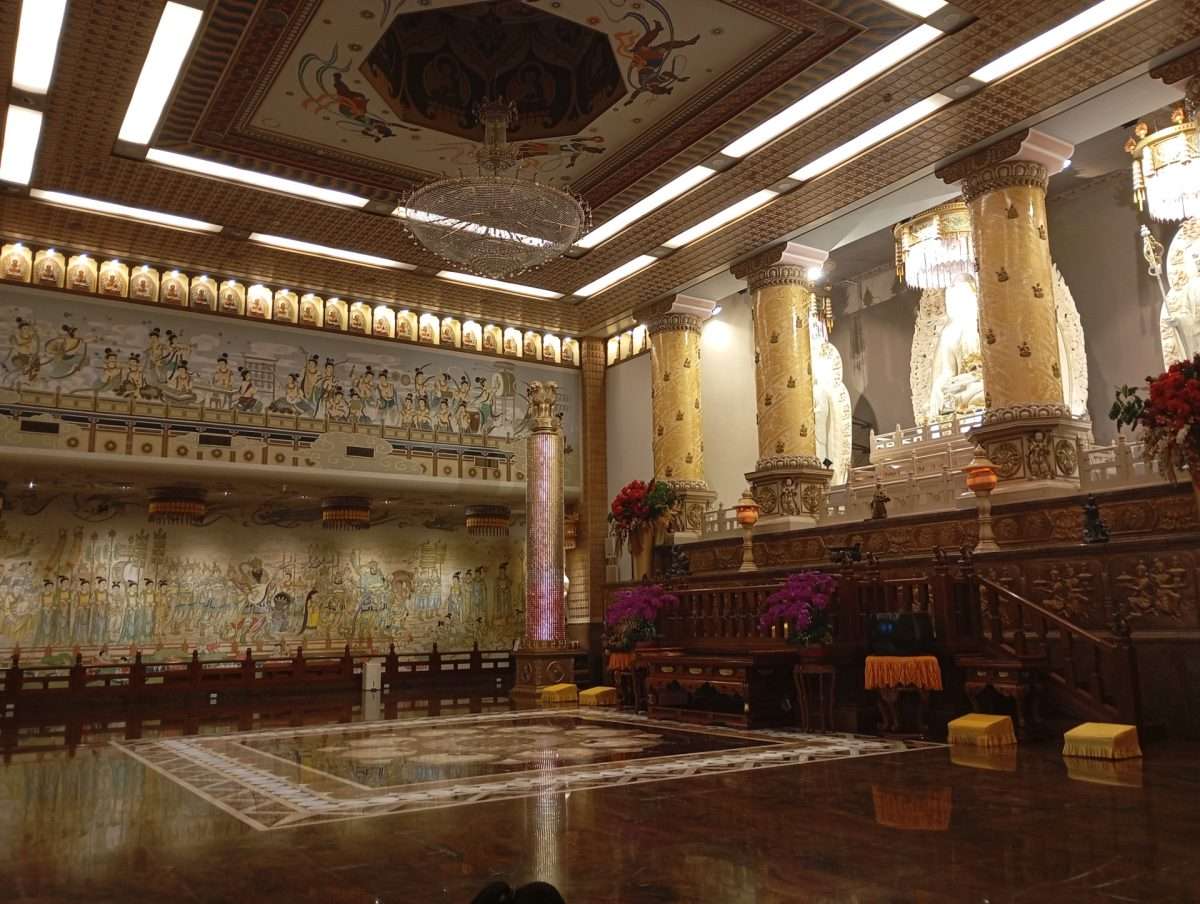
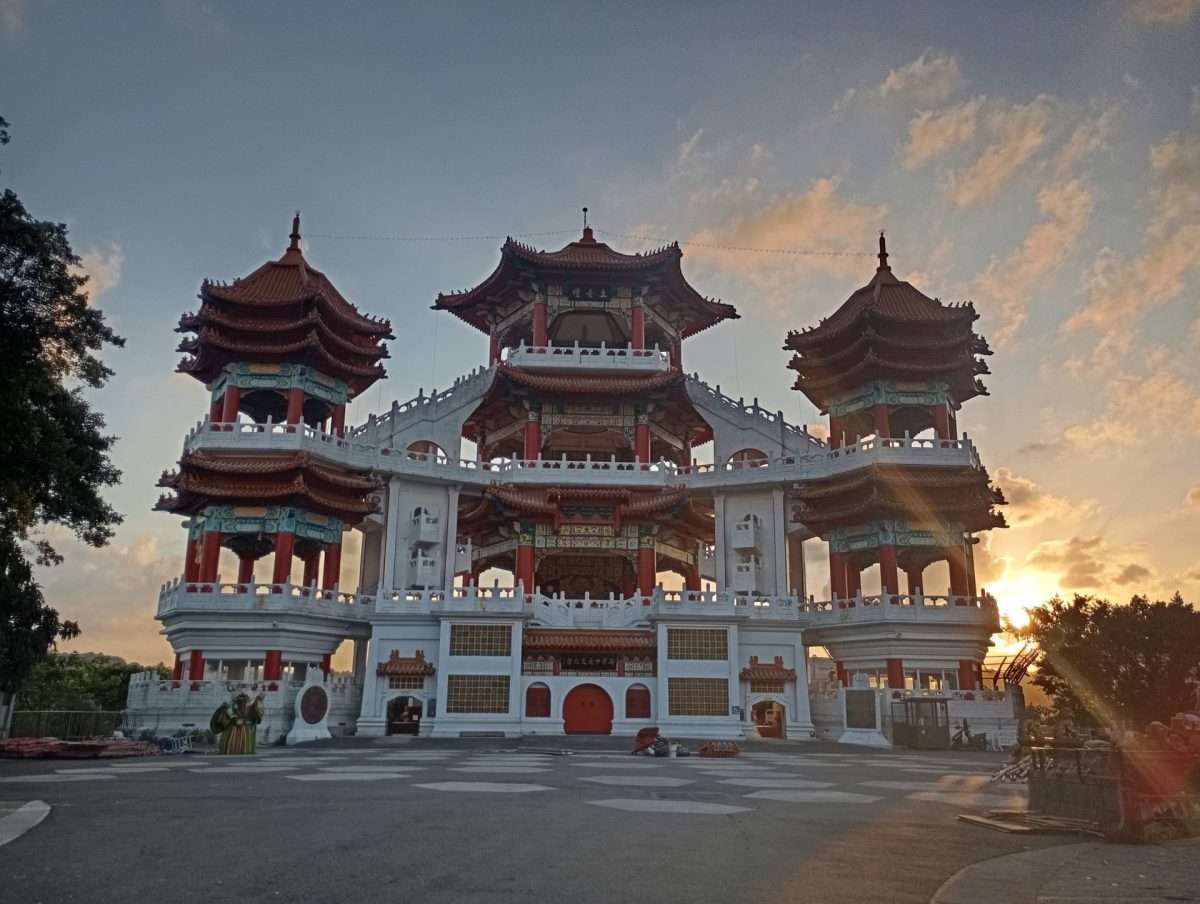
The Keelung temple, Fo Guang Shan Ji Le Temple, is one of the city’s main Buddhist centers. It was rebuilt in 1991 and includes a meditation hall, lecture spaces, a library, an educational center, and a vegetarian restaurant.
But before you enter, there is something worth looking at.
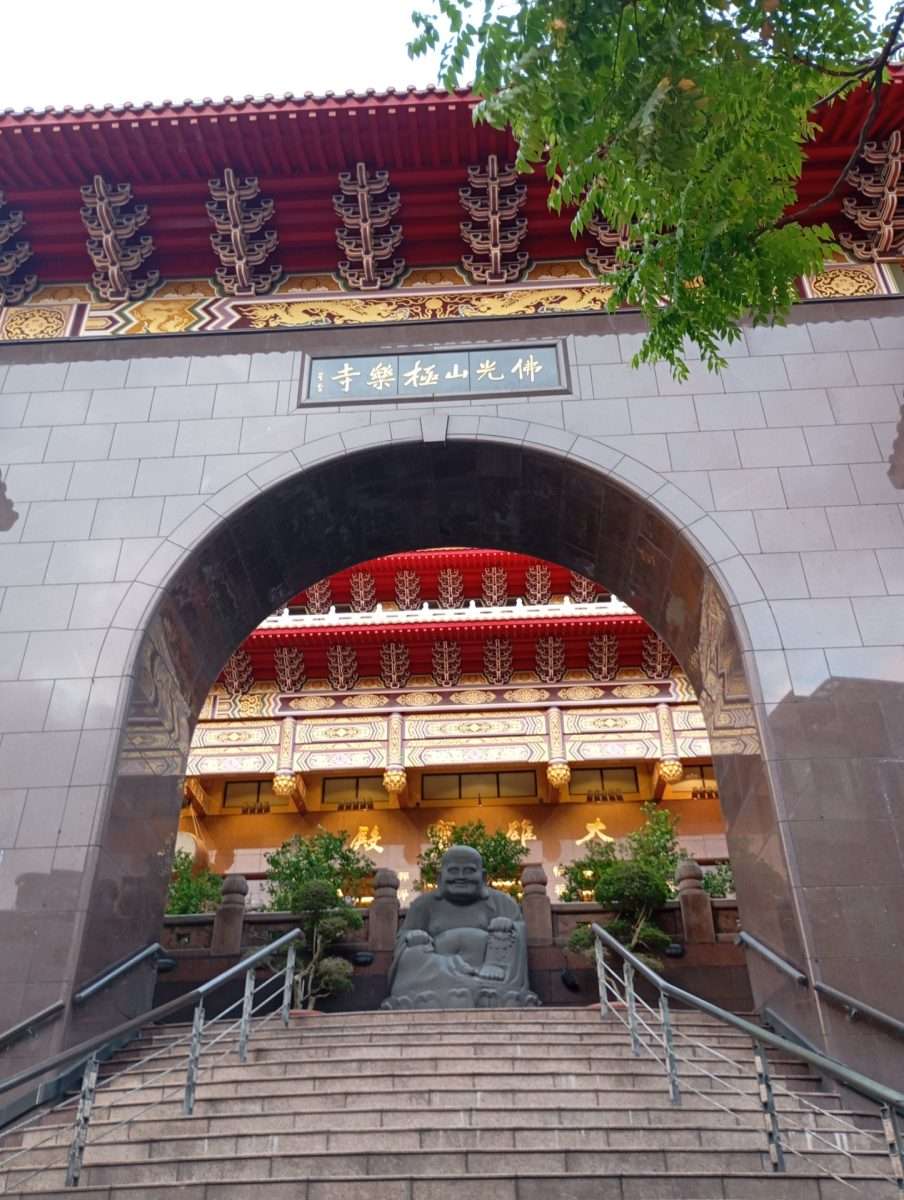
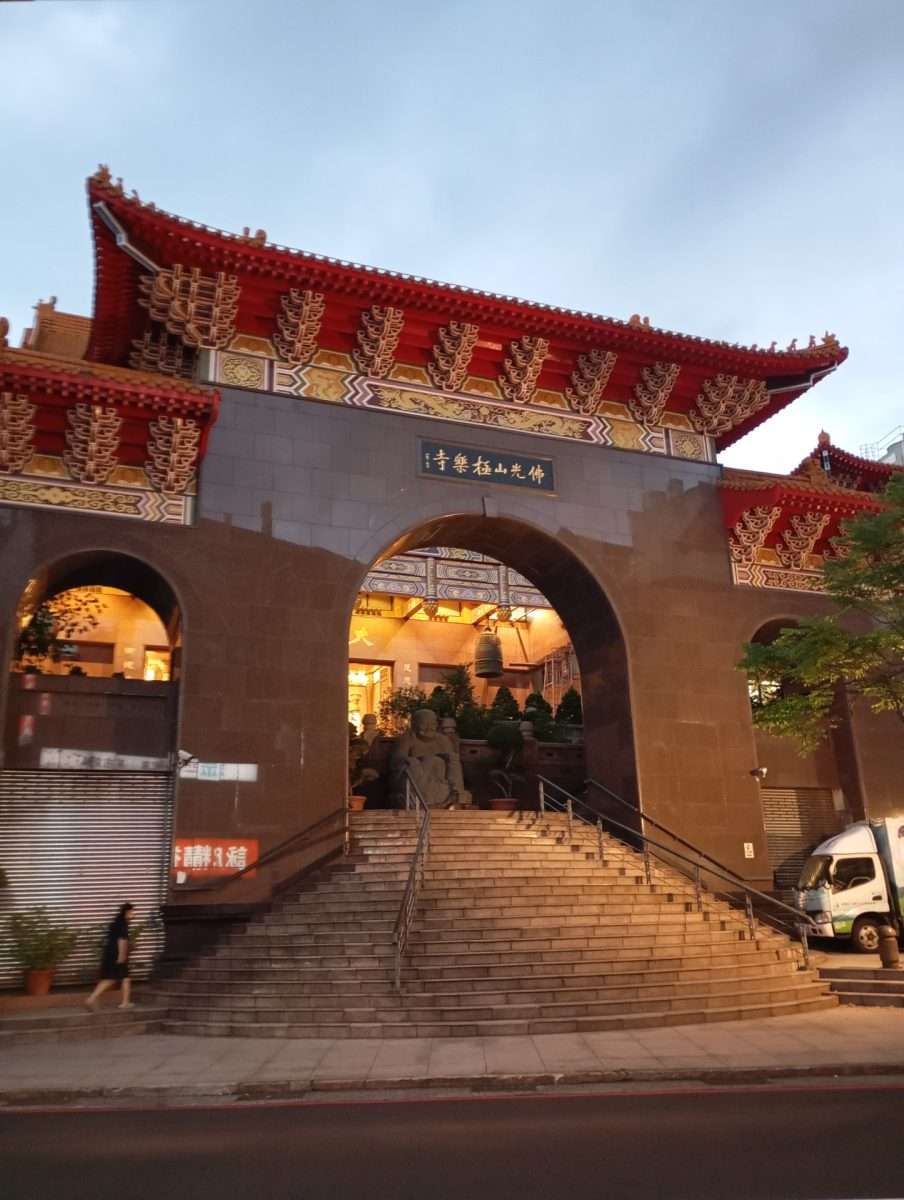
The Temple Gate
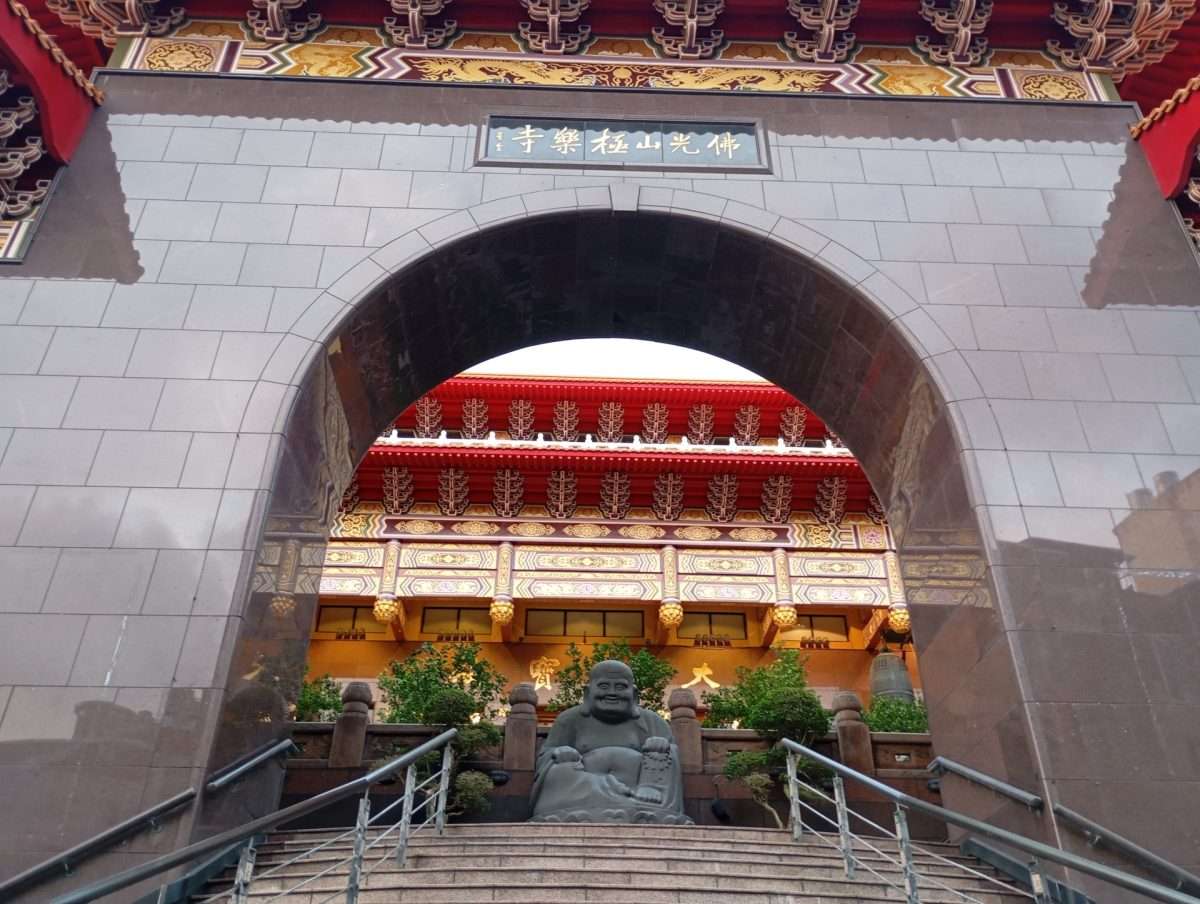
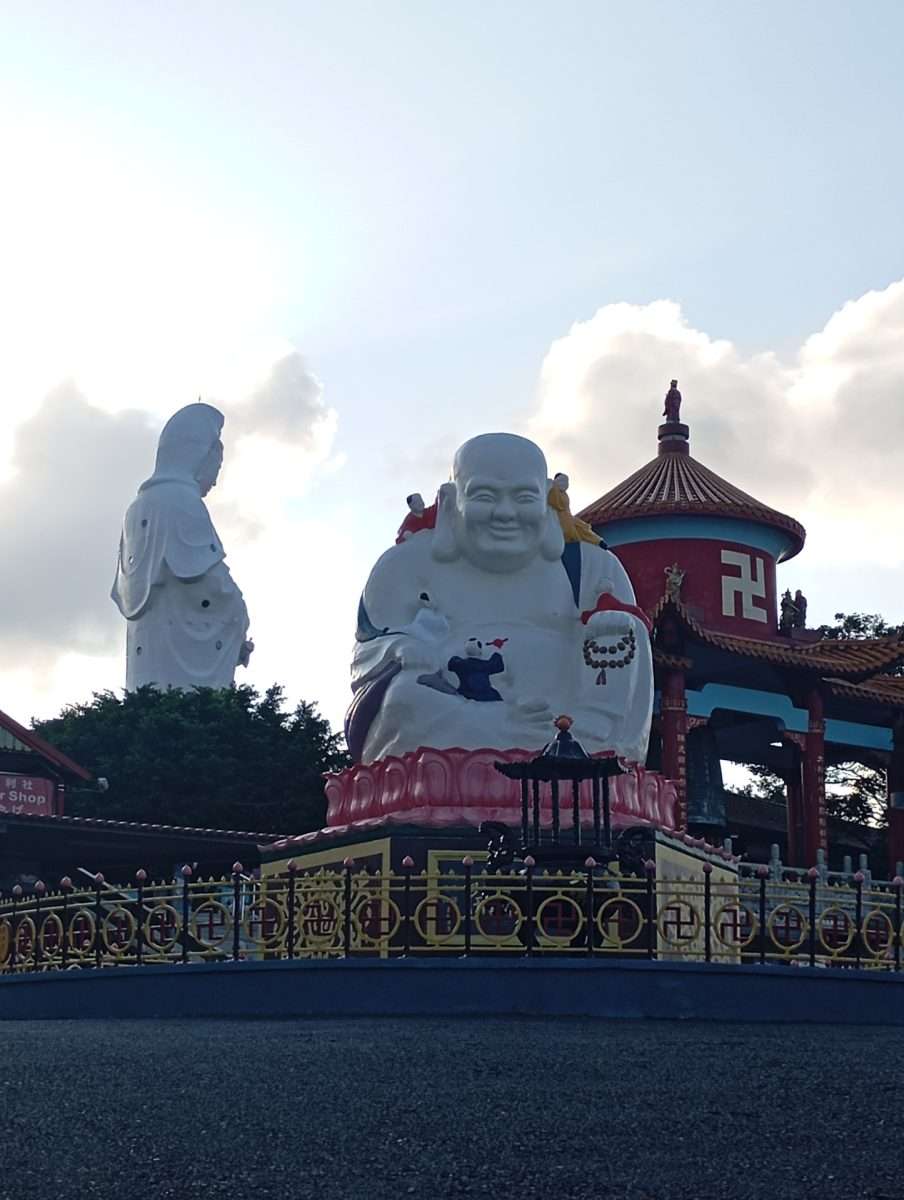
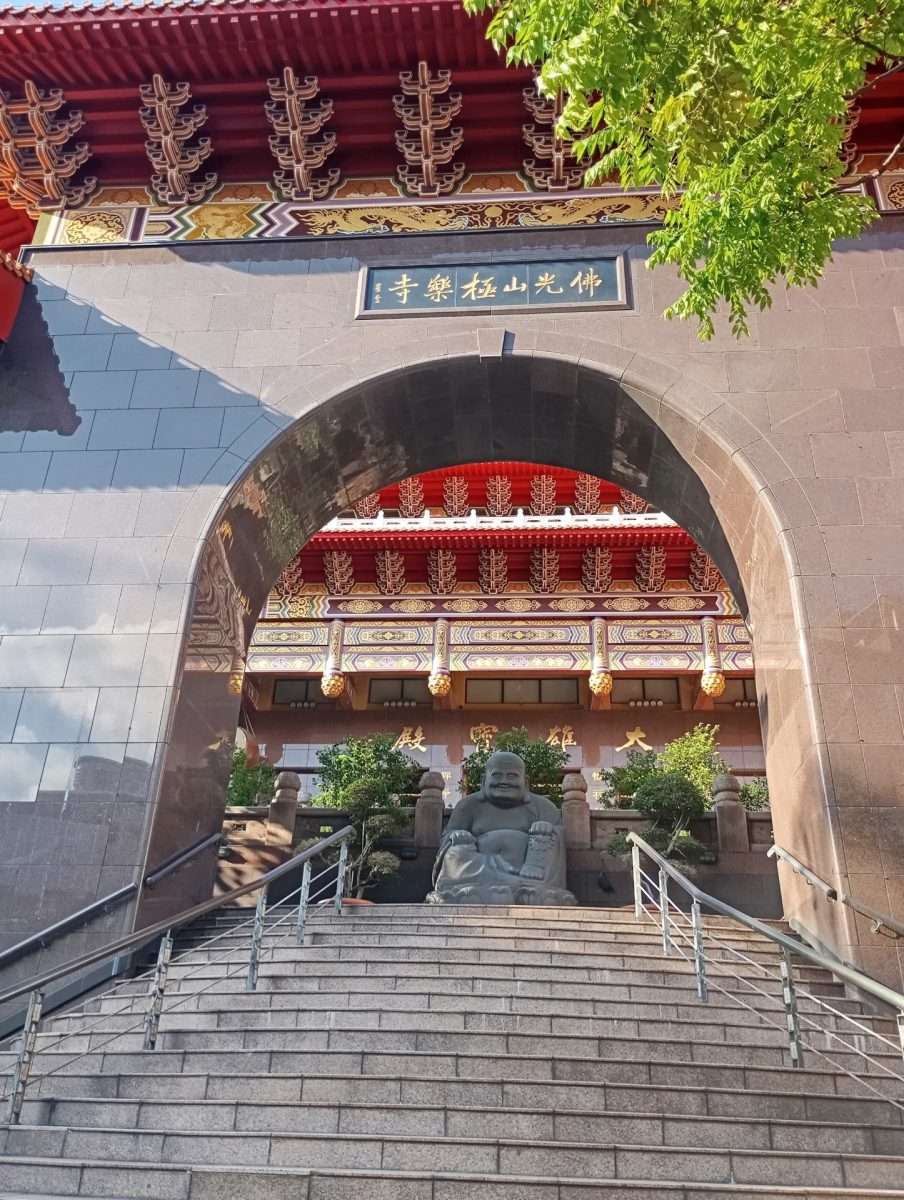
At Fo Guang Shan, you will find a monumental entrance featuring Maitreya, the smiling Buddha.
Fo Guang Shan’s own explanation states that the shanmen, literally the “mountain gate,” can also be understood as the Three Gates of Liberation, associated with wisdom, skillful means, and compassion.
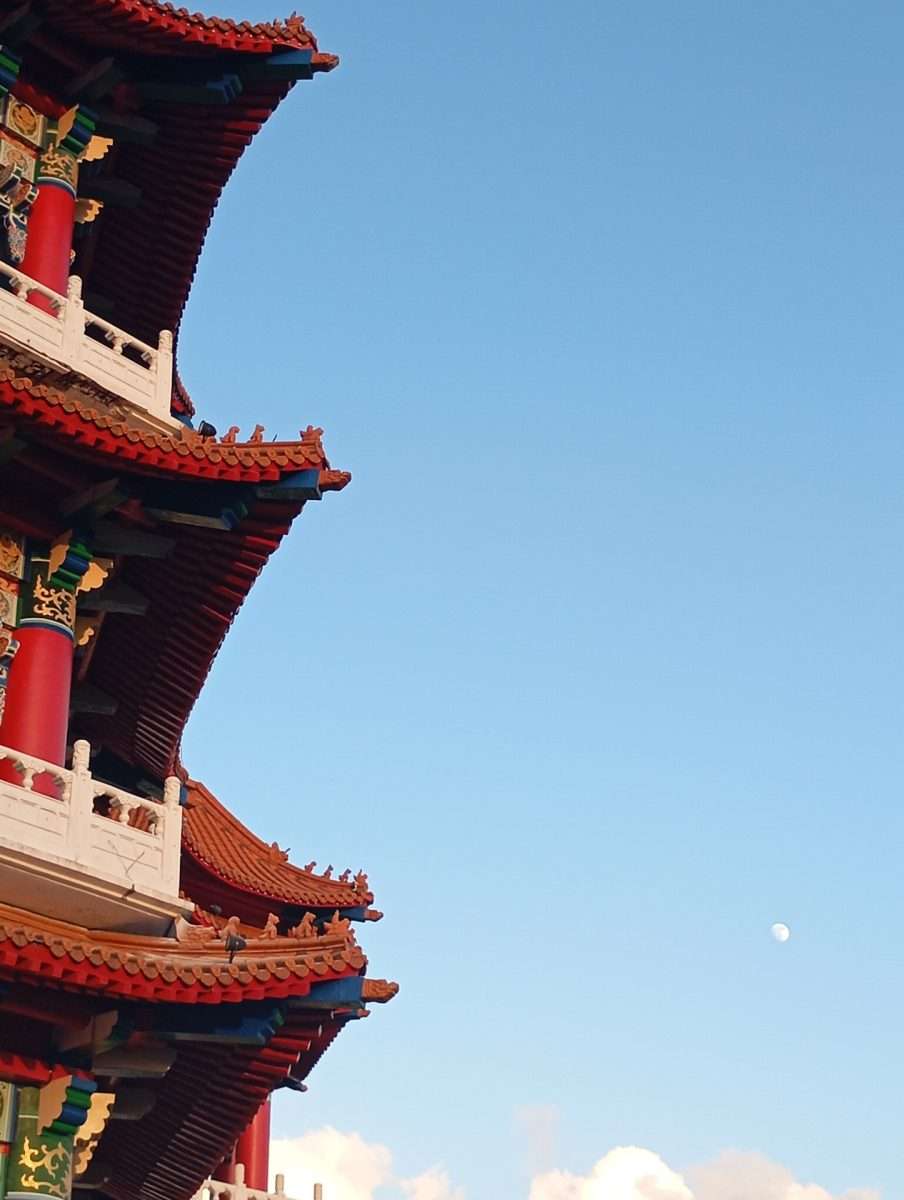
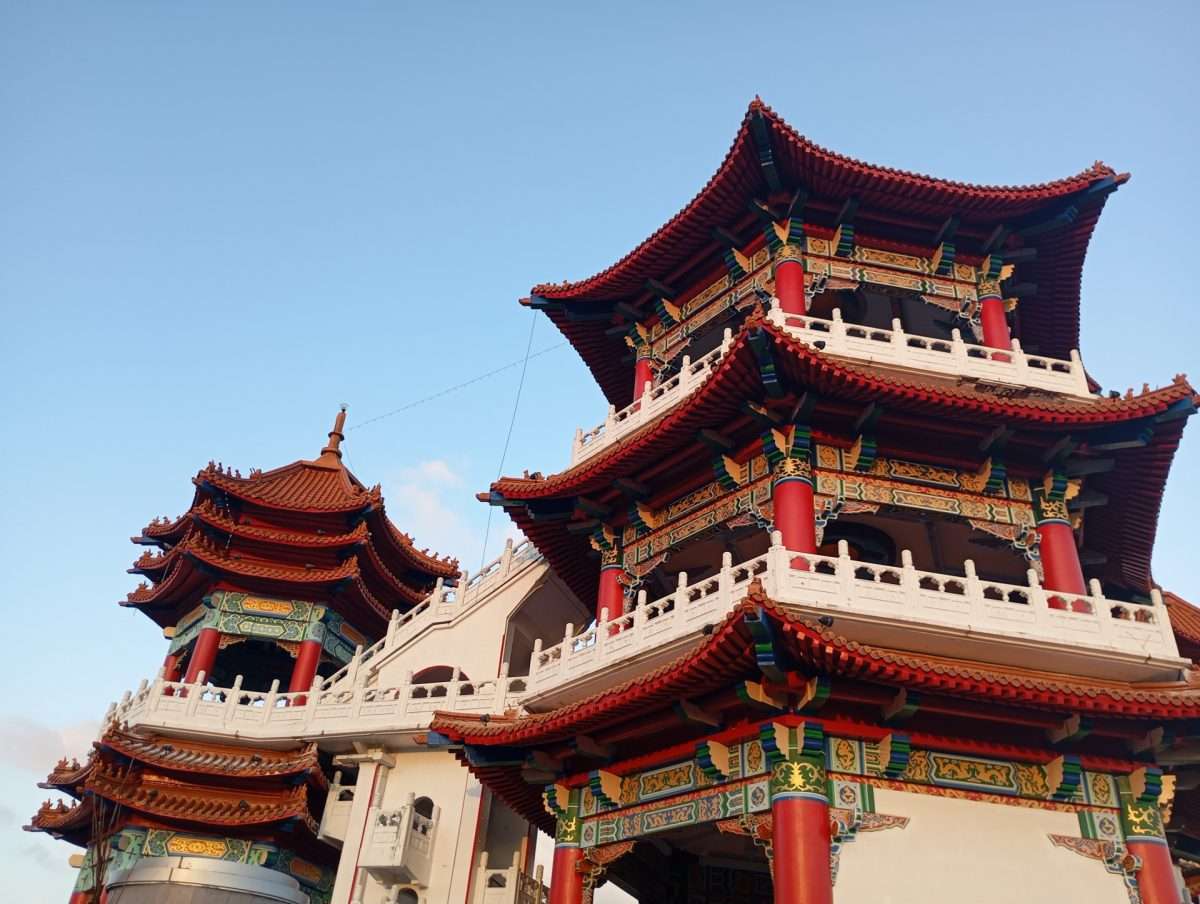
This gives us our first tool for the entire route: In a temple, architecture speaks too. It is not there simply for decoration.
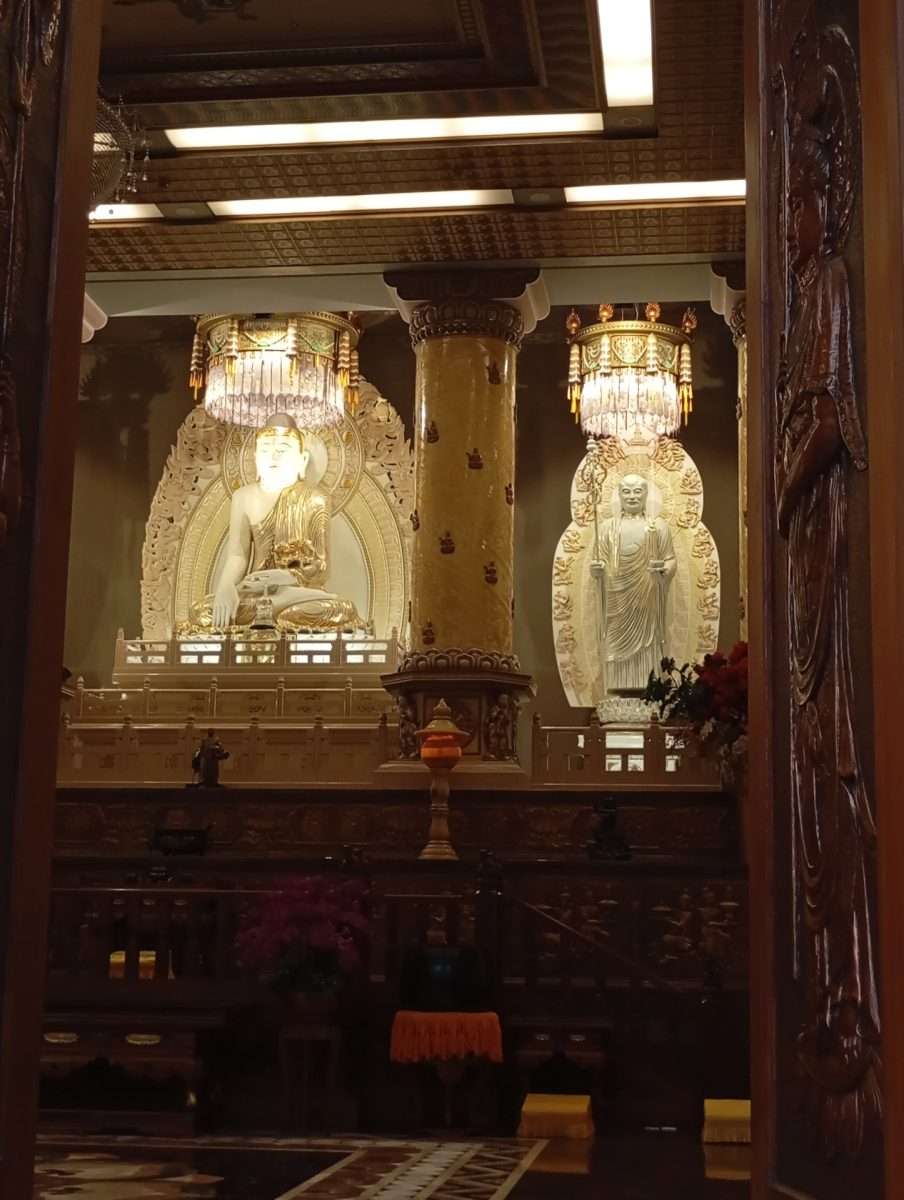
Mahavira Hall
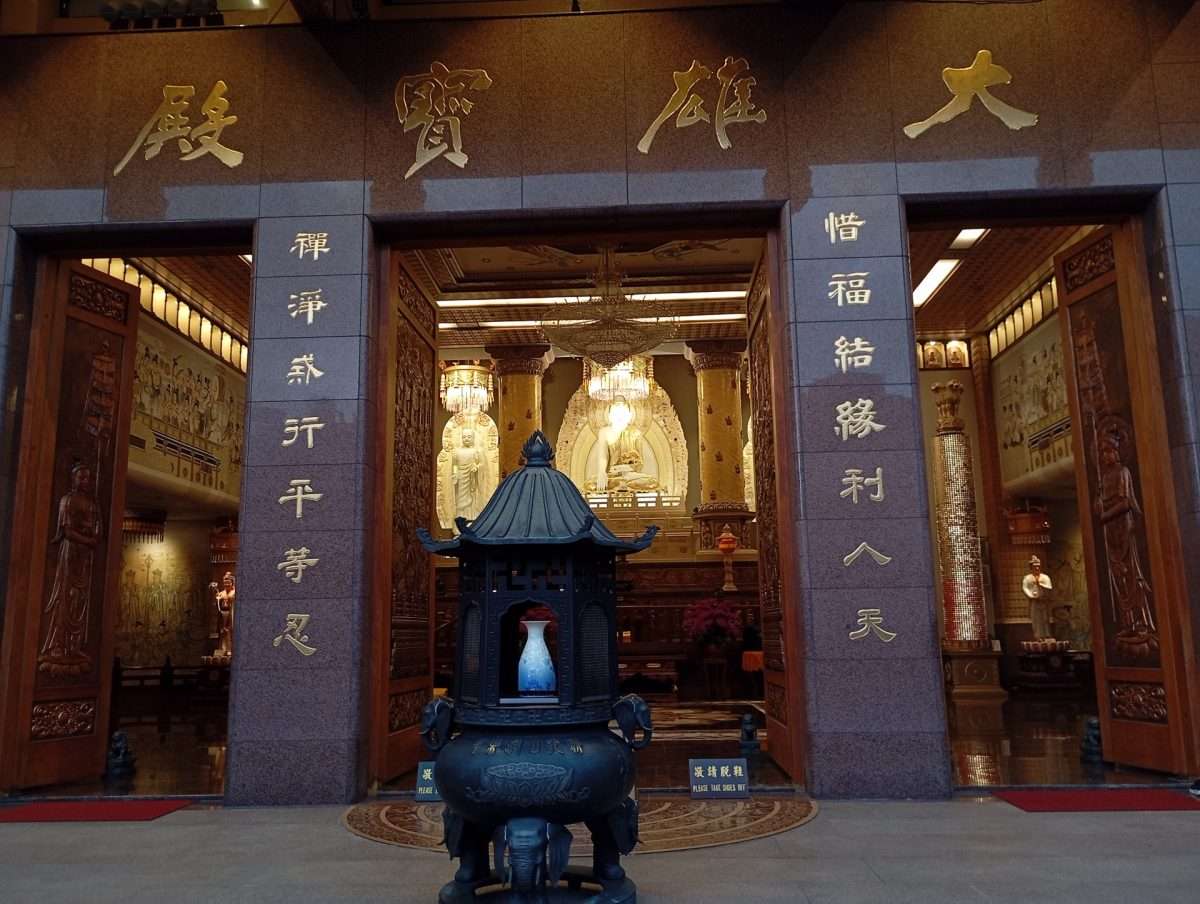
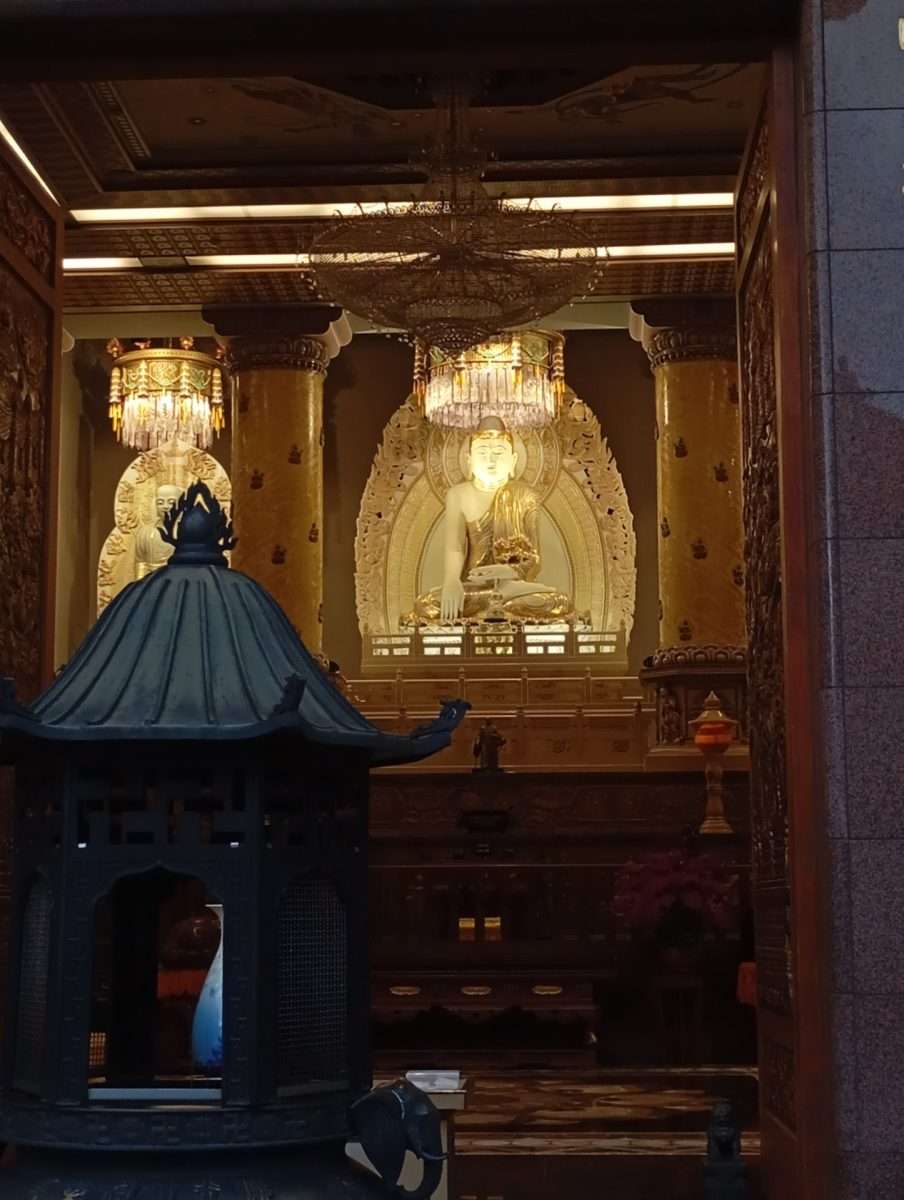
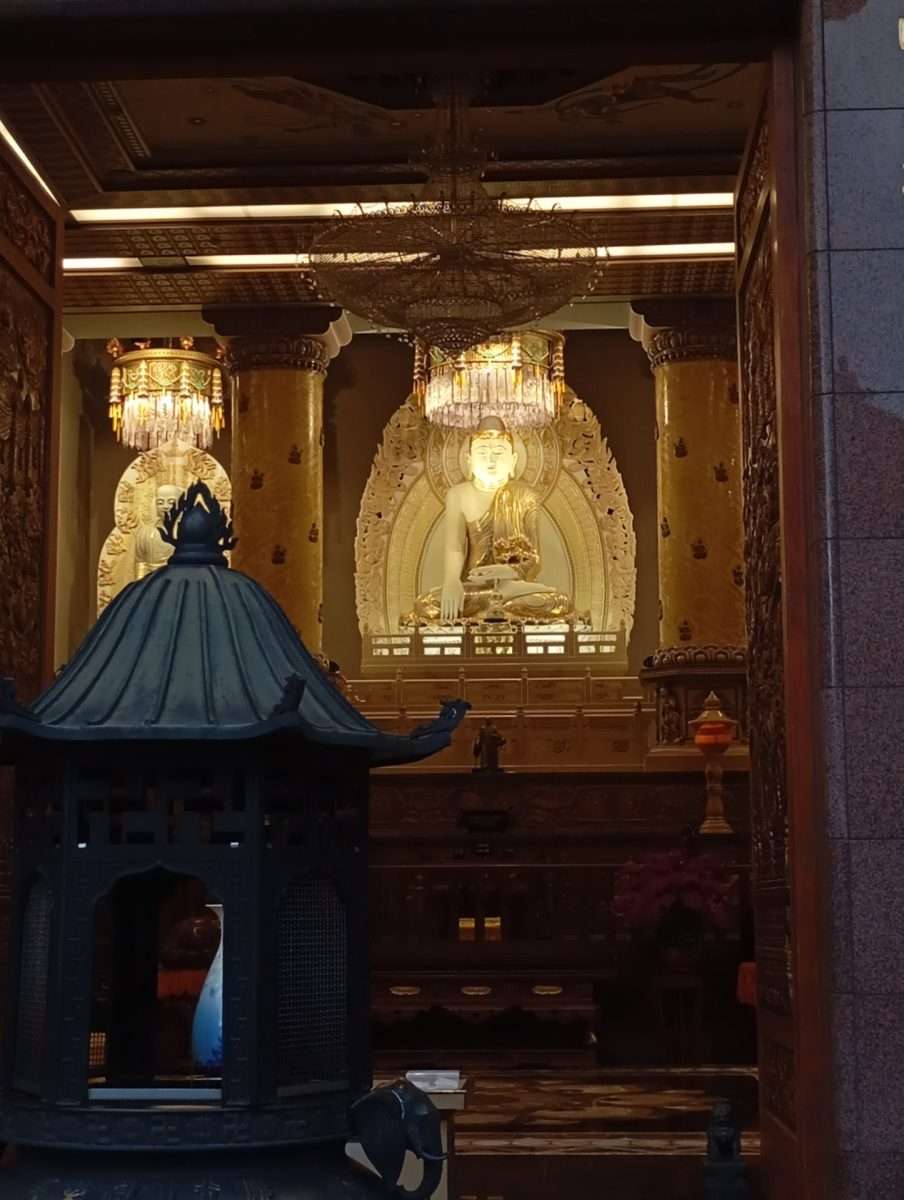
When you enter Mahavira Hall, the central statue on the main altar, unlike in some temples that directly honor the Medicine Buddha or Amitabha Buddha, is Shakyamuni Buddha. He is accompanied by his two great disciples: Ananda, representing learning and youth, and Mahakasyapa, representing ascetic practices and maturity.
The original temple did not begin with the Fo Guang Shan order. It was originally founded in 1905 under the name Guang Temple during the period of Japanese occupation. Because of bombing during World War II, the building was left almost completely in ruins. When Fo Guang Shan began the modern reconstruction in 1985, three thousand-year-old stone statues were rescued and preserved in the exterior garden.
Among them is a stone carving of the Thousand-Armed Guanyin Bodhisattva, which formed part of a historic Japanese pilgrimage route on the island, the Keelung Saigoku 33 Pilgrimage Grounds.
To delve deeper into its history, explore our comprehensive Fo Guang Shan Ji Le Temple guide.
And if you are interested in meditation, this is probably the best point along the route to stop for a little longer.
Photography and video
As a general rule, photography and video are not allowed inside Mahavira Hall or the meditation halls, especially when people are praying or a ceremony is taking place. You can freely take photographs in the courtyards, gardens, exterior corridors, and vegetarian restaurant. You can also photograph Mahavira Hall, but only from the outside.
Before entering any prayer hall, put your phone on silent or vibrate. Never answer calls inside the altar area.
How to bow and greet
- The Buddhist greeting: The traditional greeting consists of bringing your palms together at chest level and making a slight bow of the head when passing a monk or entering an altar area.
- Bowing before the Buddha: You will see practitioners prostrating on cushions in front of the statues. As a visitor, you are not expected to do this. If you wish to show respect, simply stand in front of the Buddha statue, bring your palms together, and make a deeper bow with your head and upper body.
Behavior and movement inside the hall
- Enter through the side doors: Halls often have three doors. The central door is traditionally reserved for monks. As a visitor, you should enter through the side doors, preferably the right-hand door, and step into the hall without stepping on the threshold.
- Speak very quietly if you need to communicate. These halls are active meditation spaces.
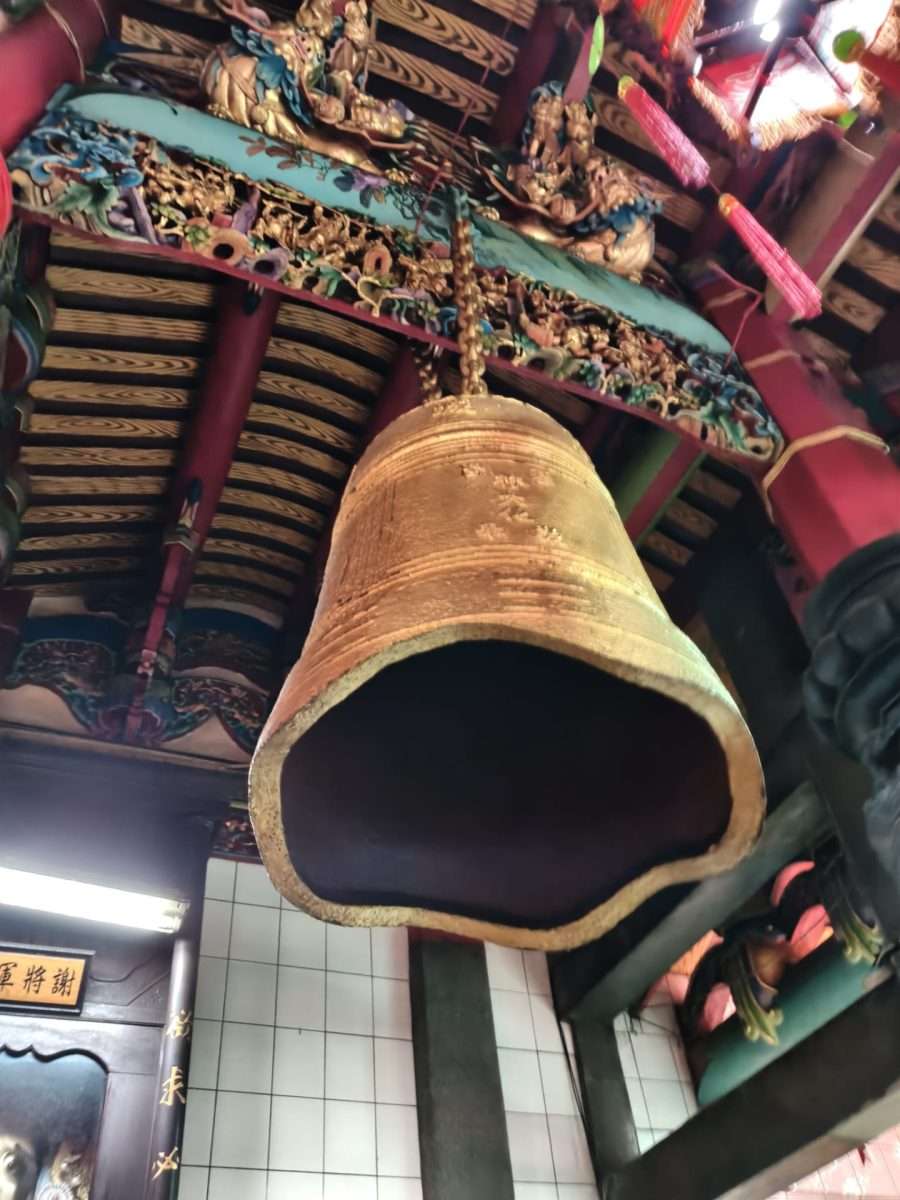
- Do not touch sacred objects: Do not touch statues or ritual instruments such as bells or gongs.
- Avoid turning your back directly toward the altar: When leaving an altar or Buddha statue, try to take a few steps backward before turning around completely rather than abruptly turning your back on it.
The general opening hours are Tuesday to Sunday, from 7:00 to 21:00, for individual visits, open prayer, library use, and the vegetarian restaurant, Water Drop Tea House, which I recommend visiting.
Dharma Service takes place every Saturday at 19:30 in the second-floor auditorium. Depending on the week, the chanting alternates between the Amitabha Sutra on odd-numbered weeks and the Diamond Sutra on even-numbered weeks.
The temple is closed on Mondays for its weekly day off, although Mahavira Hall remains open.
2. Climbing toward Zhongzheng Park: From one temple to a mountain of stories
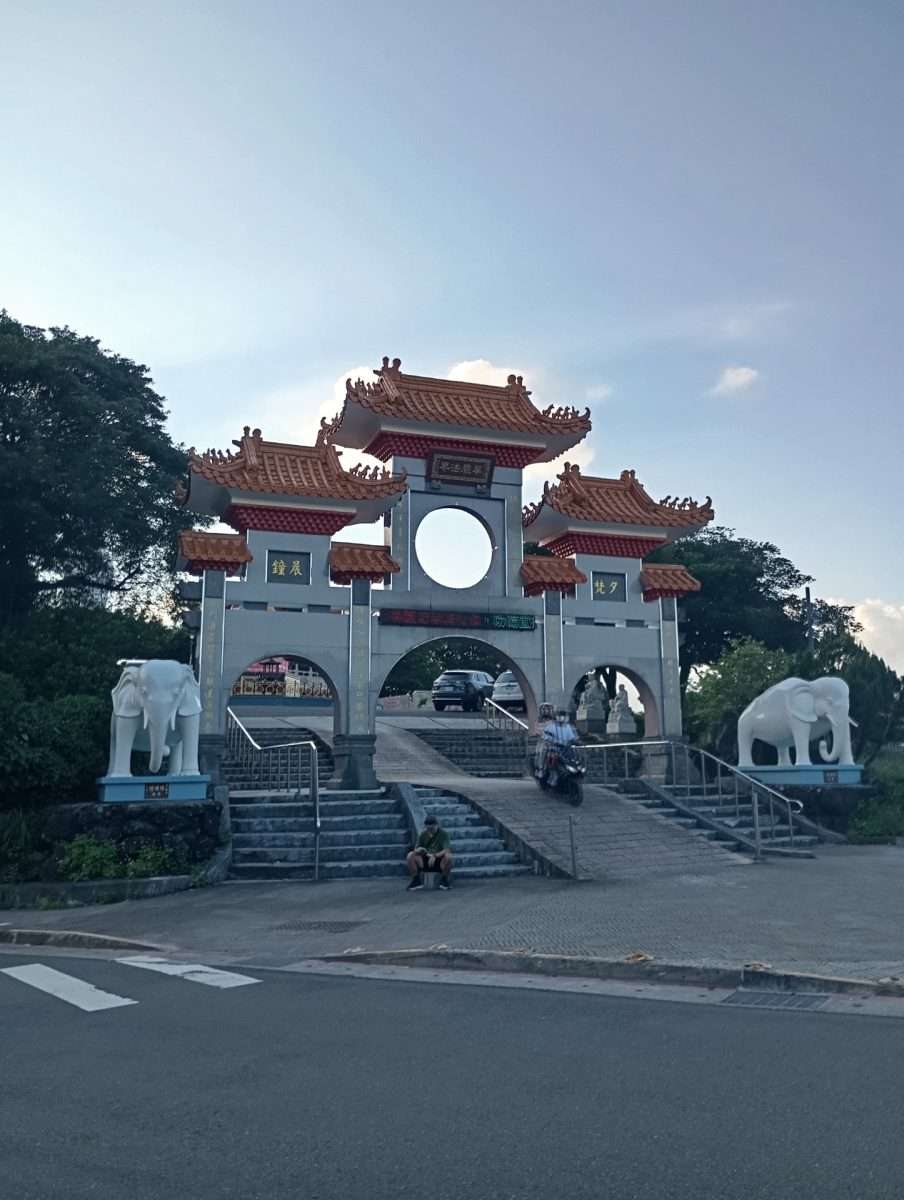
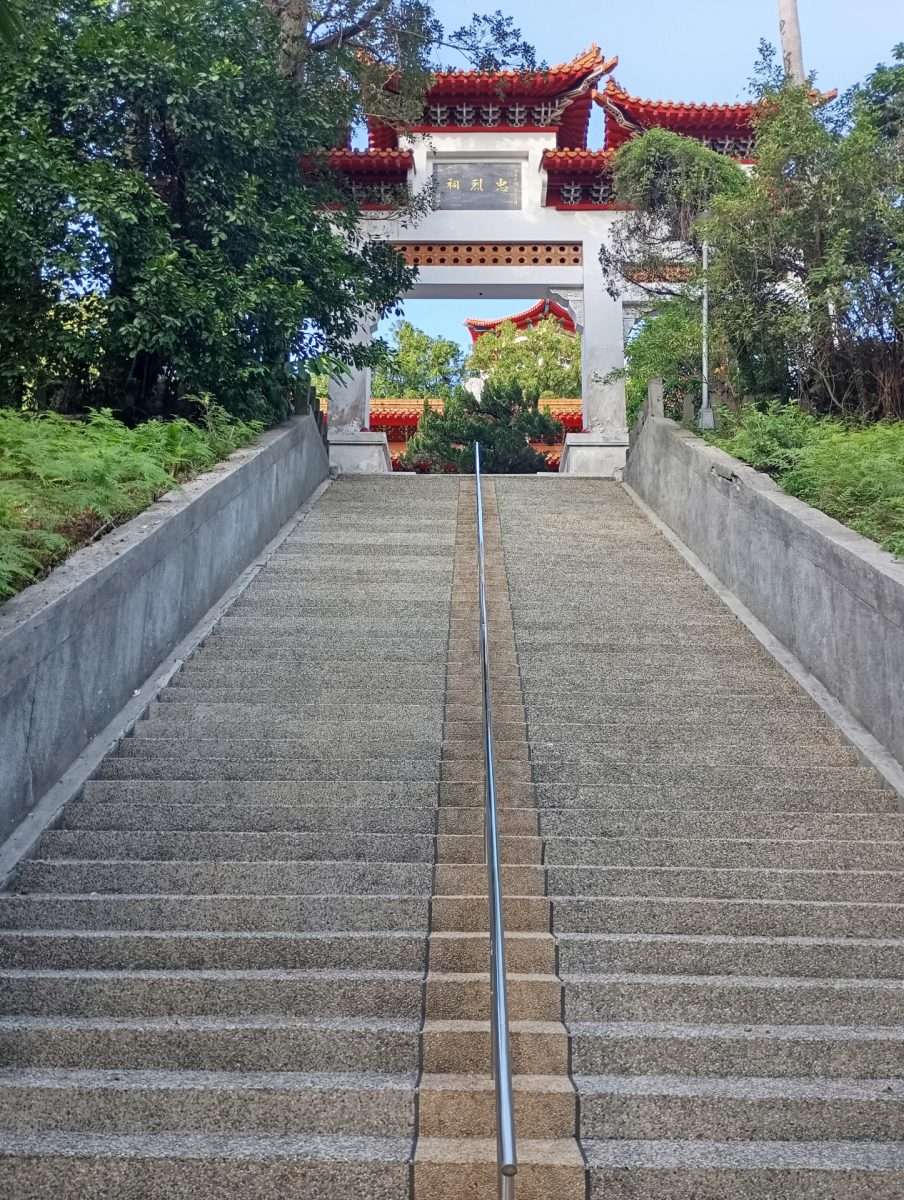
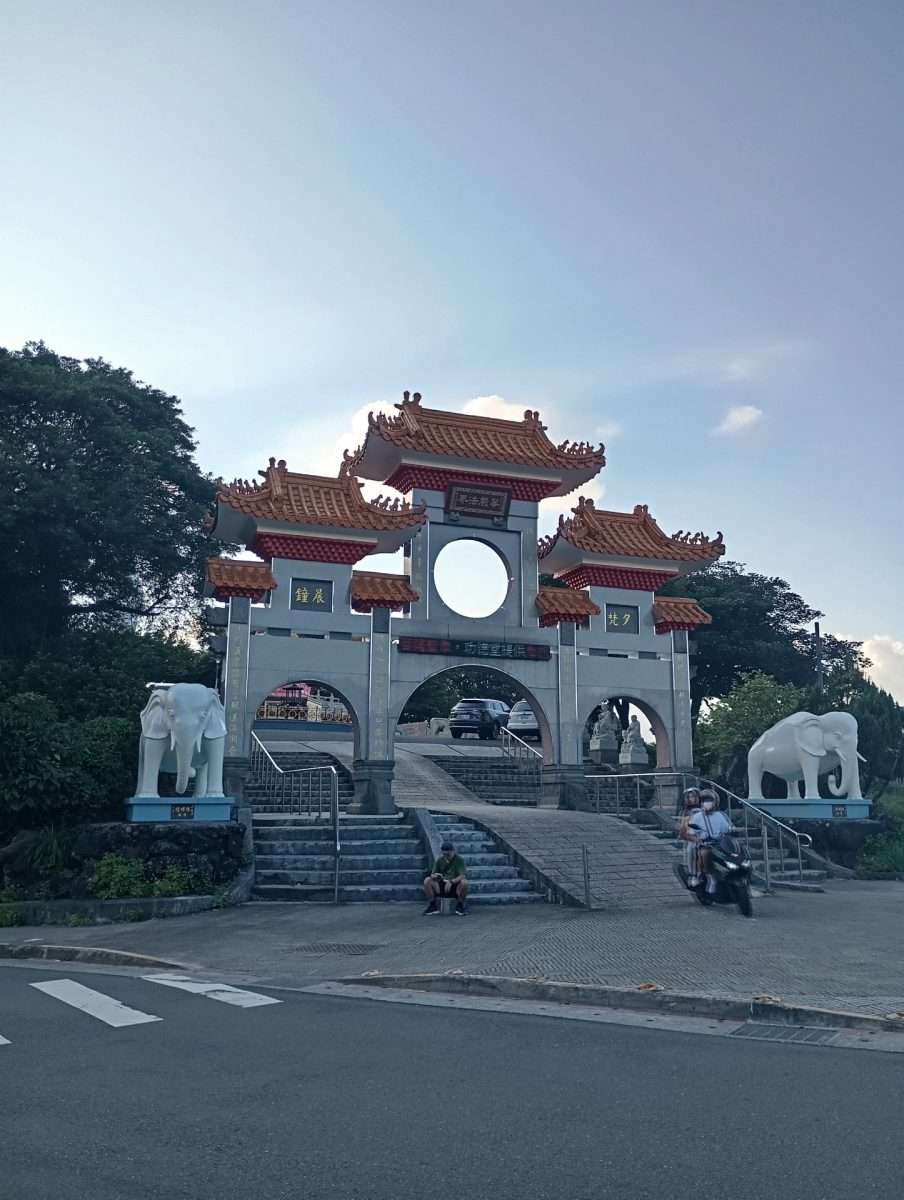
When you leave Fo Guang Shan, look for the entrance to Zhongzheng Park View Arch of Zhongzheng Park on Google Maps

Beside Fo Guang Shan Temple, you can take the stairs leading up to the park. There is also an elevator nearby, which is a good alternative if you prefer to avoid part of the climb.
This is where the second part of the route begins. This section is important because the landscape starts to change.
We leave the Buddhist temple behind and begin entering another religious landscape of Keelung.
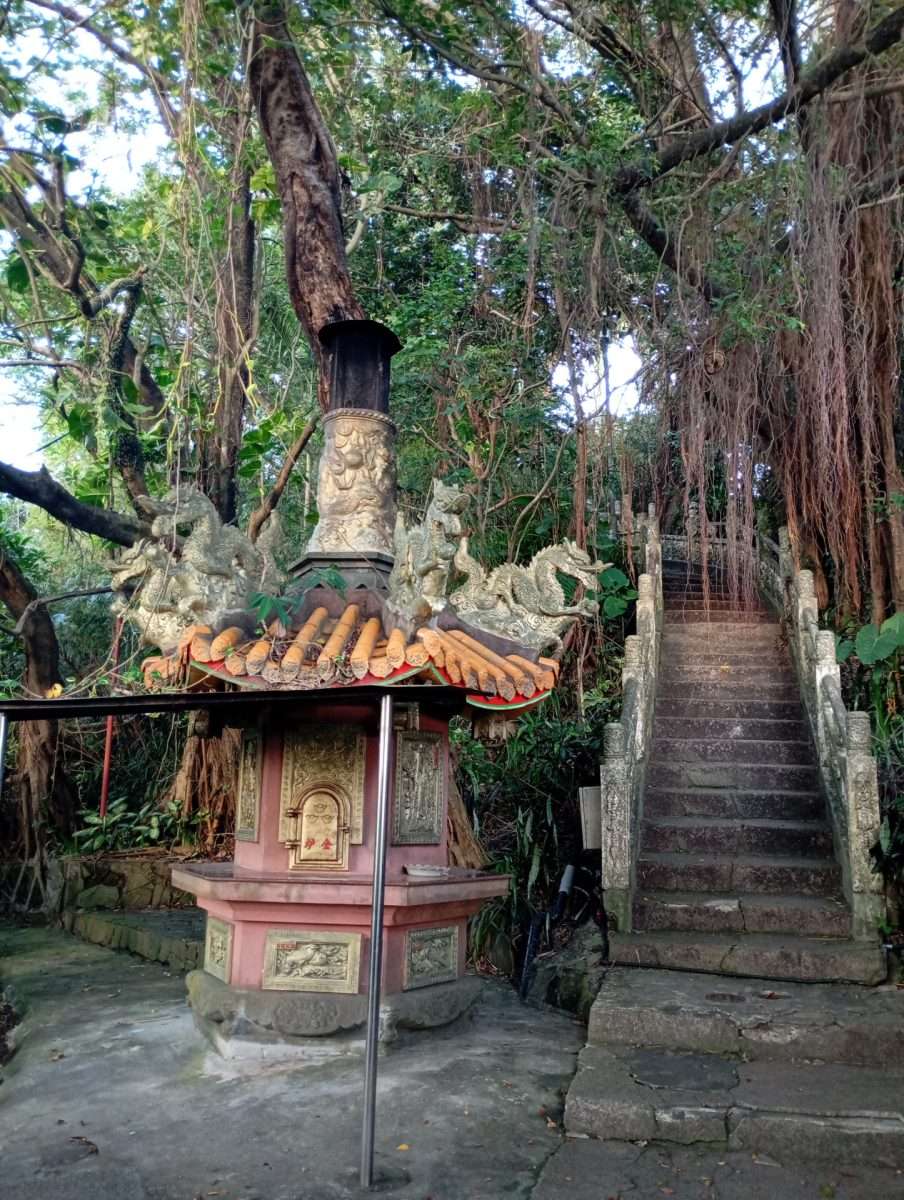
As you climb, notice something: the mountain and the temple are not separate.
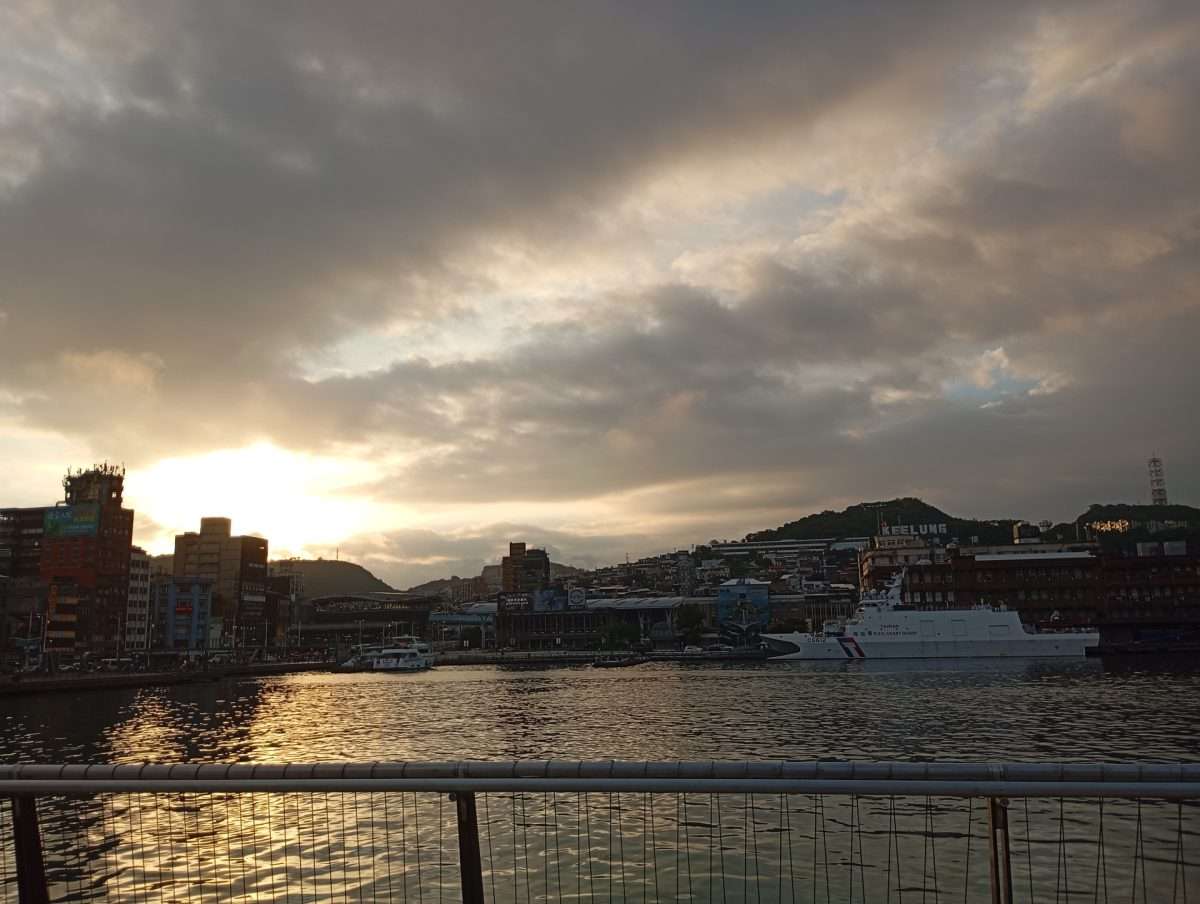
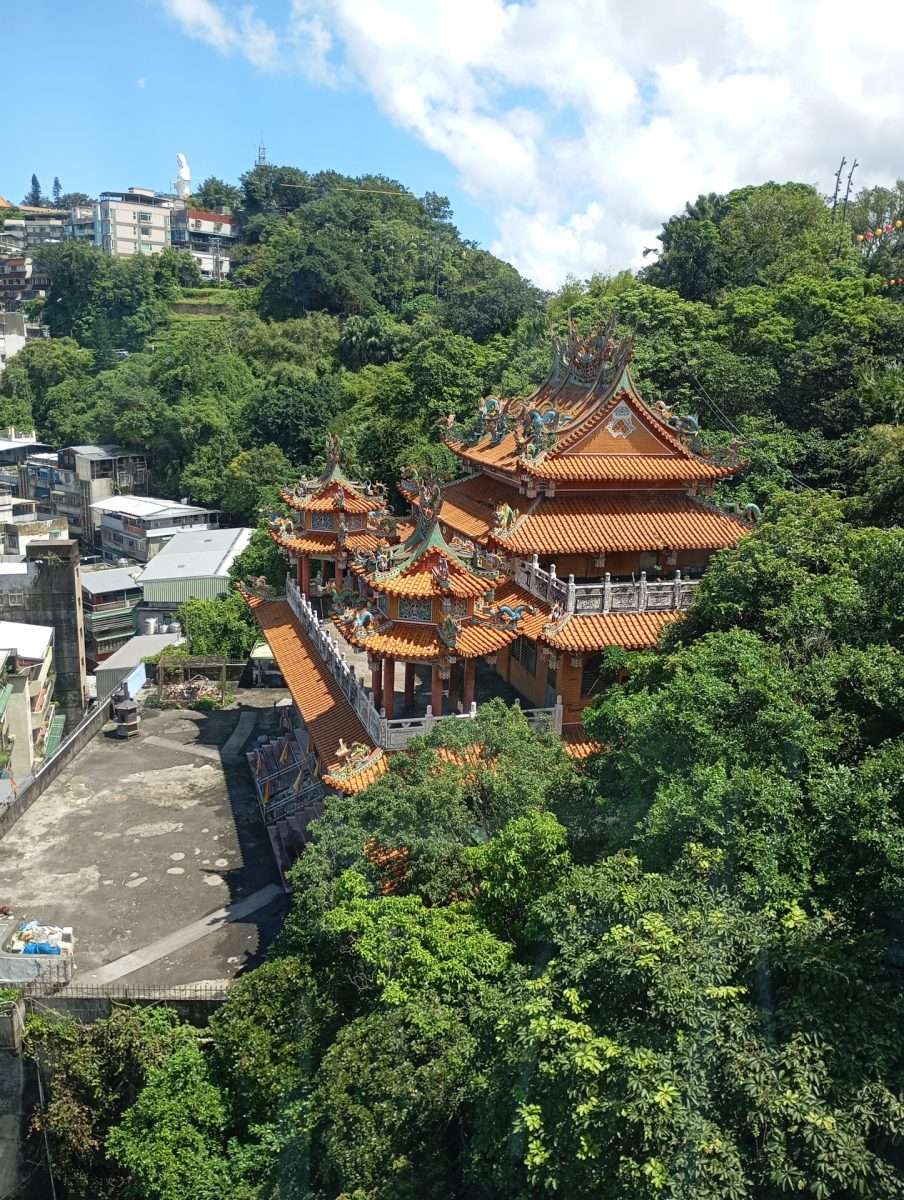
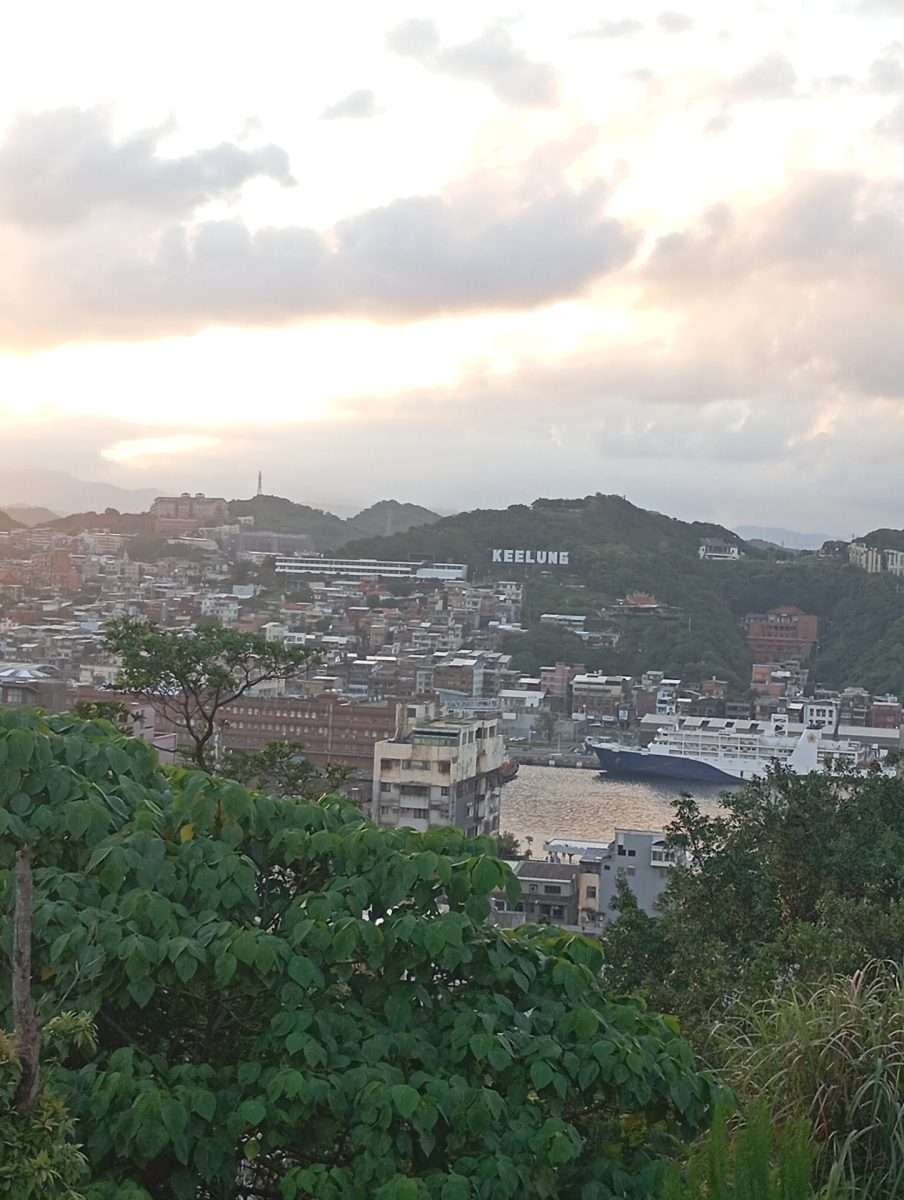
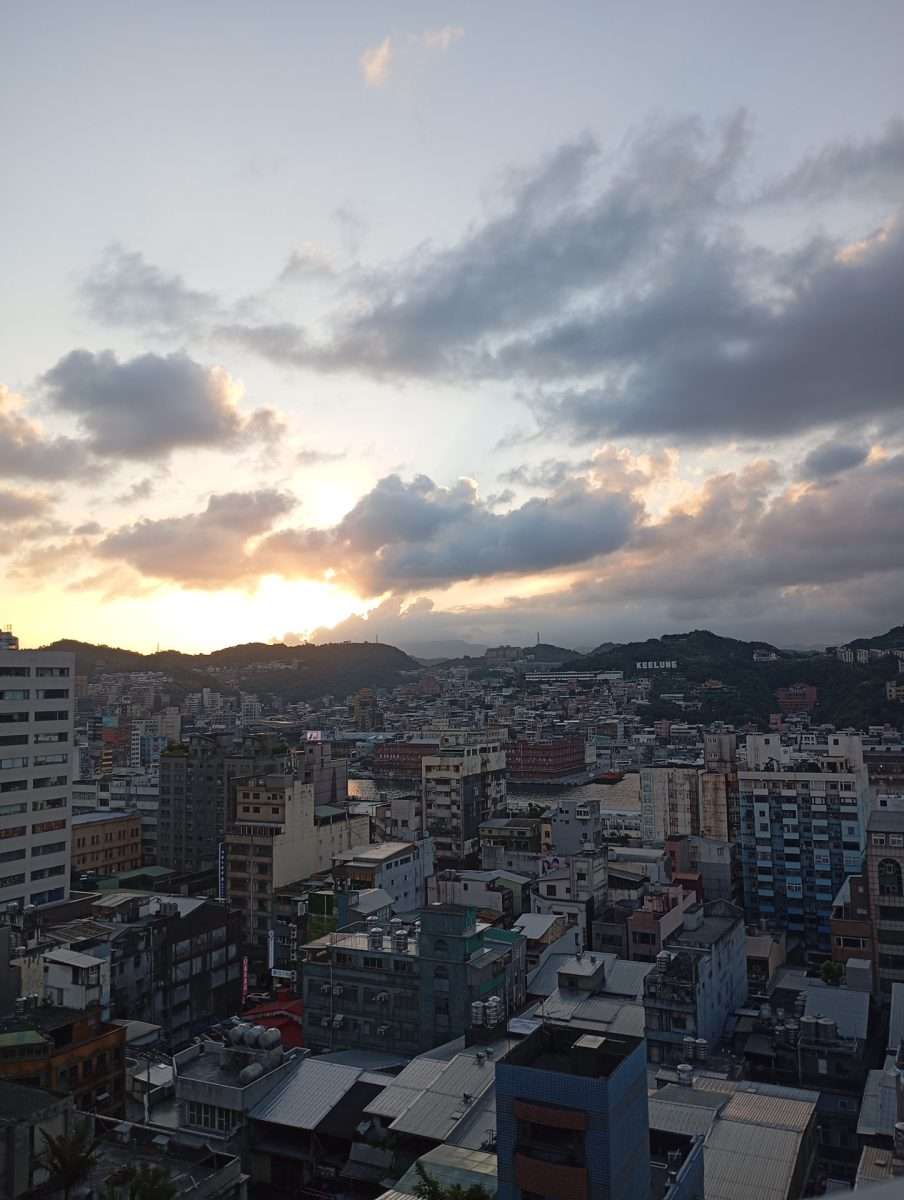
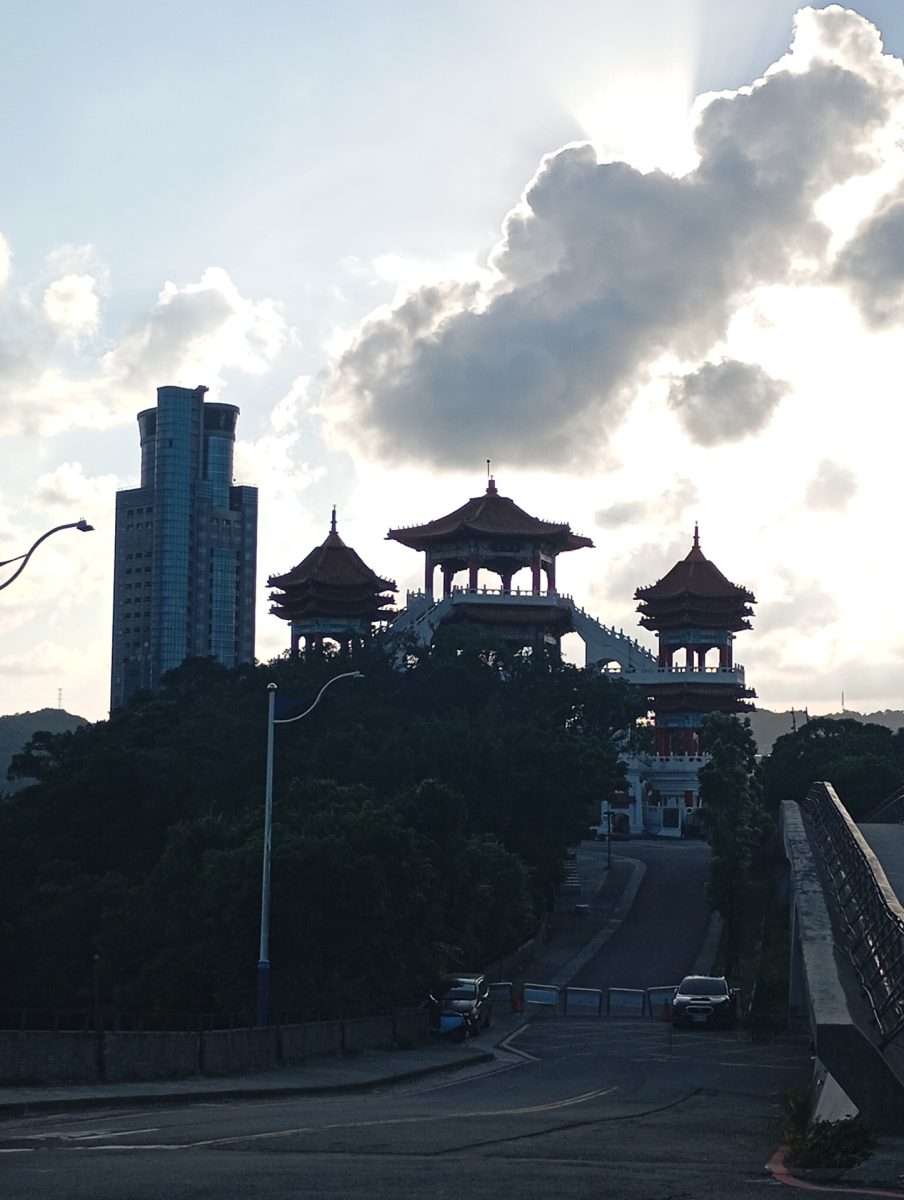
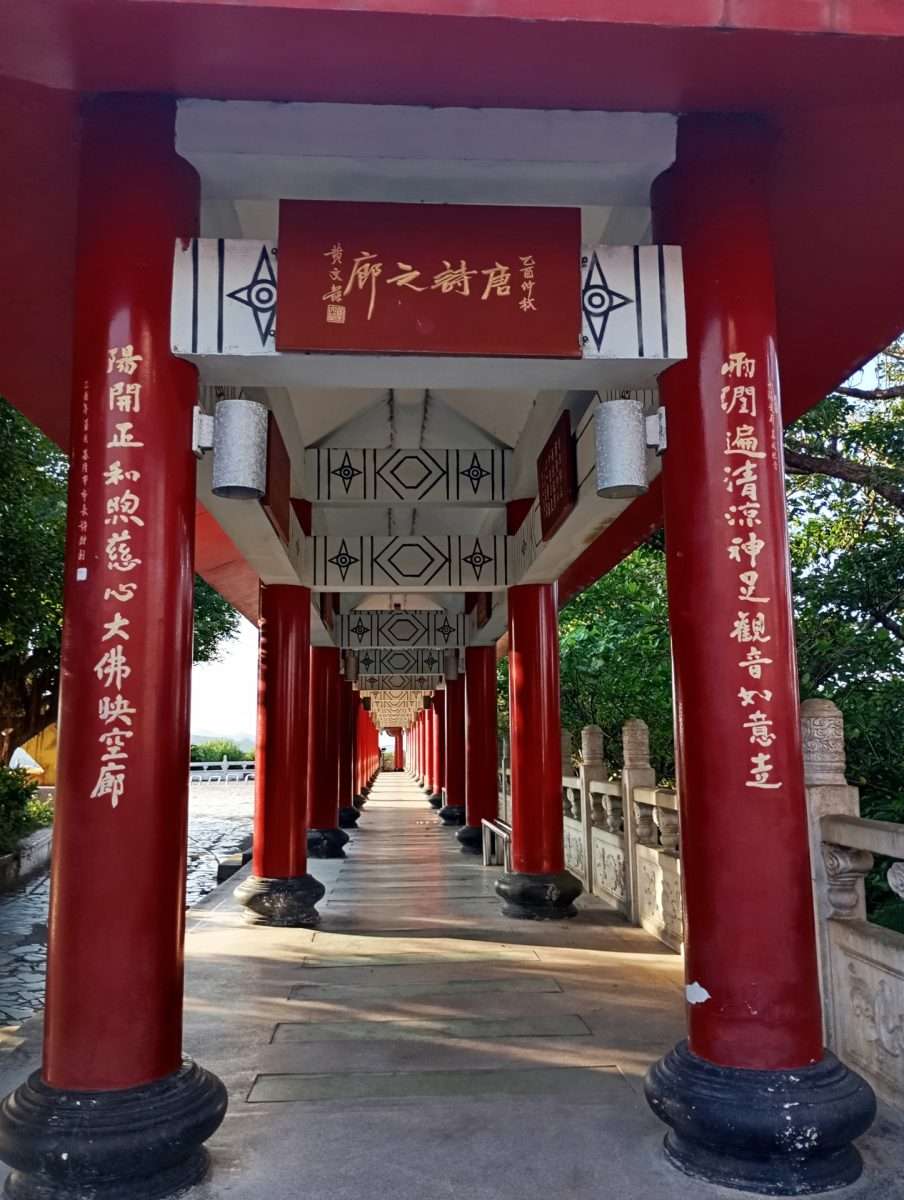
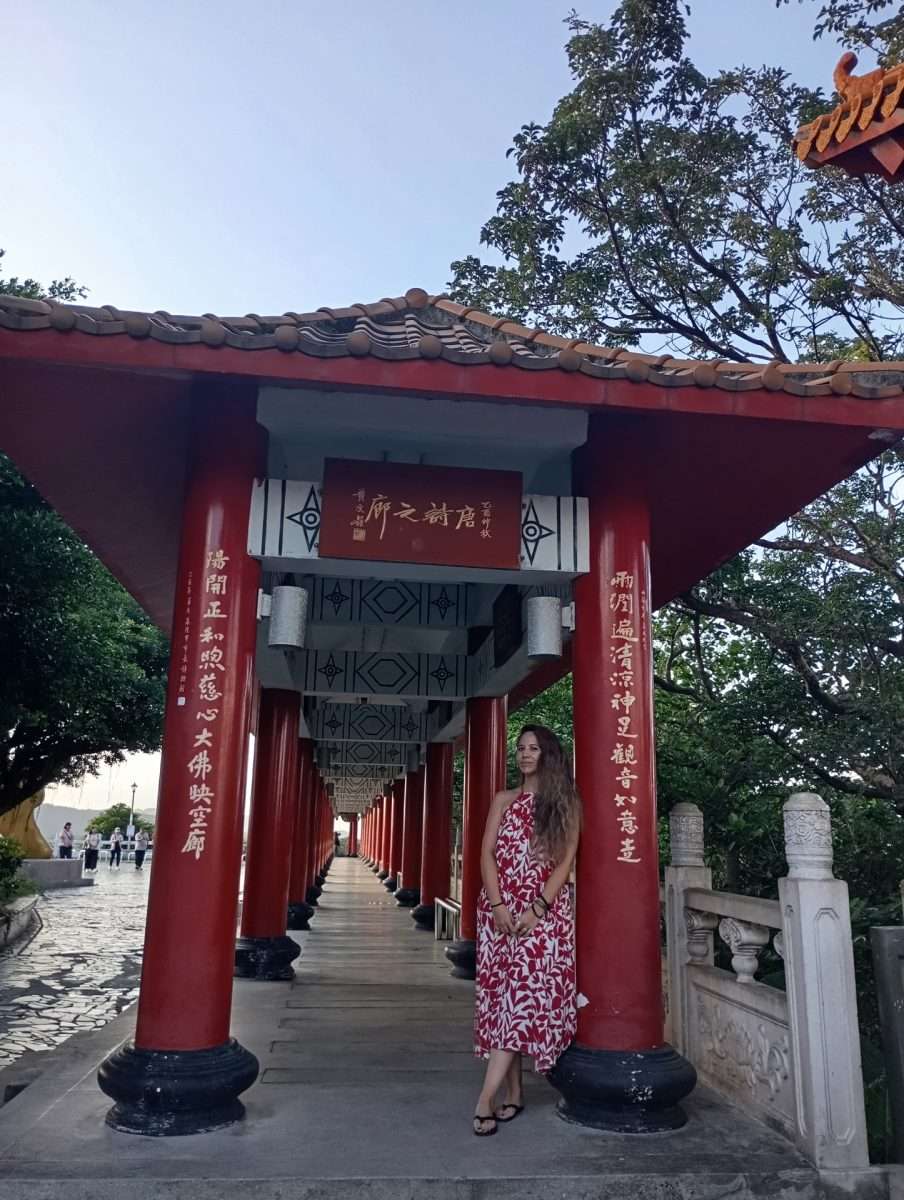
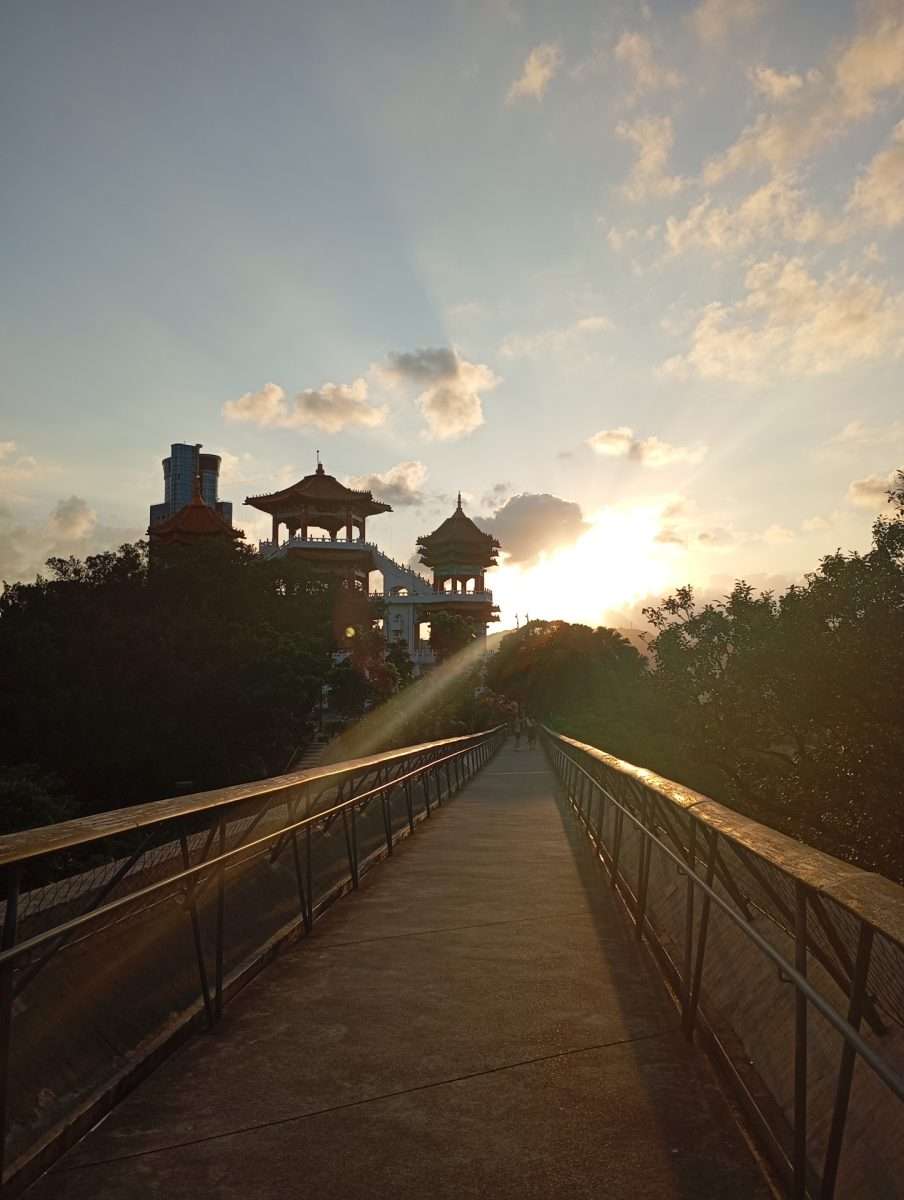
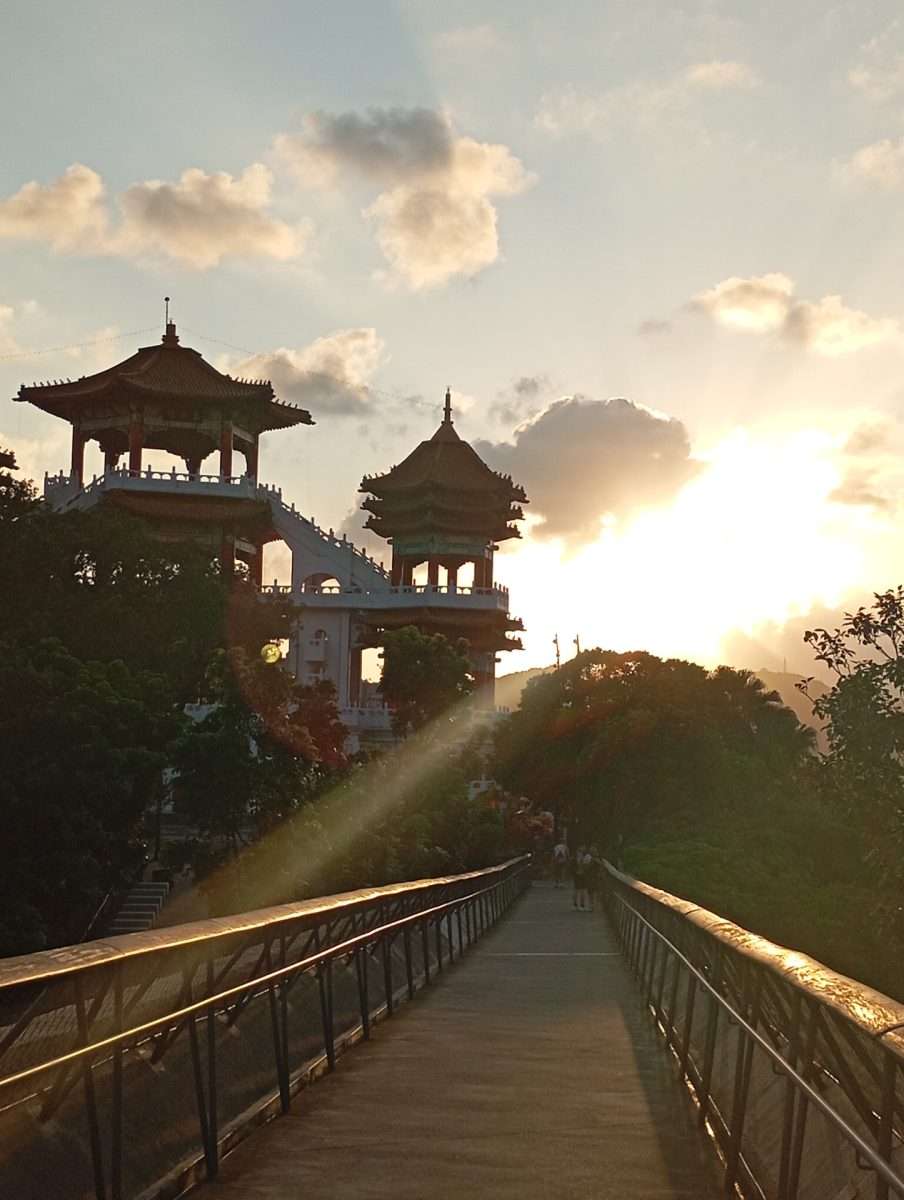
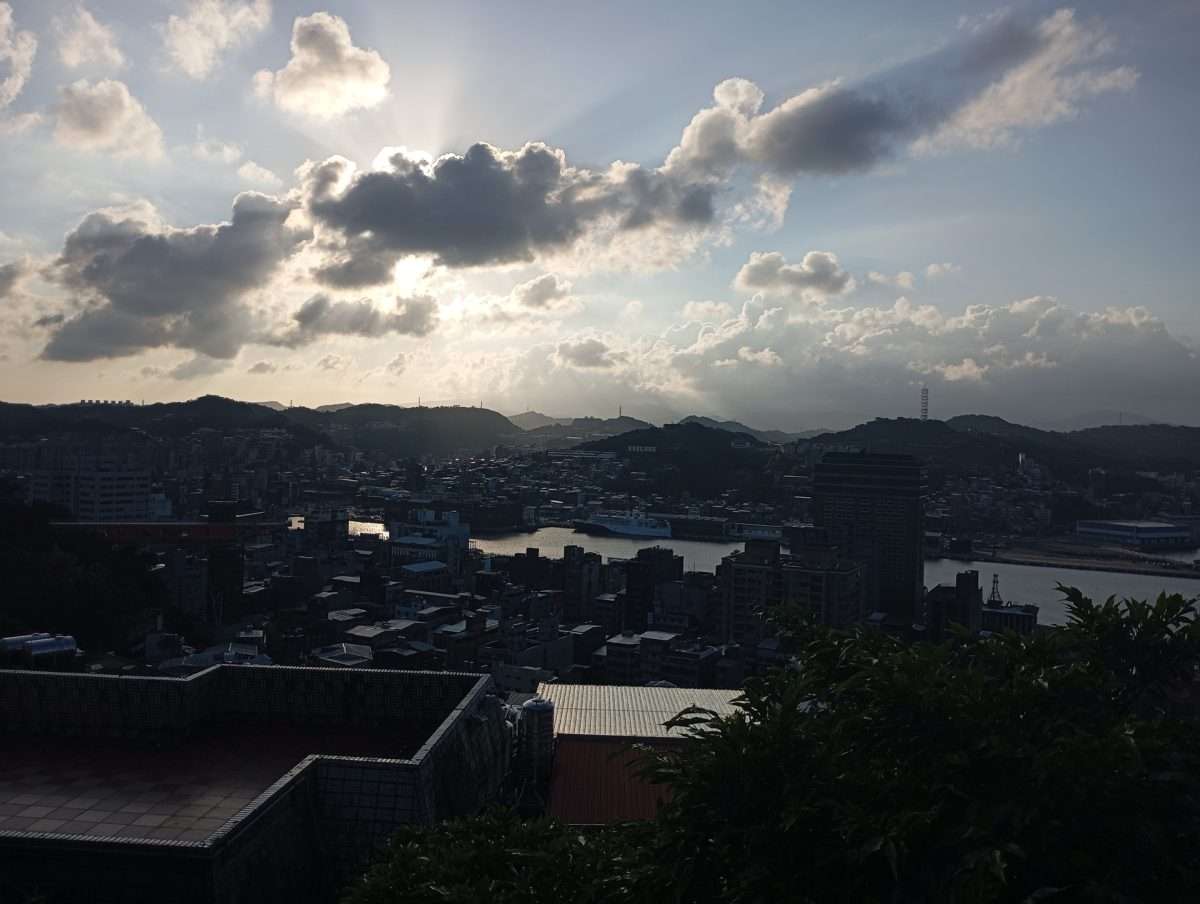
Zhongzheng Park is built along the mountainside and organized across different levels. From its higher sections, you can see Keelung, the harbor, and the mountains surrounding the city.
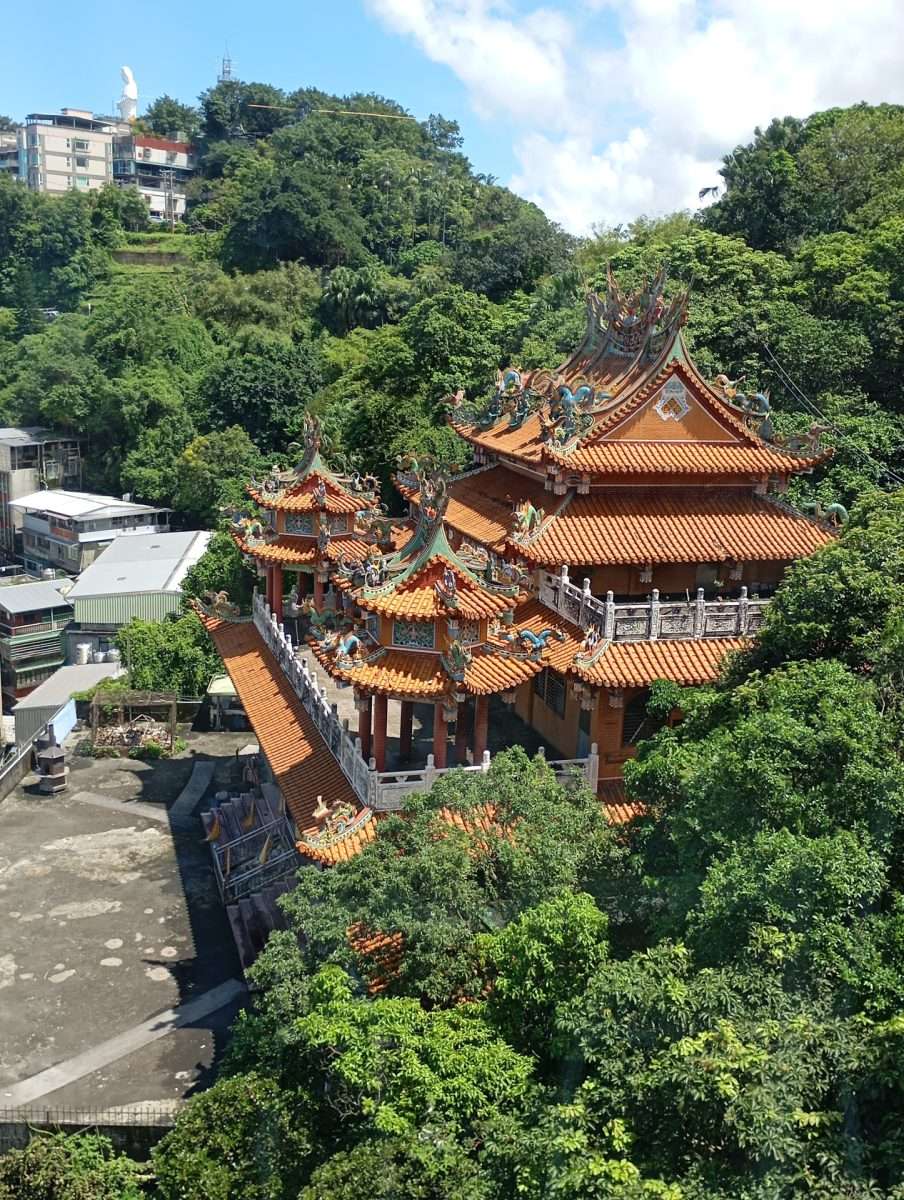
Many of Keelung’s religious spaces are integrated into these hillsides. Once again, geography appears, just as it did in the previous article, as part of the way the city was built.
But do not climb only in search of the view.
This is where you will find some of the places that offer one of the best ways to understand another dimension of Keelung: the city’s relationship with the dead and with the Ghost Festival.
3. Zhuputan Temple and the Ghost Festival Museum
Location: Inside Zhongzheng Park, on one of the middle levels of the park View Zhuputan on Google Maps
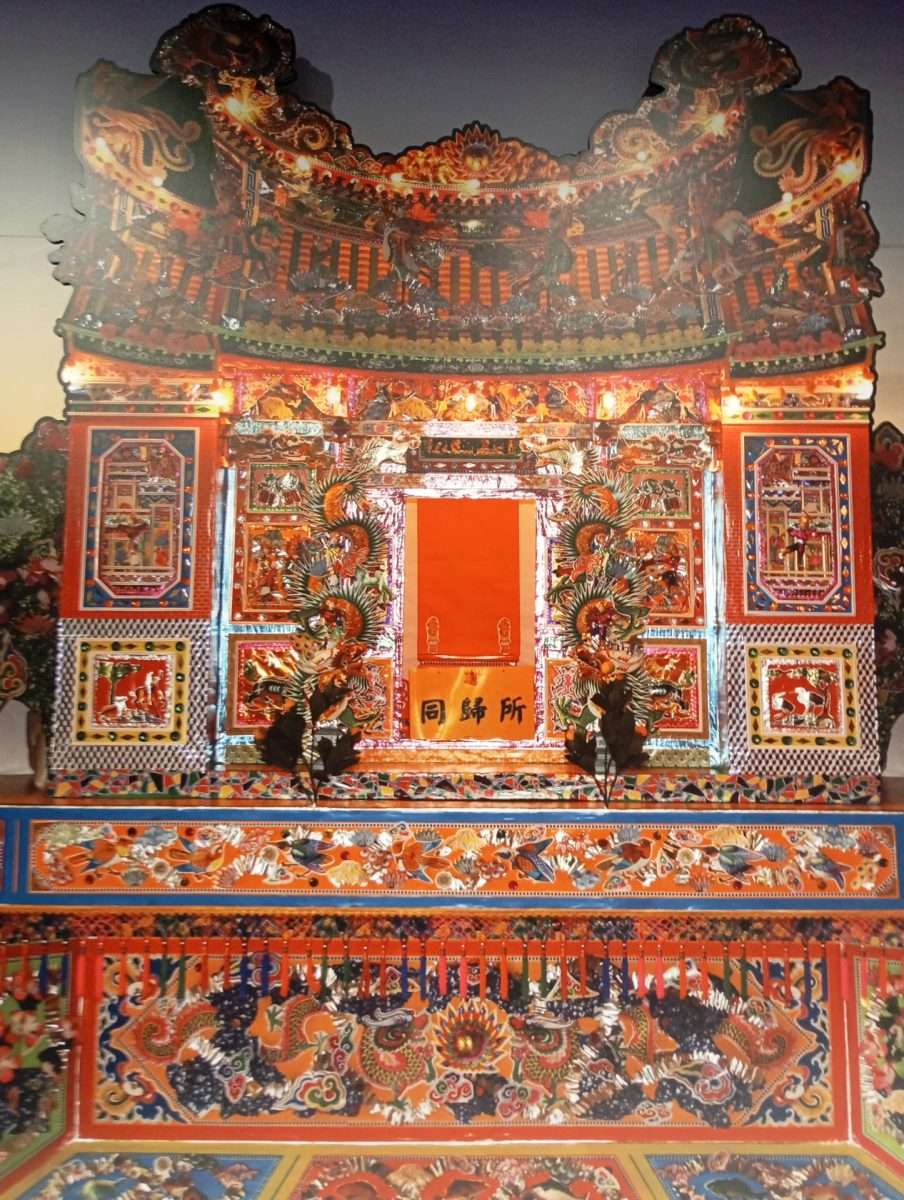
Zhuputan is one of the central sites of the Keelung Ghost Festival. The current building serves as the main altar for the festival ceremonies and has a history connected to the communities that shaped Keelung. The site was moved to the park and today remains one of the most important places for understanding the celebration.
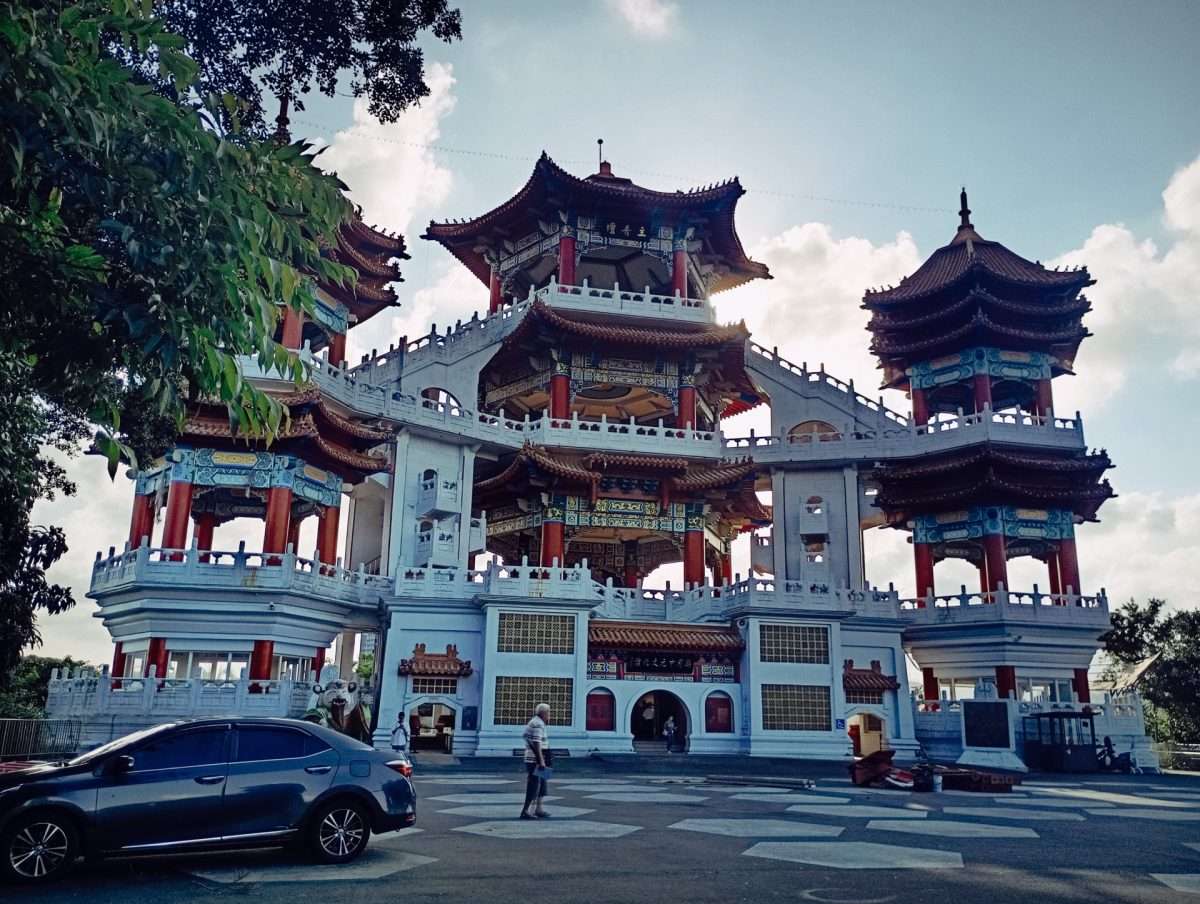
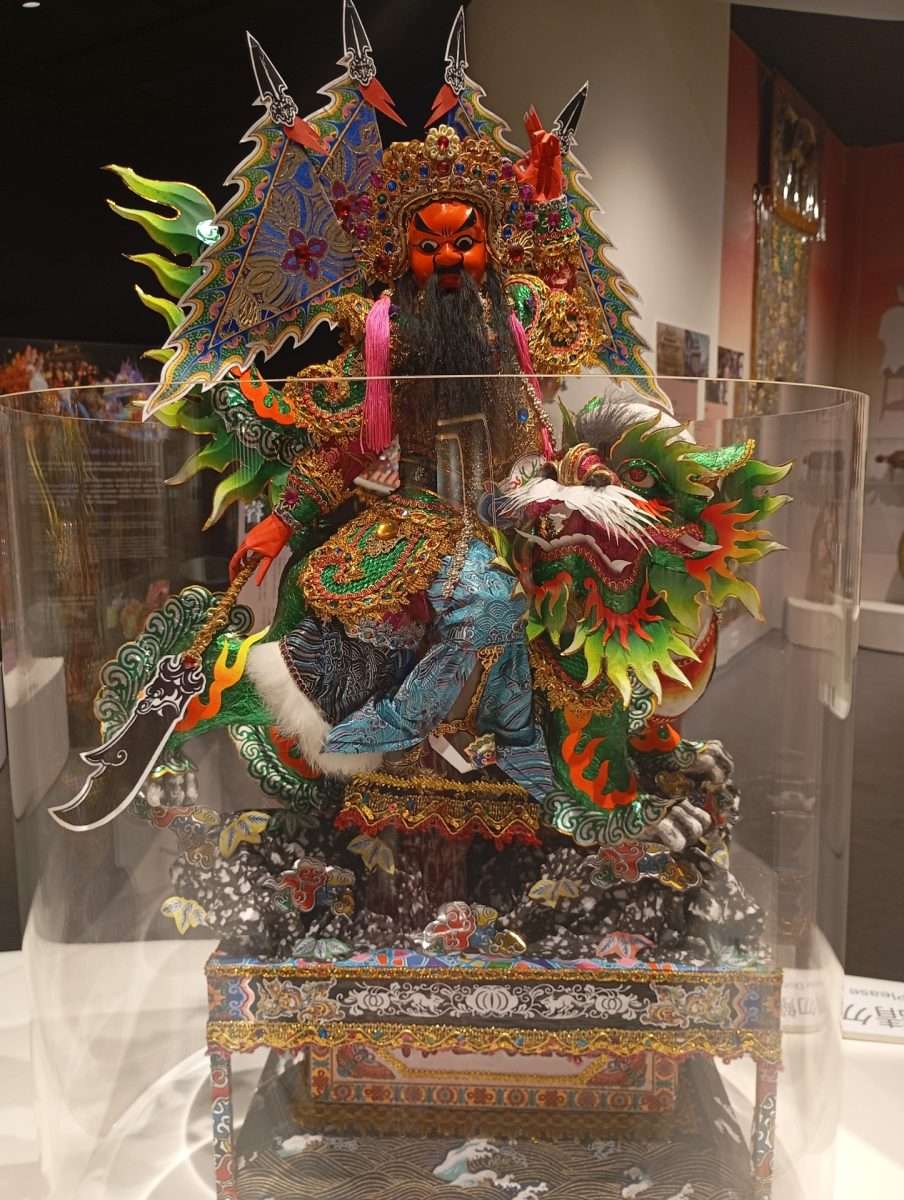
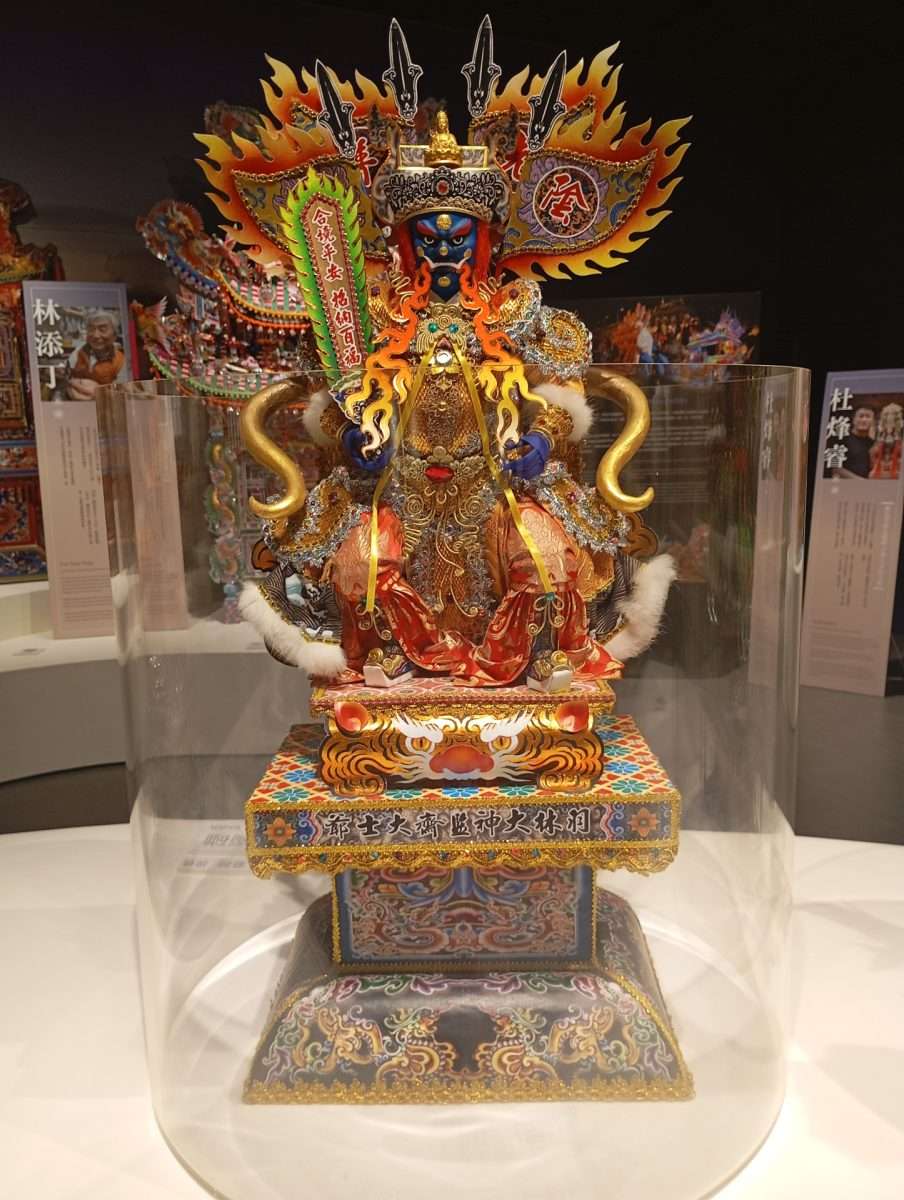
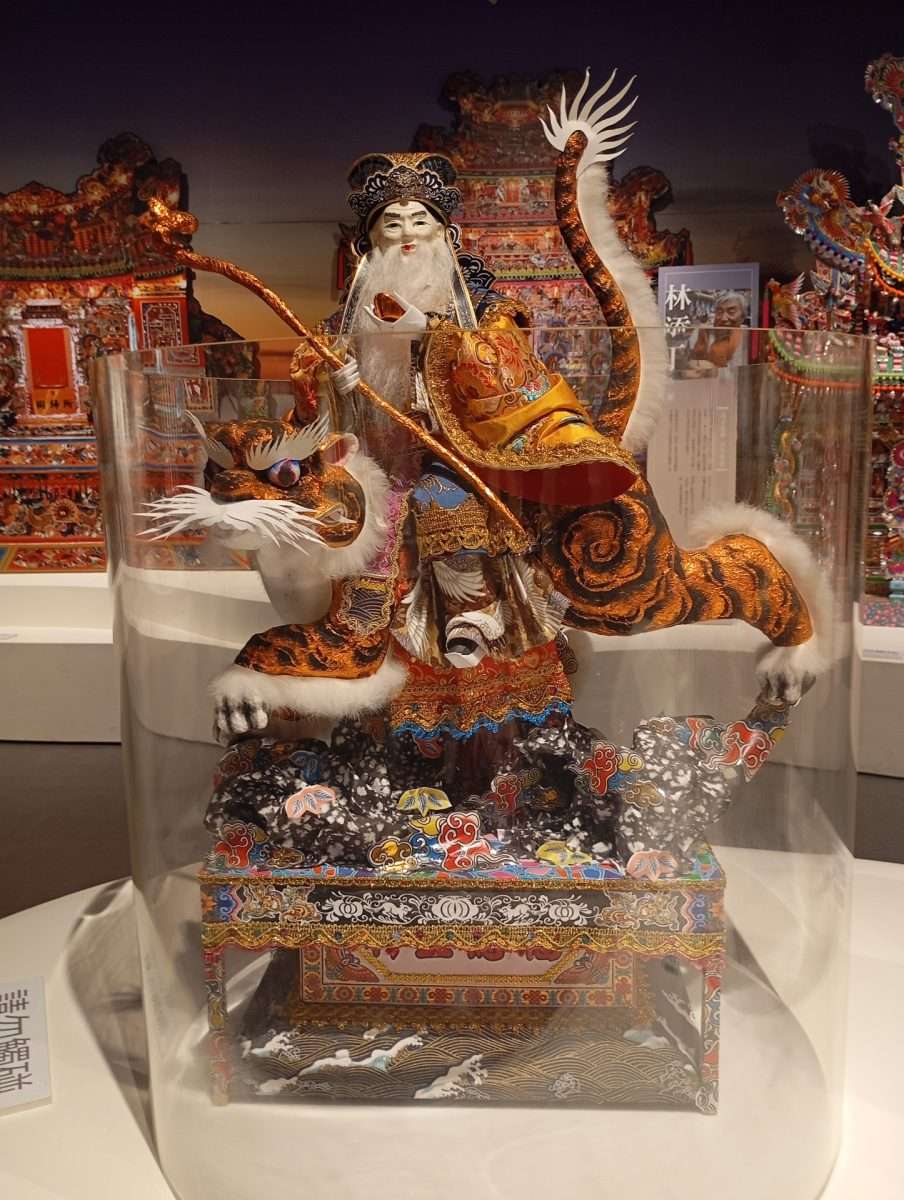
On the first floor you will find the Ghost Festival Museum, created to explain the historical origins of the festival, its rituals, and the roles of different religious figures.
This is particularly interesting because here, religion becomes more than a matter of individual belief.
If you have read the first article, you may remember that this celebration is not simply a festival about ghosts.
It is connected to the history of Keelung’s communities, conflicts from the past, the memory of the dead, and pudu practices intended to provide ritual care for wandering spirits.
Keelung’s Zhongyuan Festival is deeply connected to the history of the city’s communities, past conflicts, and the ways different groups developed mechanisms for living together and remembering the dead.
So when you are here, think of the temple not only as a religious place. Think of it as a place where a city preserves part of its memory.
The Ghost Festival Museum is located within this complex and was created precisely to explain the history and practices of the festival. Admission is free. The museum is open Tuesday to Sunday from 9:00 to 17:00 and closed on Mondays.
At this temple, only the museum is open to visitors; the upper floors cannot be accessed. There are also public restrooms.
Key details to look for during your visit
- The ten fundamental ceremonies that structure the entire festival.
- The decisive role of family groups and the collective commitment that keeps the tradition alive.
- Objects used in processions, musical instruments, and ceremonial artworks.
- Different offerings and objects connected to ancestor veneration.
- The convergence of Taoist traditions, Buddhist teachings, and regional customs.
If you want to learn more about this fascinating festival, I invite you to read Keelung Ghost Festival by Keelung For A Walk. Another resource worth exploring: Keelung Ghost Festival Experience Guide, Ghost Festival Museum, Ghost Festival Walking Tour.
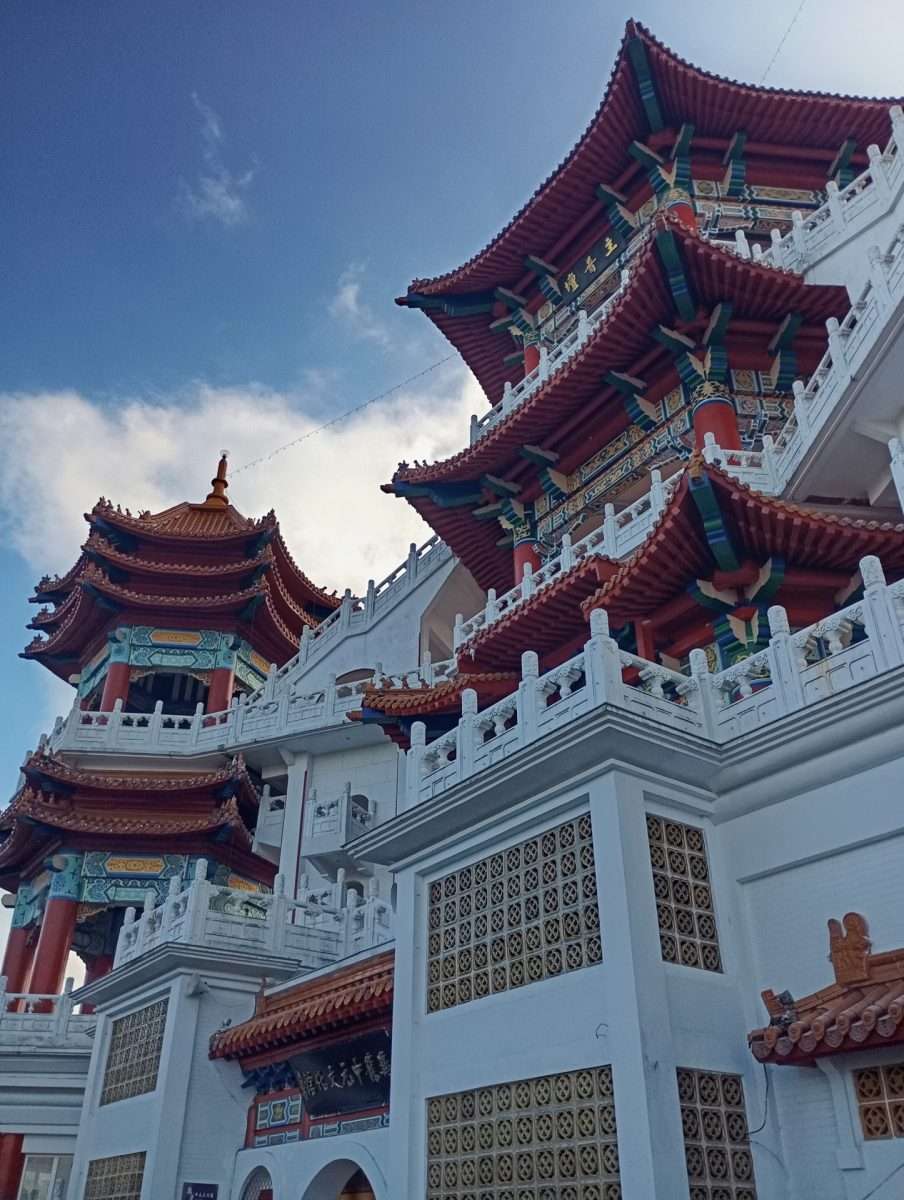
4. Keep climbing: Big Buddha Temple — looking at the city from above
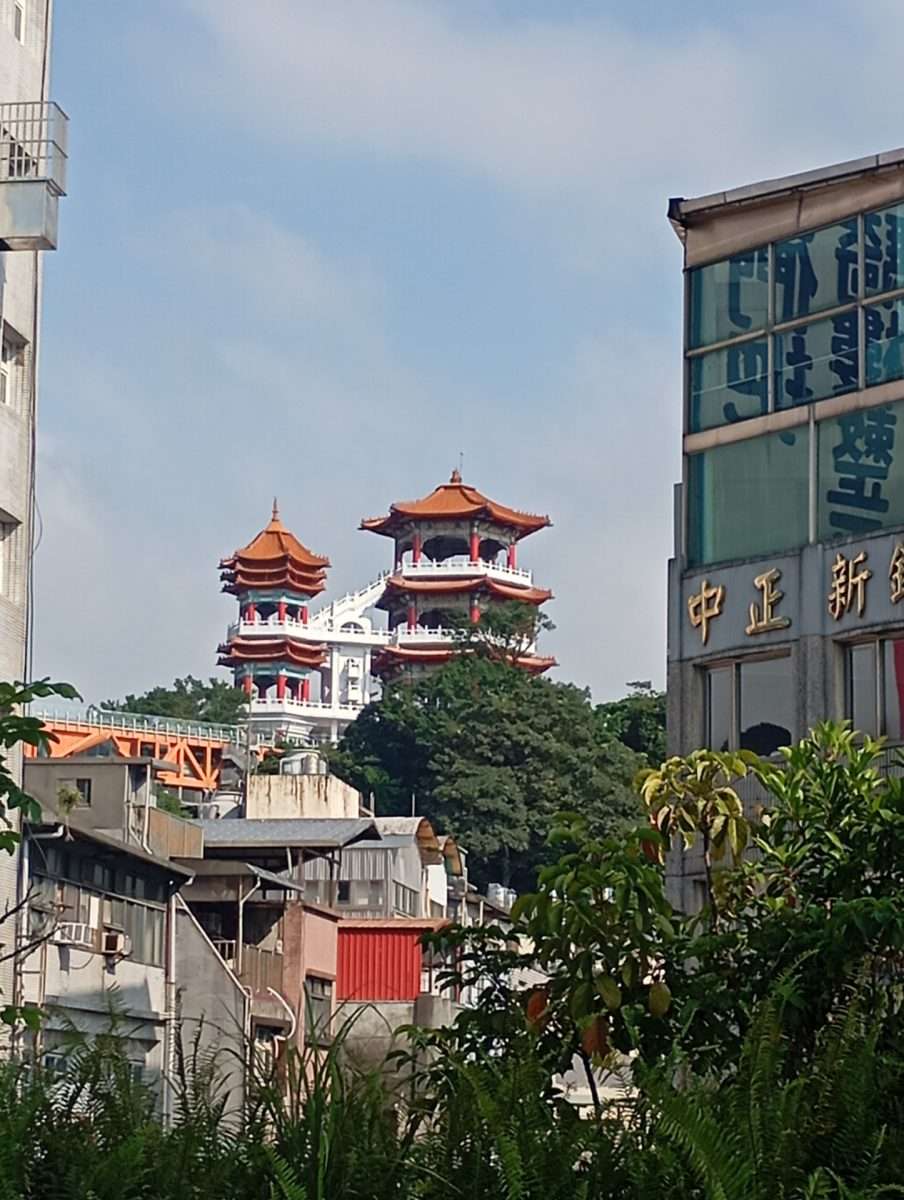
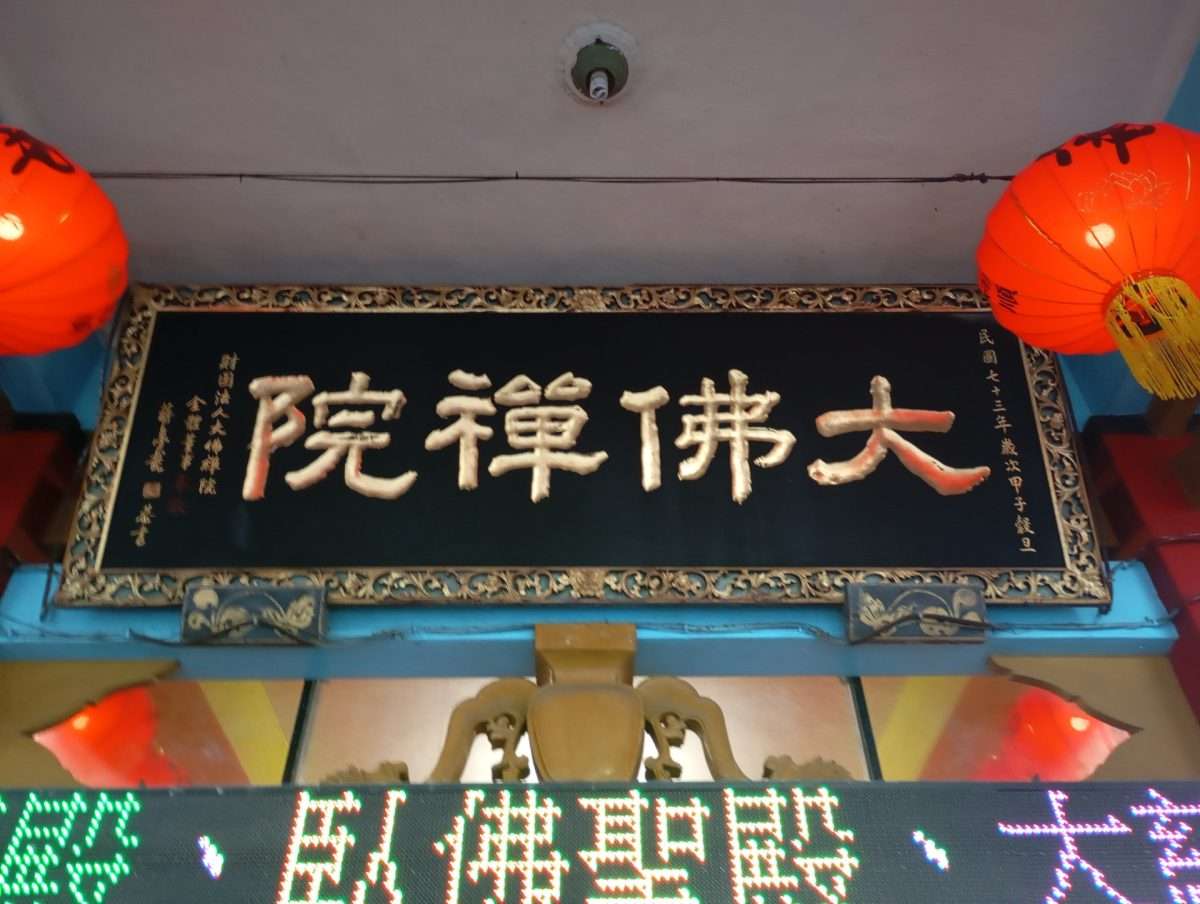
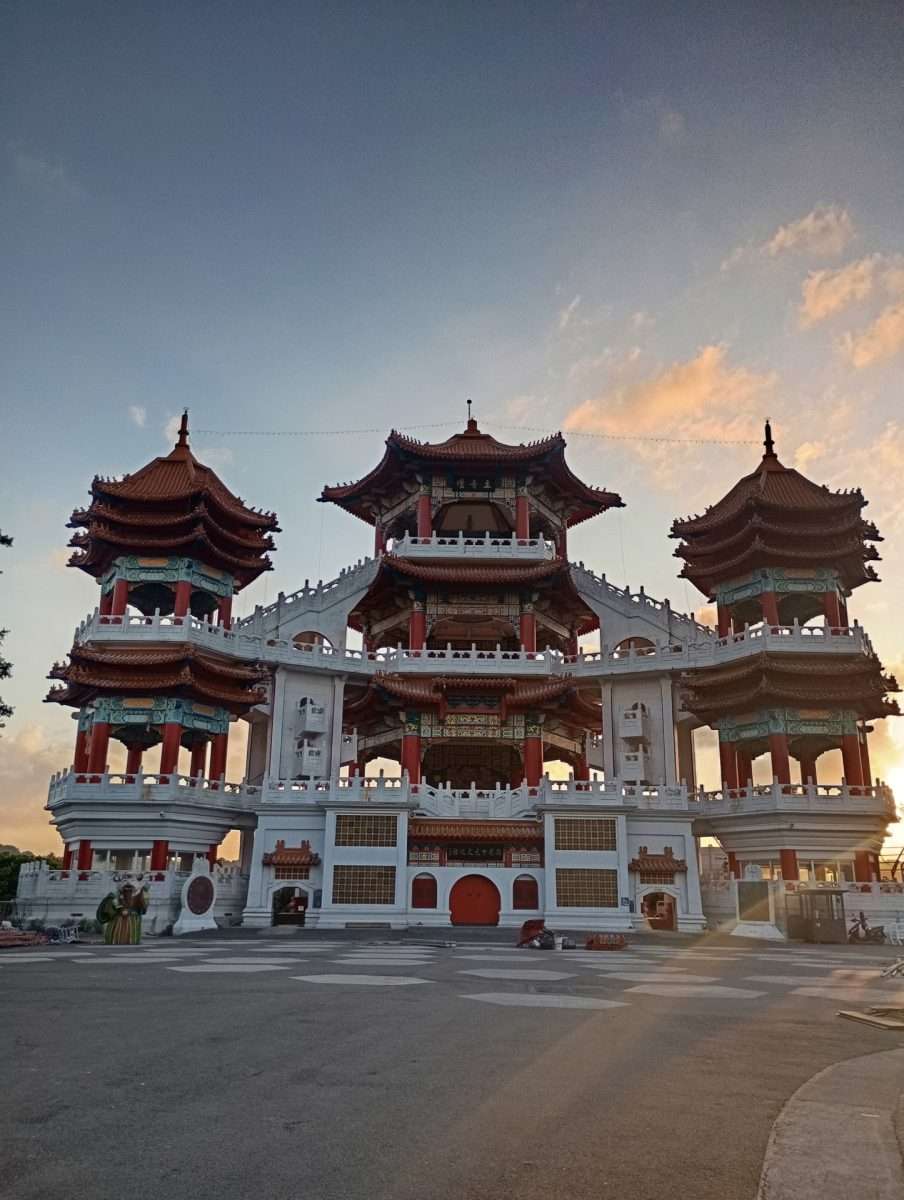
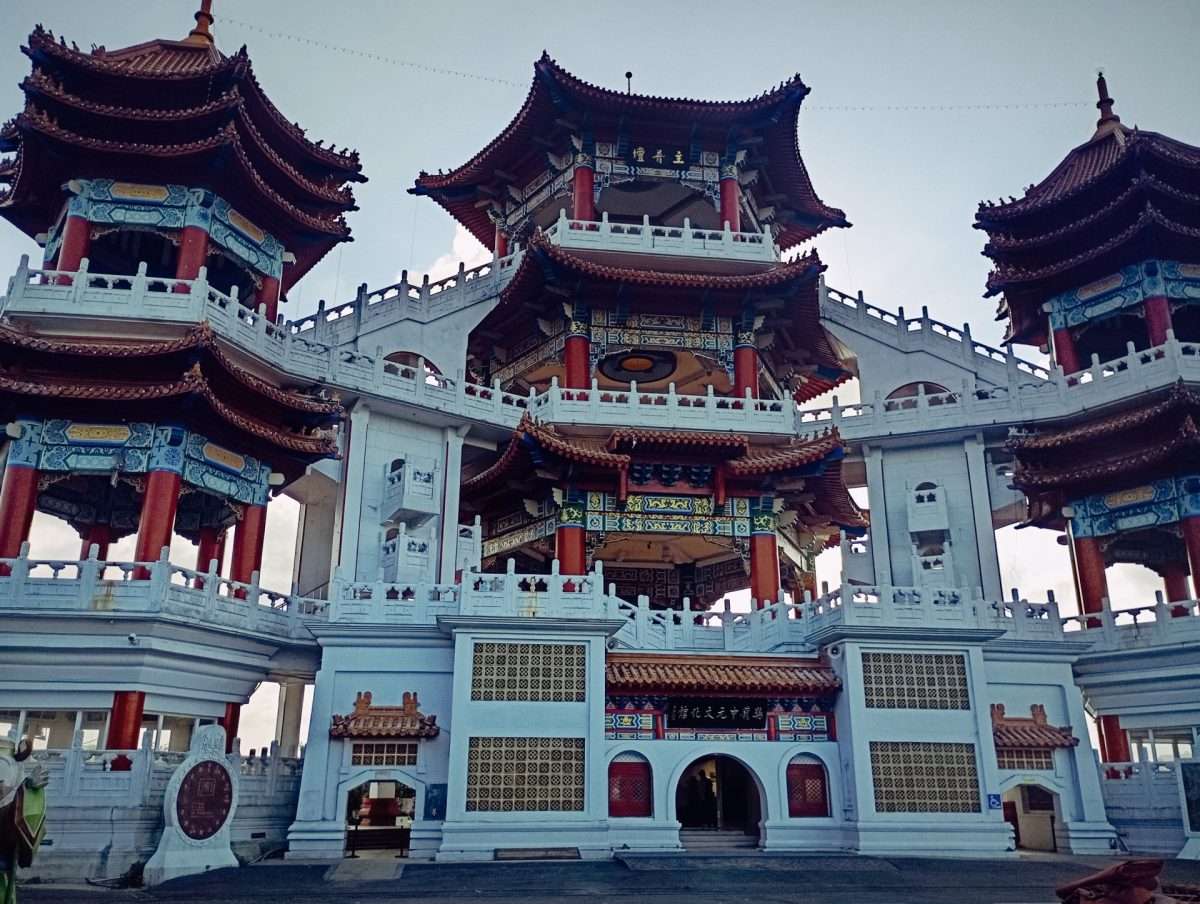
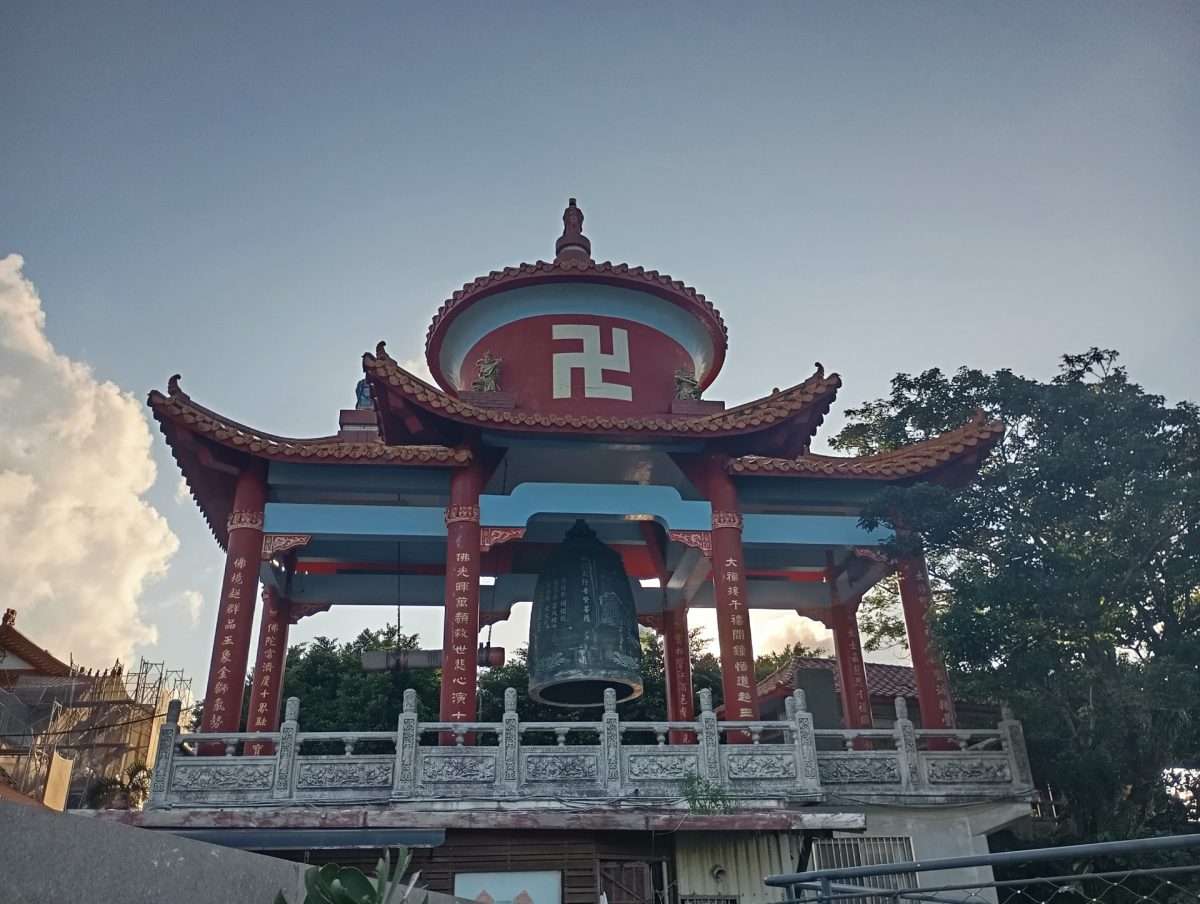
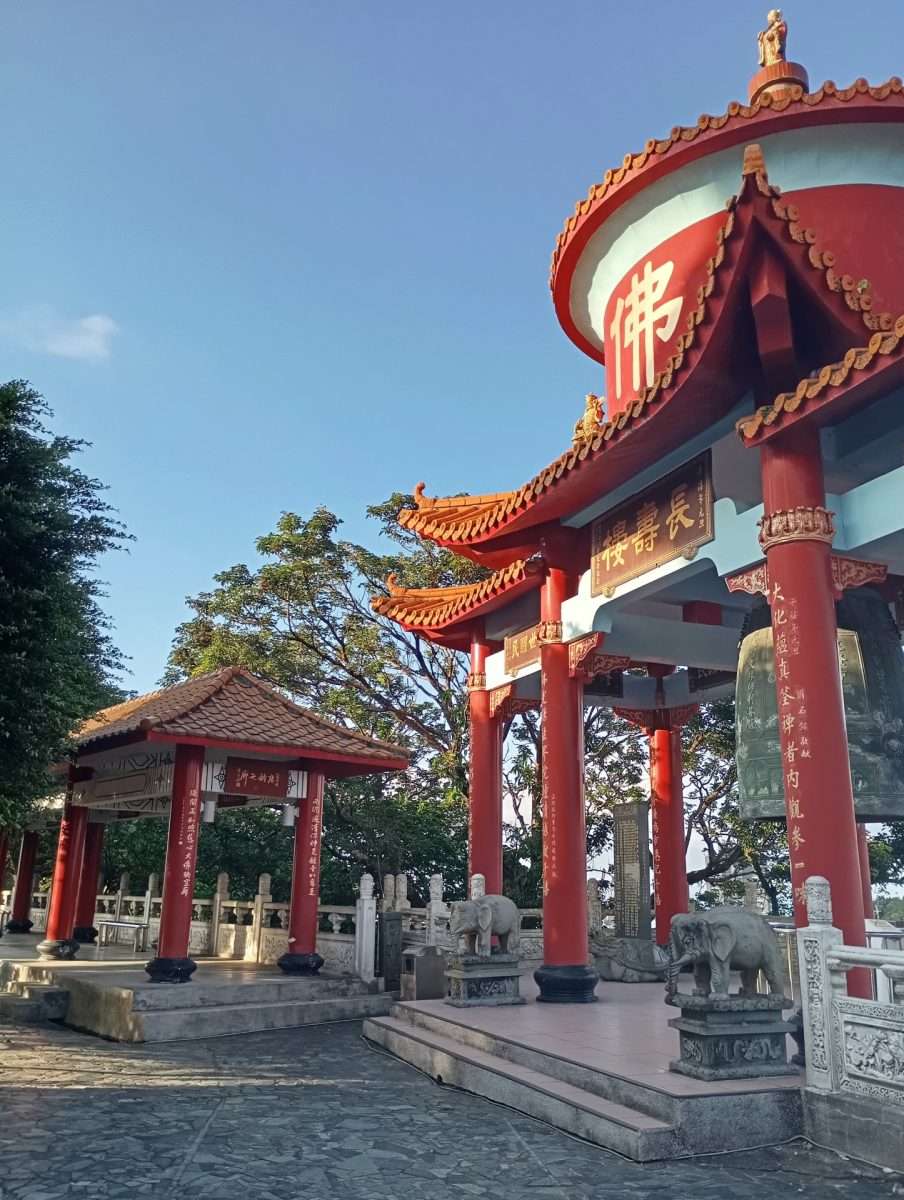
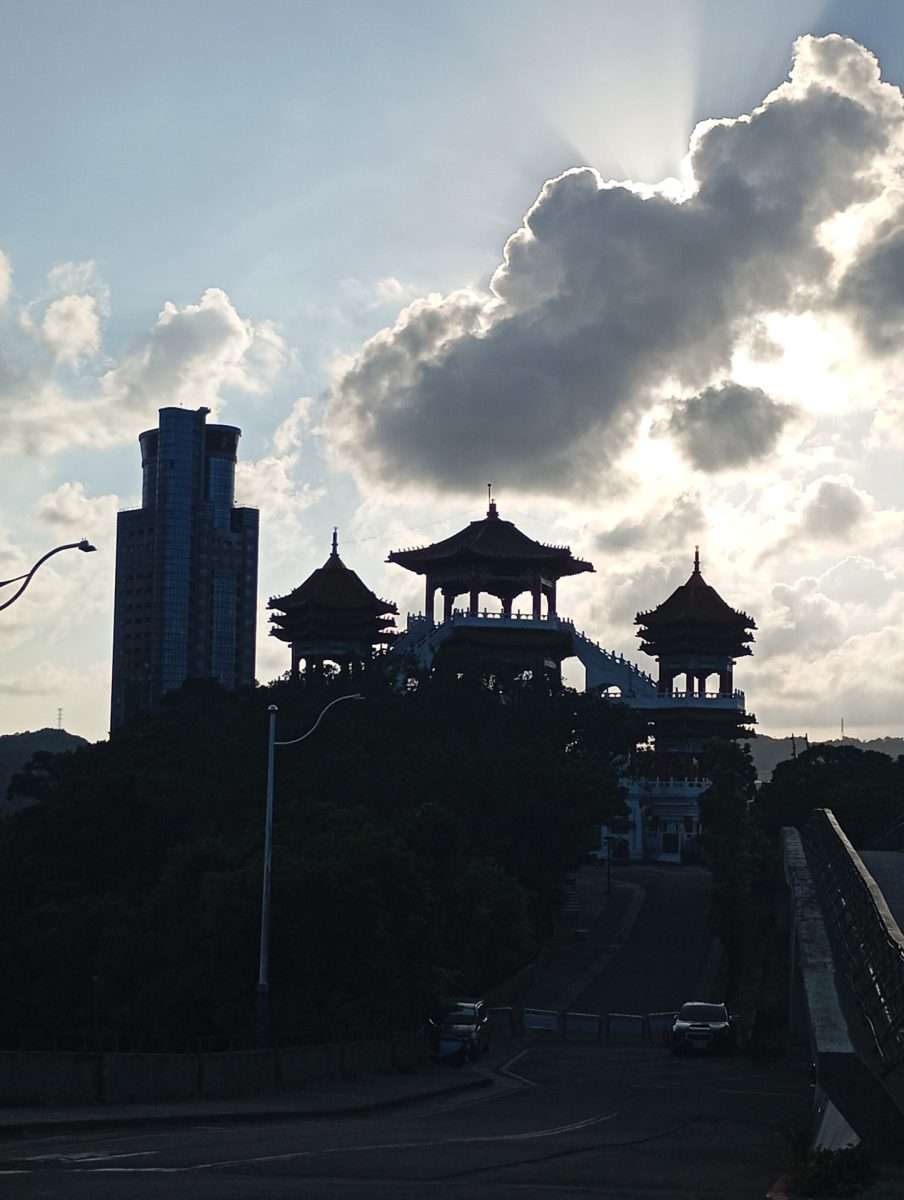
From Zhuputan, continue walking through the park toward the upper section and you will eventually reach the Big Buddha Zen Temple area.
Location: No. 17, Shoushan Road, inside Zhongzheng Park. View Big Buddha Temple on Google Maps
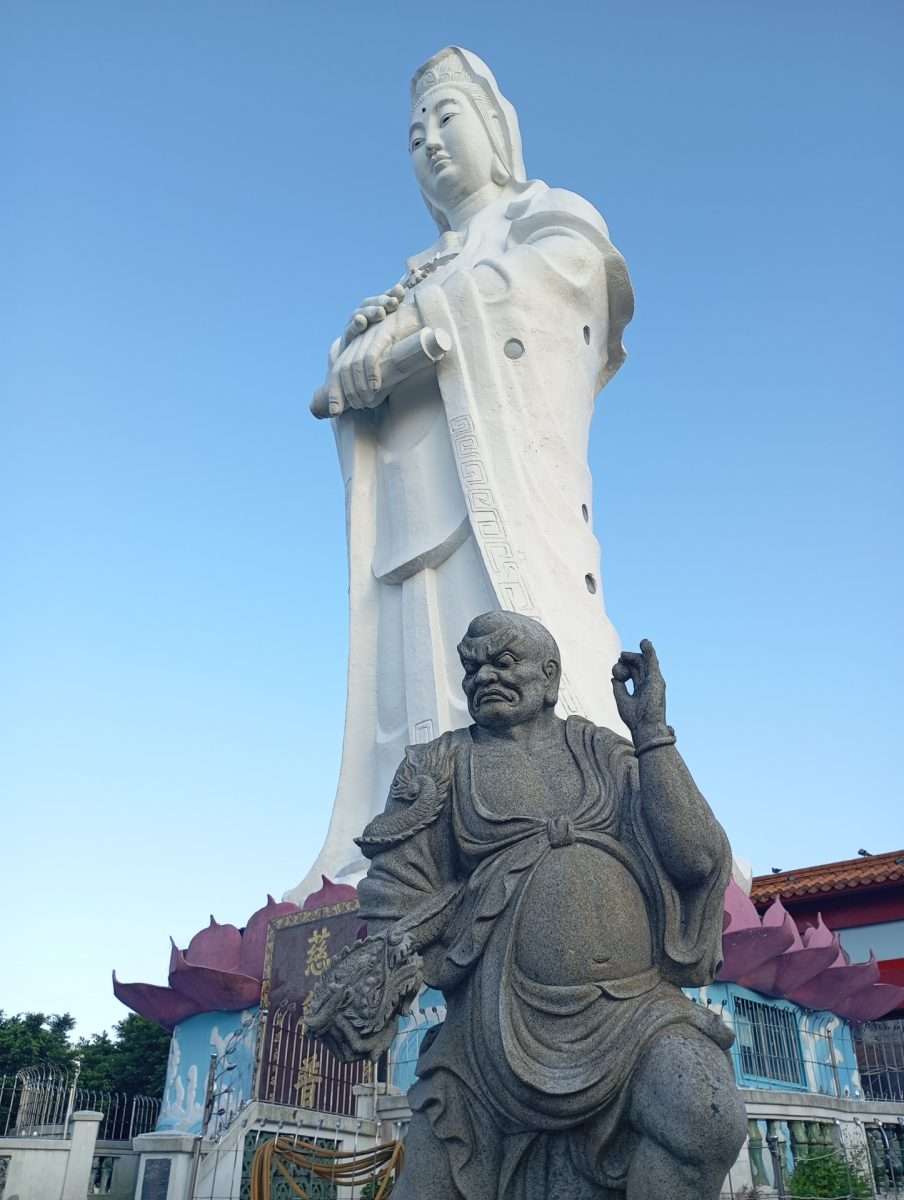
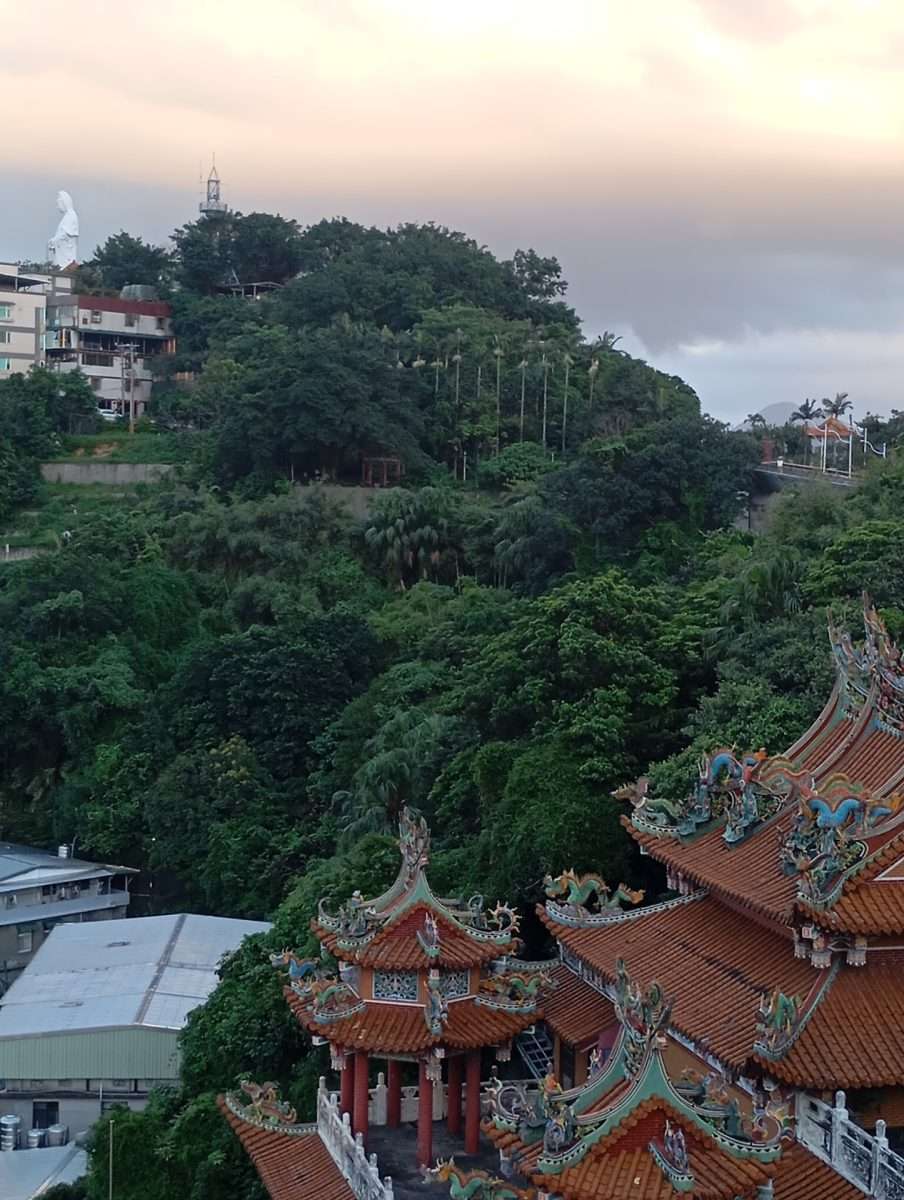
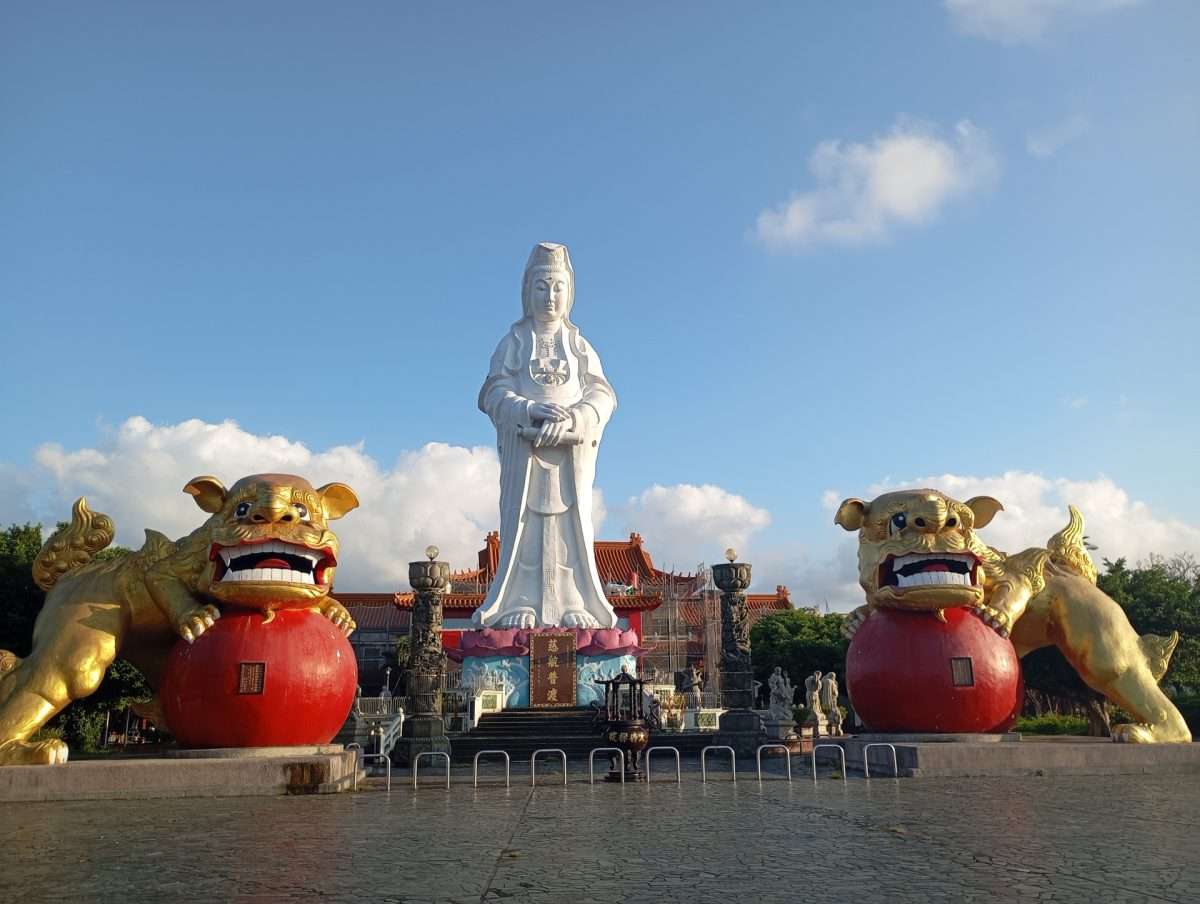
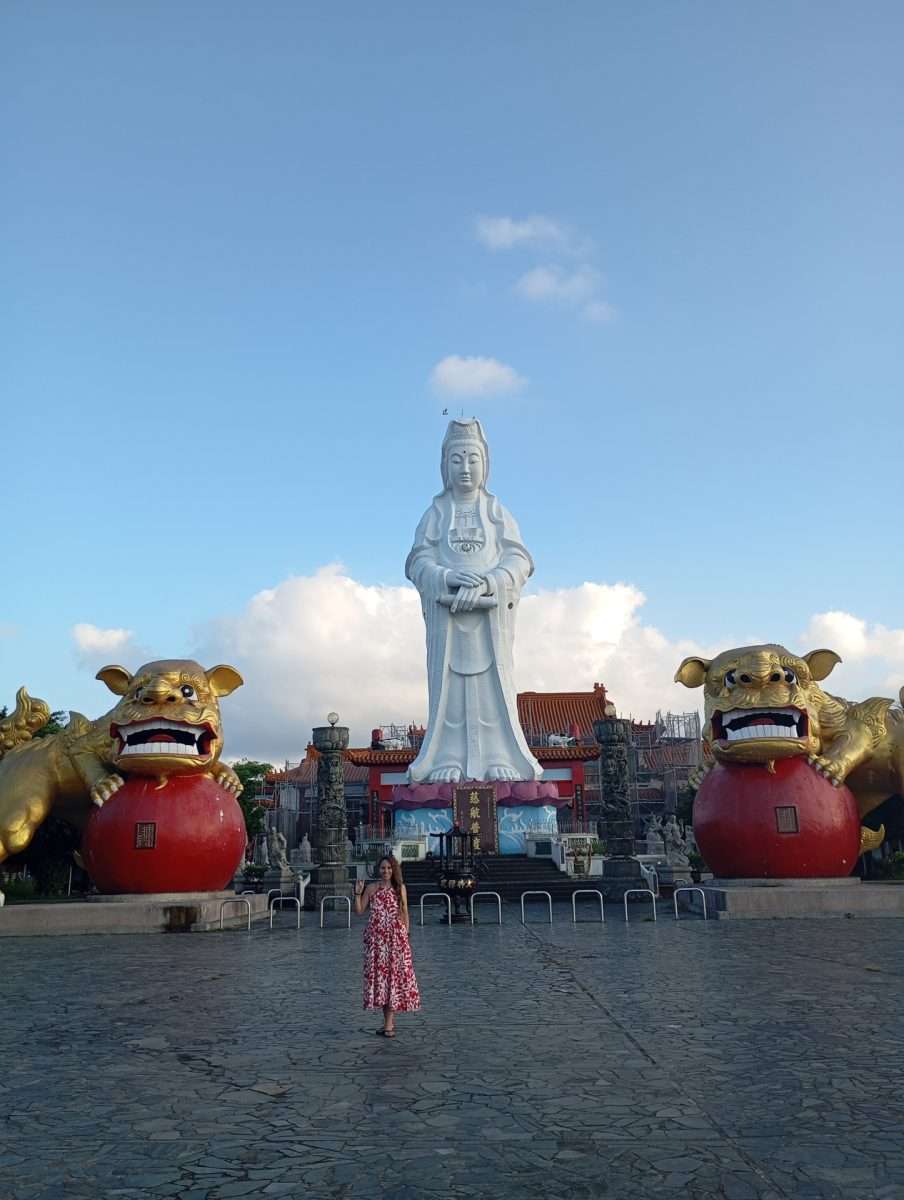
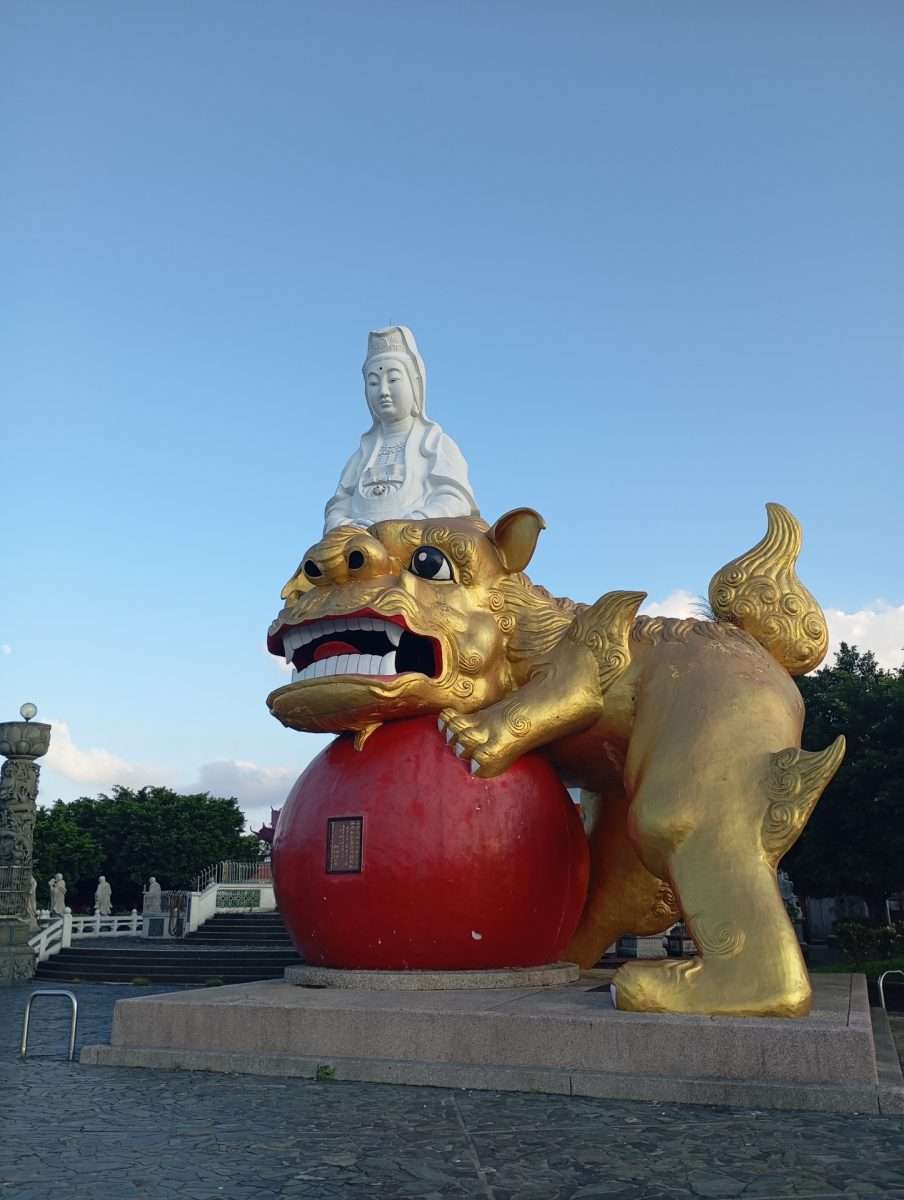
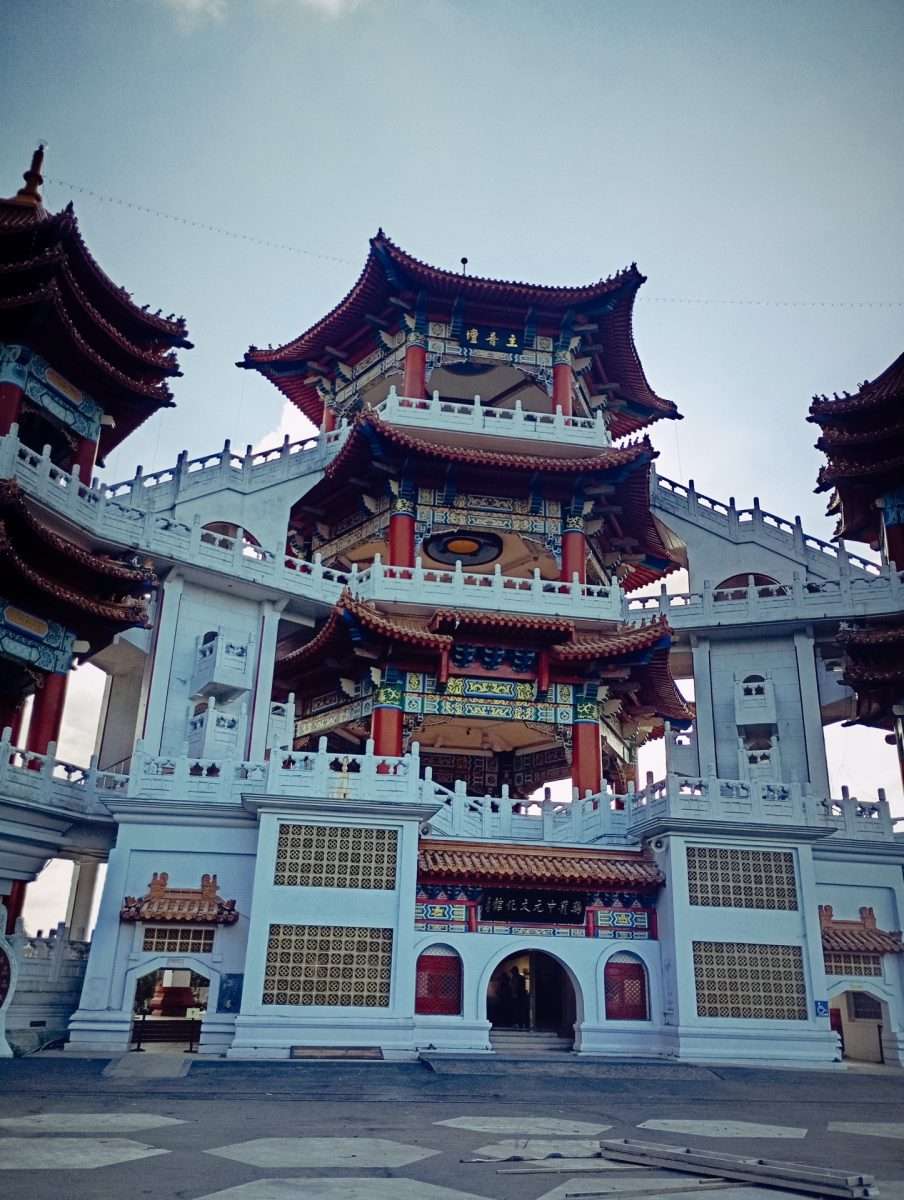
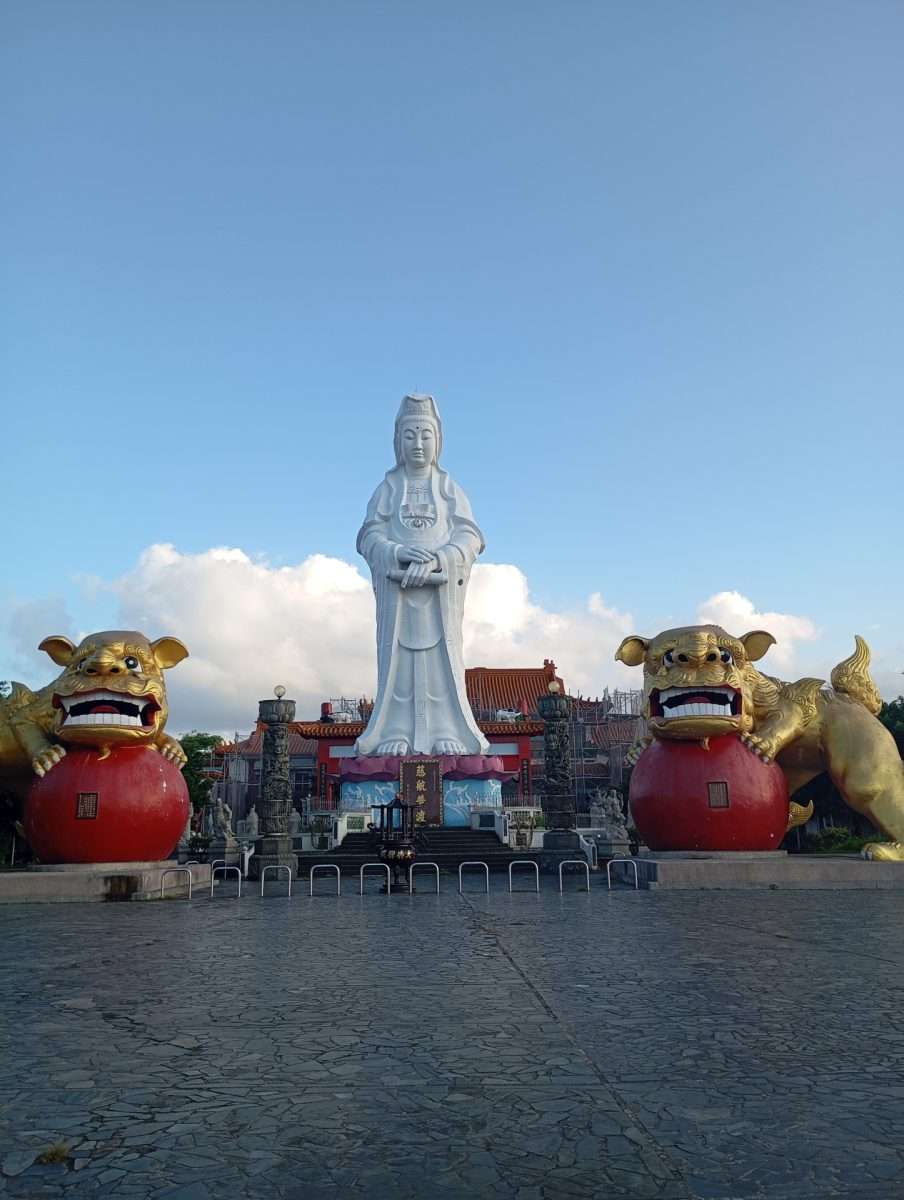
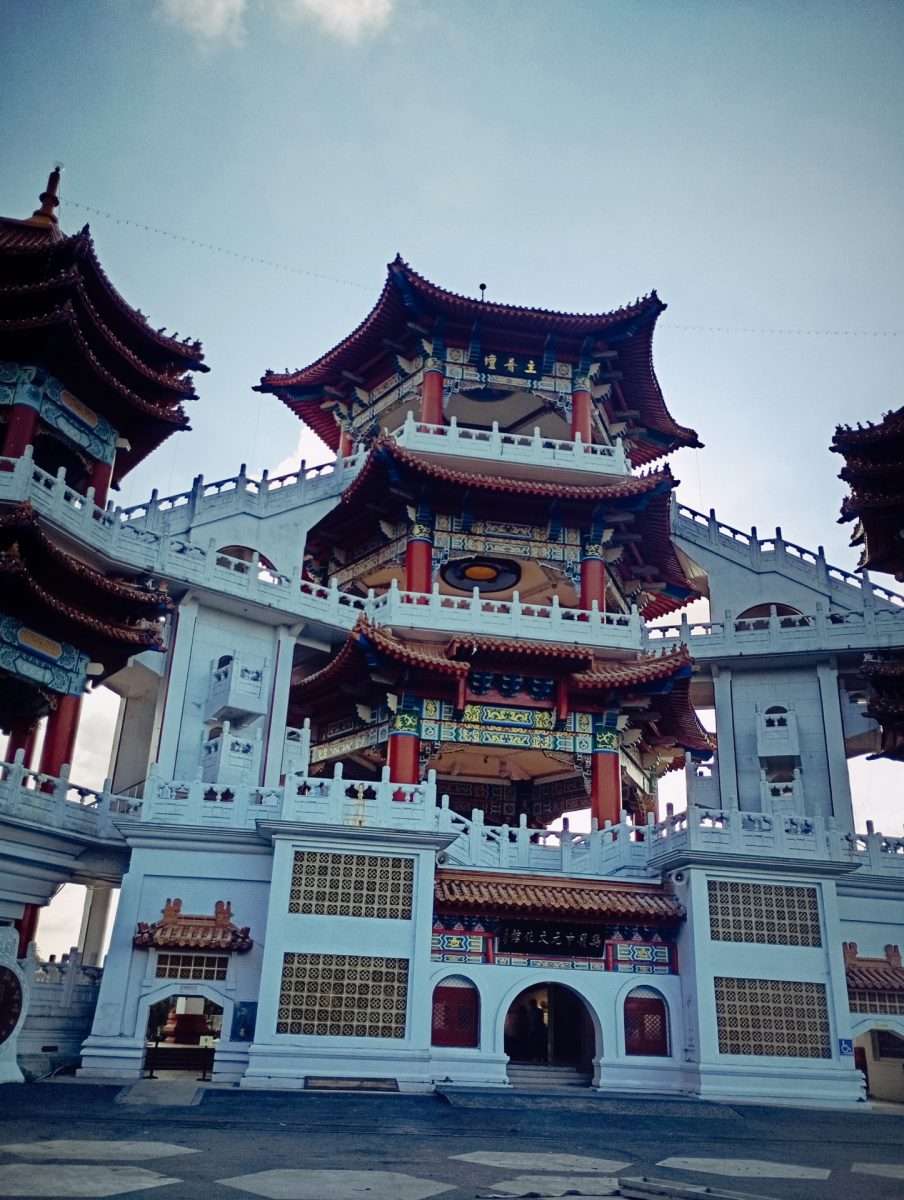
The temple sits in the upper part of Zhongzheng Park, and one of its most recognizable features is the large white statue of Guanyin, approximately 22.5 meters tall.
Guanyin is a bodhisattva associated with compassion and is also the temple’s principal figure.
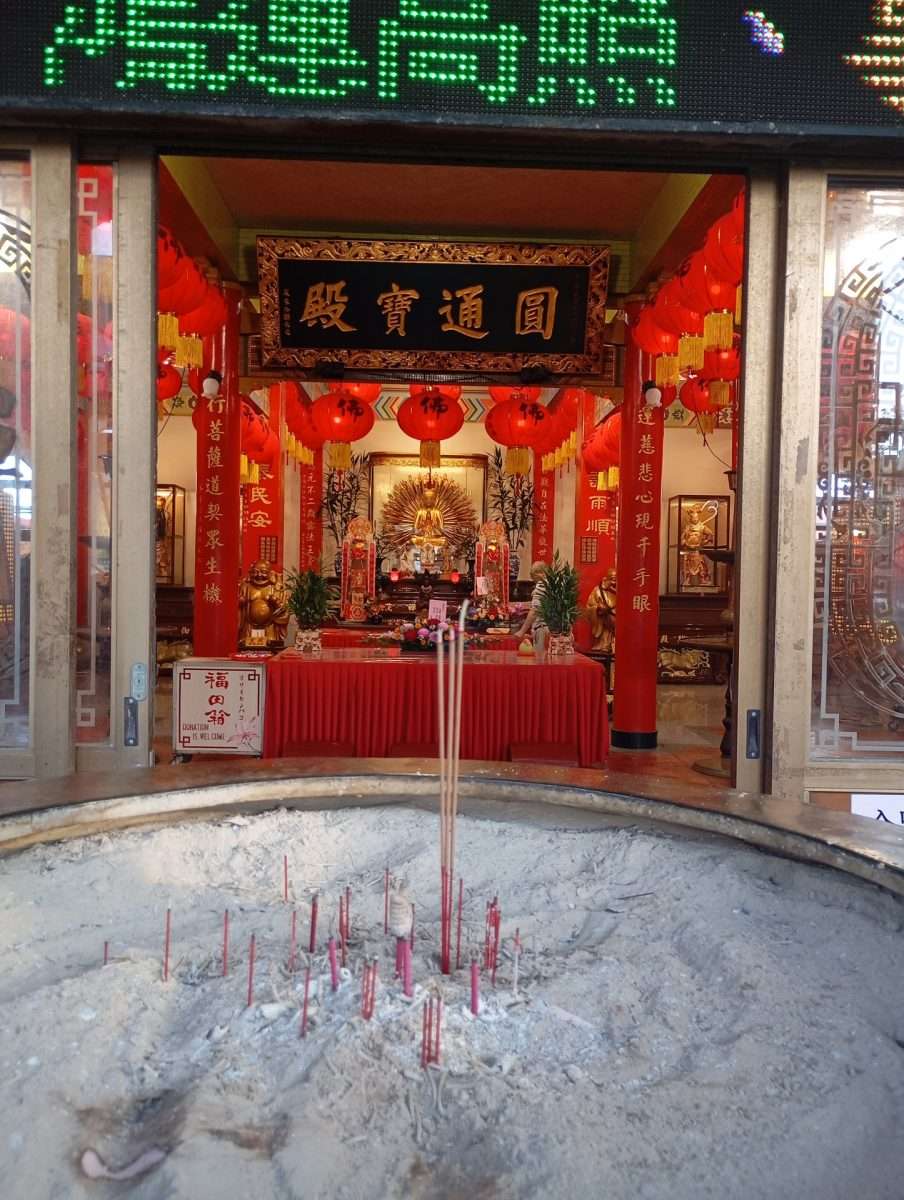
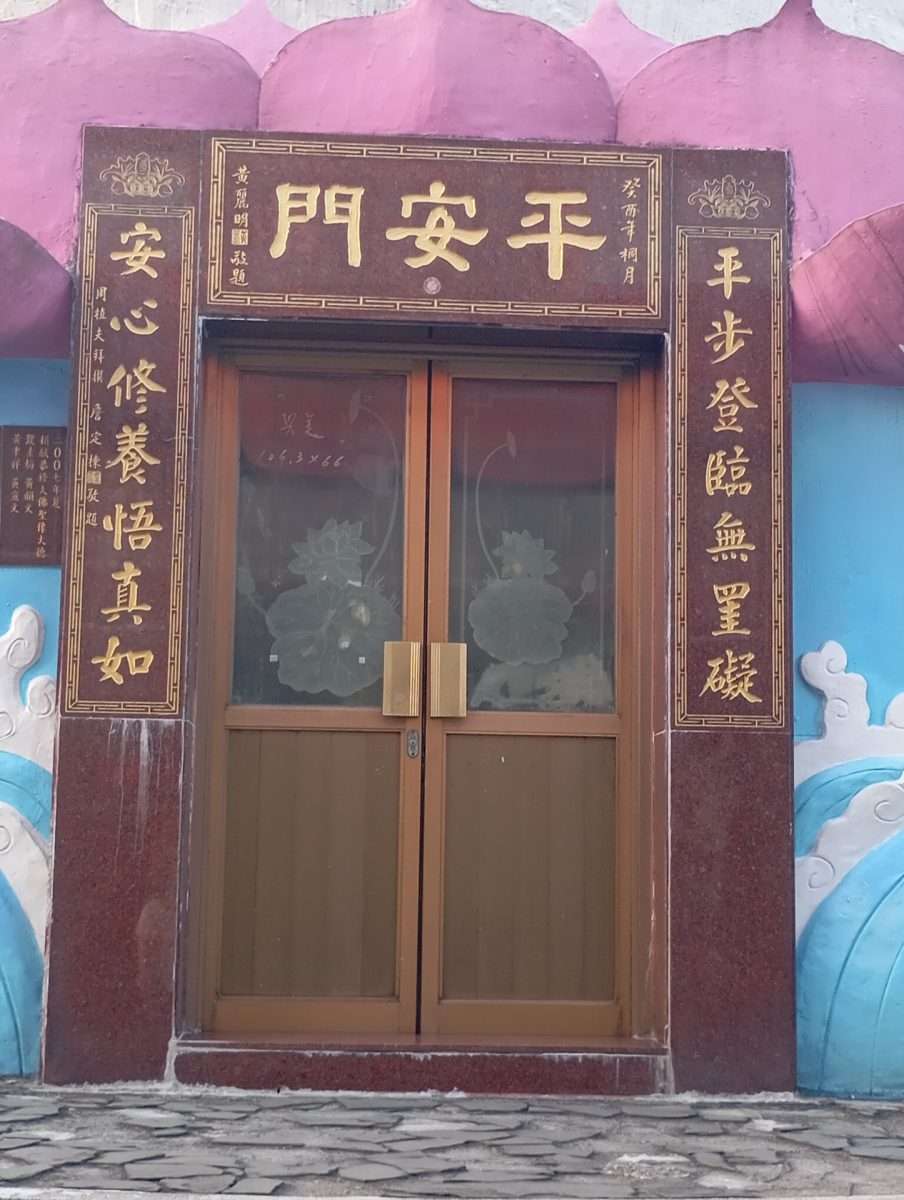
When you enter Yuantong Hall, this relationship becomes even clearer: the interior contains a representation of Guanyin with a thousand arms and a thousand eyes, one of the best-known forms of this figure within the Buddhist tradition.
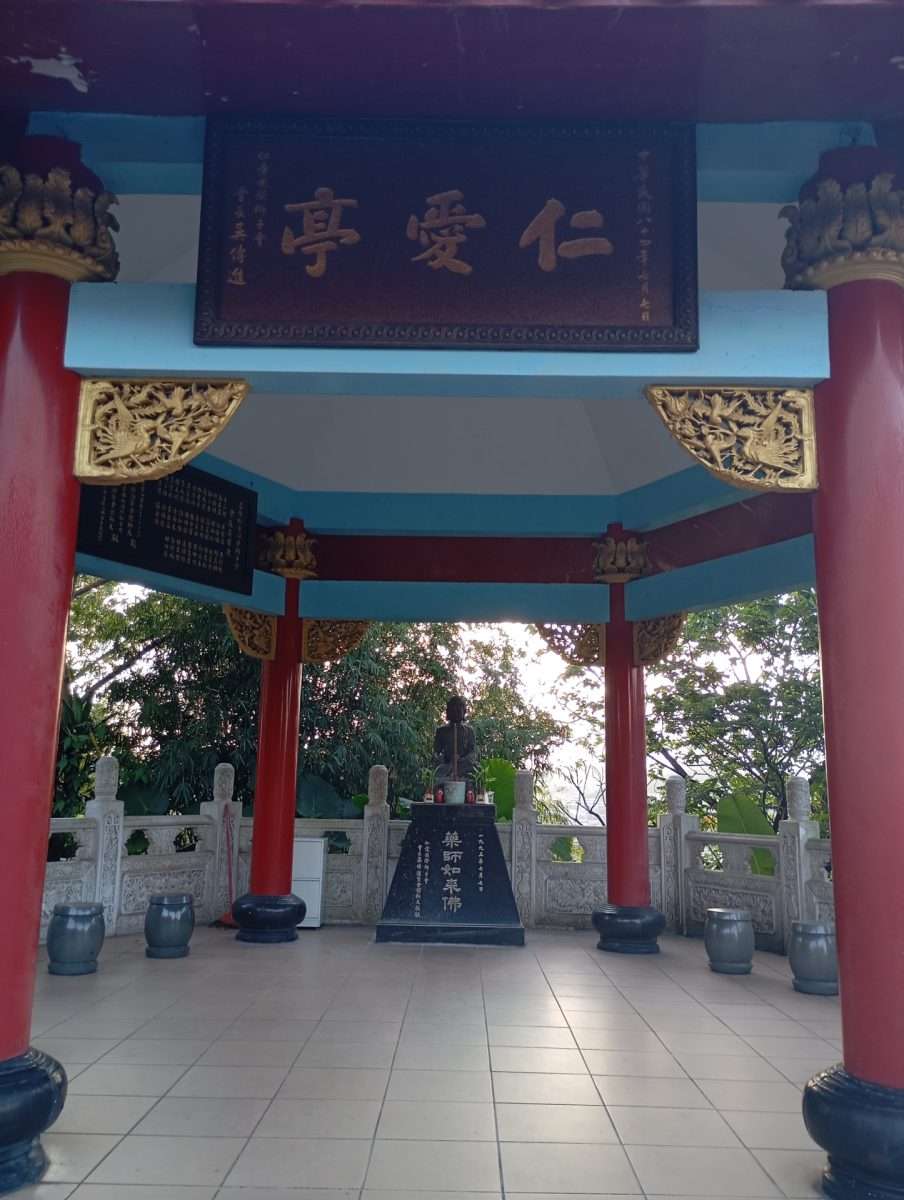
On the upper floor is Mahavira Hall. At the central altar is Gautama Buddha, the historical Buddha, generally accompanied by the Buddhas of the Three Worlds, including Amitabha Buddha and the Medicine Buddha. This is the main space used by the monks for daily chanting and prayers.
The great white statue of Guanyin was inaugurated in 1969 at the highest point of Zhongzheng Park. Its location facing the coast is not accidental. It was built looking directly toward the ocean to act as a kind of “protective lighthouse” for ships and sailors entering Keelung Harbor.
At the time of its construction, it was the tallest Buddhist statue in Taiwan.
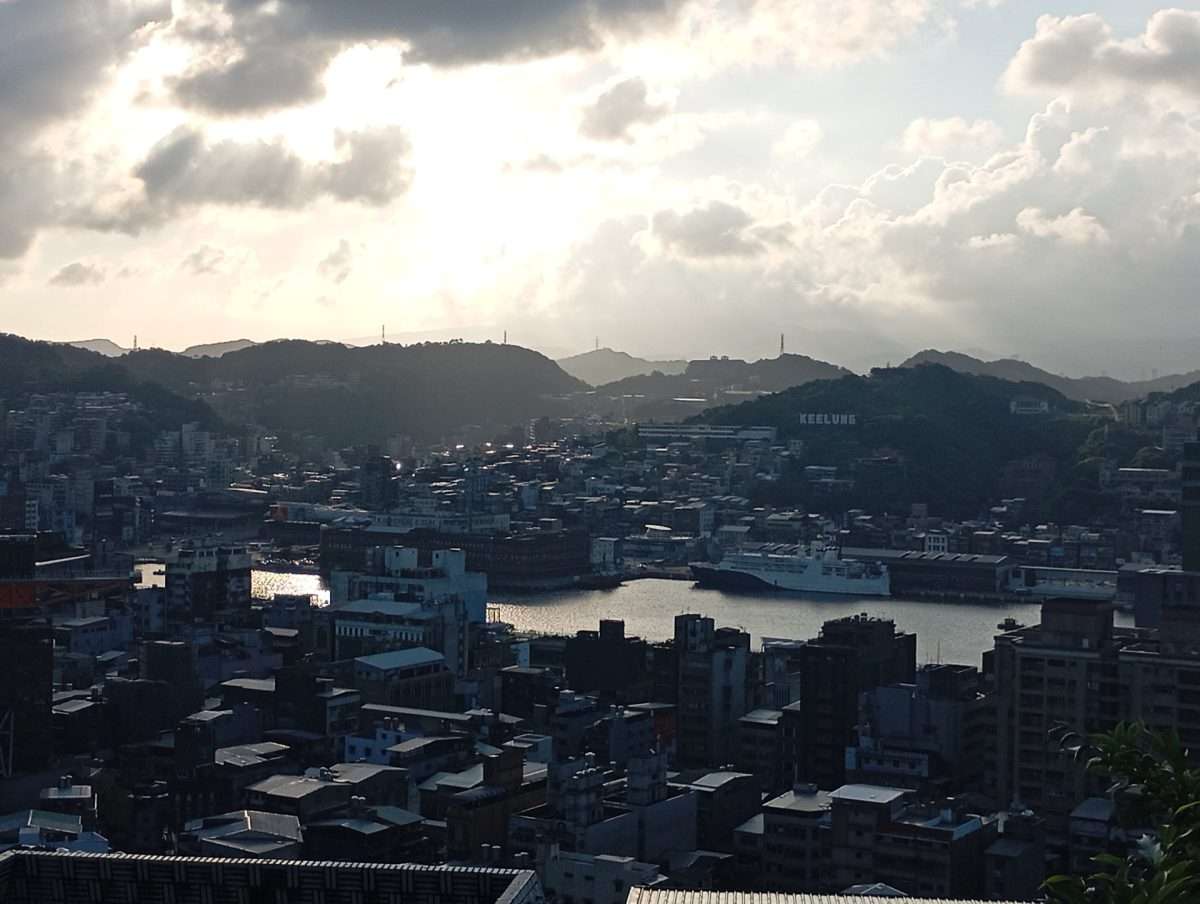
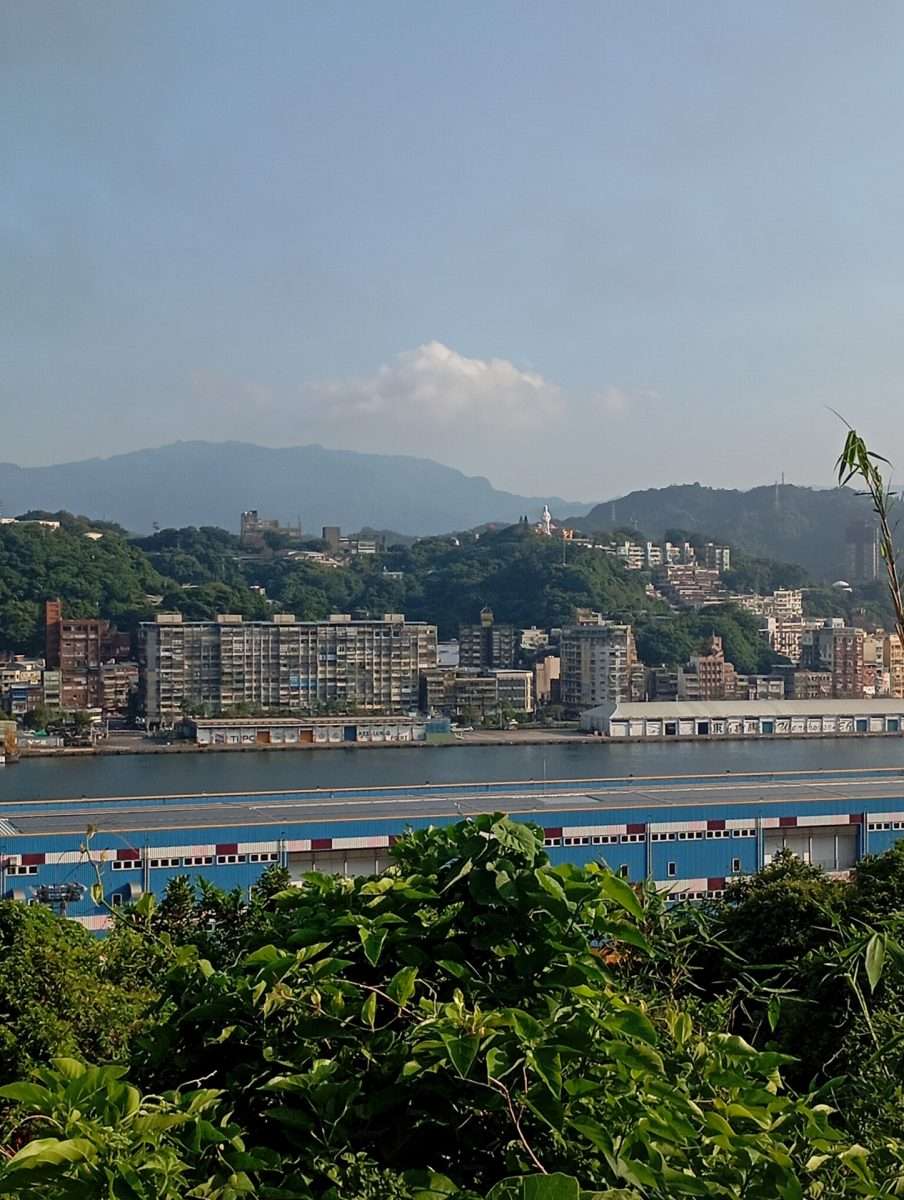
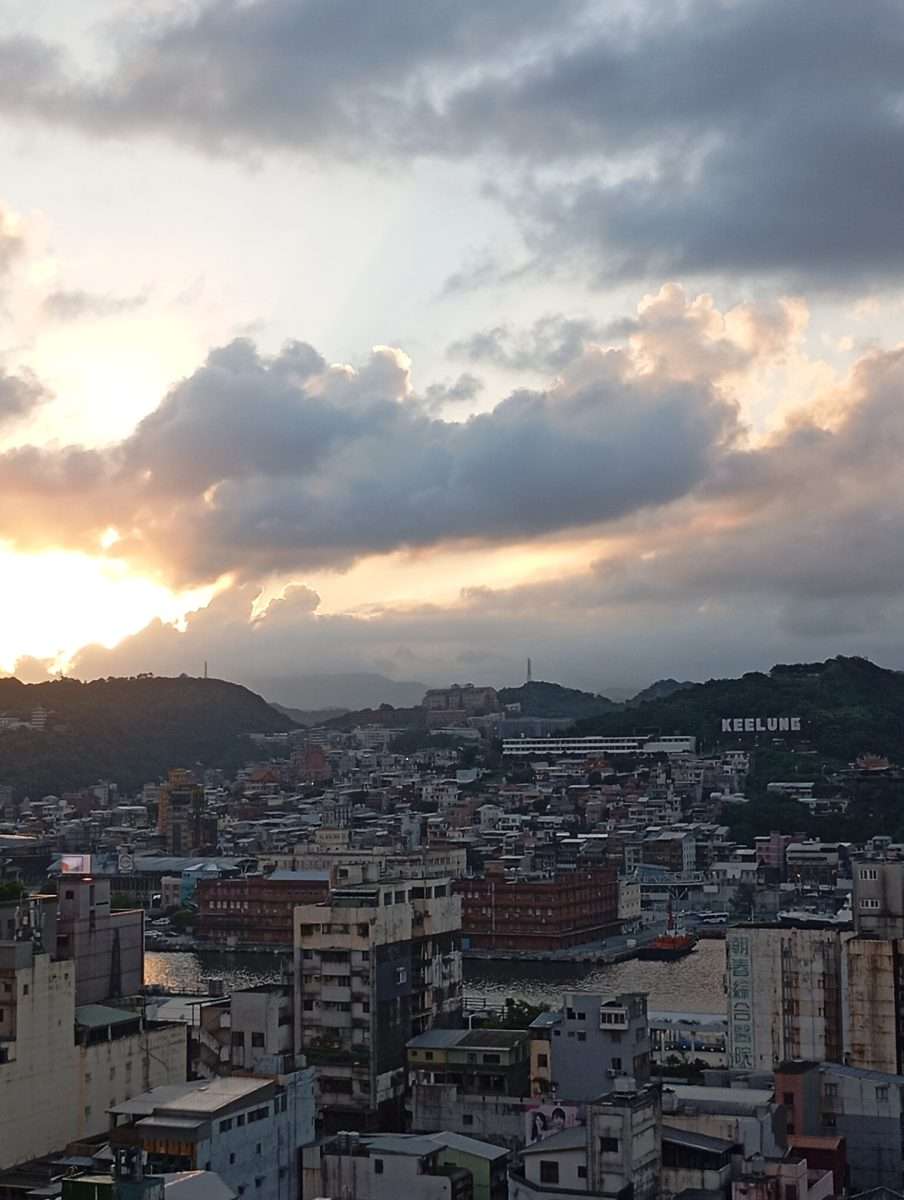
From here, you also have one of the best opportunities on the route to look at Keelung from above. From this height, the harbor appears again, along with the streets and mountains.
And now you can recognize something we saw in the first article: the geography of Keelung is also part of its religious history. The city we previously explained through its history now appears literally in front of you.
From this point onward, you will start finding elements that appear again in the temples that follow. You do not need to memorize everything, just learn to recognize a few things.
Incense
This will probably be one of the first things you notice.
Incense is not there simply to make the temple smell pleasant. In many Taiwanese religious practices, it functions as an offering and as a ritual means of communicating with a deity.
That is why you may see people lighting several sticks, pausing in front of different altars, and then placing them in the appropriate burners.
5. Going down: a different route
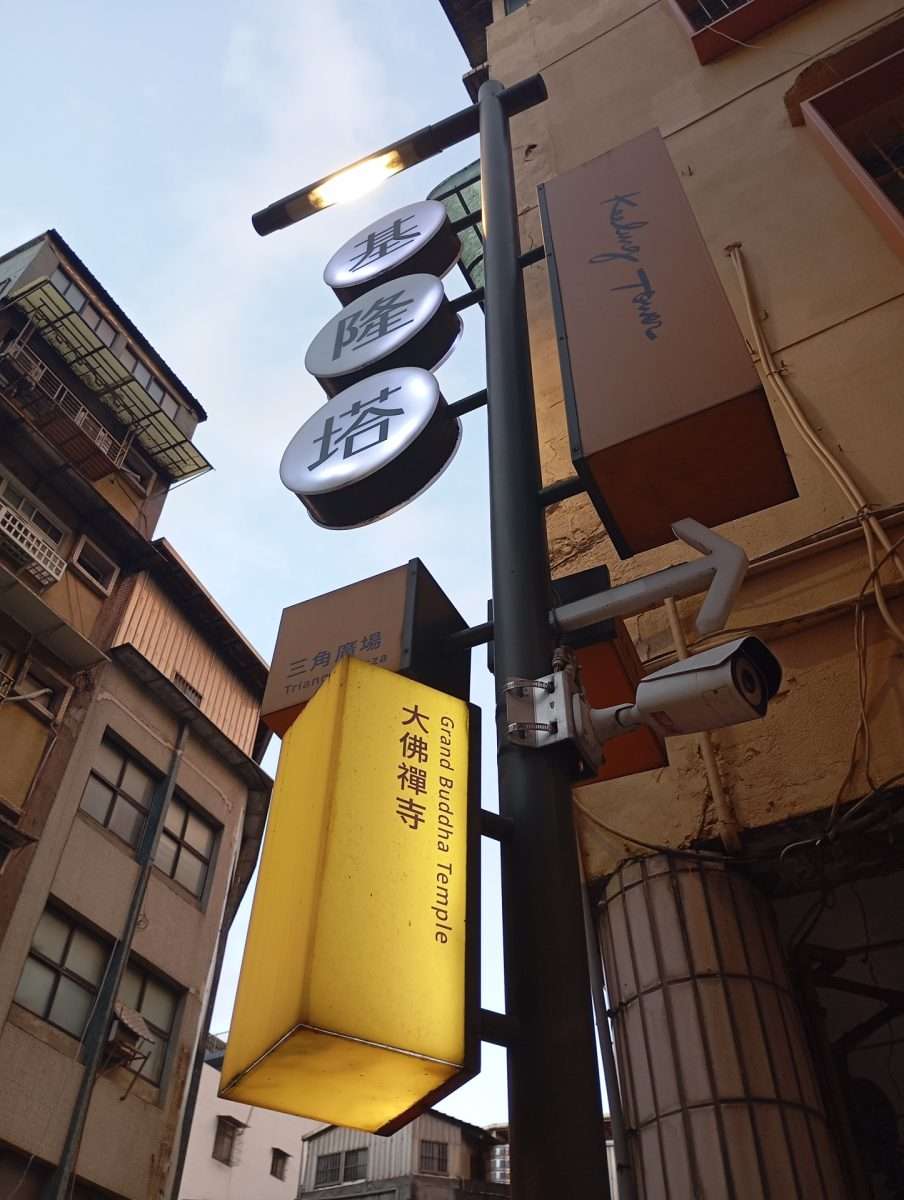
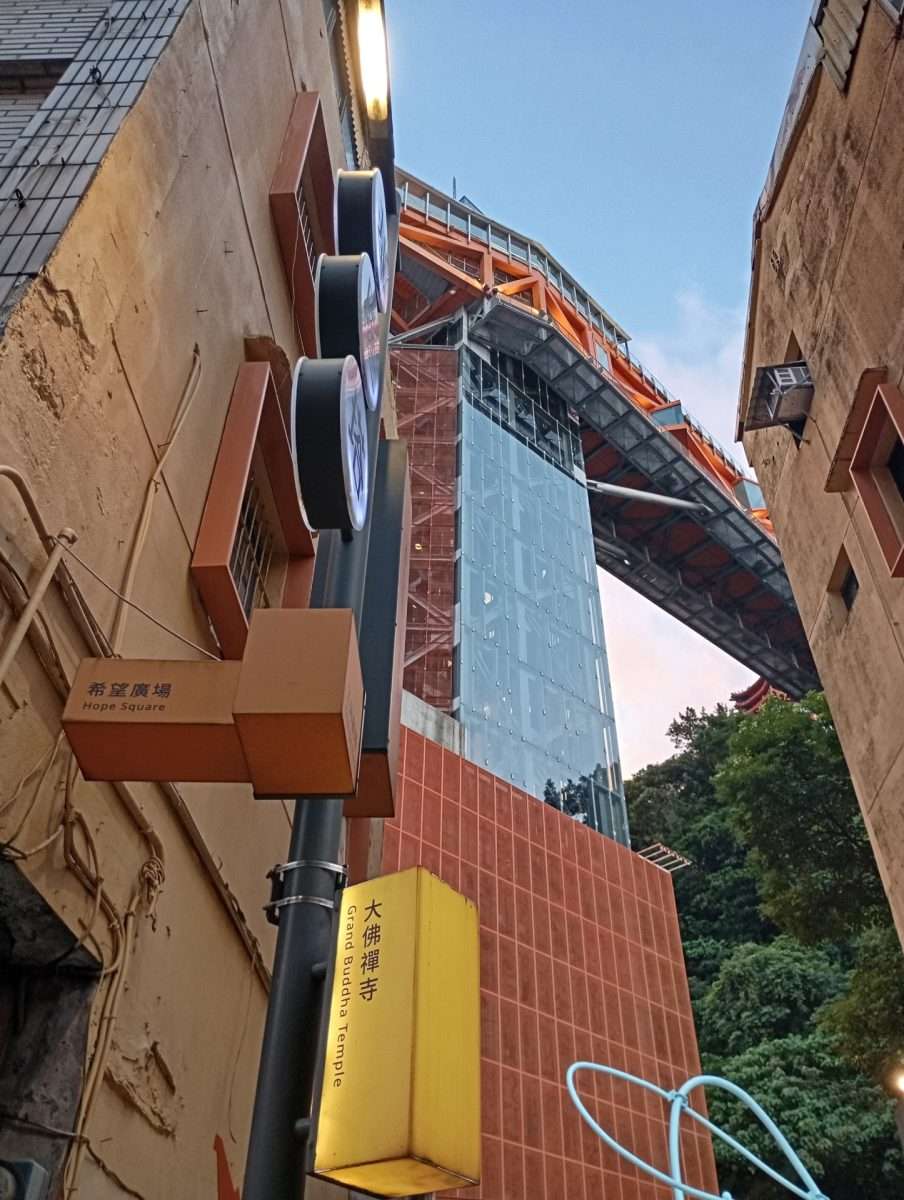
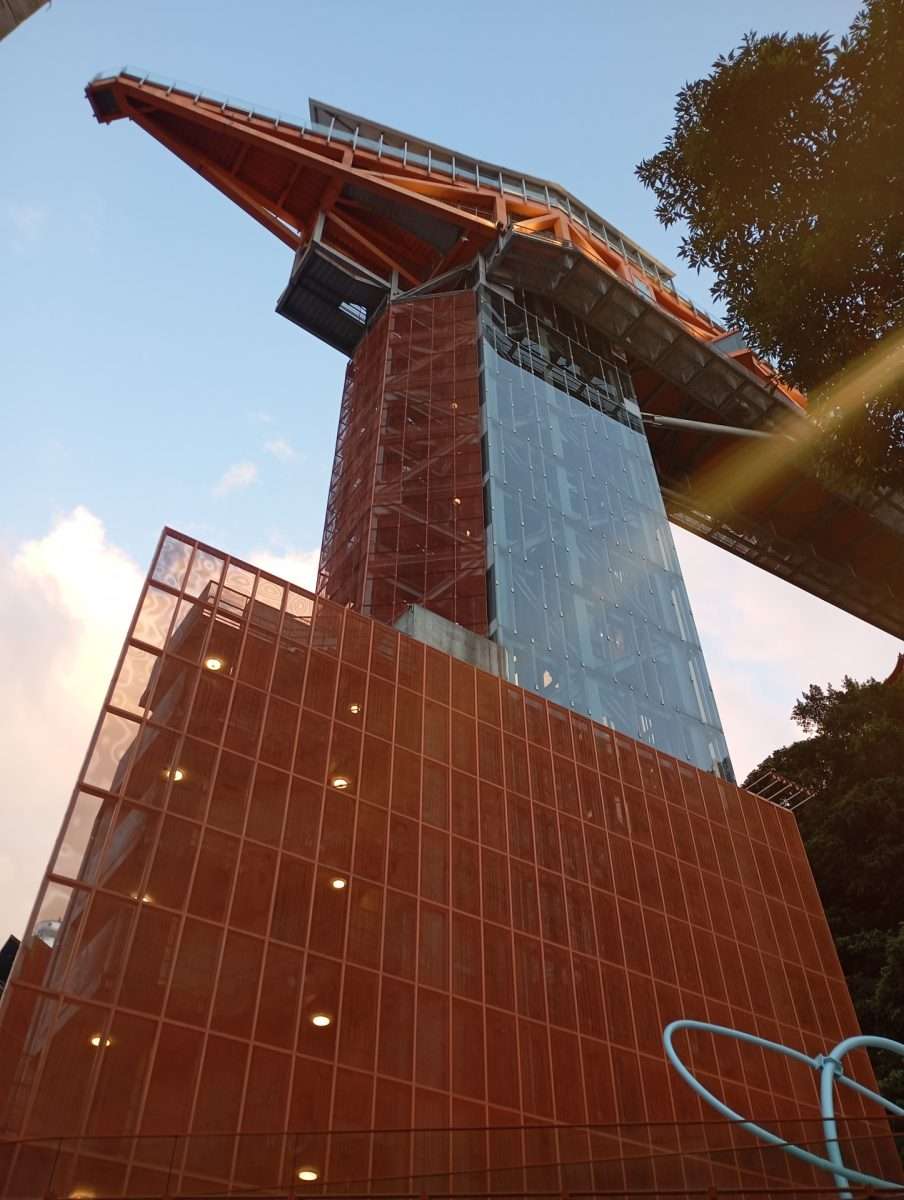
After visiting the Big Buddha, instead of going directly back down the same way, you can return toward the Zhuputan area and use Keelung Tower to descend toward the city. View Keelung Tower on Google Maps
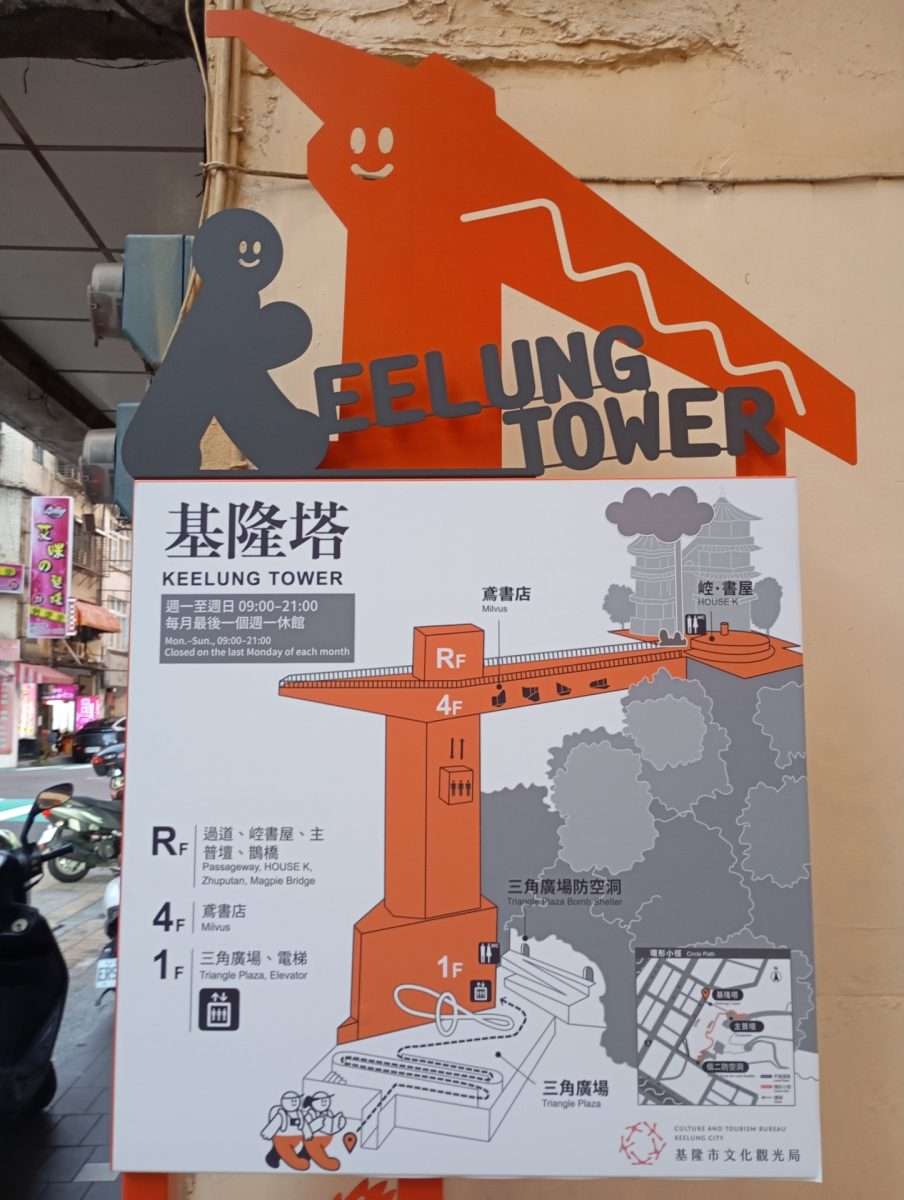
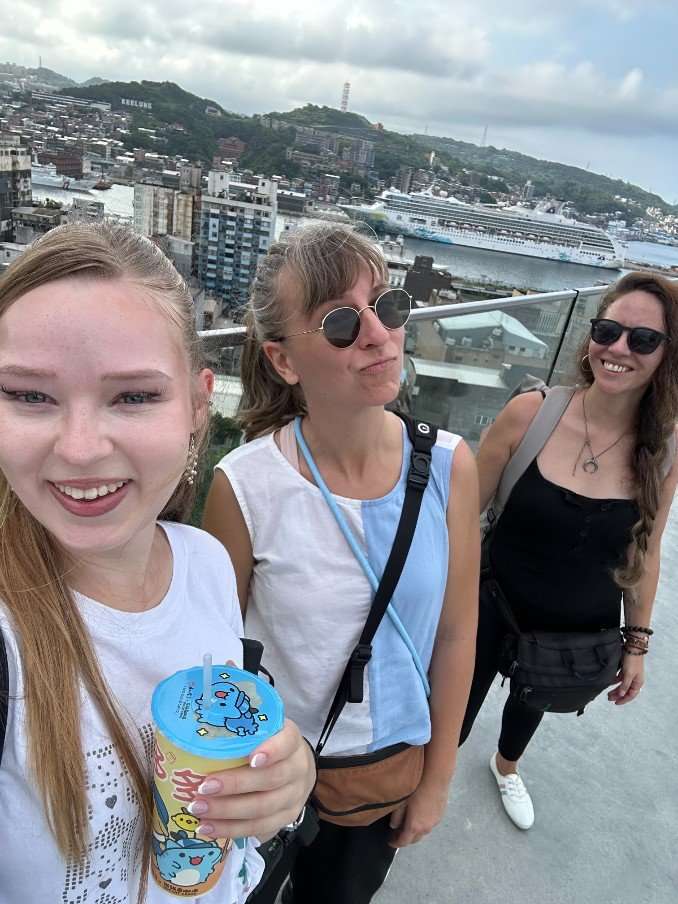
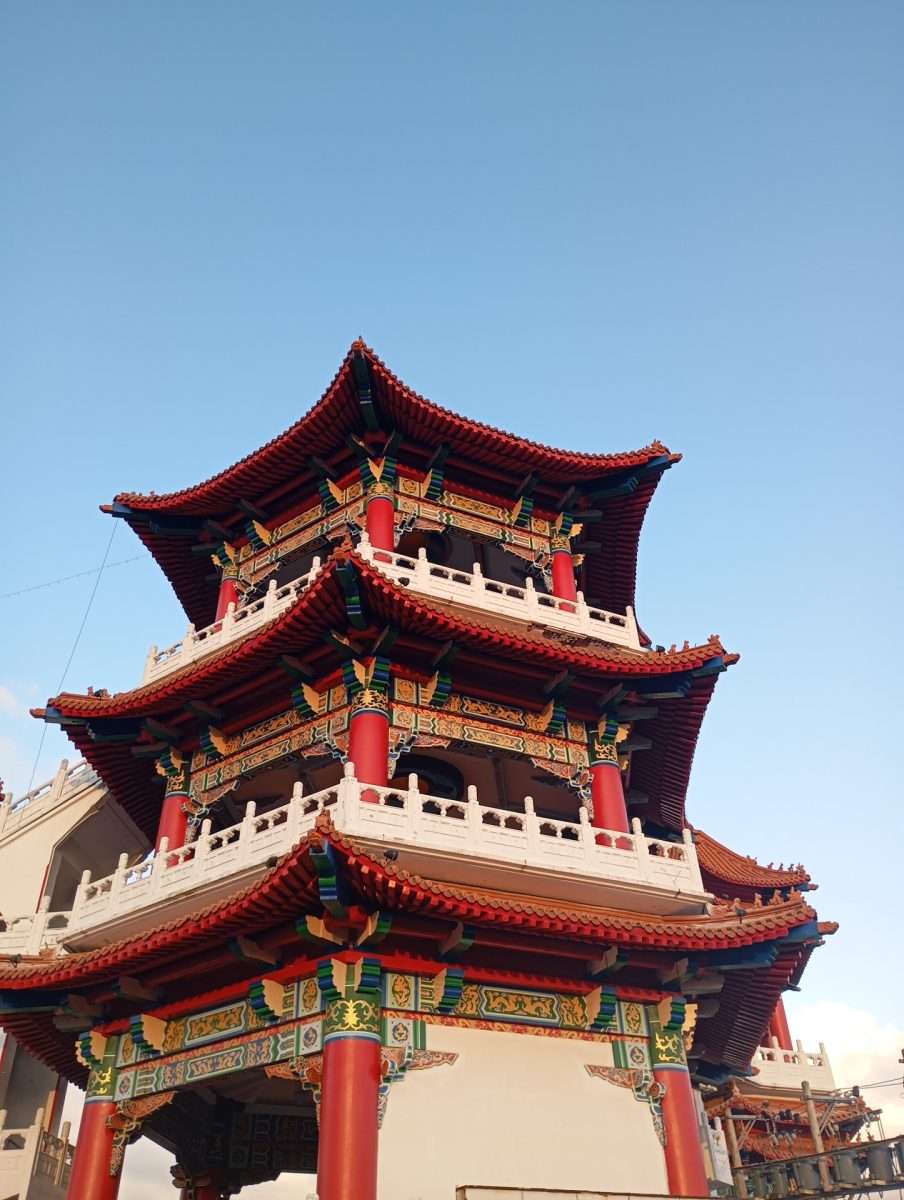
Keelung Tower is a vertical connection linking the streets of lower Keelung with the area behind Zhuputan. In addition to making movement easier, it has become a new viewpoint overlooking the city and the harbor.
Current opening hours: Tuesday to Sunday, 10:00–22:00; closed Mondays.
From here, the most urban part of the route begins.
We are no longer climbing toward the mountain.
Now we are heading down toward the harbor, commercial streets, and temples that grew alongside the city’s everyday life.
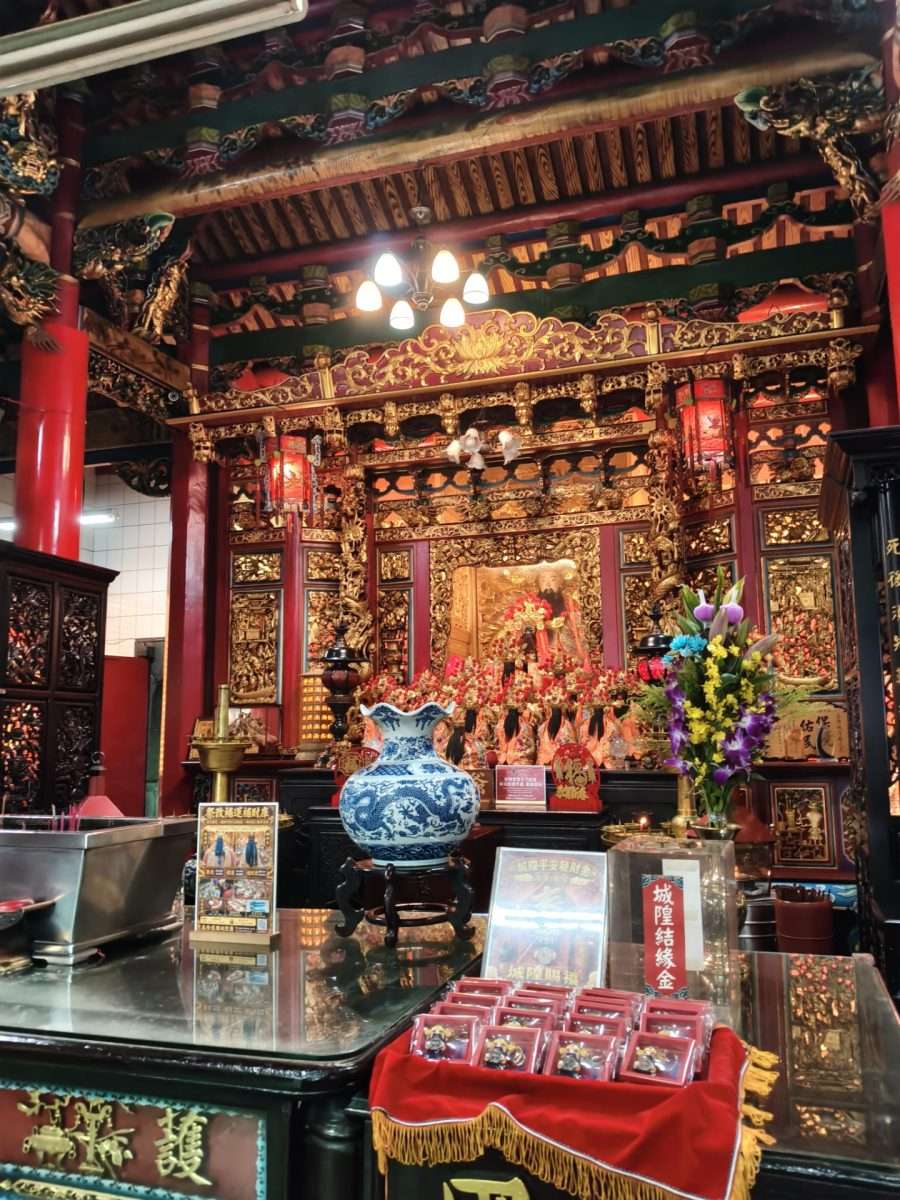
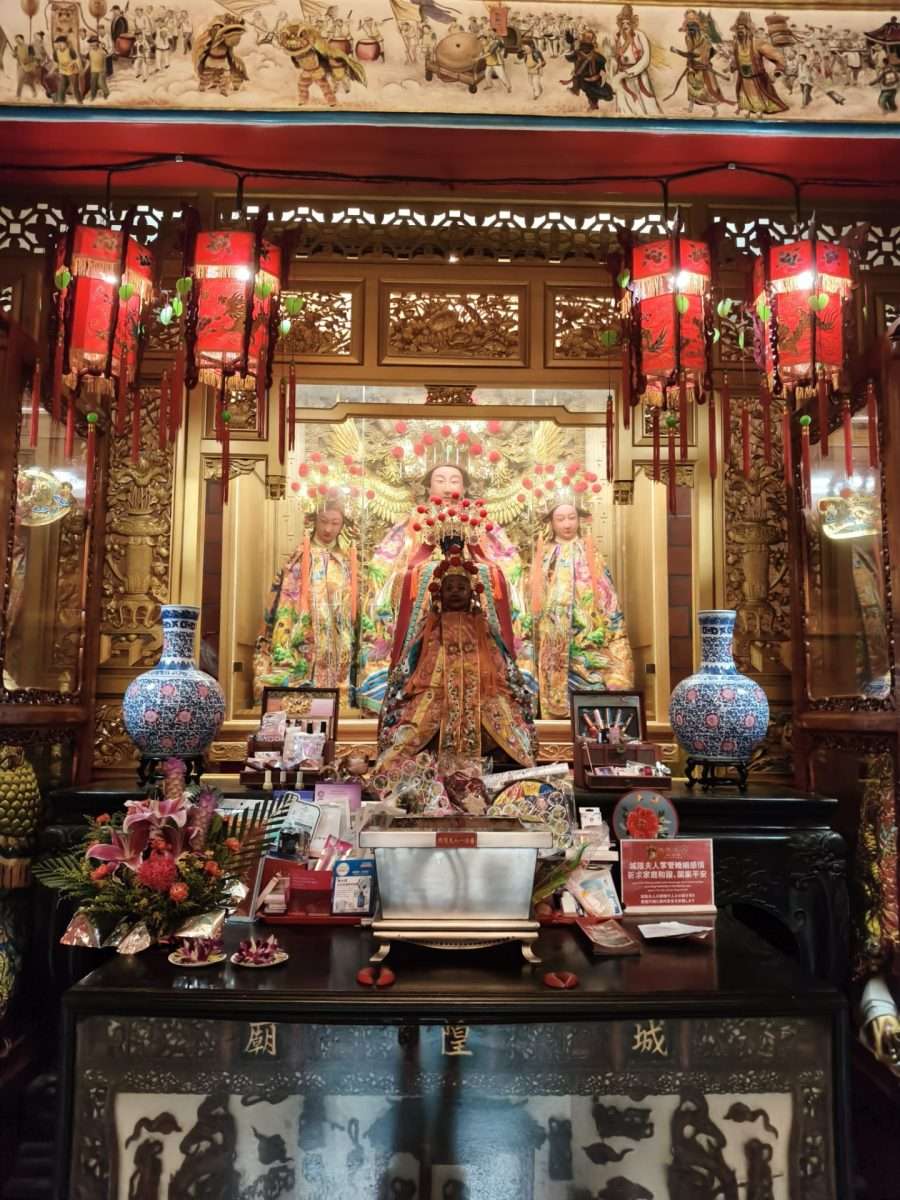
6. Chenghuang Temple: The Guardian of the City
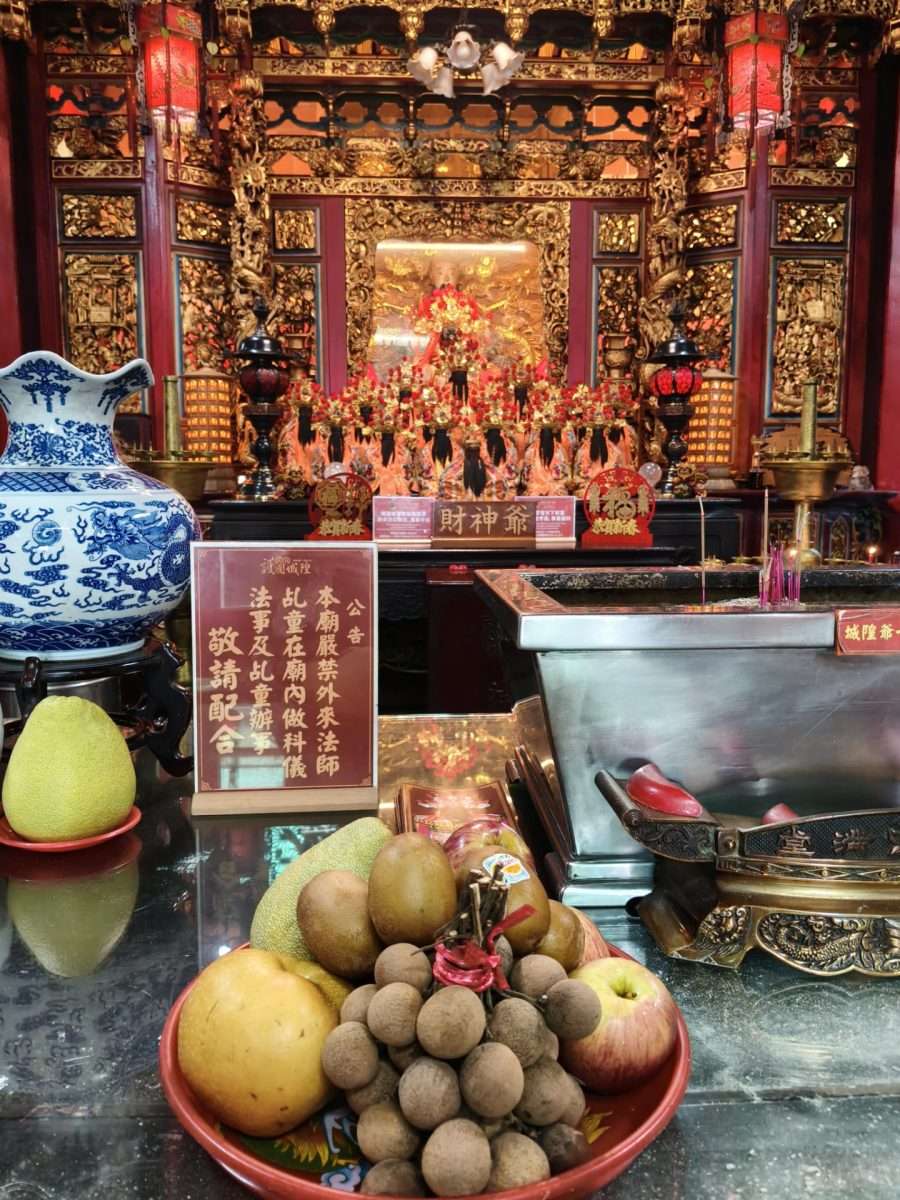
Location: No. 7, Zhongyi 1st Road, Ren’ai District. It is opposite the harbor area and very close to Maritime Plaza and Keelung Station. View Chenghuang Temple on Google Maps
Here we encounter a religious figure very different from the ones we have just seen.
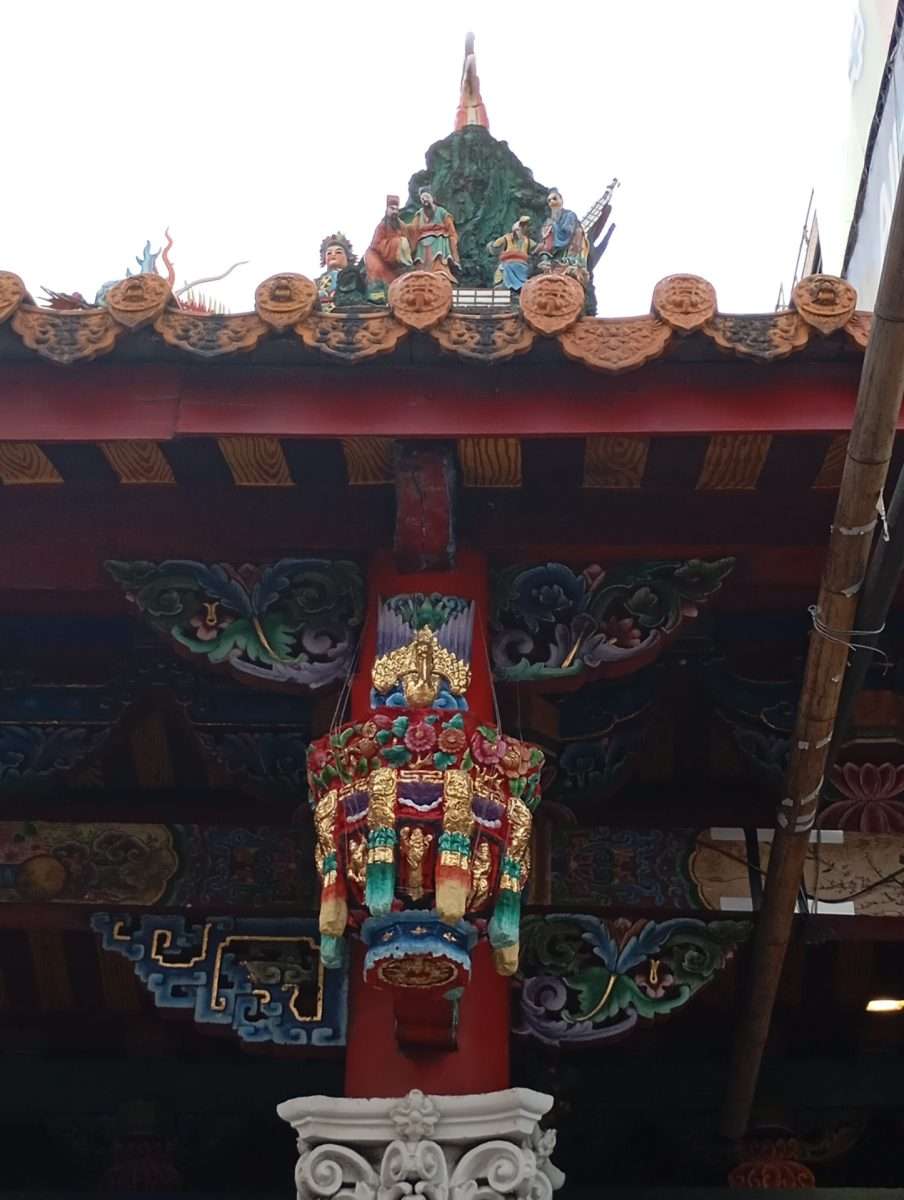
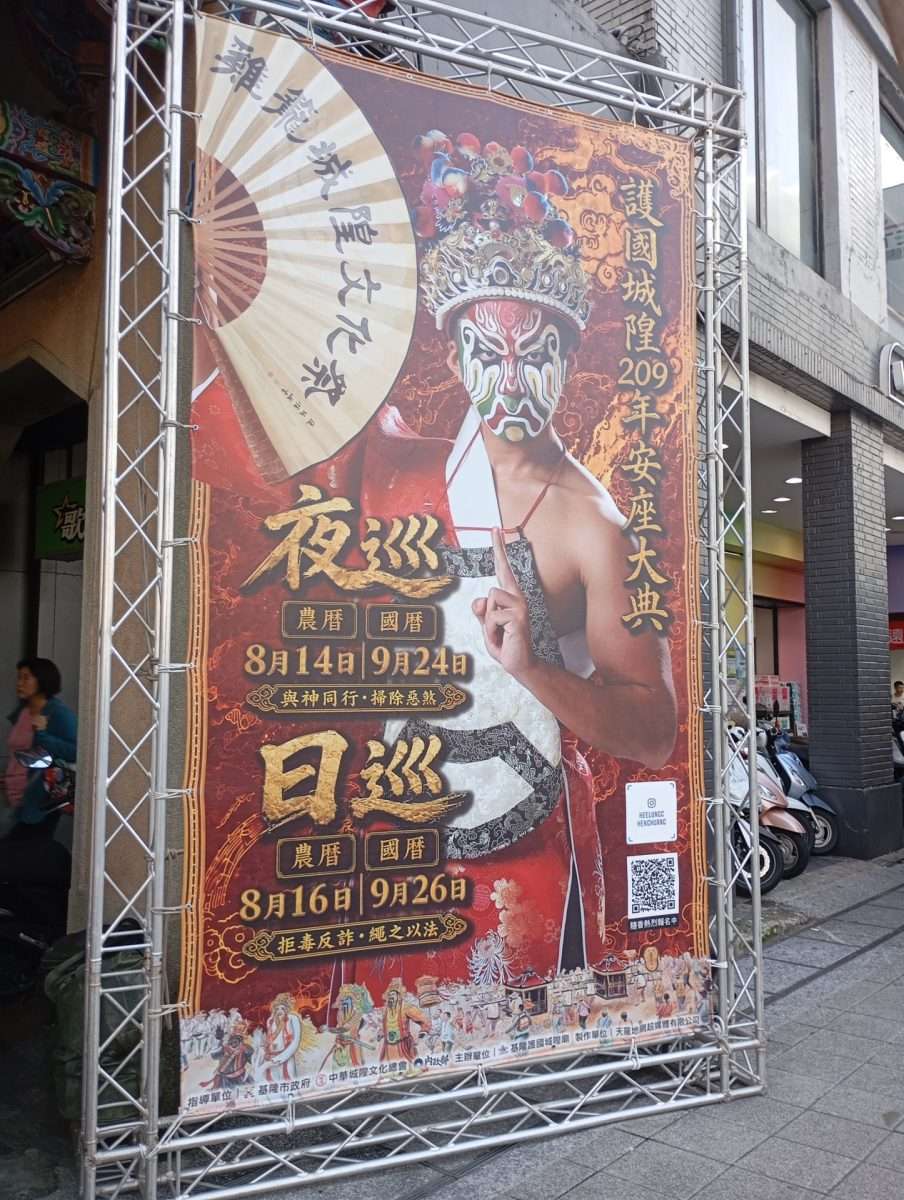
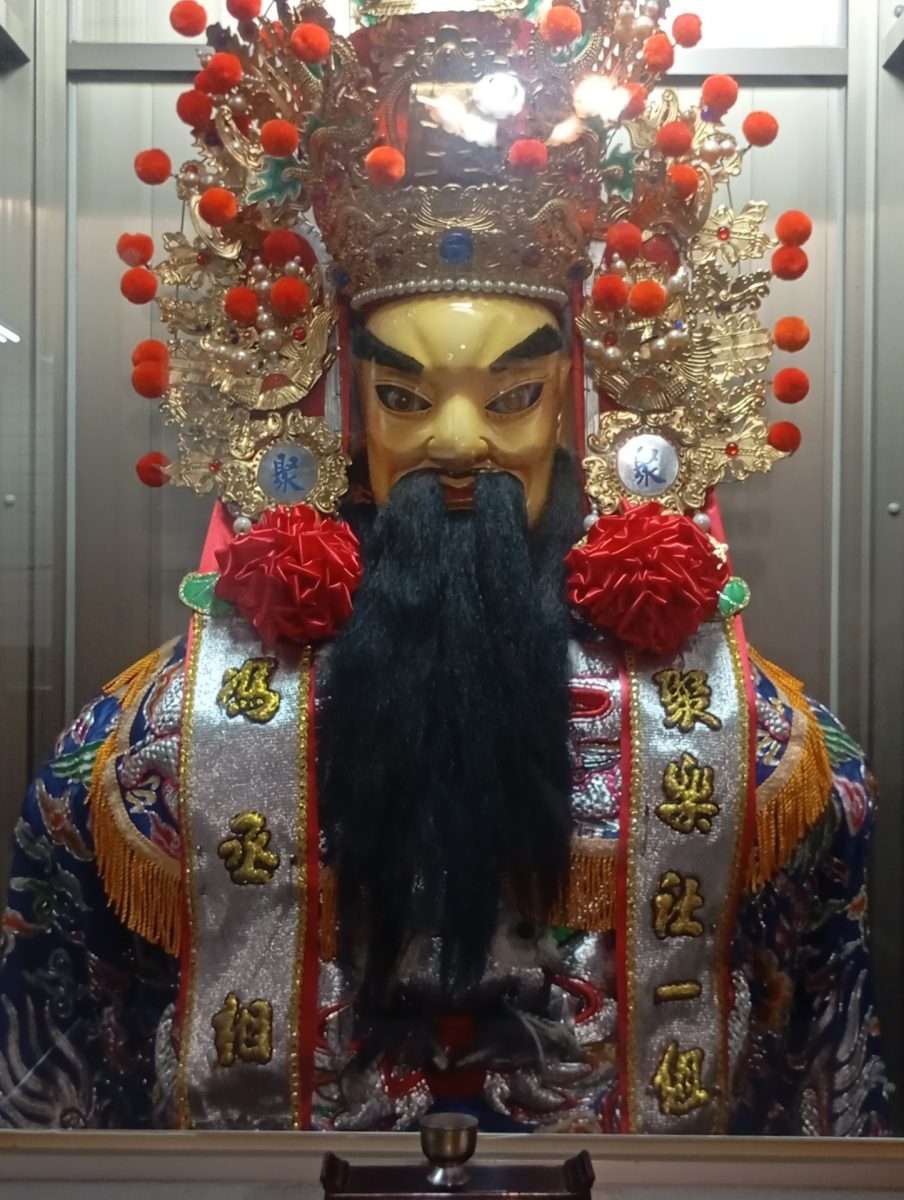
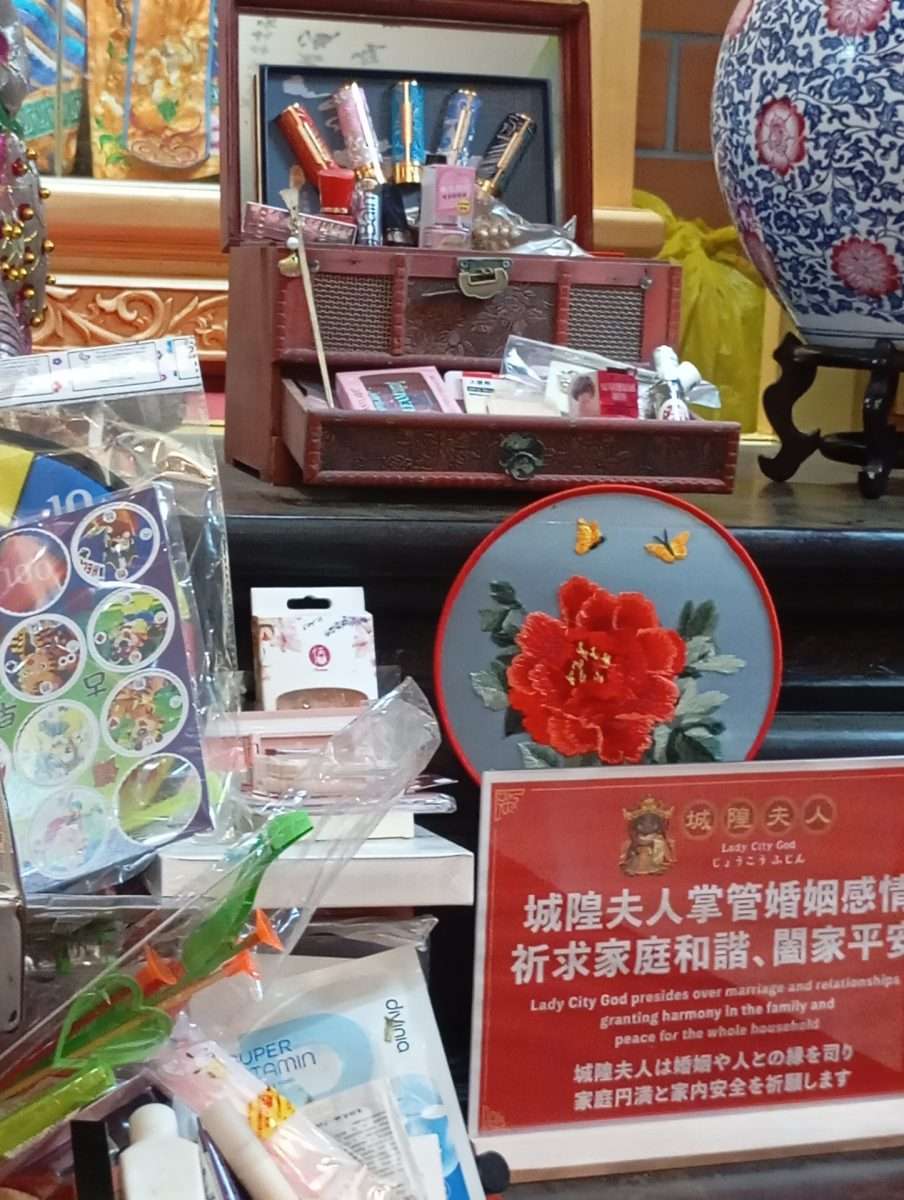
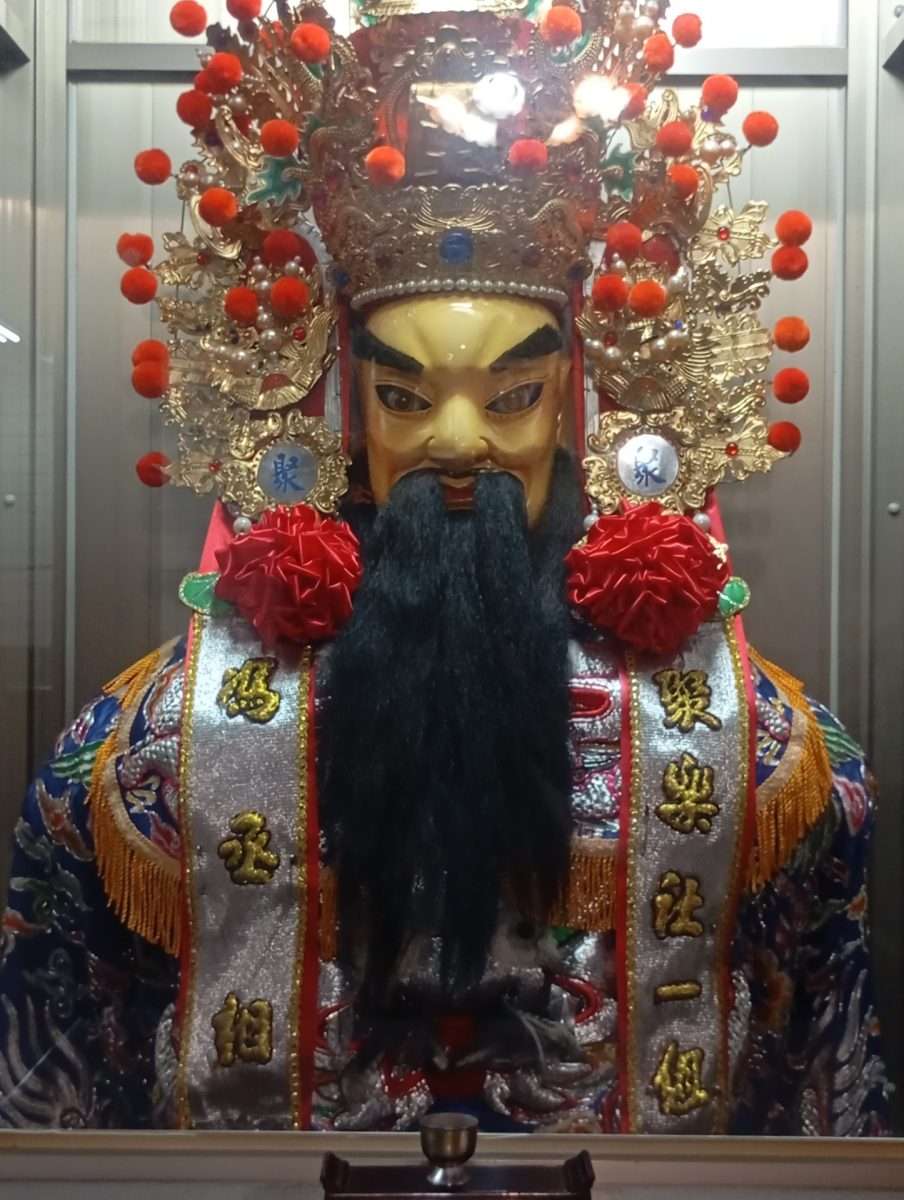
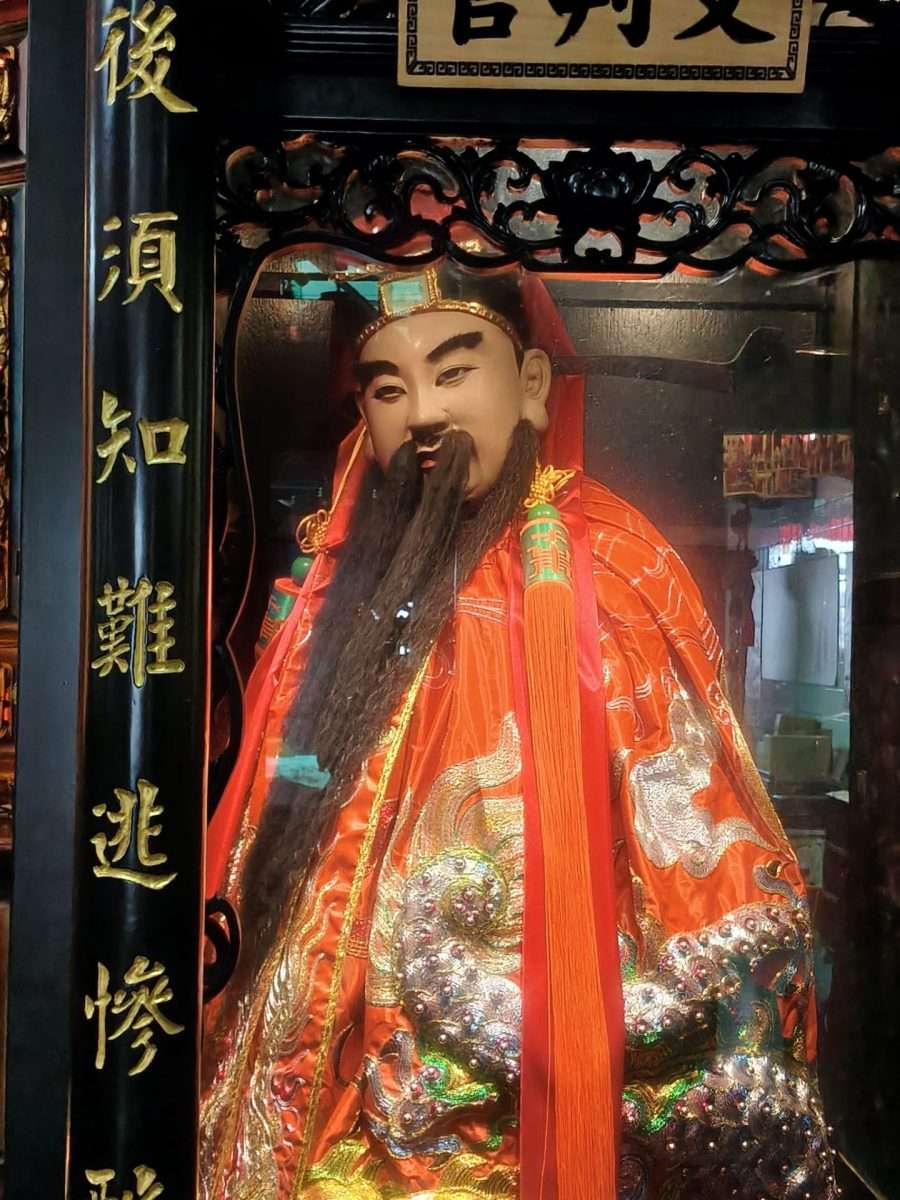
Chenghuang is the City God.
Within Taiwanese folk religious traditions, Chenghuang is associated with protecting the territory and the community living there. That is why this temple has a particularly interesting relationship with Keelung as a city.
The temple was built in 1818 at the initiative of members of the local community. One tradition holds that the figure worshipped as Keelung’s Chenghuang was Bao Rong, a Qing-period official remembered for his honesty and concern for the local population. After his death, he is said to have begun being venerated as the city’s protector.
And there is another detail that once again connects the temple with the sea.
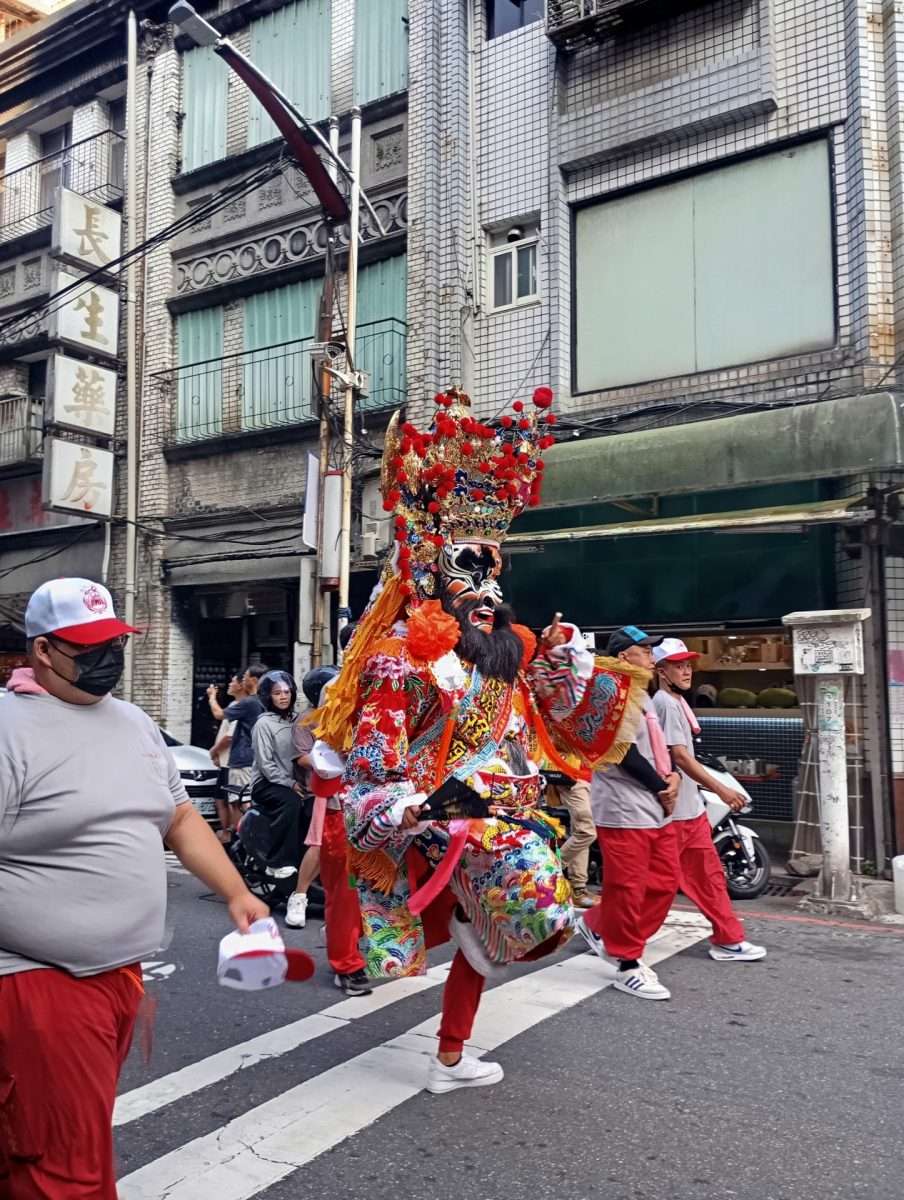
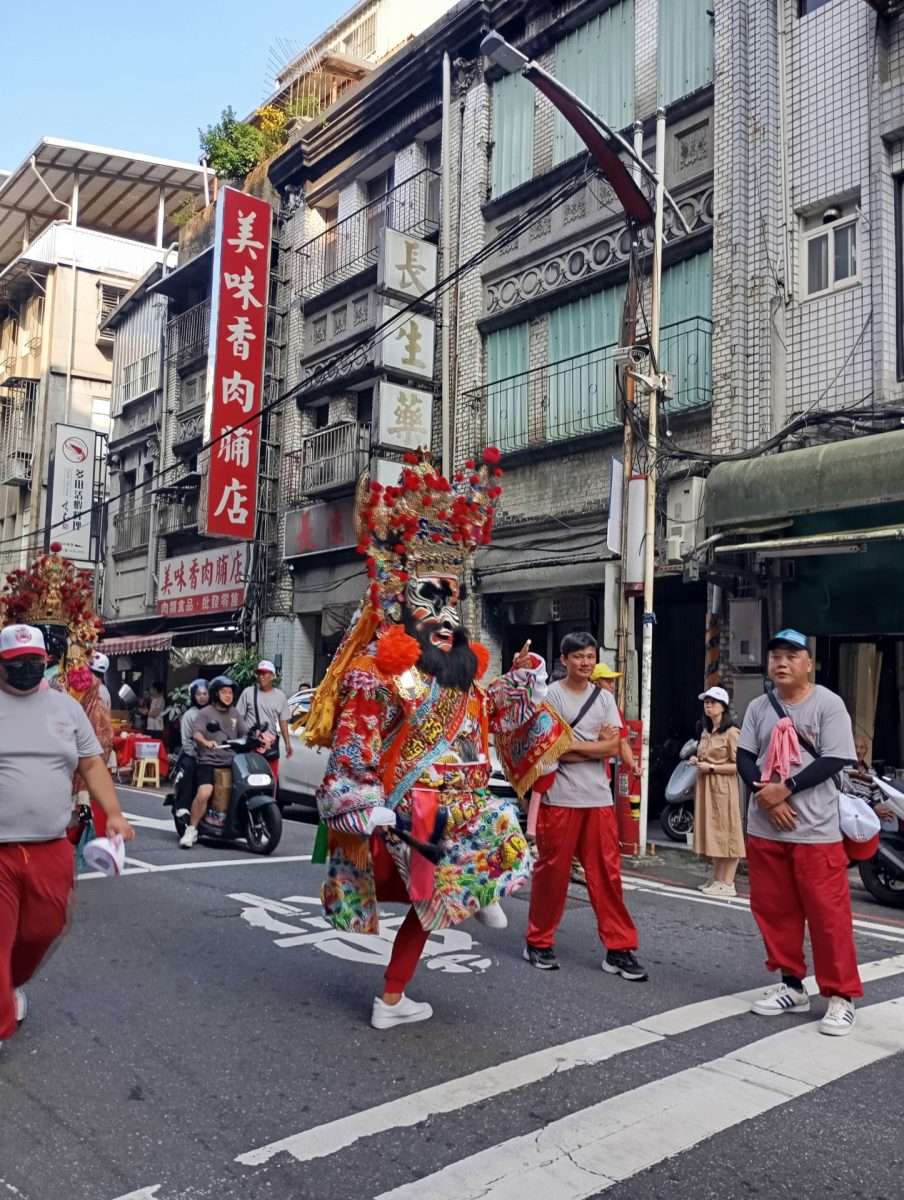
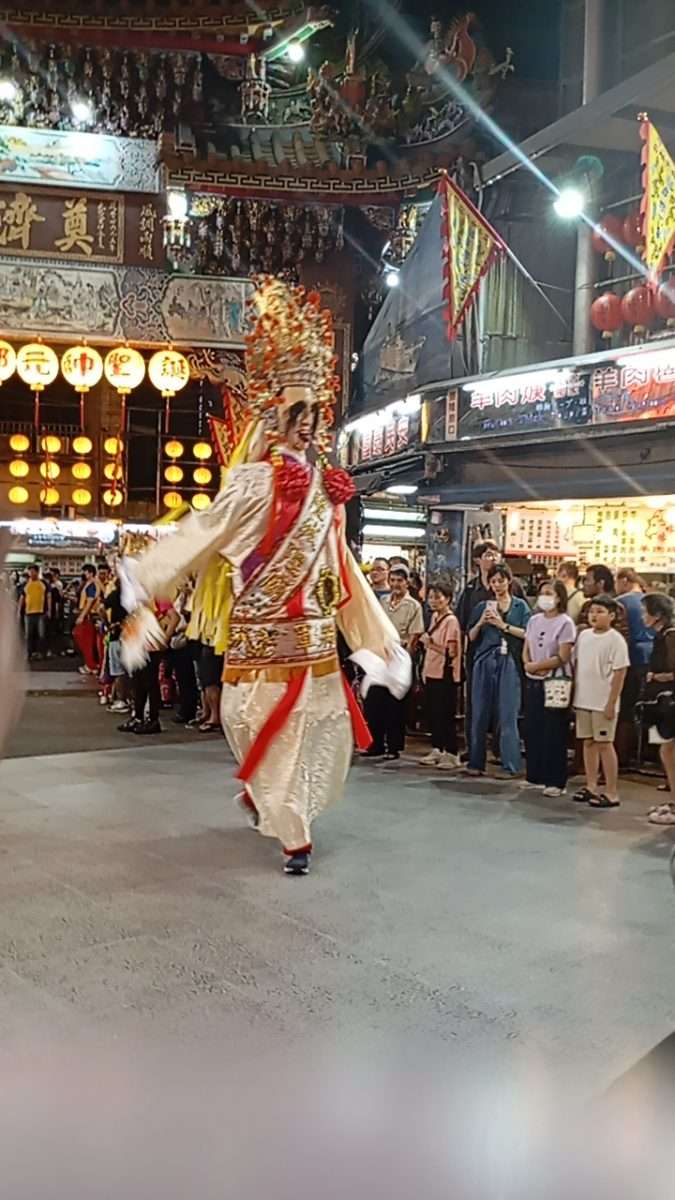
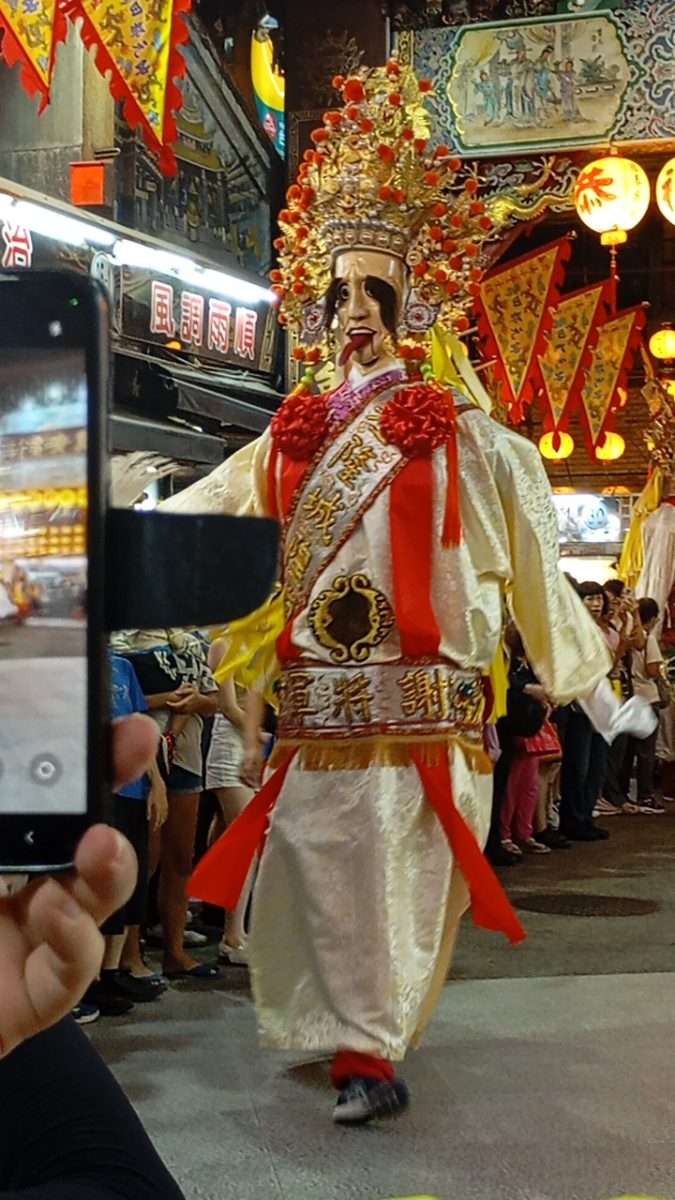
Keelung’s Chenghuang is not only associated with protecting the city. During the Chenghuang Cultural Festival, associated with the seventh lunar month, the deity symbolically takes part in a procession through the harbor accompanied by divine generals. The ritual seeks to drive away wandering spirits and ask for protection and well-being for the community.
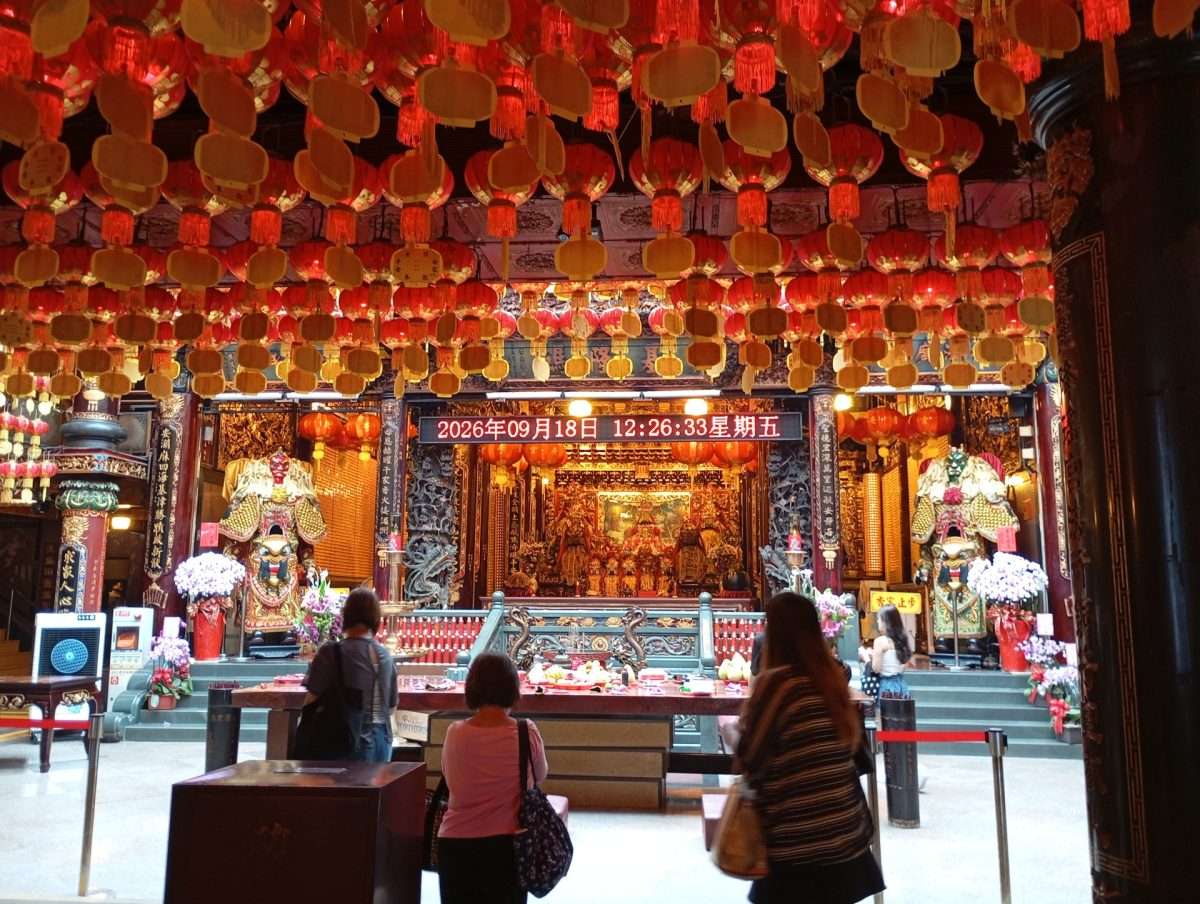
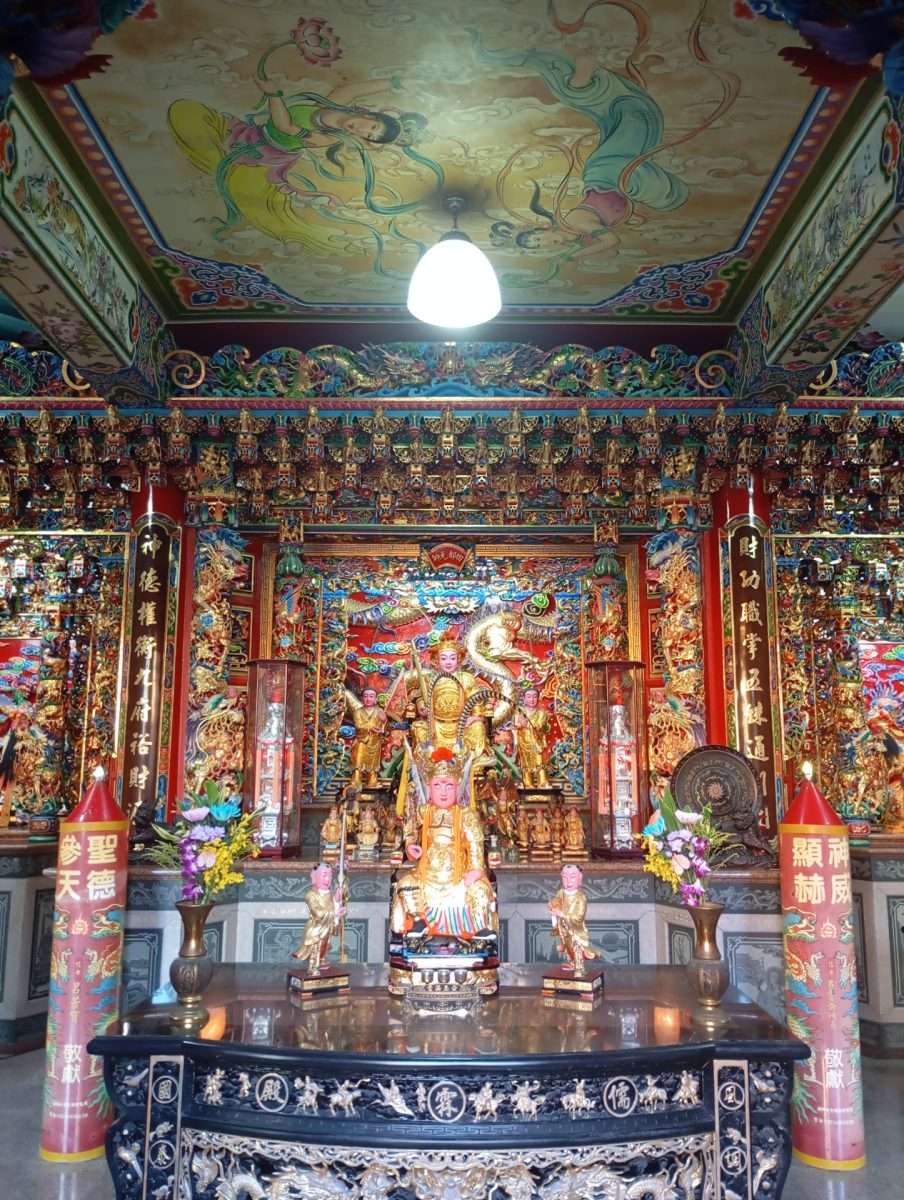
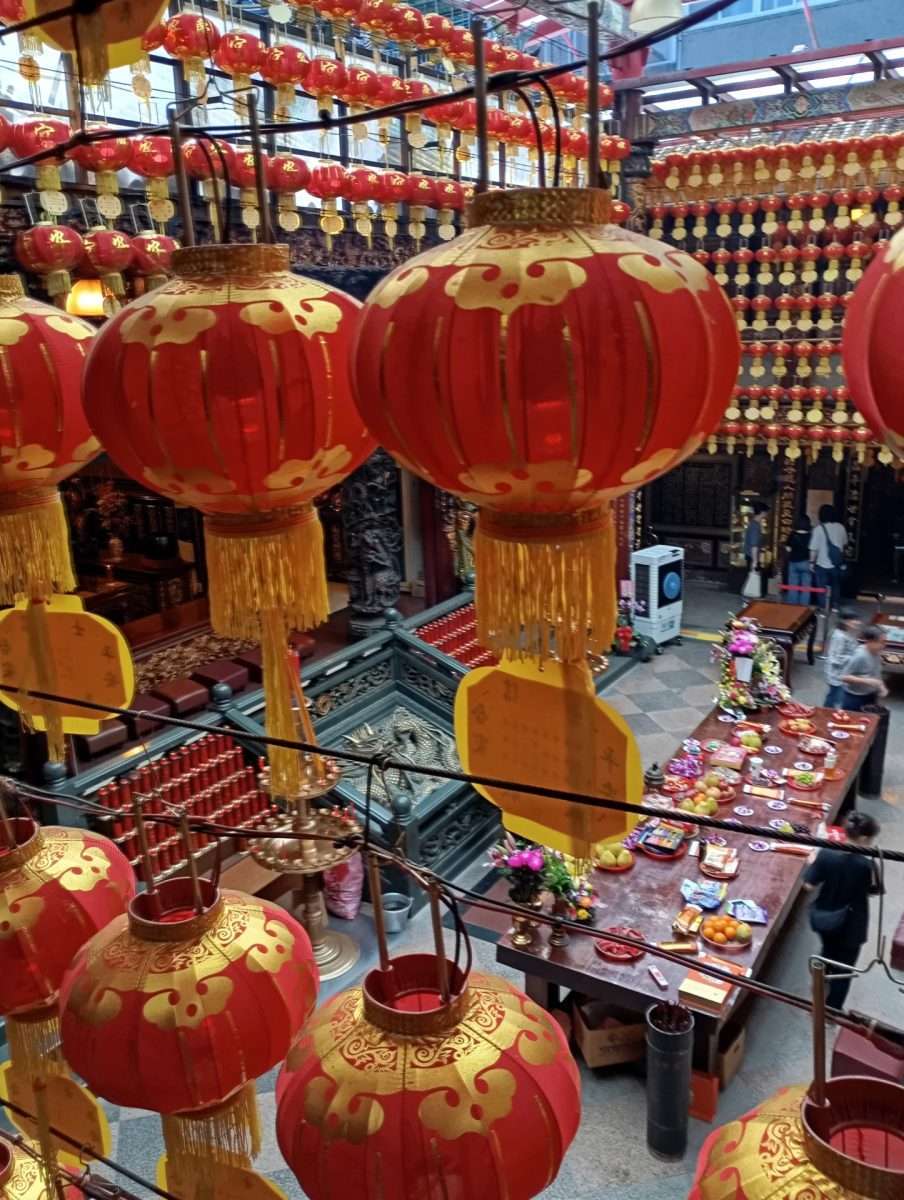
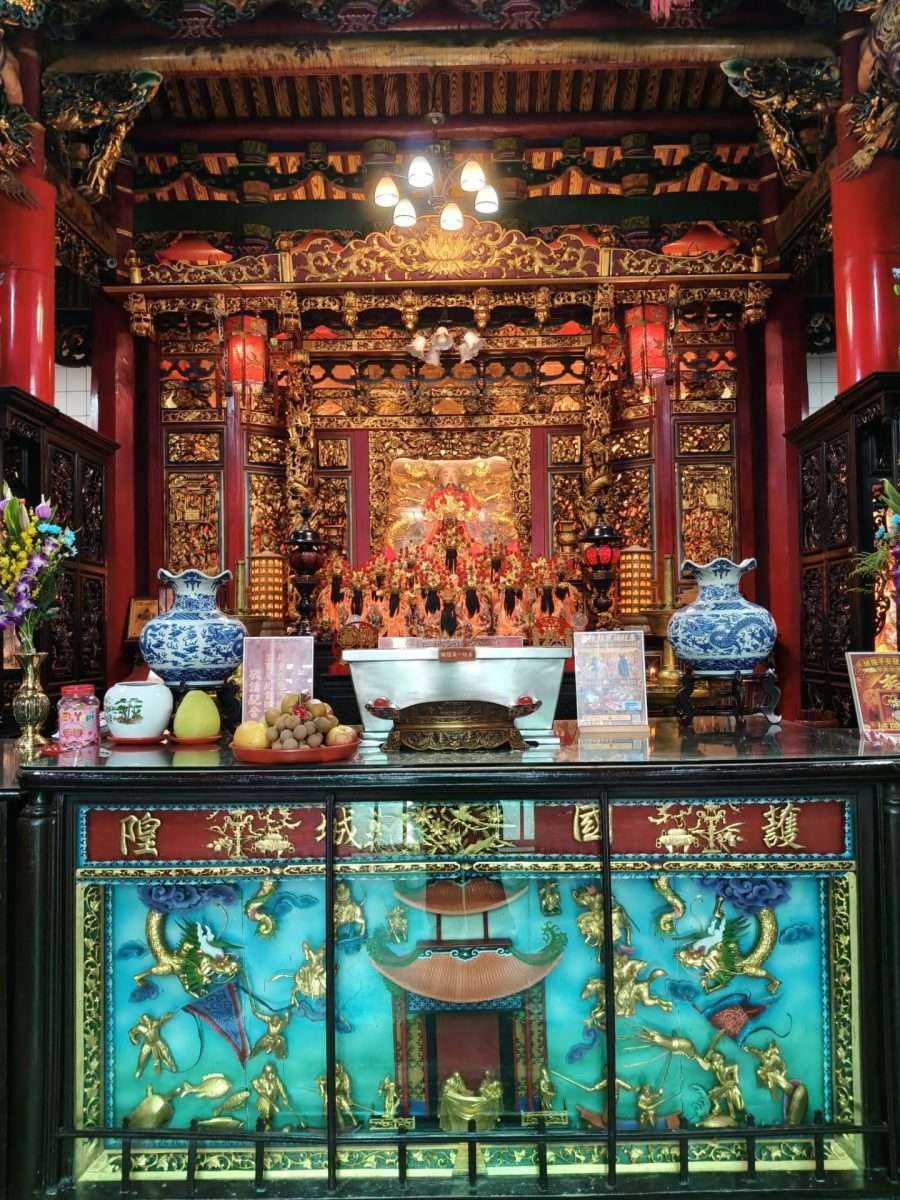
The interior can feel overwhelming if this is your first temple of this kind.
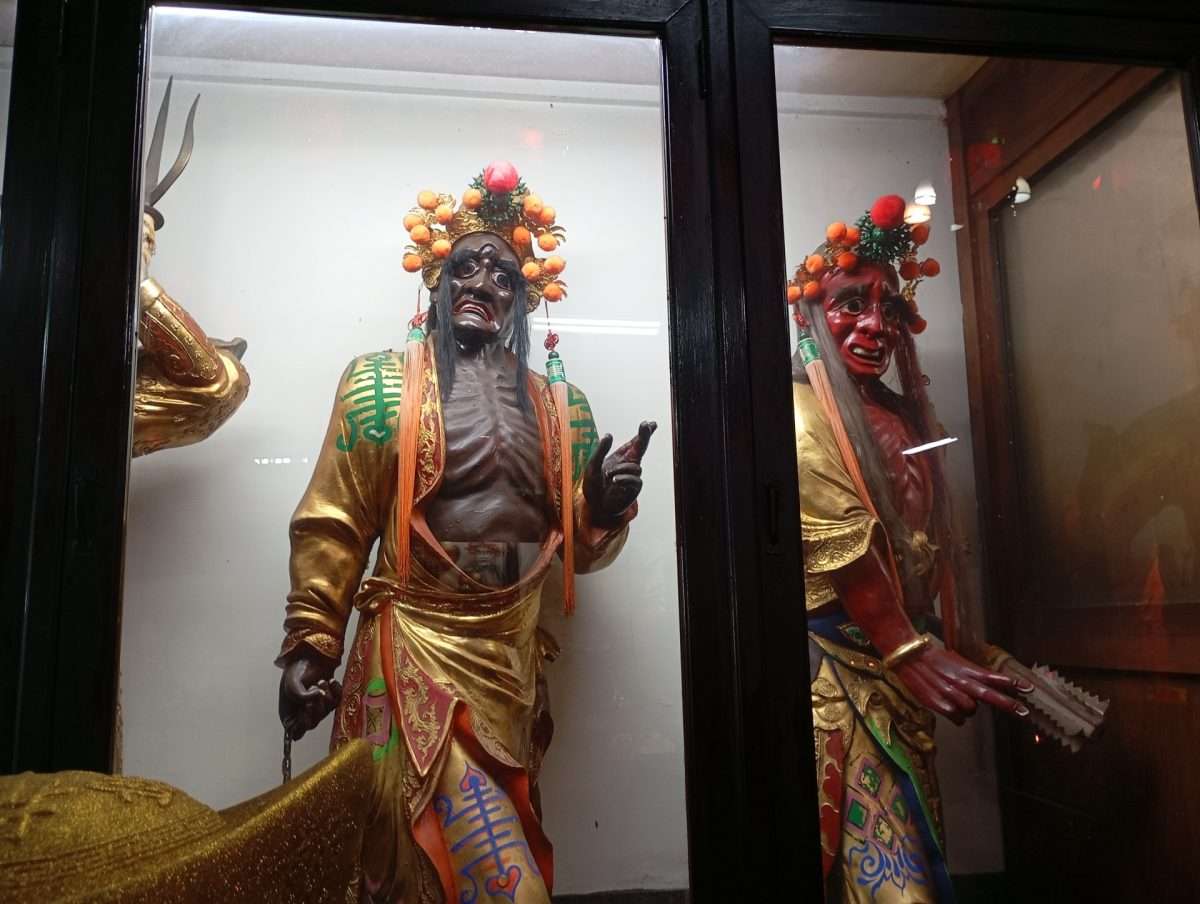
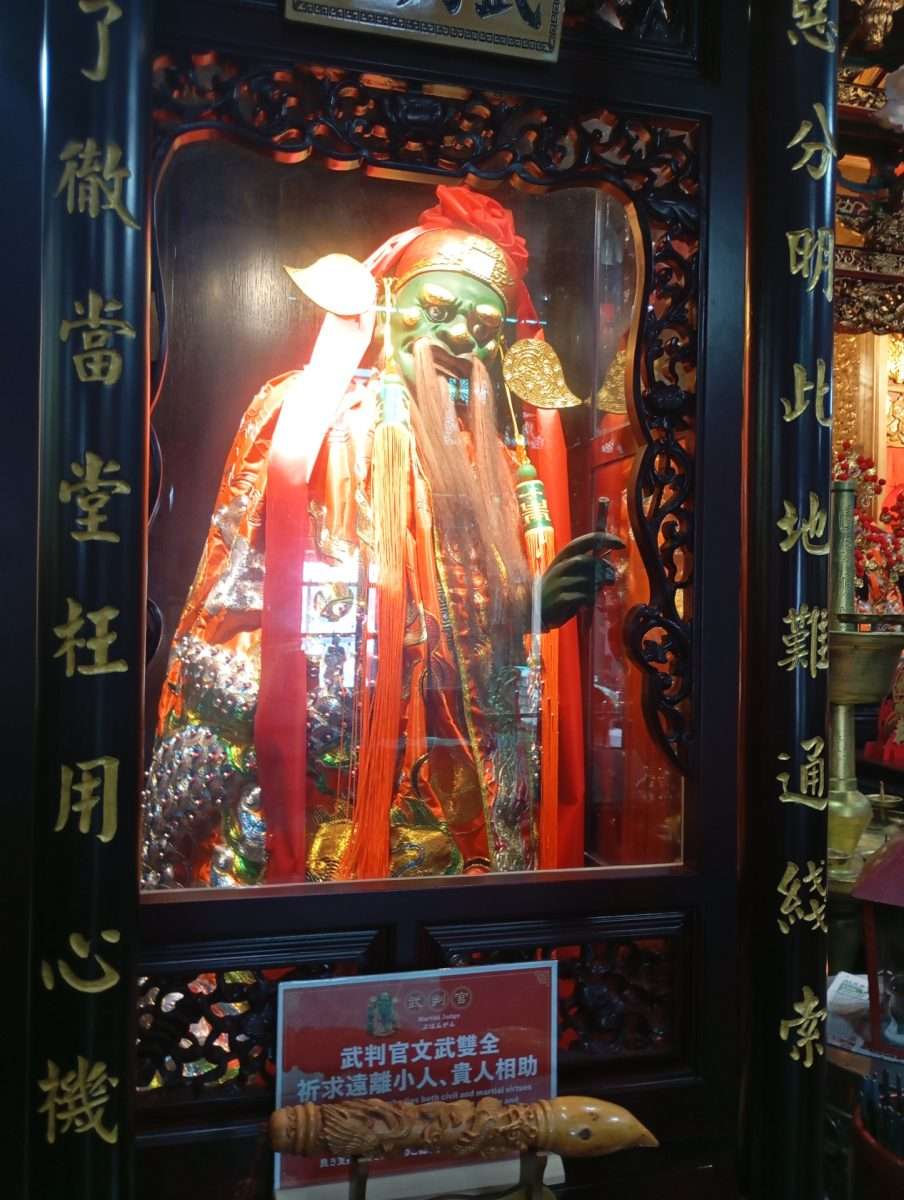
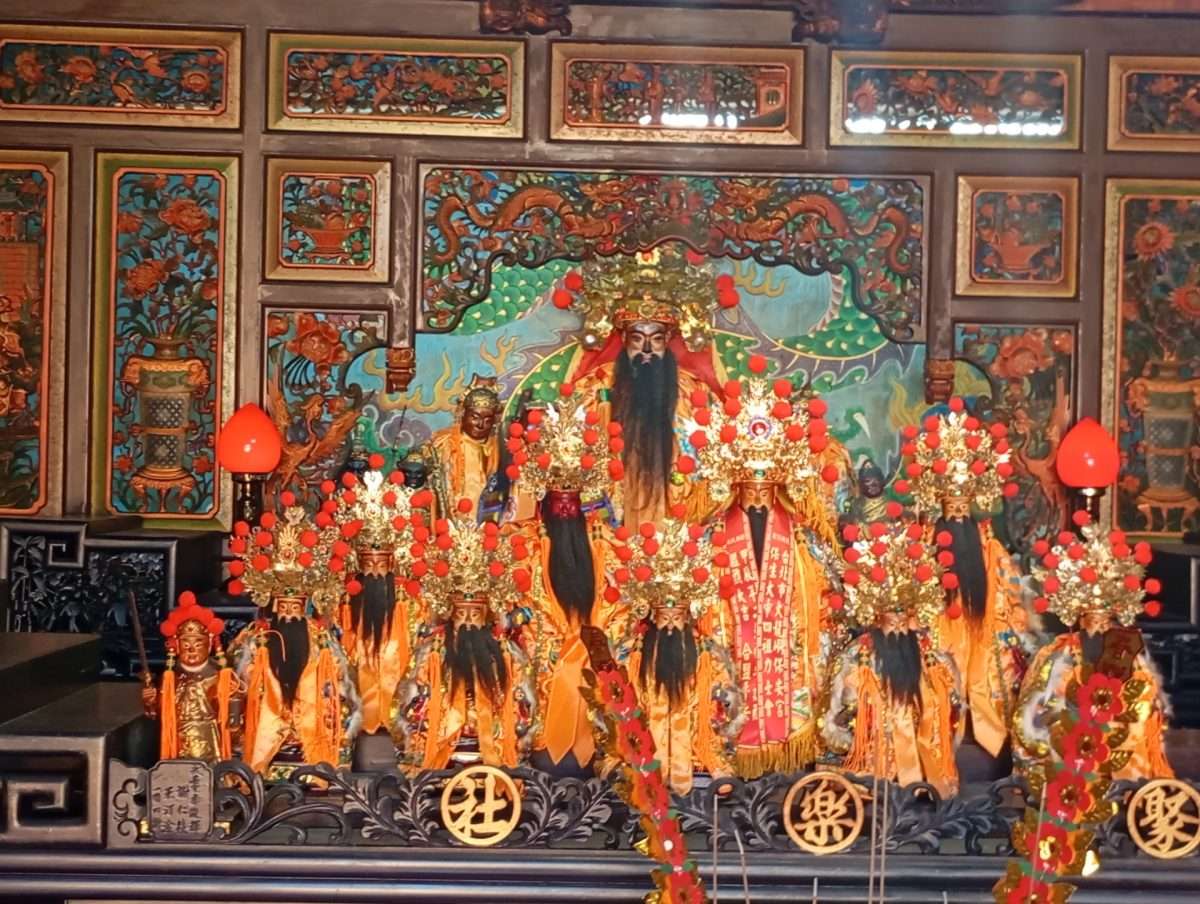
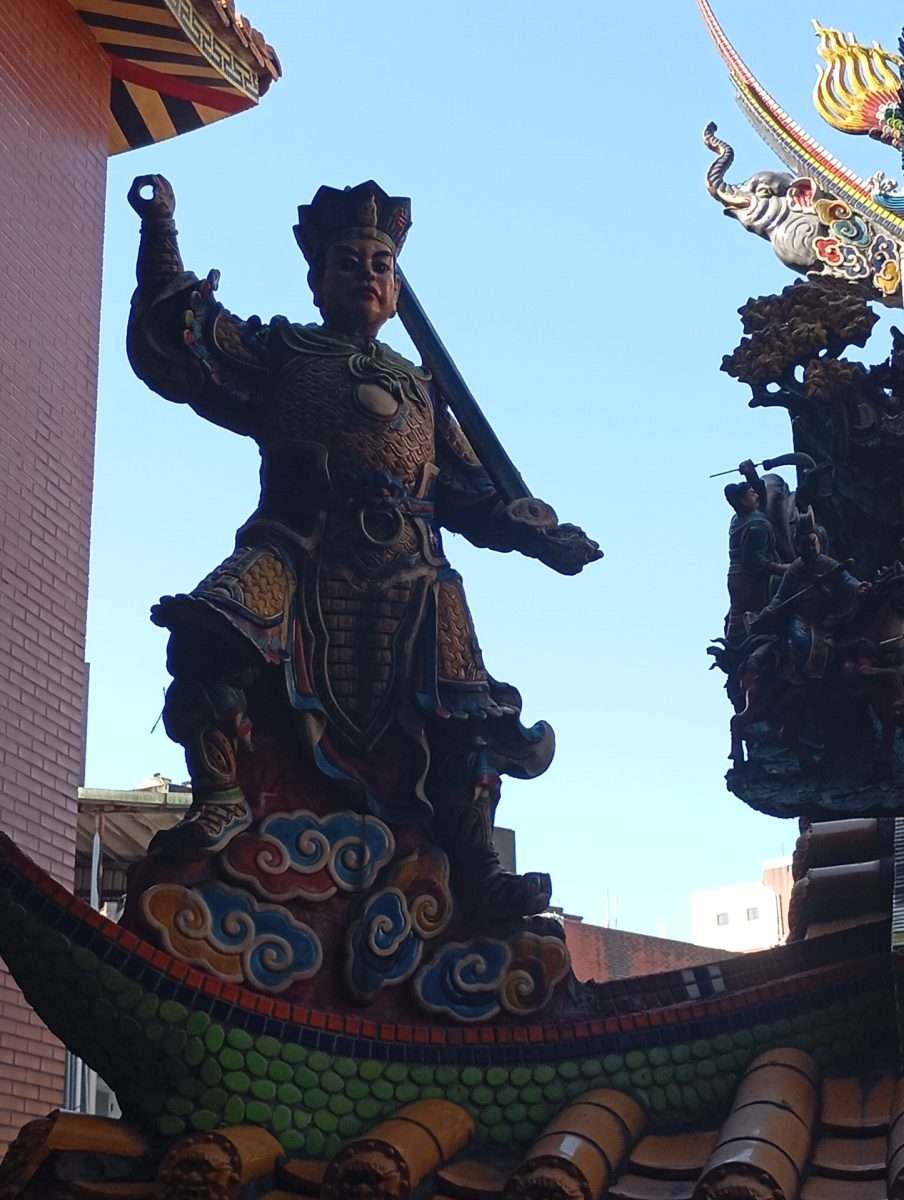
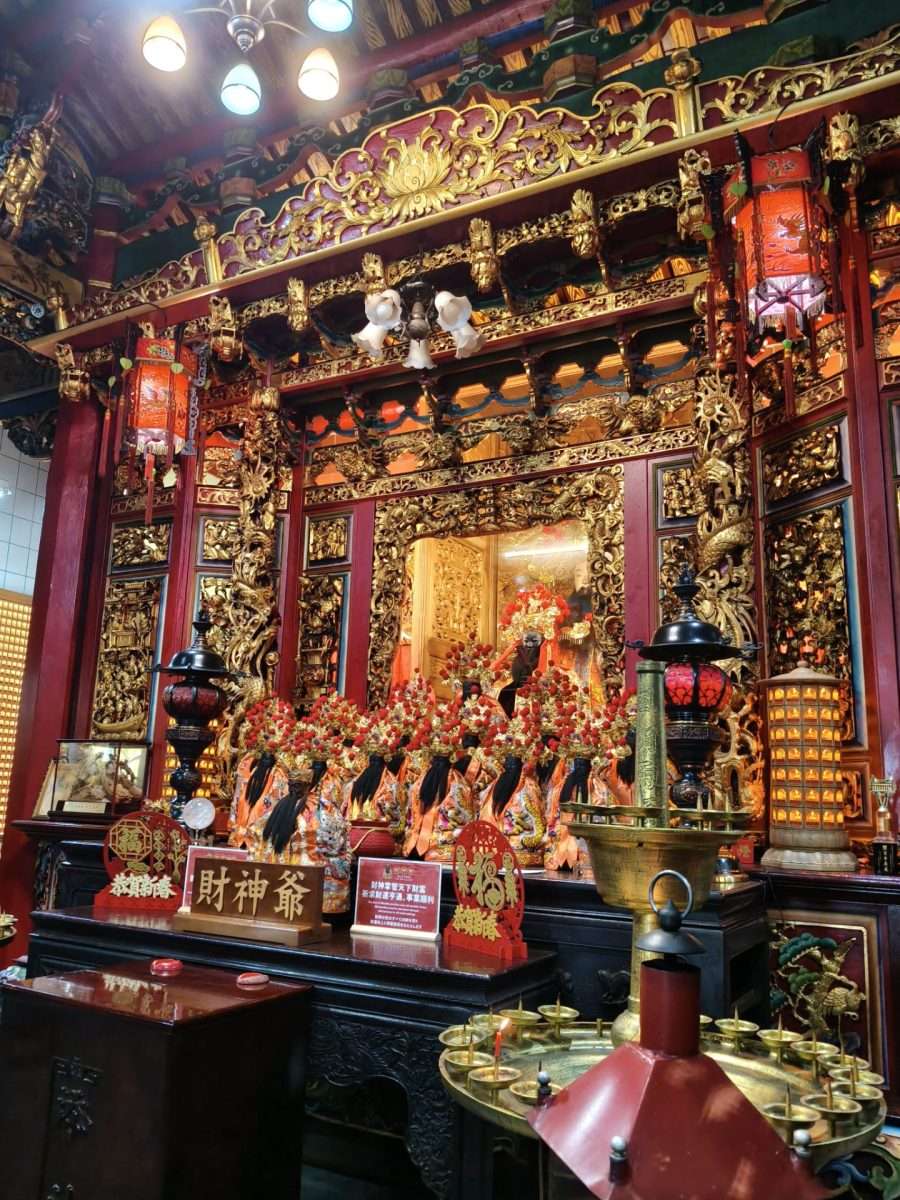
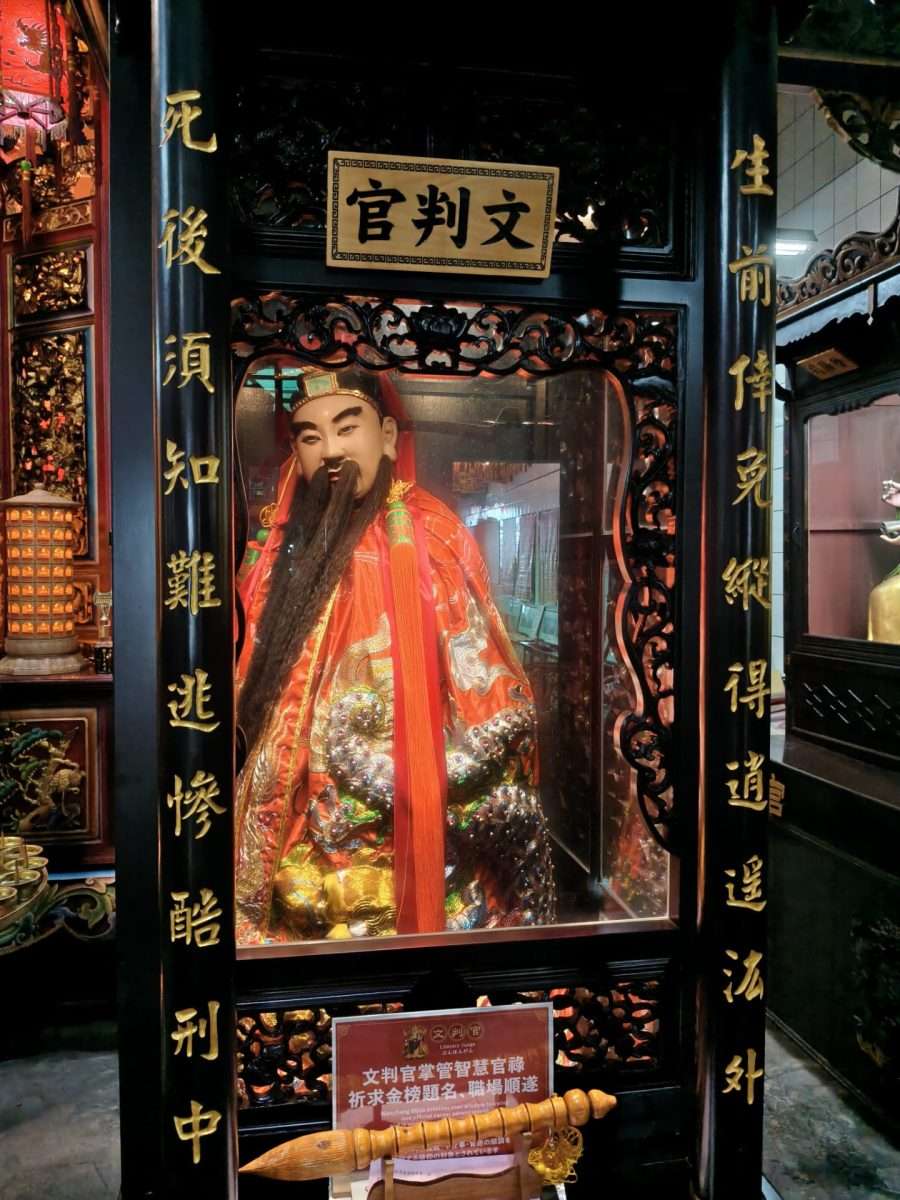
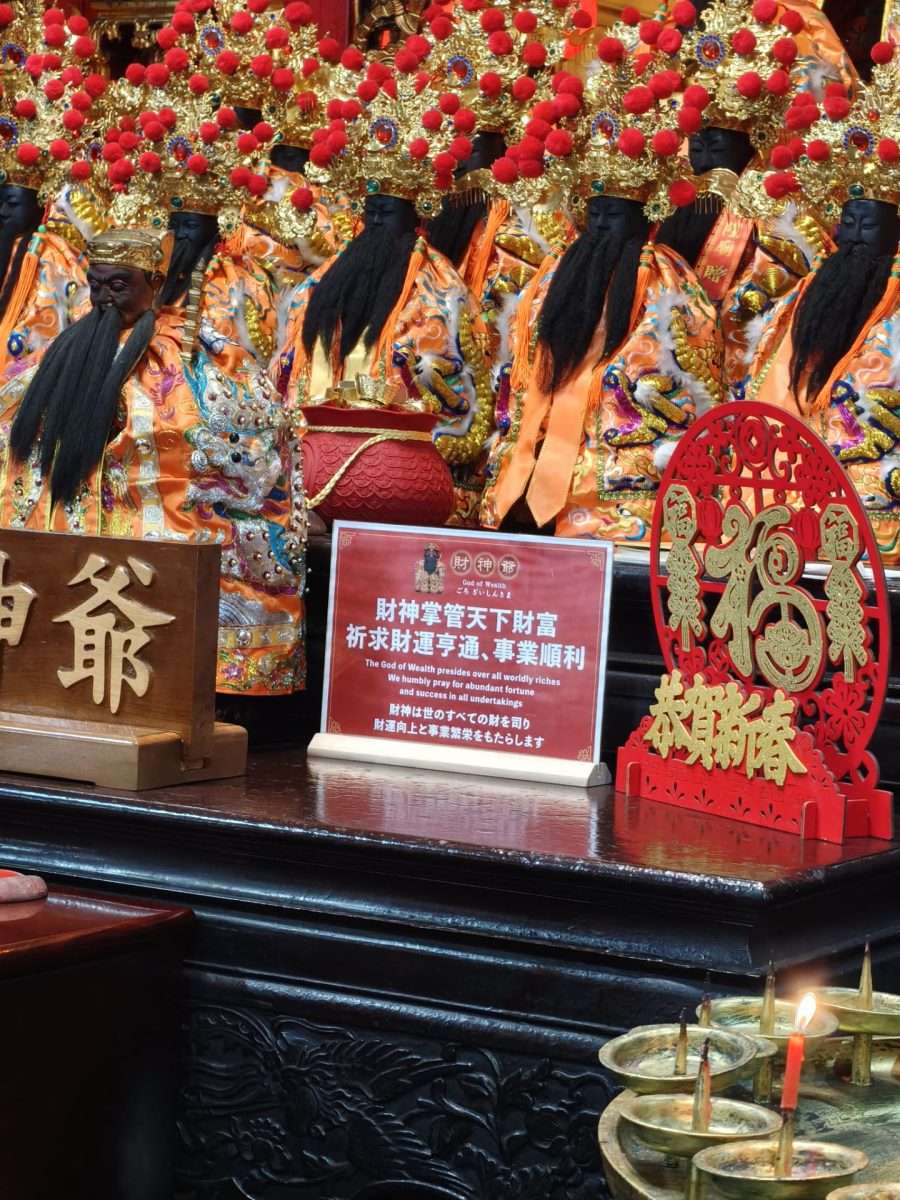
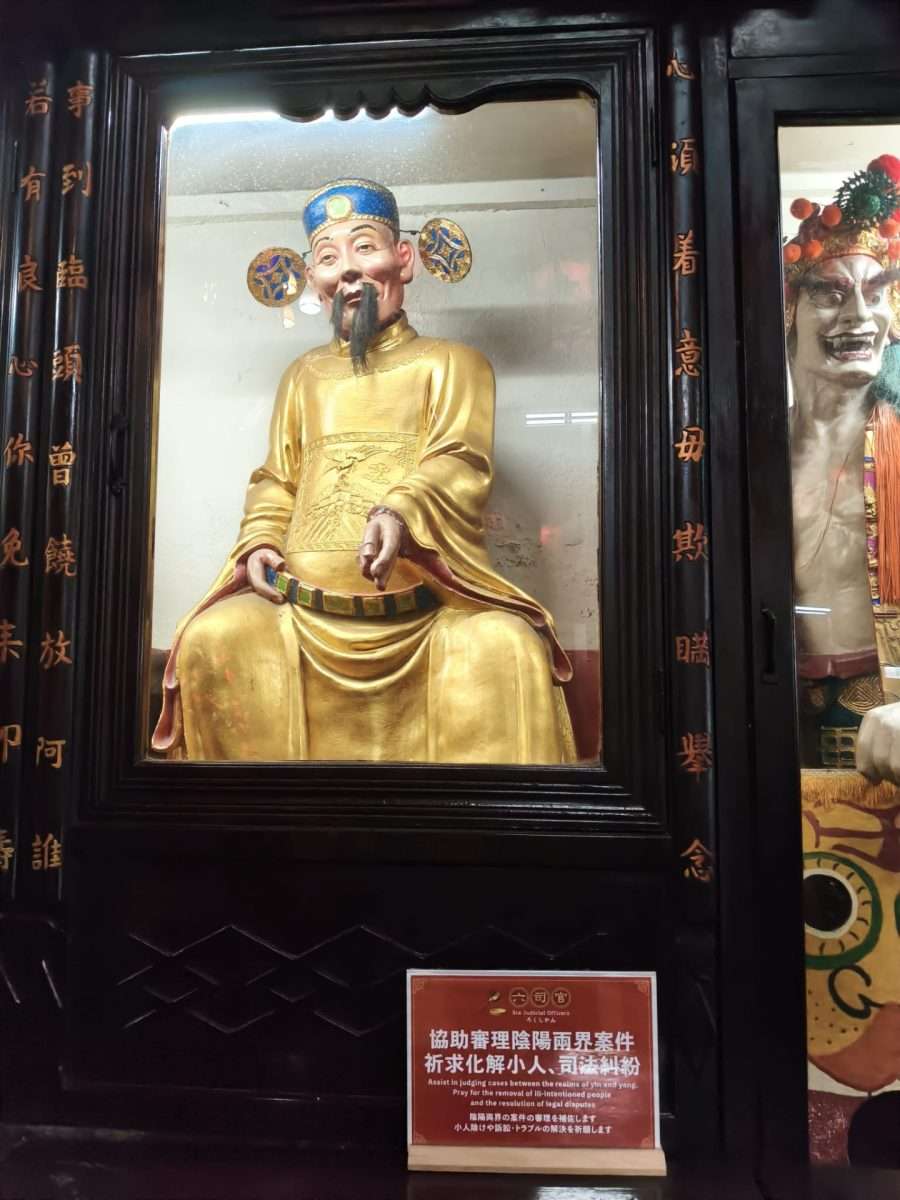
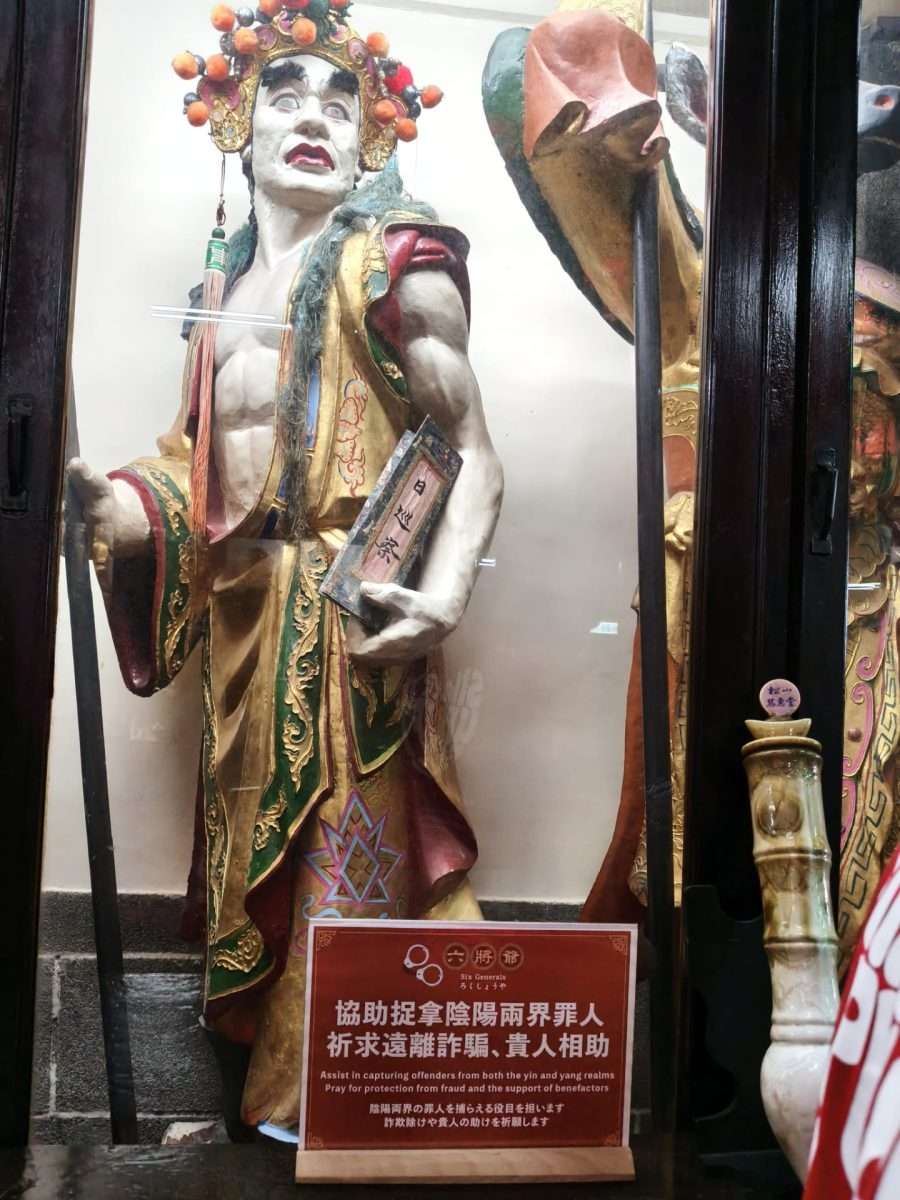
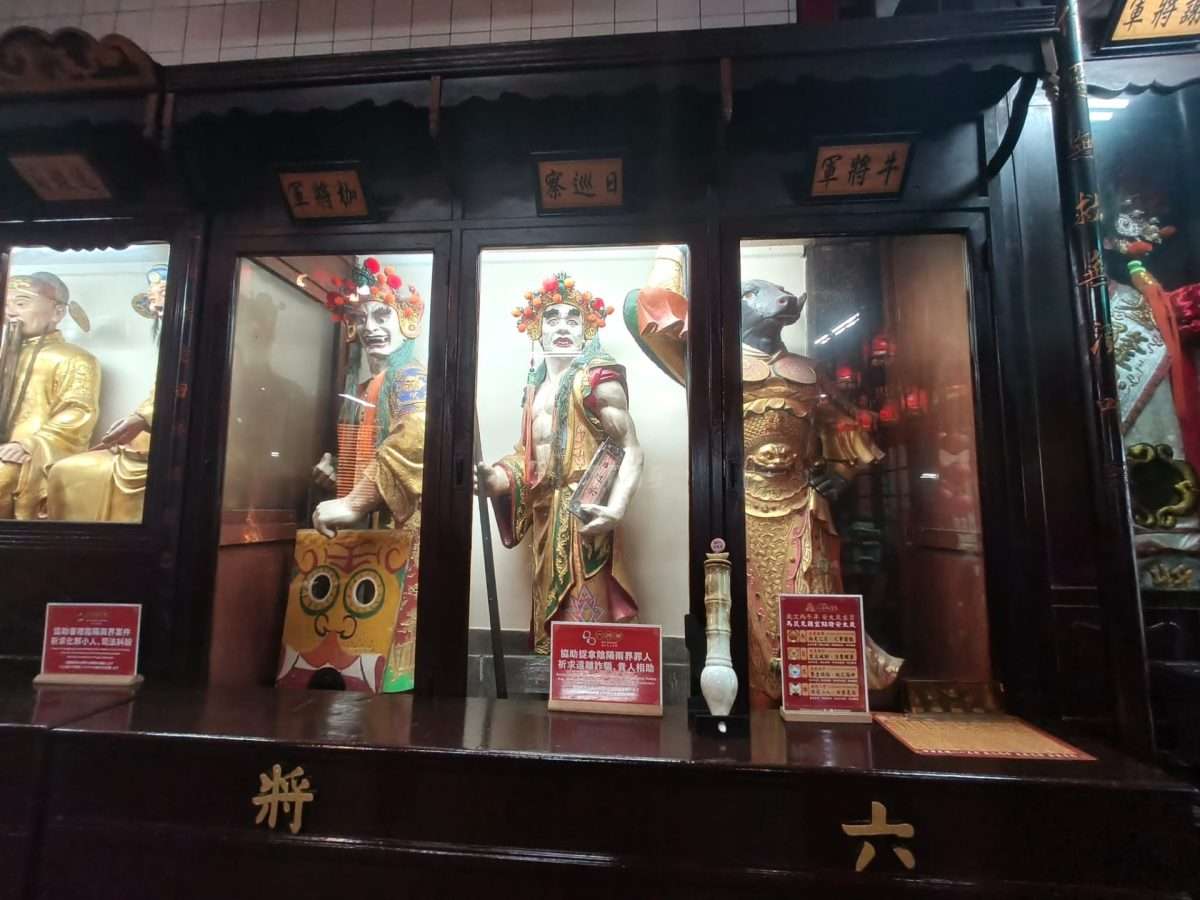
In addition to Chenghuang, you will find figures who perform specific functions within the ritual universe: civil and military judges, six officials, and six generals. Not every figure you see is a “main deity.”
What to look for at Chenghuang
- The main figure of Chenghuang and how it is presented at the altar.
- The judges, officials, and generals accompanying the City God.
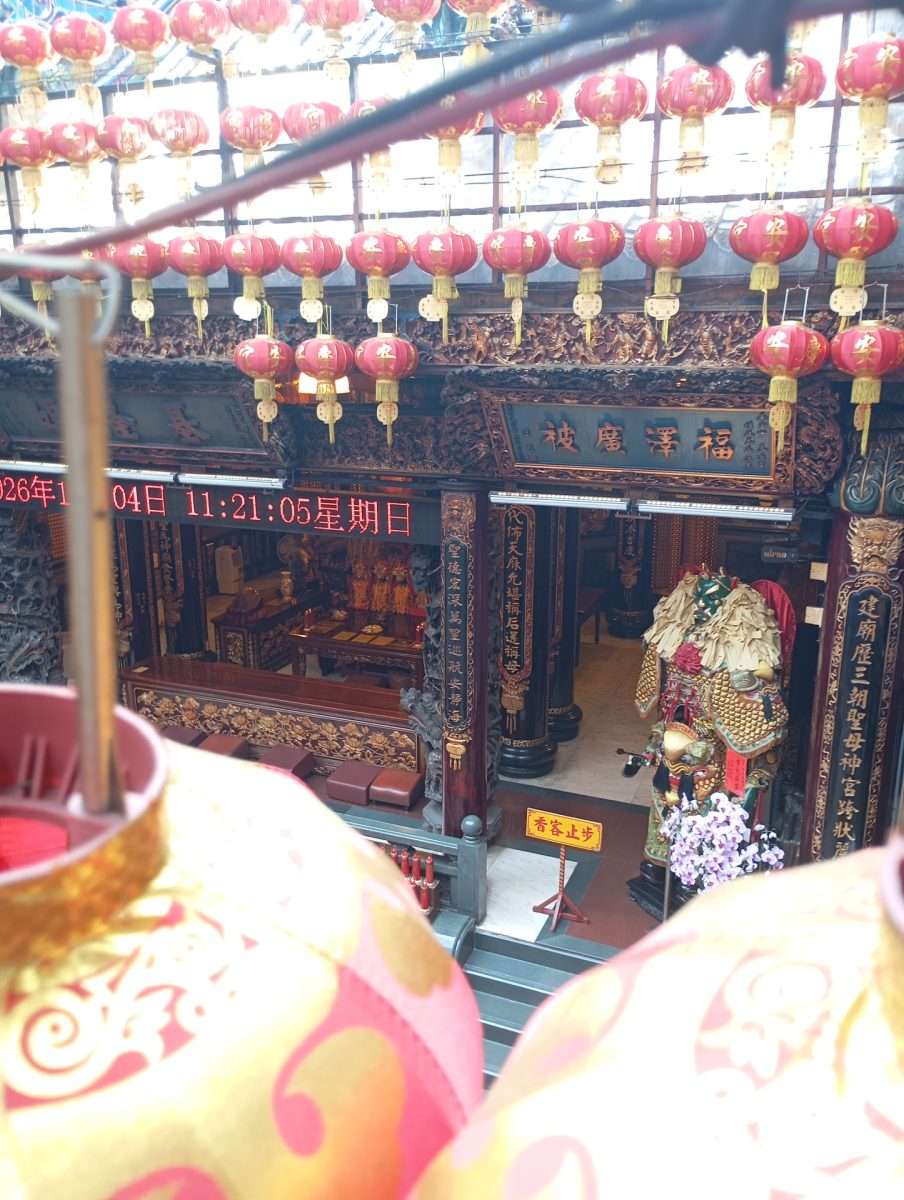
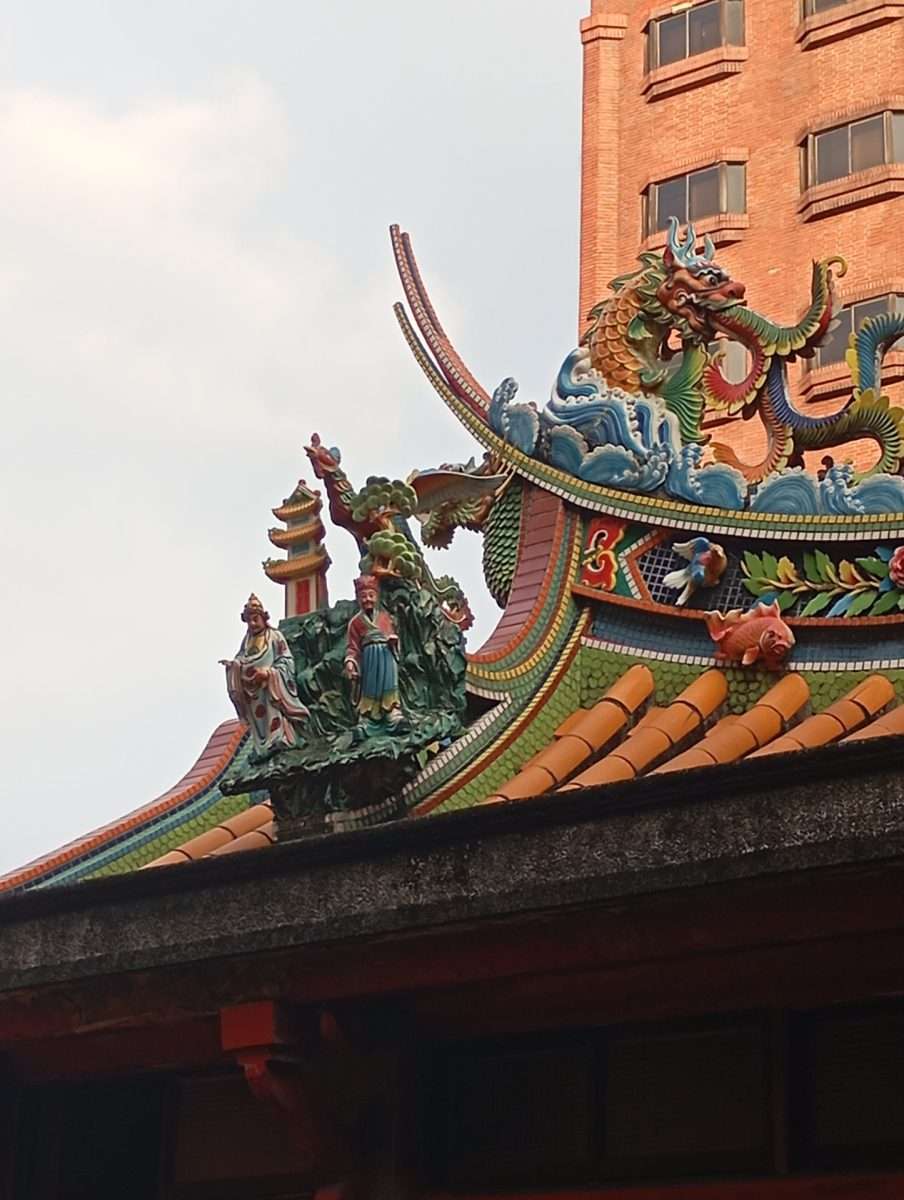
- The carvings, columns, inscriptions, and architectural structure of the temple.
- The movement of people: who come to ask, give thanks, offer incense, or make a consultation.
And what is that paper they are burning?
This is one of the things that can be most confusing for foreign visitors.
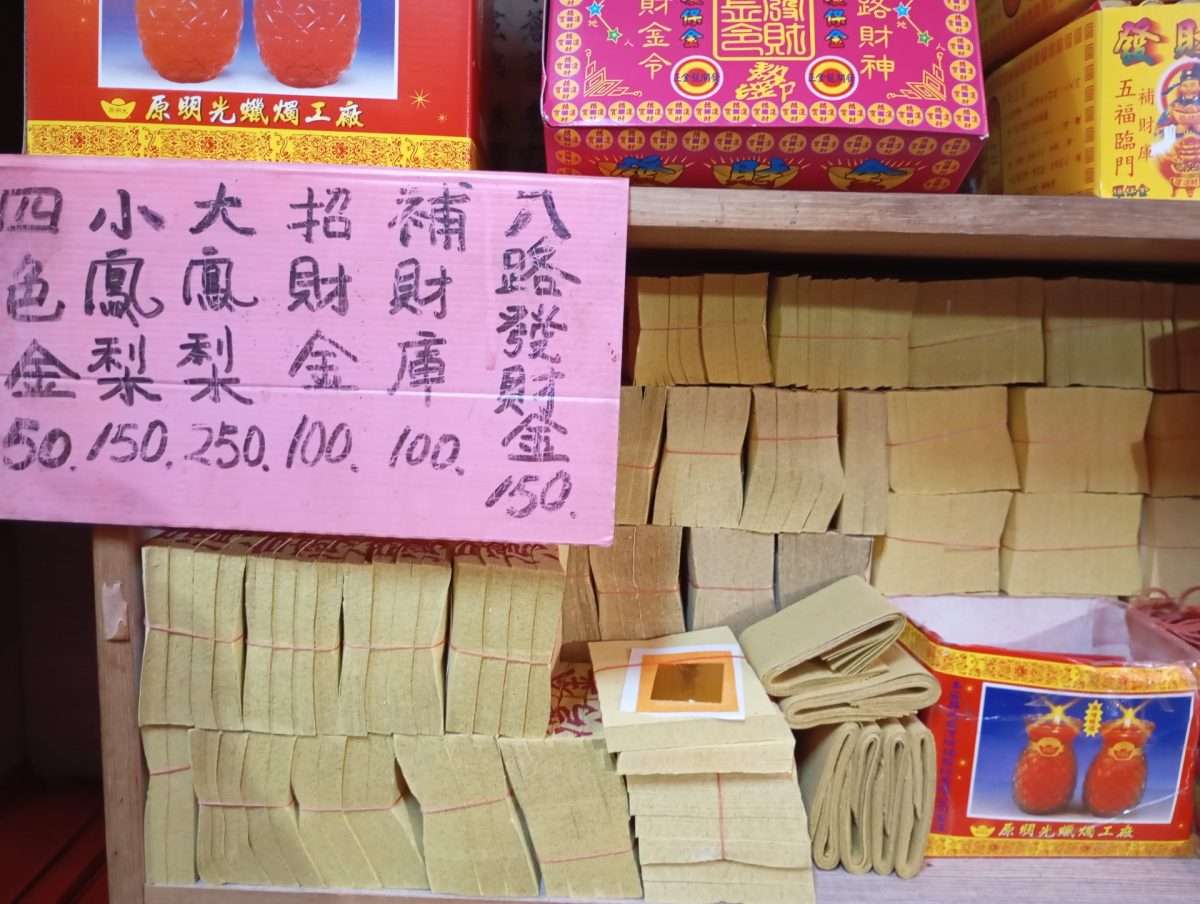 Not all burned paper serves the same purpose.
In Taiwan, the term zhǐqián is generally used to refer to ritual paper commonly known as “joss paper” or “paper money,” but there are different types.
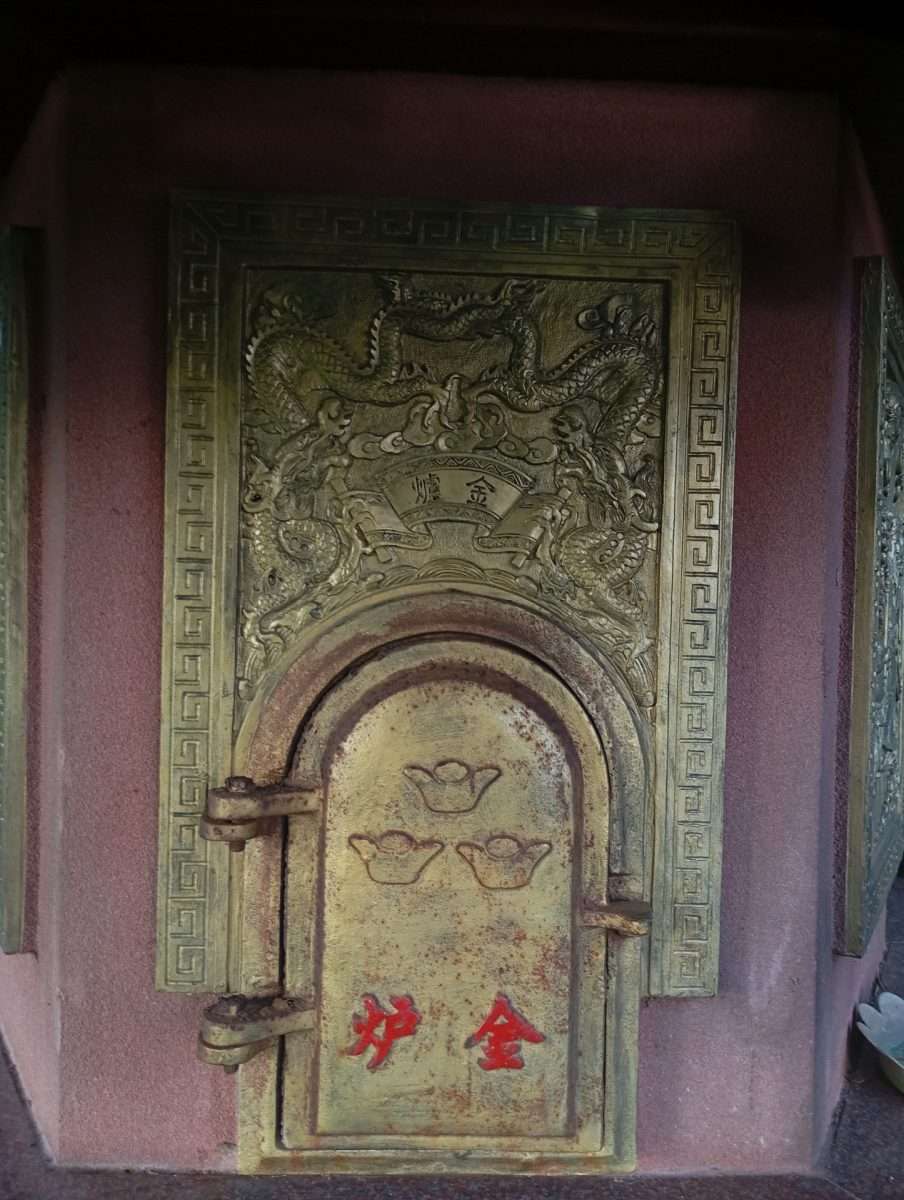
Gold paper, known as jīnzhǐ, is traditionally used in offerings directed toward certain deities.
Silver paper, yínzhǐ, has uses associated with ancestors and spirits. Taiwan’s Ministry of Education also distinguishes different types of silver paper depending on the ritual occasion.
This can also be seen in Keelung’s Zhongyuan Festival. Keelung For A Walk, for example, documents the use of gold paper for deities and silver paper for spirits during festival practices.
So simply saying “Taiwanese people burn money for the dead” would be an oversimplification. The paper can represent different kinds of offerings, and its meaning depends on the ritual, the recipient, and the context.
As a visitor, you do not need to burn it. First, observe.
7. Qing’an Temple: Mazu and a city that learned to live with the sea
From Chenghuang Temple, continue toward Zhong 2nd Road. Qing’an Temple is just a few minutes’ walk from the harbor and city center.
Location: No. 1, Zhong 2nd Road, Ren’ai District. View Qing’an Temple on Google Maps
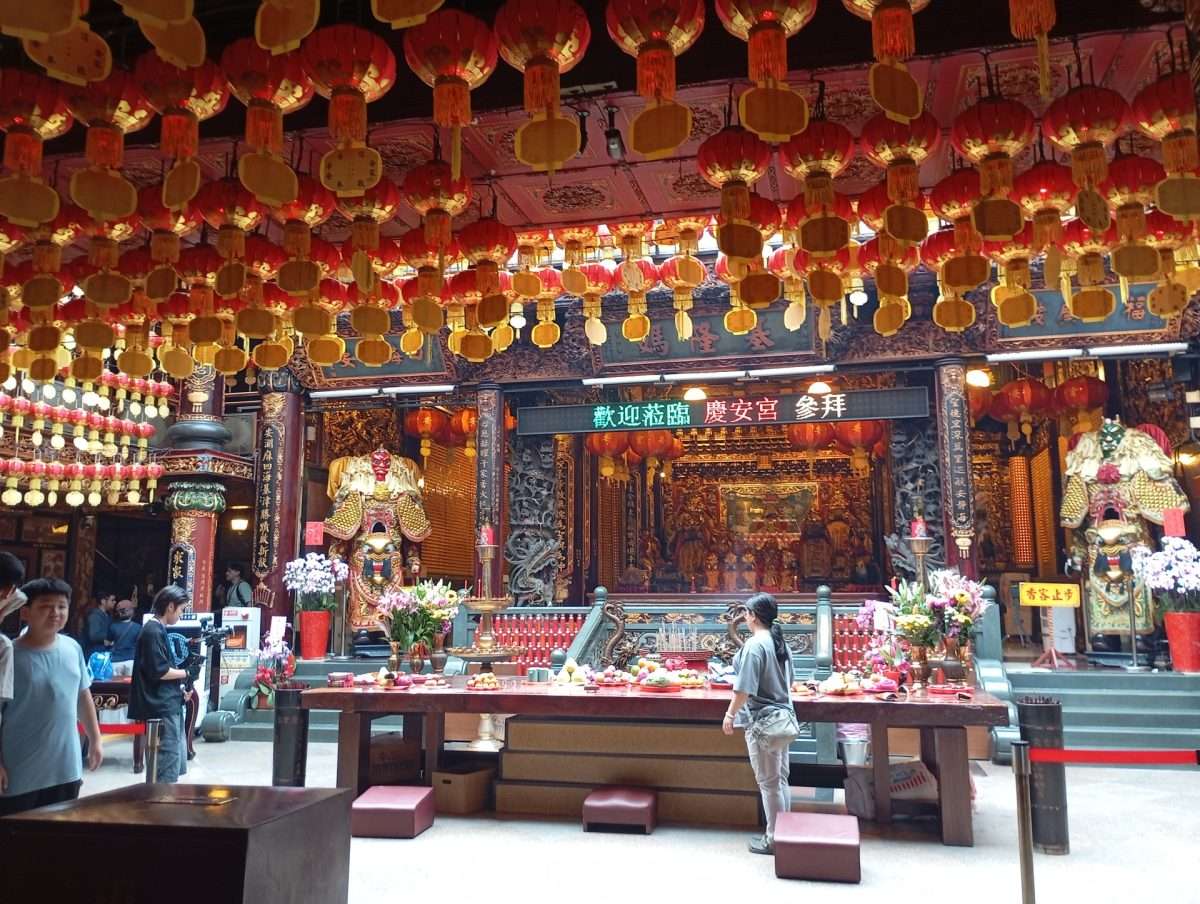
Qing’an Temple, also known as the Mazu Temple, is one of Keelung’s most important historic temples.
Its history is directly connected to the harbor.
When it was established, this area was an active port, and a significant part of its population made a living from fishing. The temple was created to venerate Mazu and has more than two centuries of history.
Here, the simplest question is also the most interesting:
Why Mazu?
Mazu is one of the major religious figures historically associated with Taiwan’s maritime communities. For people whose lives depended on the sea, having a figure associated with protecting fishermen and travelers had a very concrete meaning.
So when you enter Qing’an, try not to look only at the decoration.
Look at the relationship.
A port city.
A fishing community.
A deity associated with the sea.
And a temple that continues to function at the heart of that same city.
Inside, you can also see Mazu accompanied by two figures, the General of Thousand-Mile Eyes and the General of Wind-Accompanying Ears, known for their extraordinary powers of sight and hearing and traditionally associated with protecting and assisting the goddess.
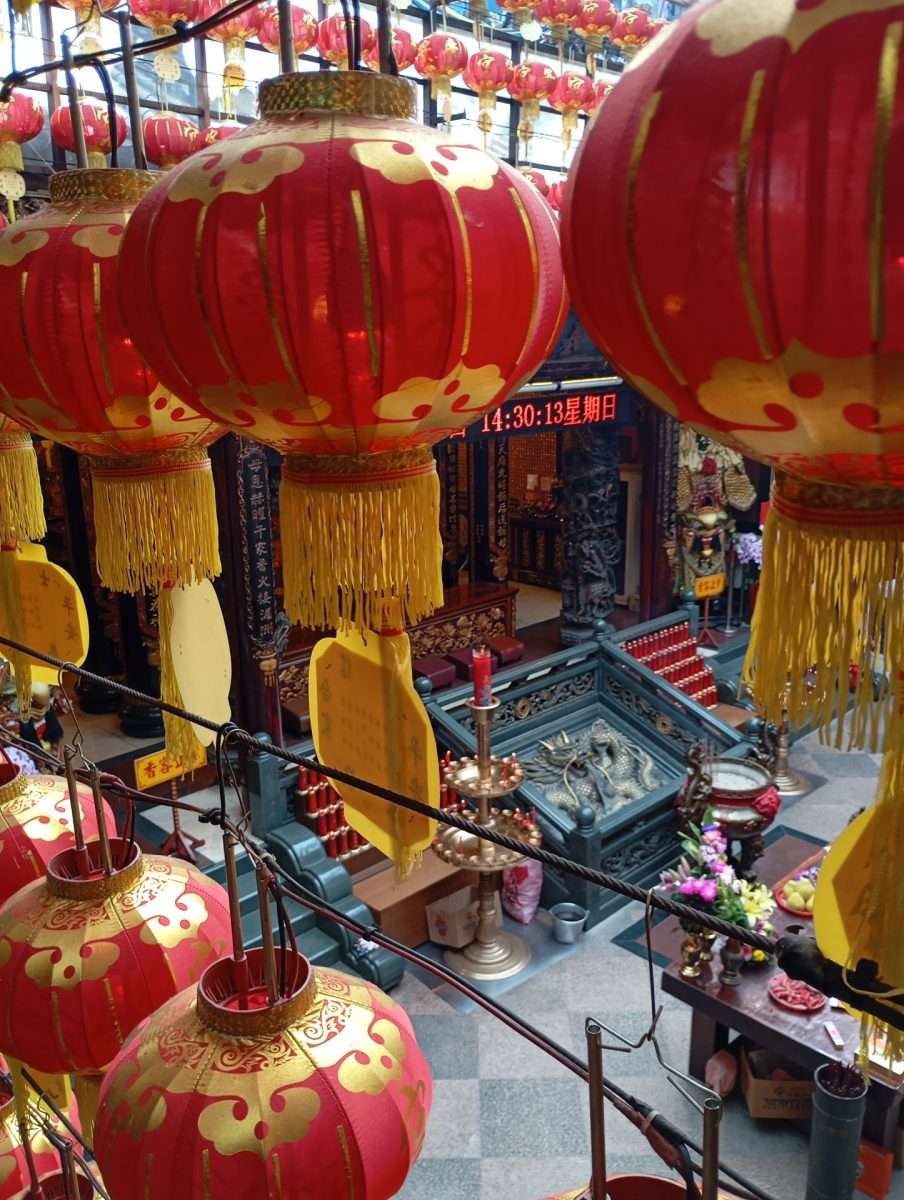
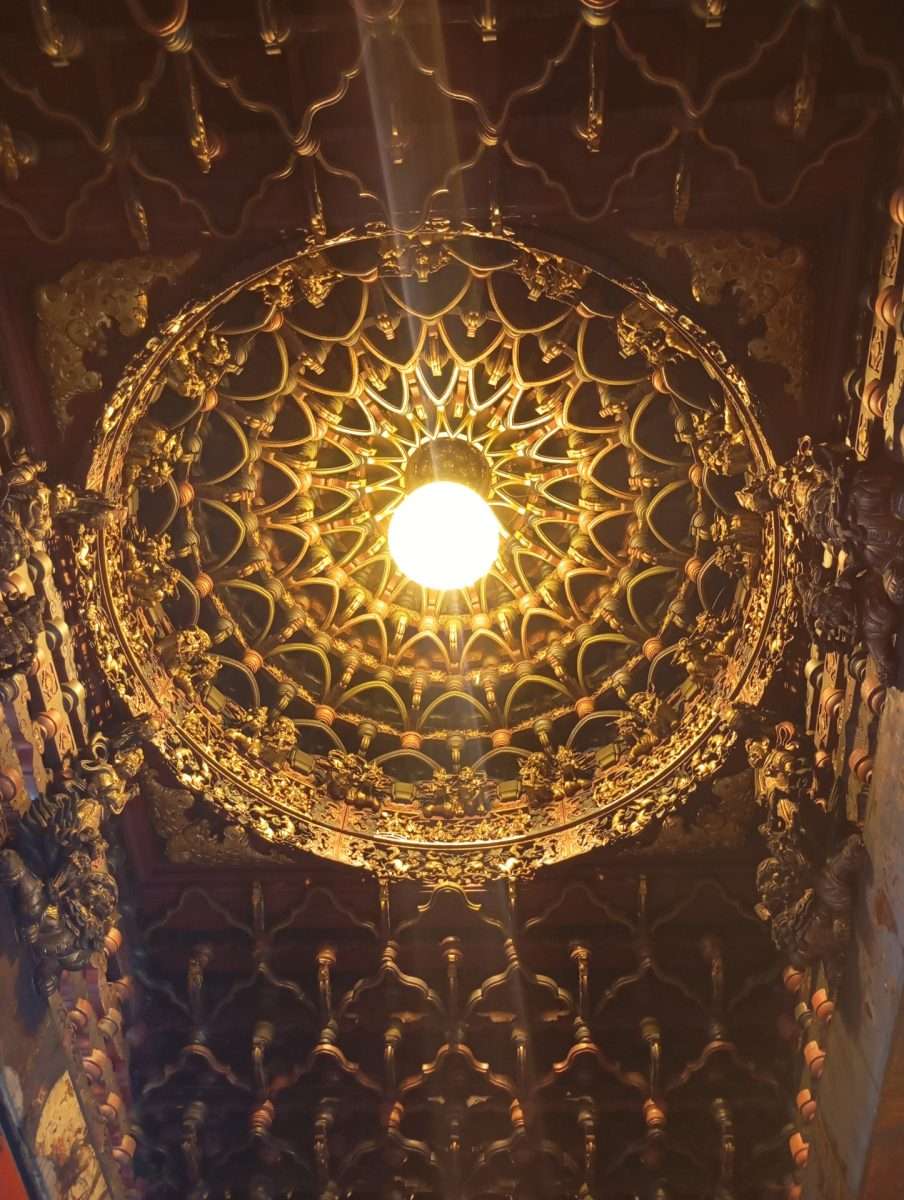
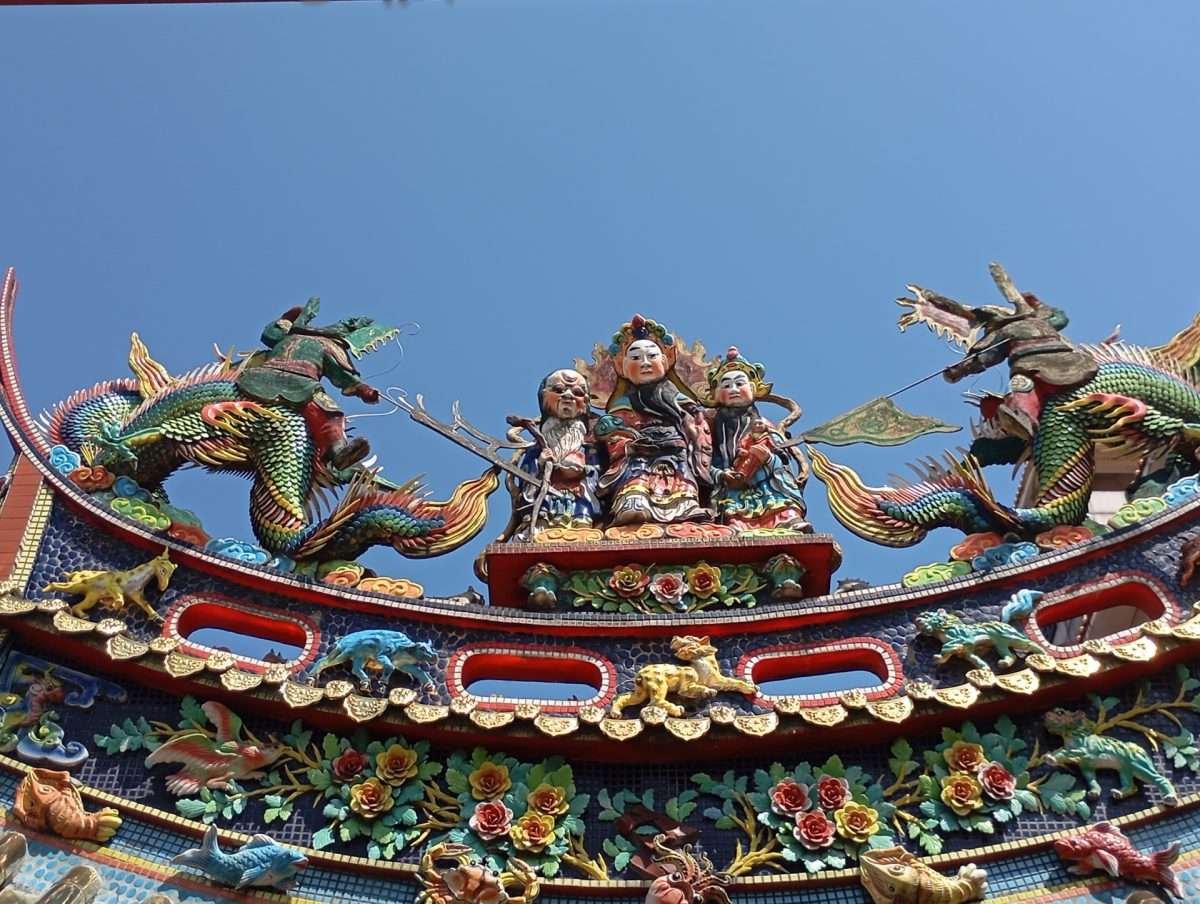
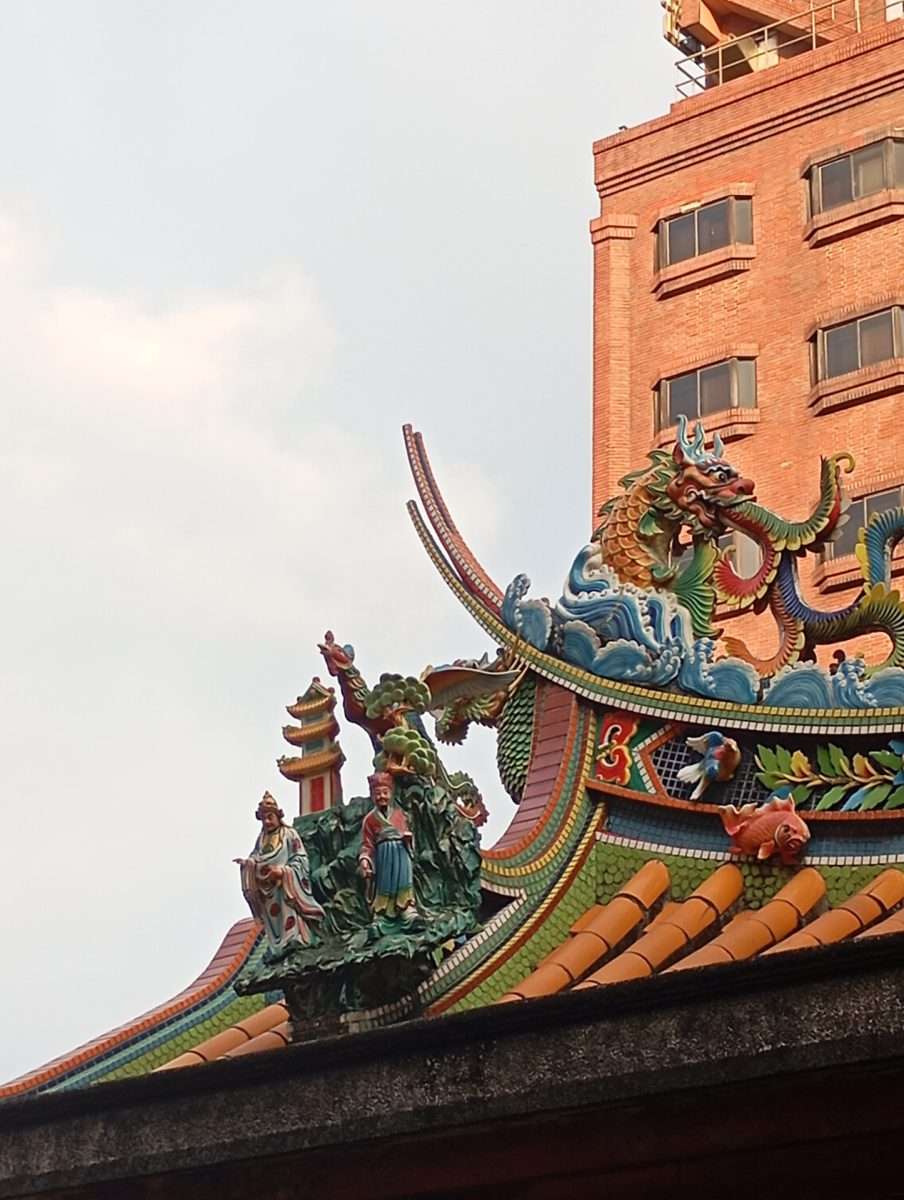
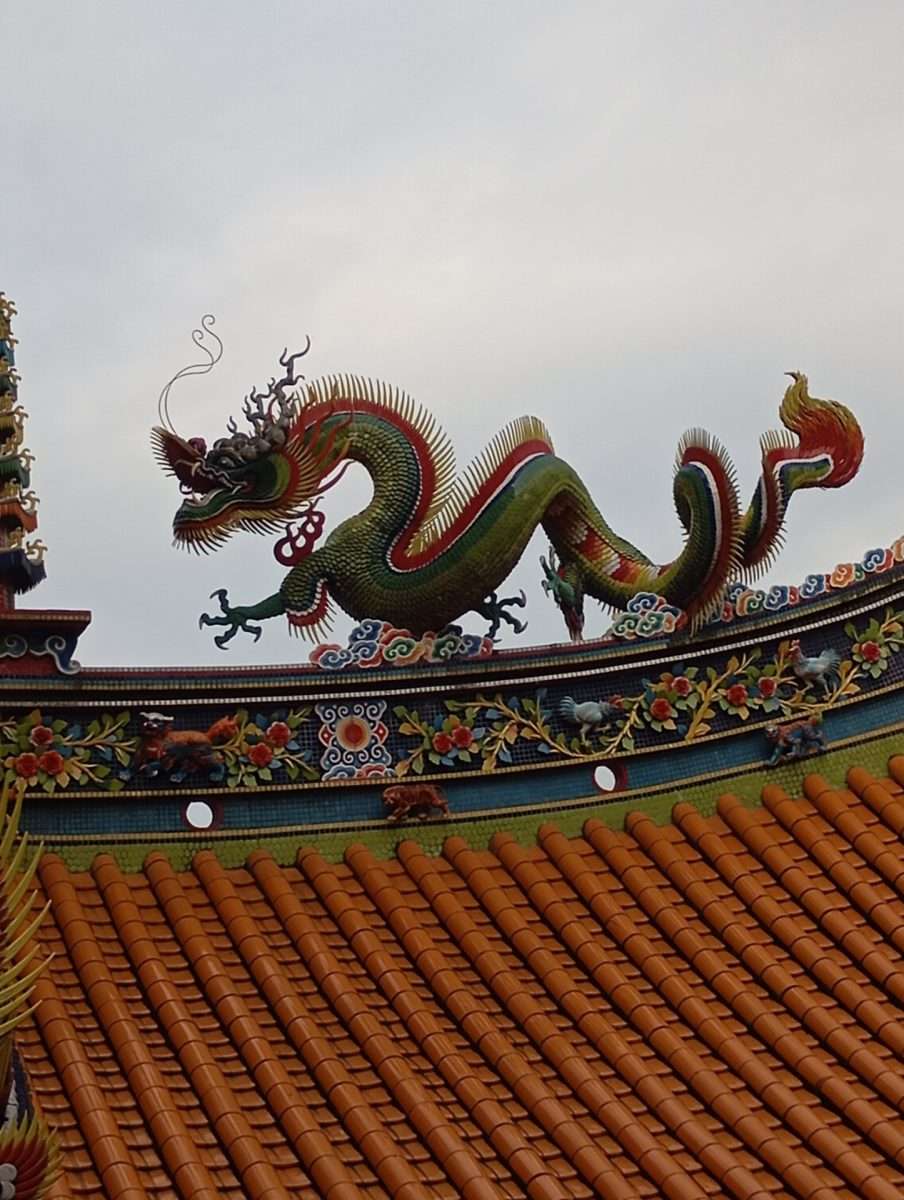
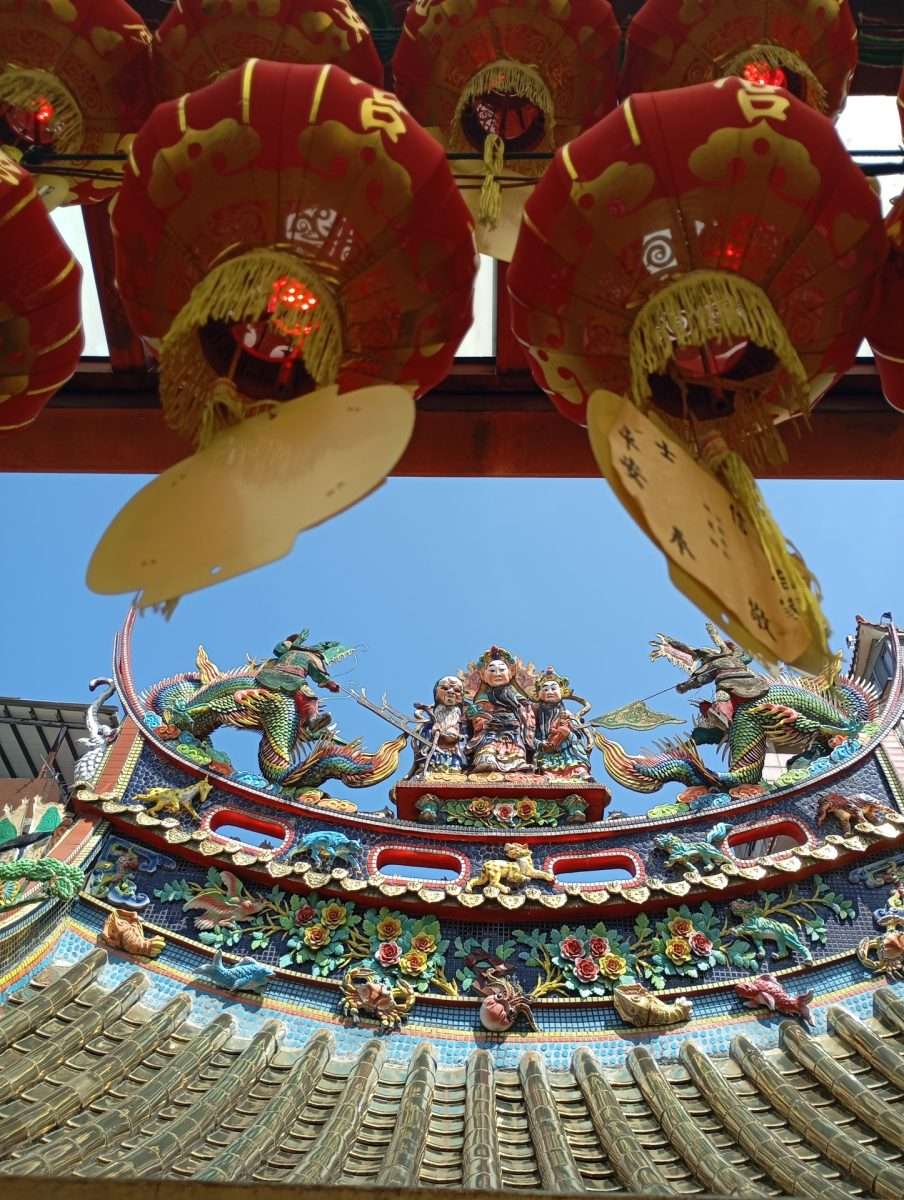
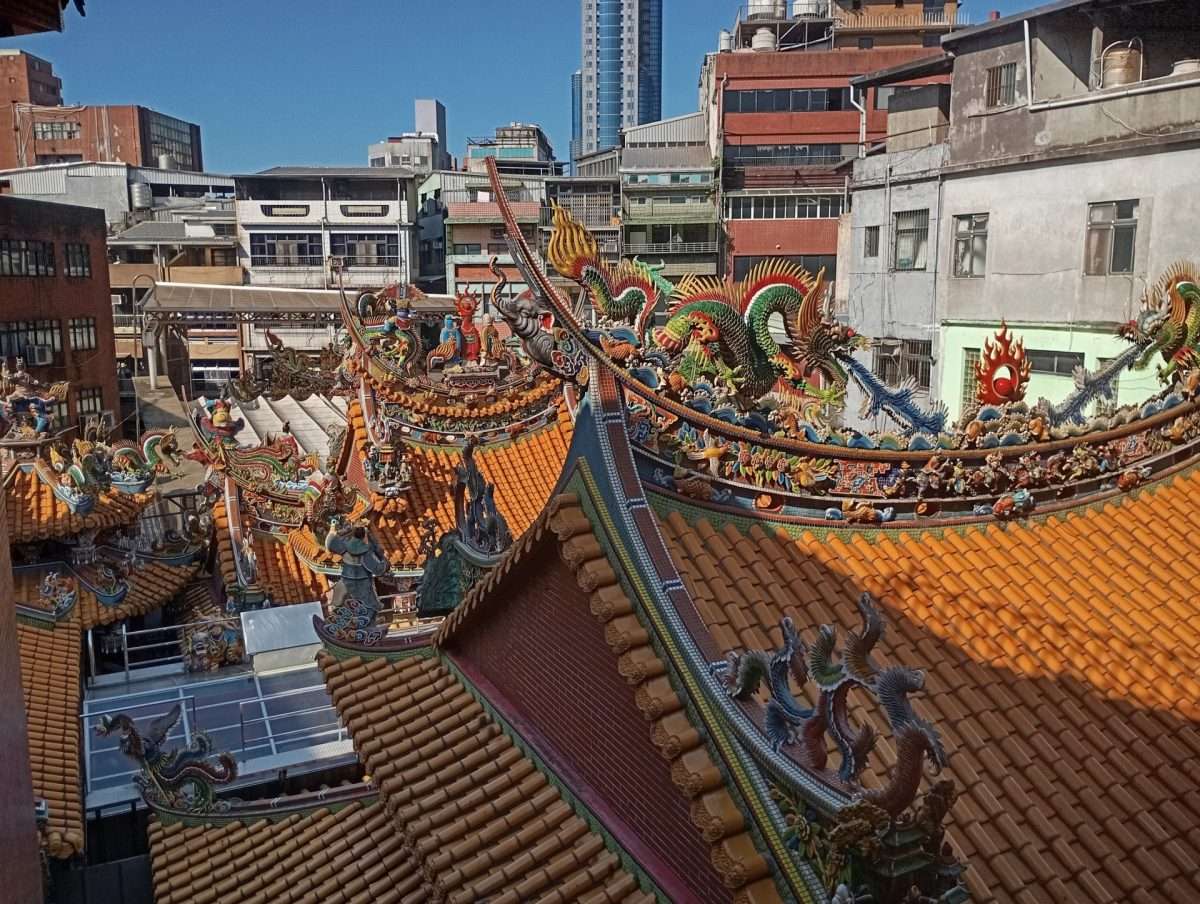
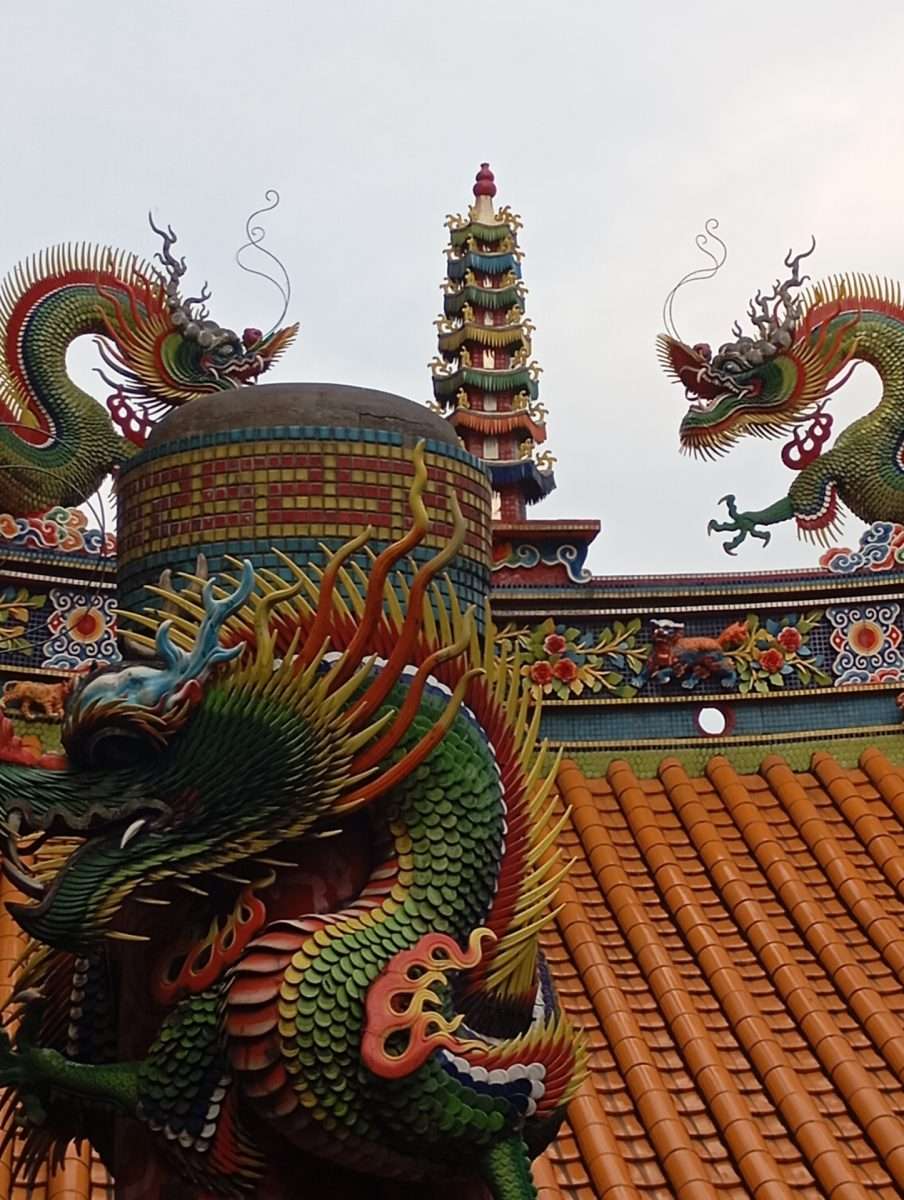
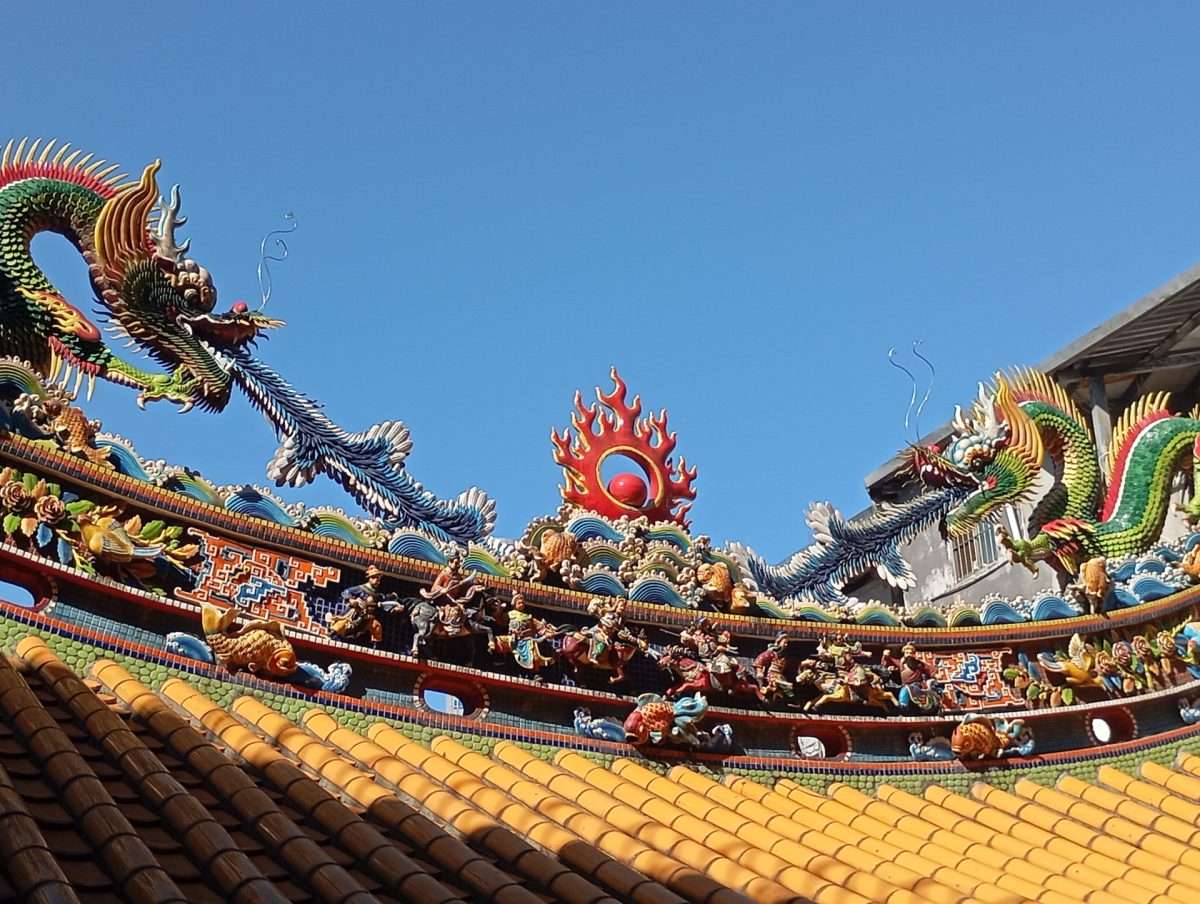
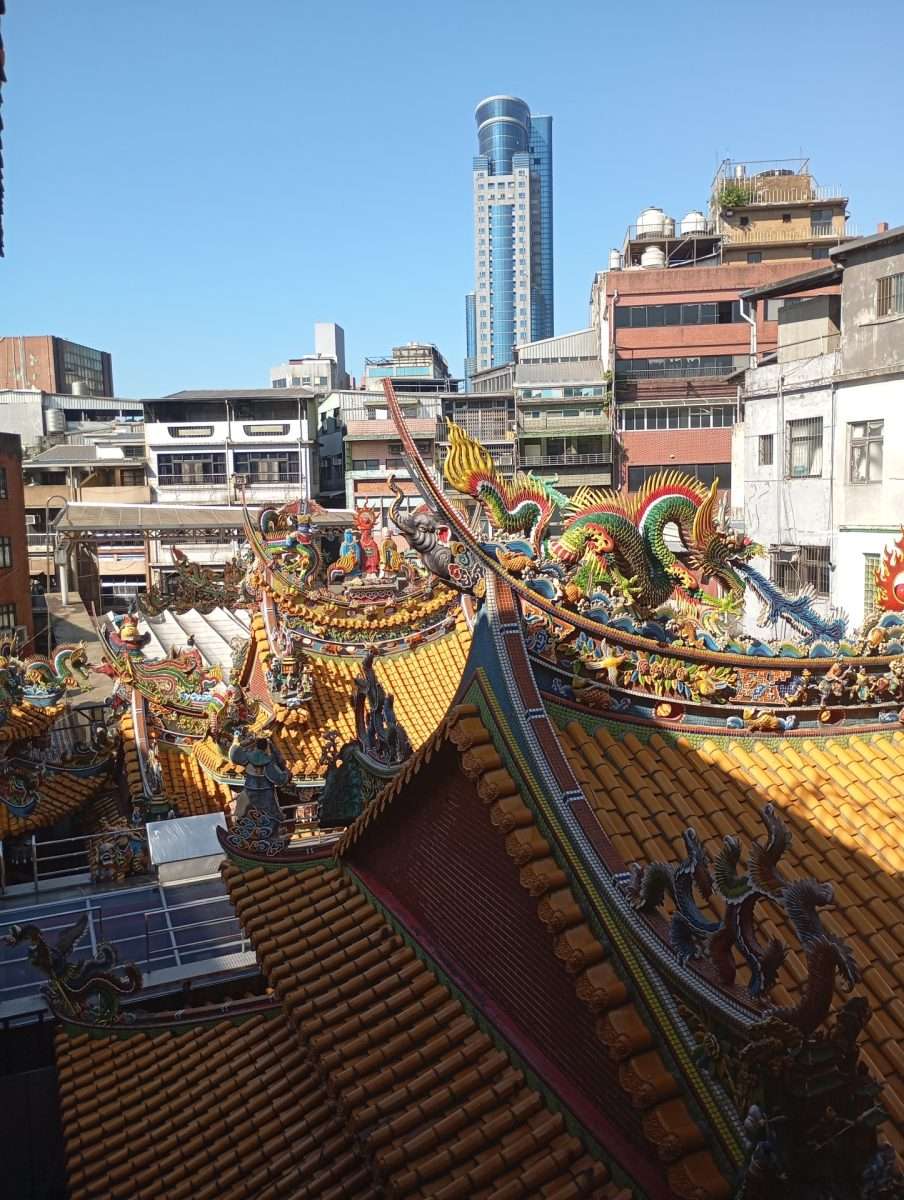
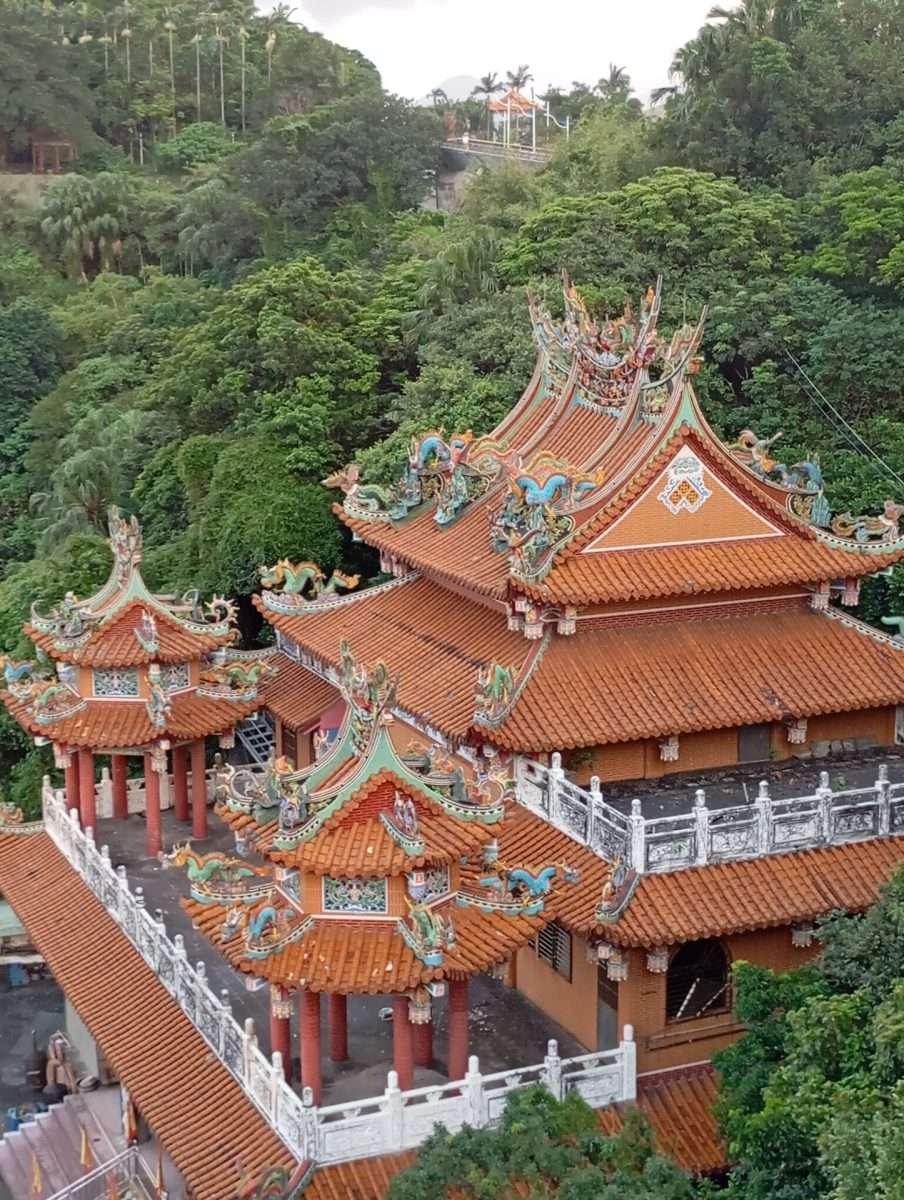
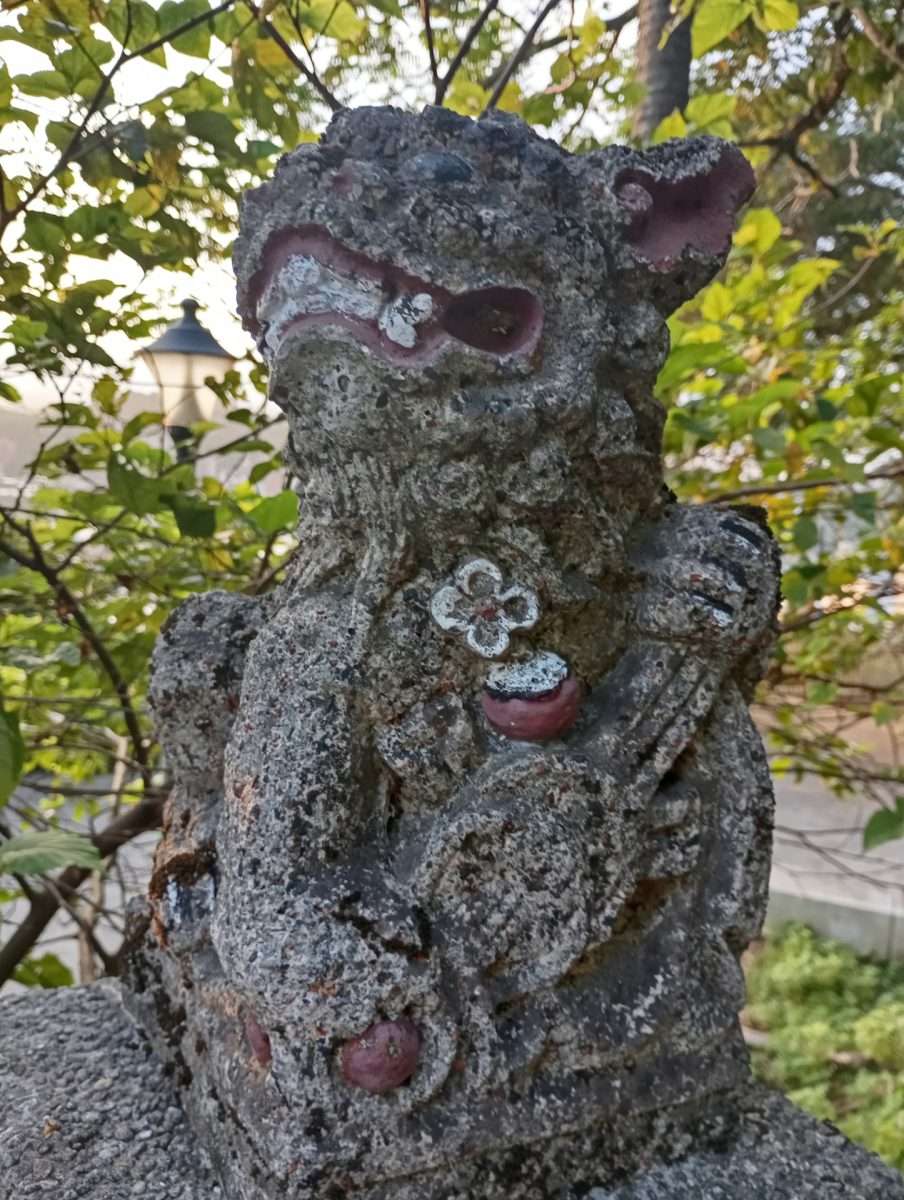
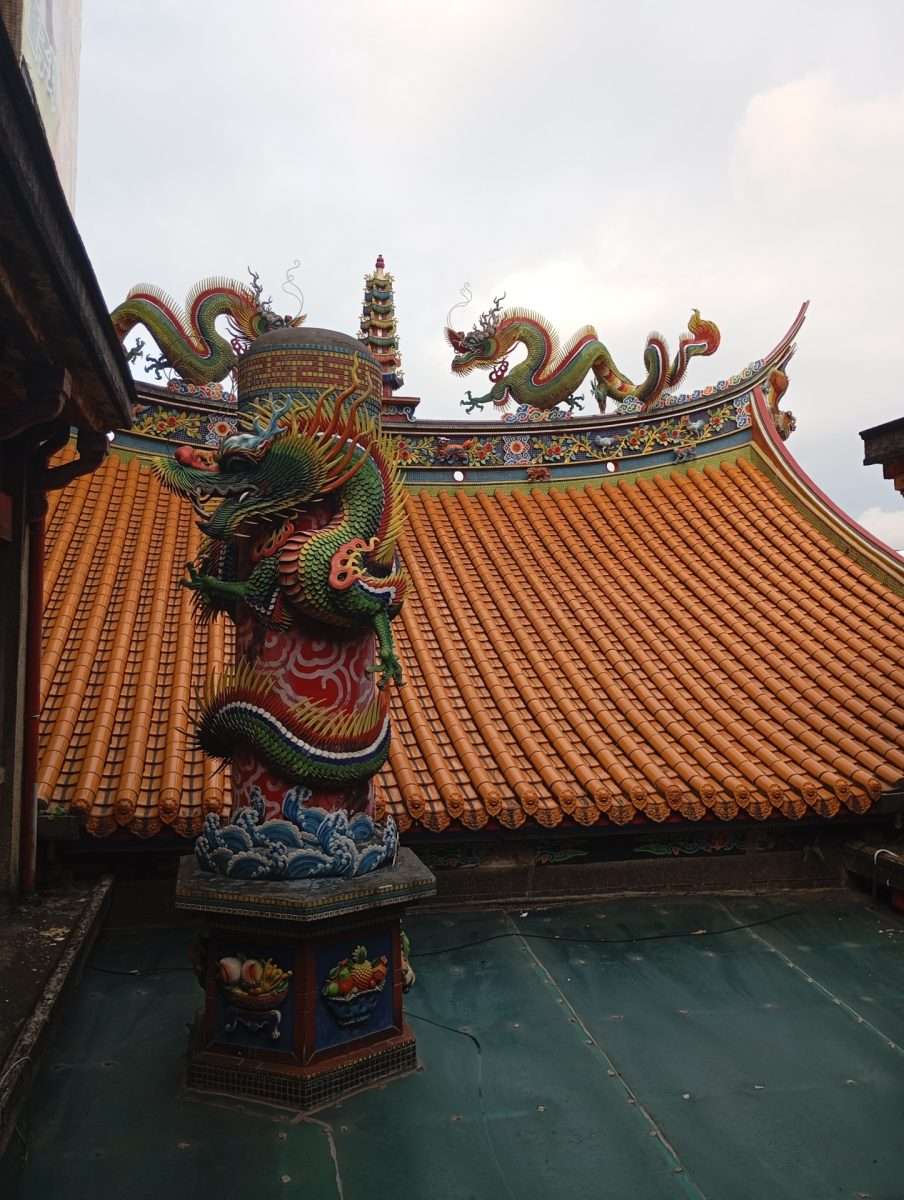
The architecture also deserves attention. The Keelung government highlights the sculpted dragons, stone lions, and interior walls. These are elements you can observe even if you do not yet know how to identify all the deities.
And here you can also practice what you have learned:
- Look at the main altar and Mazu’s position.
- Look for the figures accompanying her.
- Observe dragons, lions, carvings, colors, and inscriptions.
- Look at the incense and offerings: what are the people there actually doing?
And then ask yourself:
What does all of this have to do with the history of Keelung?
The answer once again leads us back to the sea.
If you want to learn more about the history of Mazu and Qing’an, here is a useful resource The Great Mother of Keelung: Mazu — Keelung For A Walk
Why do temples have three doors?
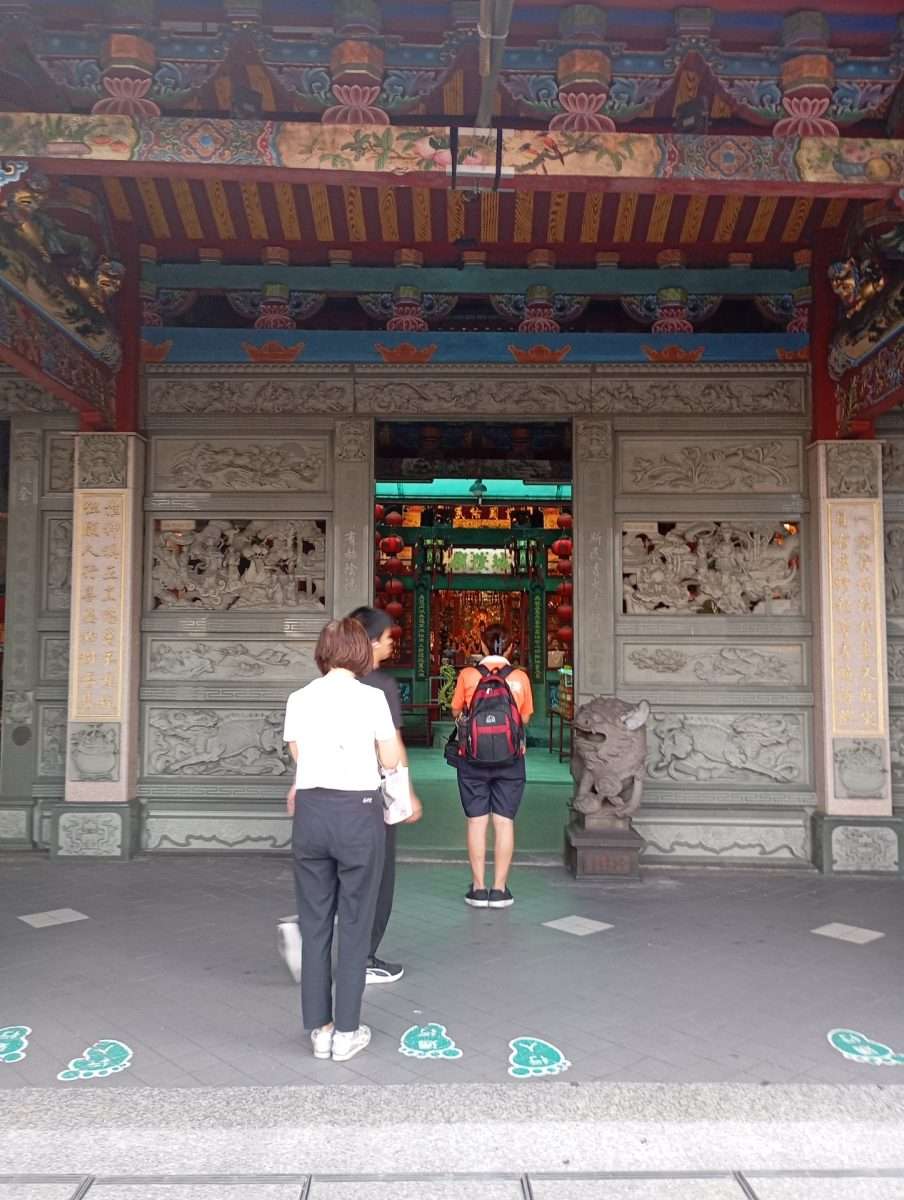
This is another one of those things you will probably notice when visiting a temple in Taiwan. Many traditional temples have three entrance doors. And if you are unfamiliar with the tradition, it is easy to wonder which one you are supposed to use.
The central door may have a special ritual meaning and, depending on the temple, may be reserved for deities, monks, ceremonies, or particular occasions.
The two side doors also have their own names: the Dragon Gate and the Tiger Gate. When you are facing the temple, the door on the right is the Dragon Gate and is traditionally used for entering. The door on the left is the Tiger Gate, traditionally used for leaving.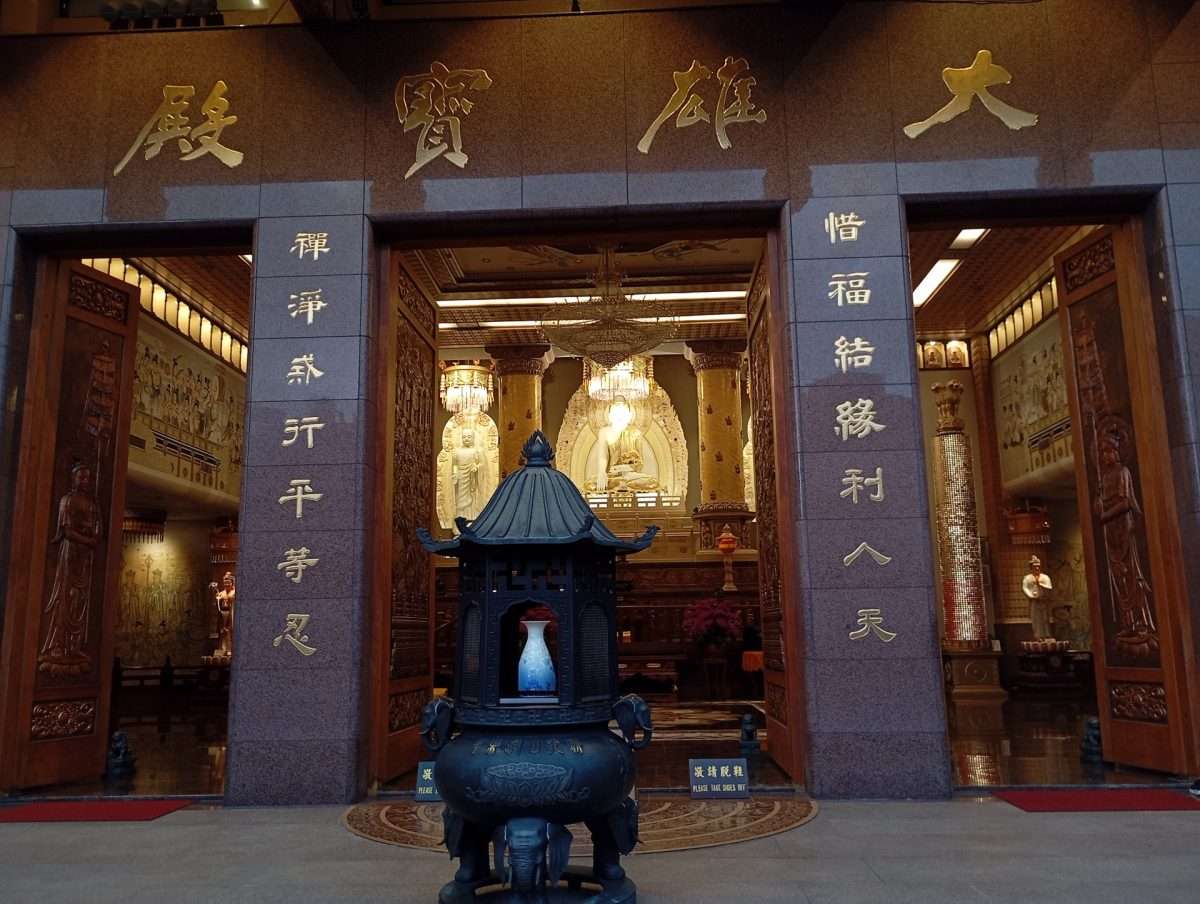 This custom is known as “enter through the Dragon and leave through the Tiger” (rù lóng mén, chū hǔ kǒu), and is traditionally associated with entering while seeking good fortune and leaving bad fortune behind.
Not all temples follow this practice in exactly the same way, and during festivals, ceremonies, or periods of heavy crowds, there may be exceptions. So if you are unsure, observe what others are doing first or follow the temple’s instructions.
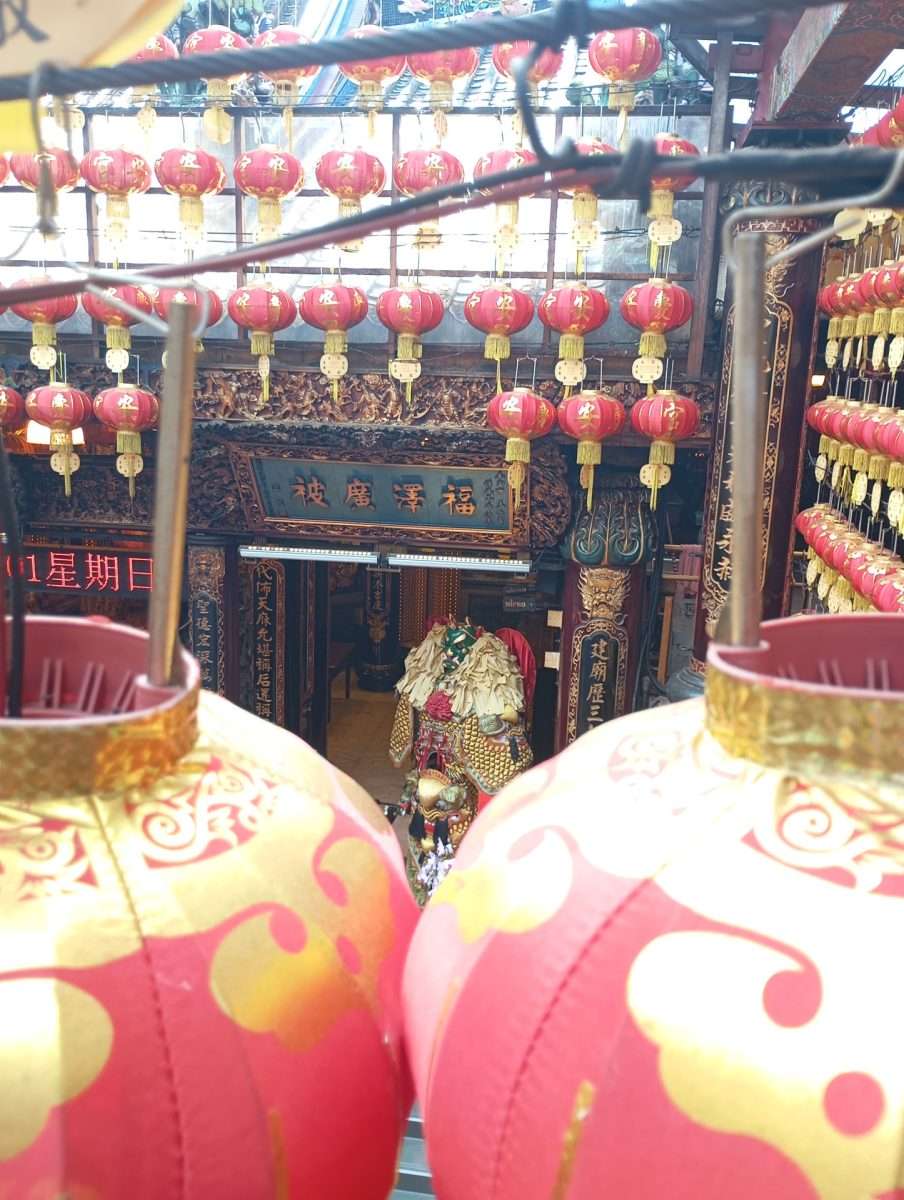
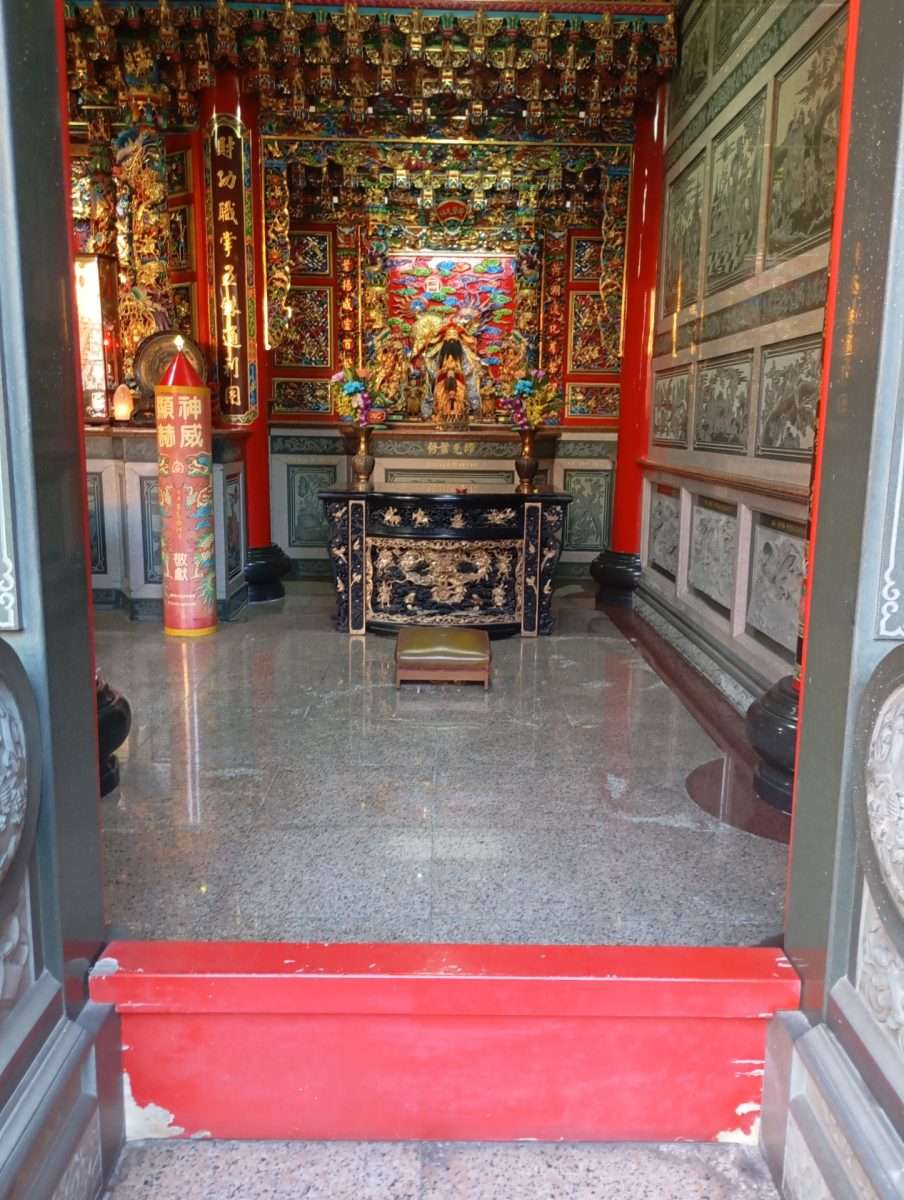
And there is something else you will probably notice when entering: In many of these doorways, there is a wooden piece, perhaps around 20 centimeters high and usually painted red, running across the bottom of the entrance.
The first time you see it, it is easy to think: Does this mean I am not supposed to enter? Or at least, that is what I thought. But no, if the door is open, you can enter.
There is just one thing you should remember: Do not step on the threshold.
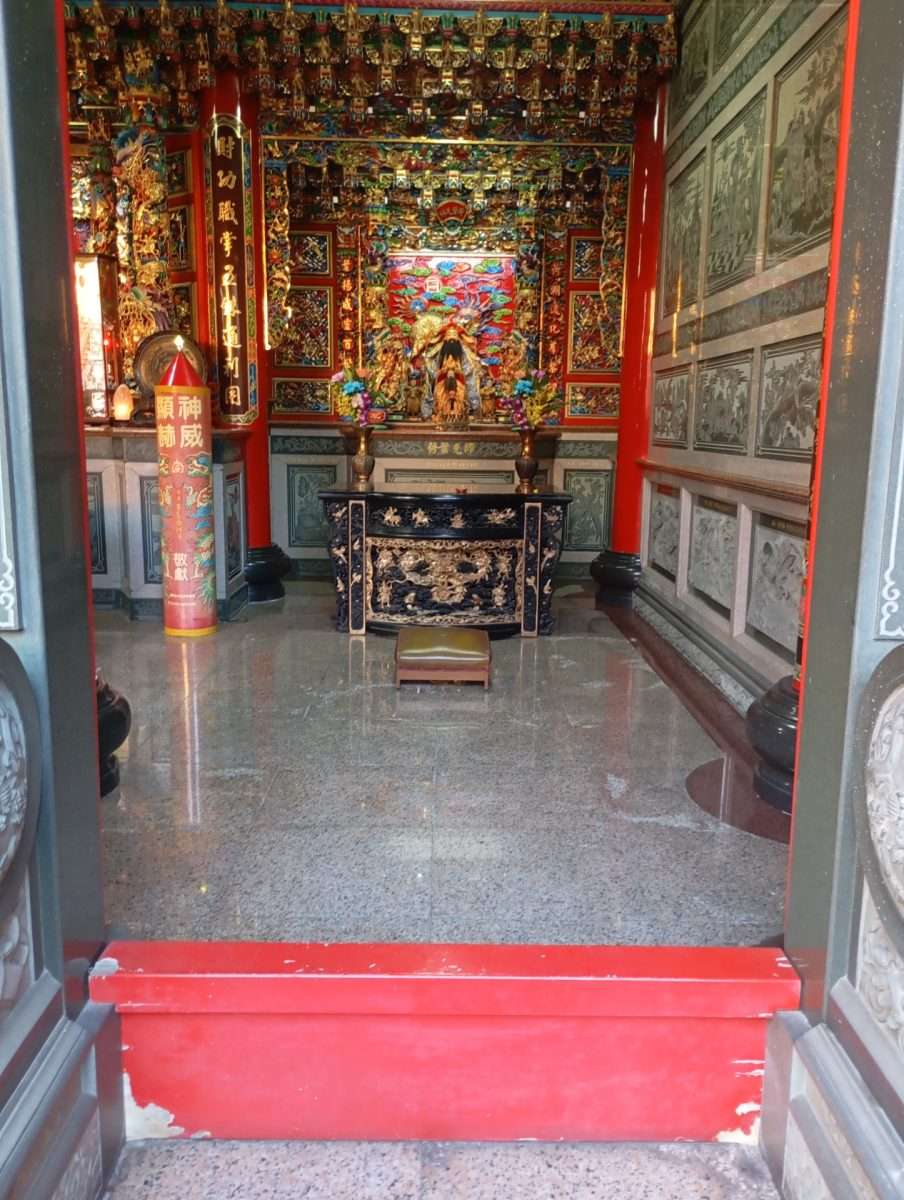 This wooden piece is known as ménkǎn, the doorway threshold. The custom is to lift your foot and step over it rather than stepping directly on it.
Why?
There are different traditional explanations. One associates the threshold with the deities who protect the entrance: stepping on it is considered disrespectful toward them.
Another symbolic explanation connects it with the idea that the threshold represents a boundary between the outside world and the sacred space.
In some traditions, it is also explained that stepping on it is symbolically equivalent to “stepping on the shoulders” of the person or being who inhabits or protects the place.
So when you see that wooden piece at the entrance, do not interpret it as a barrier. It is something you cross, but do not step on.
And perhaps this is one of the first interesting things you can learn when visiting a temple in Keelung: Many things that may look purely decorative or architectural to a foreign visitor can also carry cultural meaning.
The three doors tell you how to enter. The threshold reminds you how to do it.
And before you have even reached the altar, the temple is already teaching you how to observe.
8. Dianji Temple: When a temple also tells a story of migration
Location: No. 27-2, Ren 3rd Road, Ren’ai District. View Dianji Temple on Google Maps
From Qing’an, continue toward Ren 3rd Road. And here something happens that I love about this route:
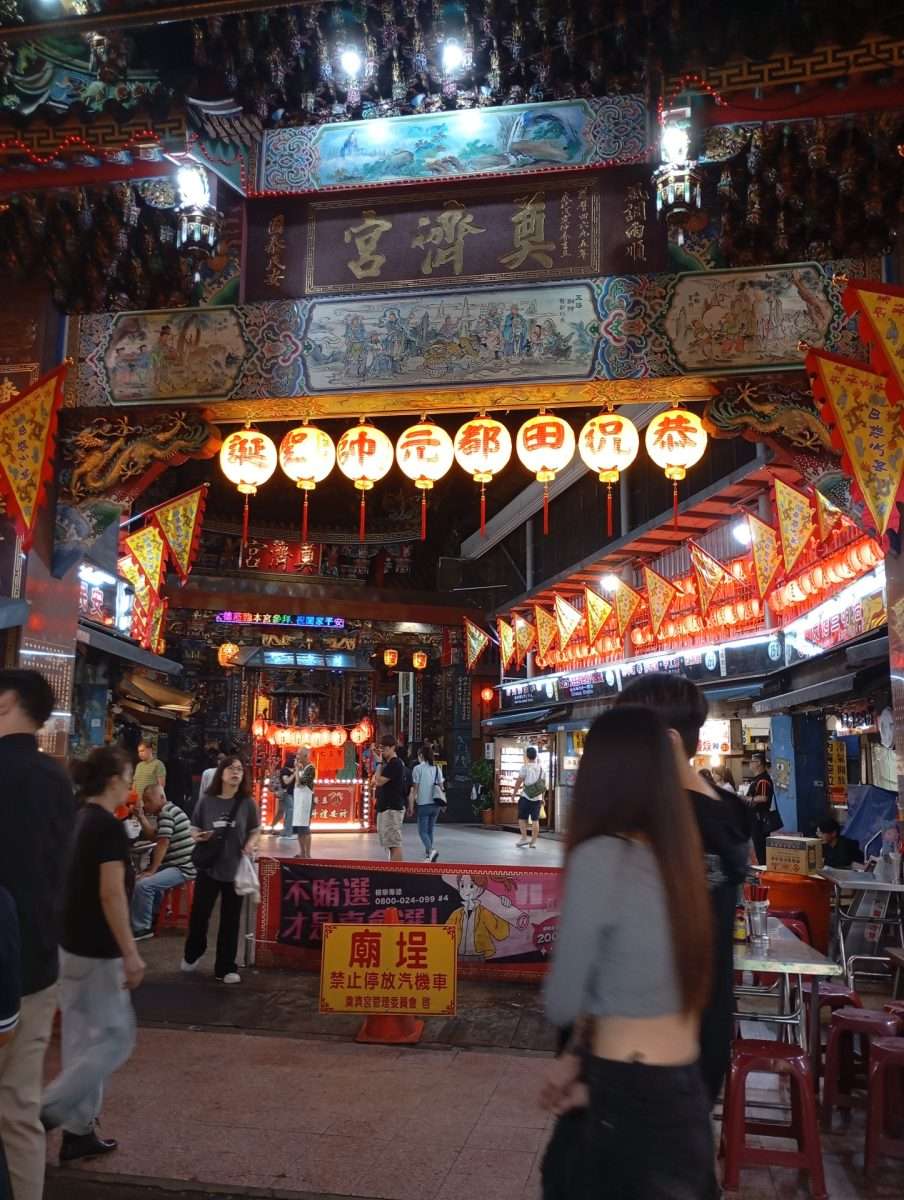
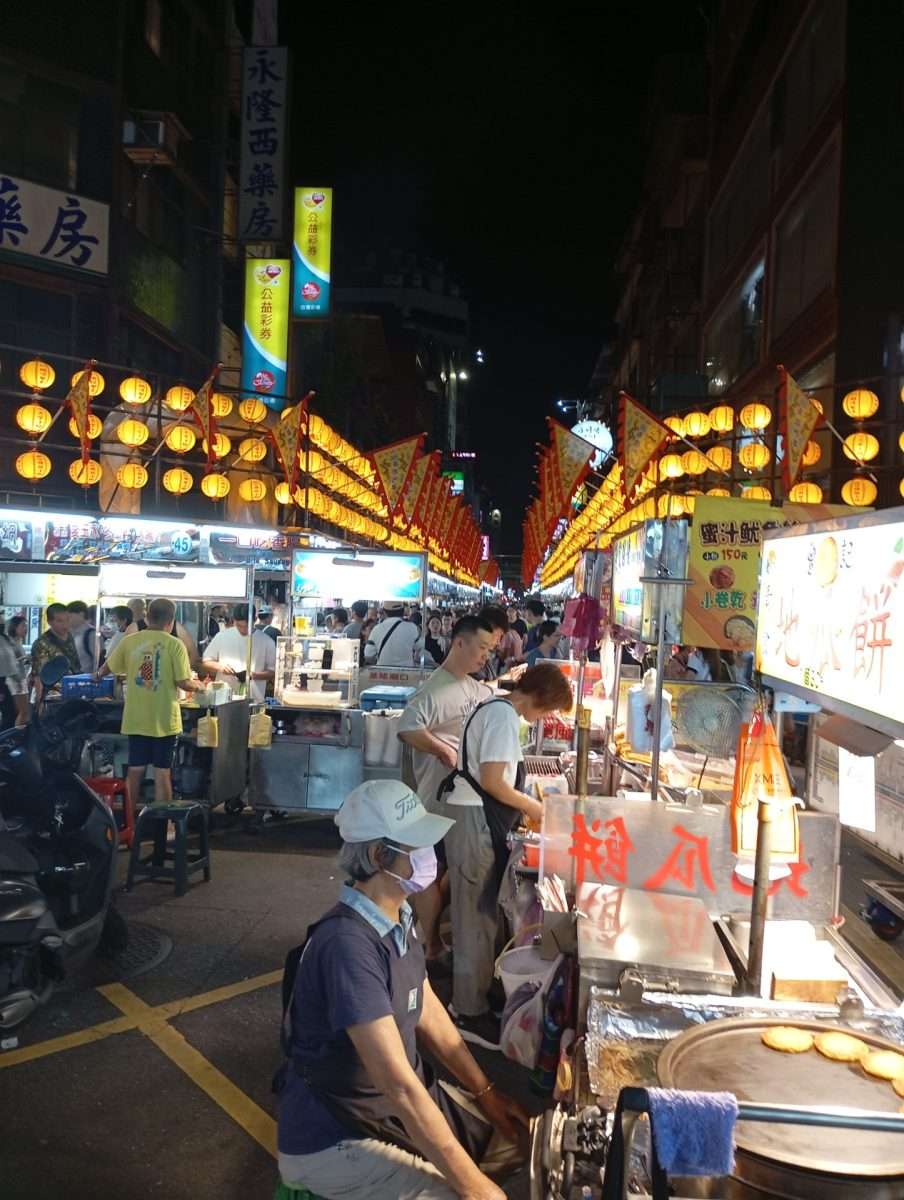
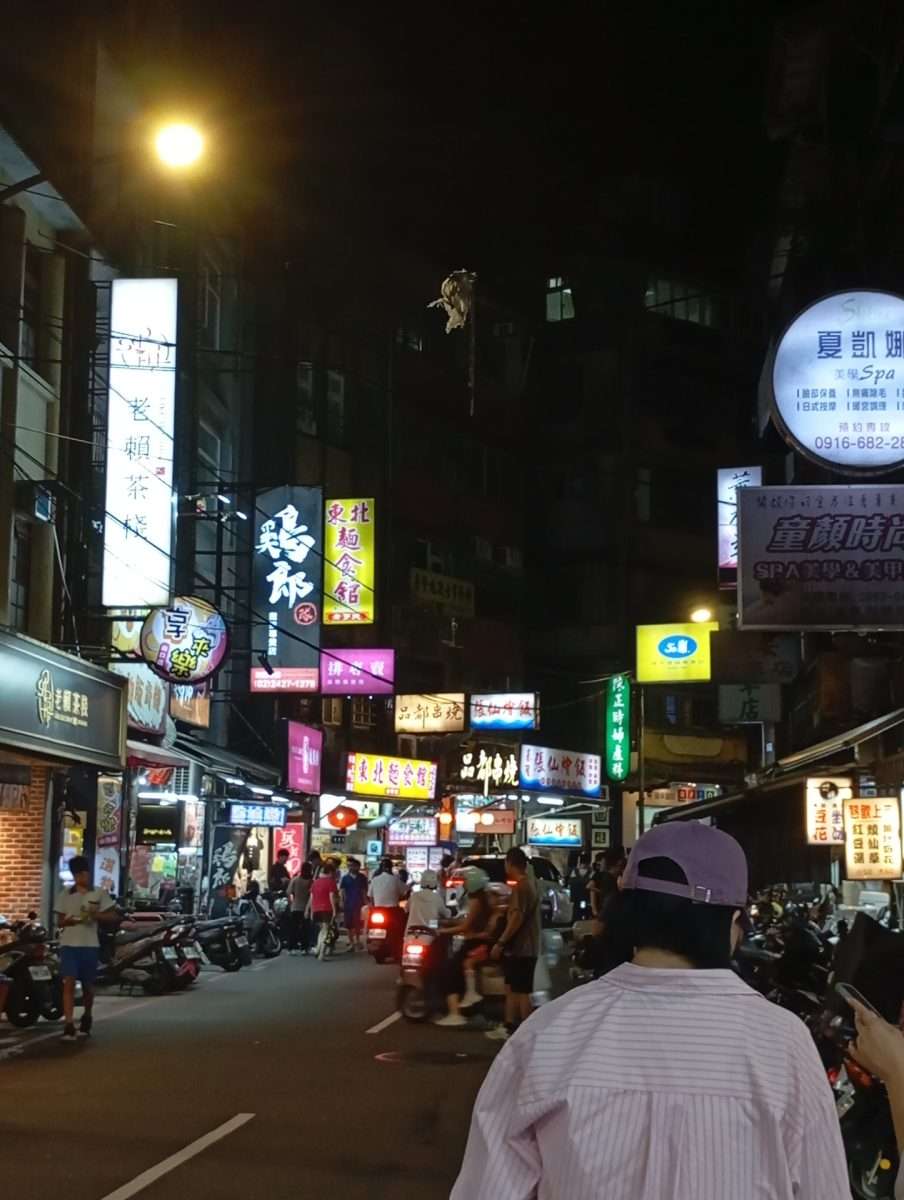
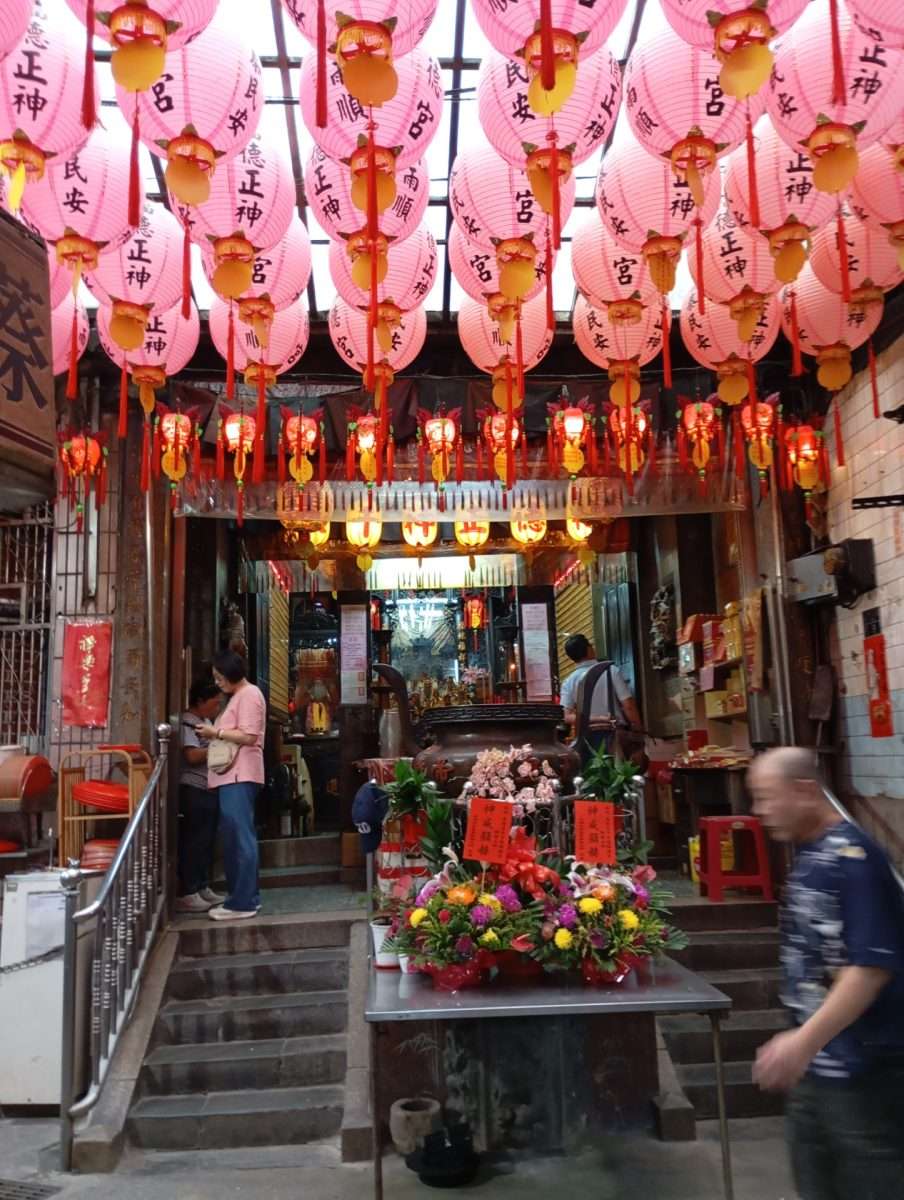
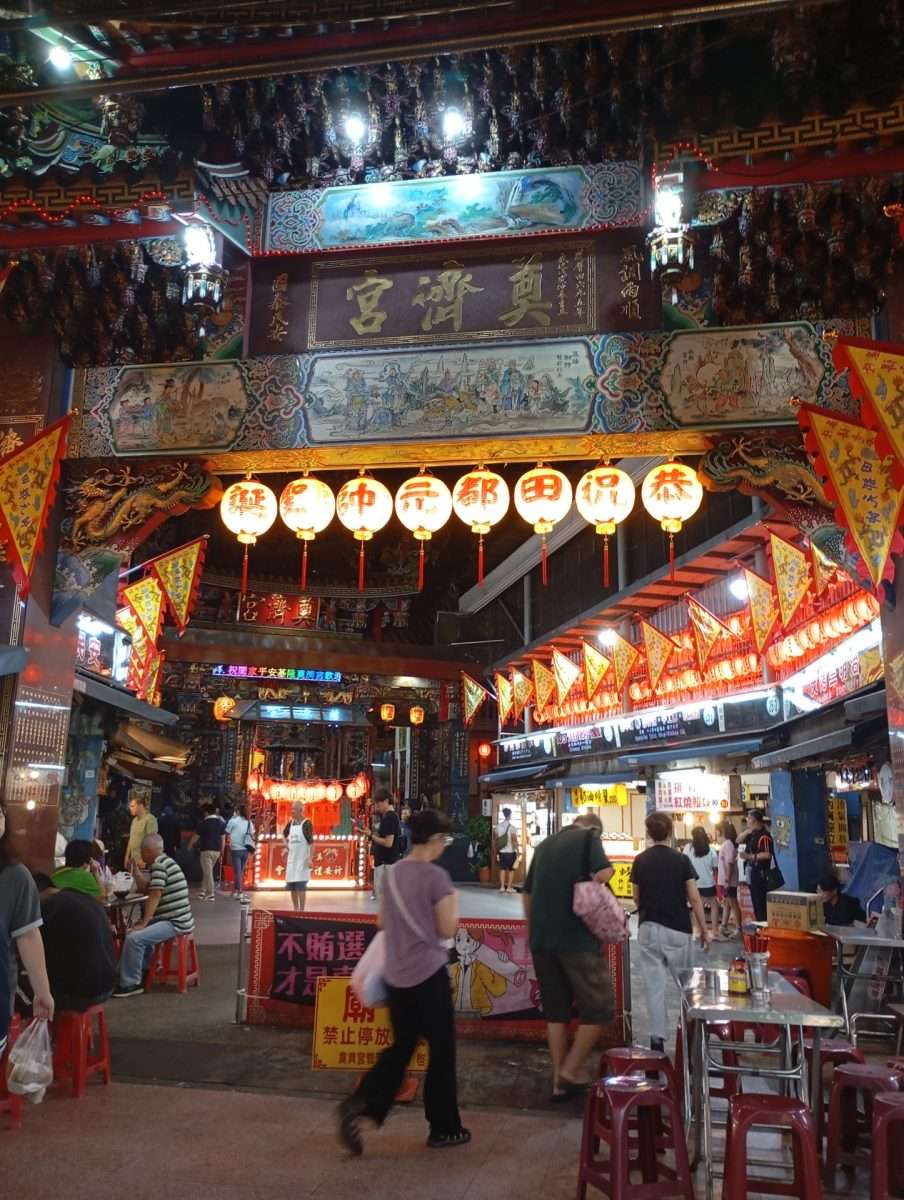
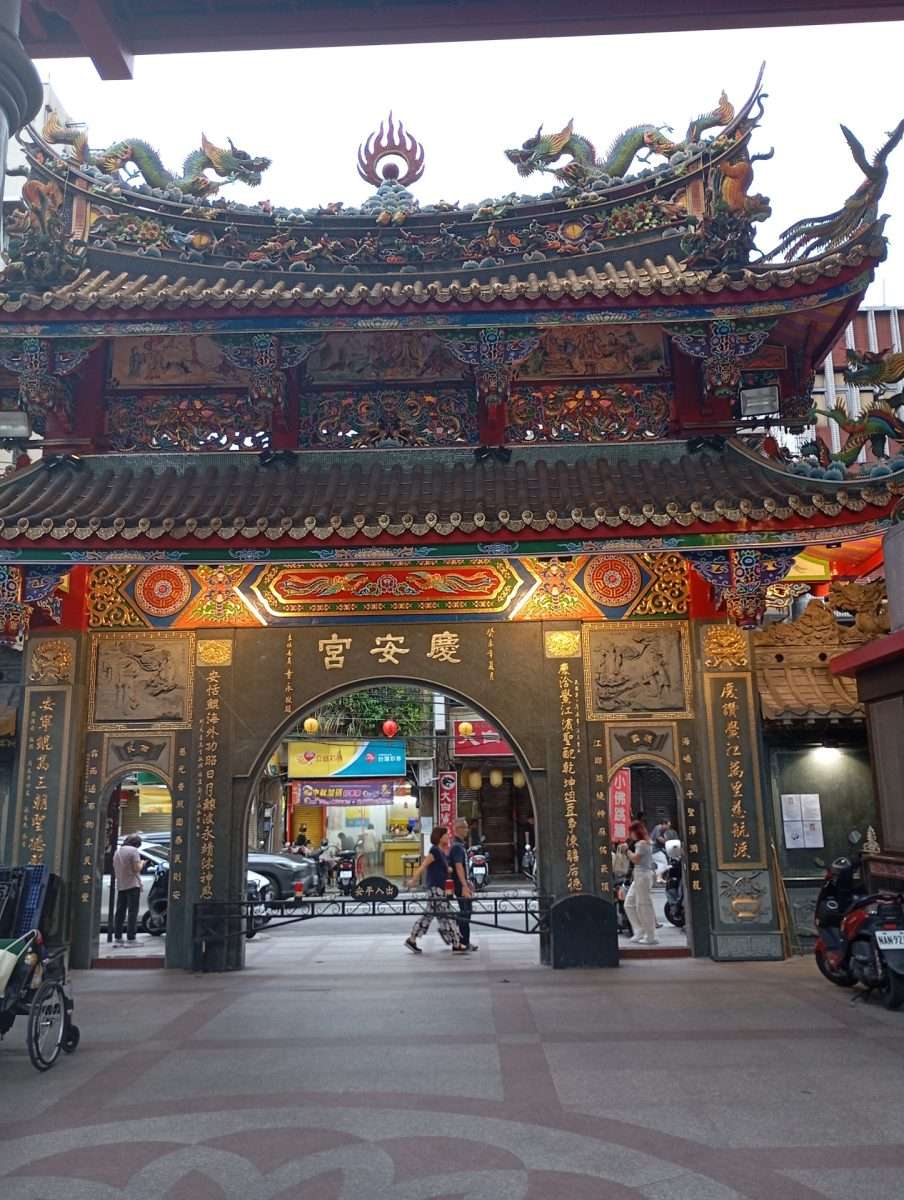
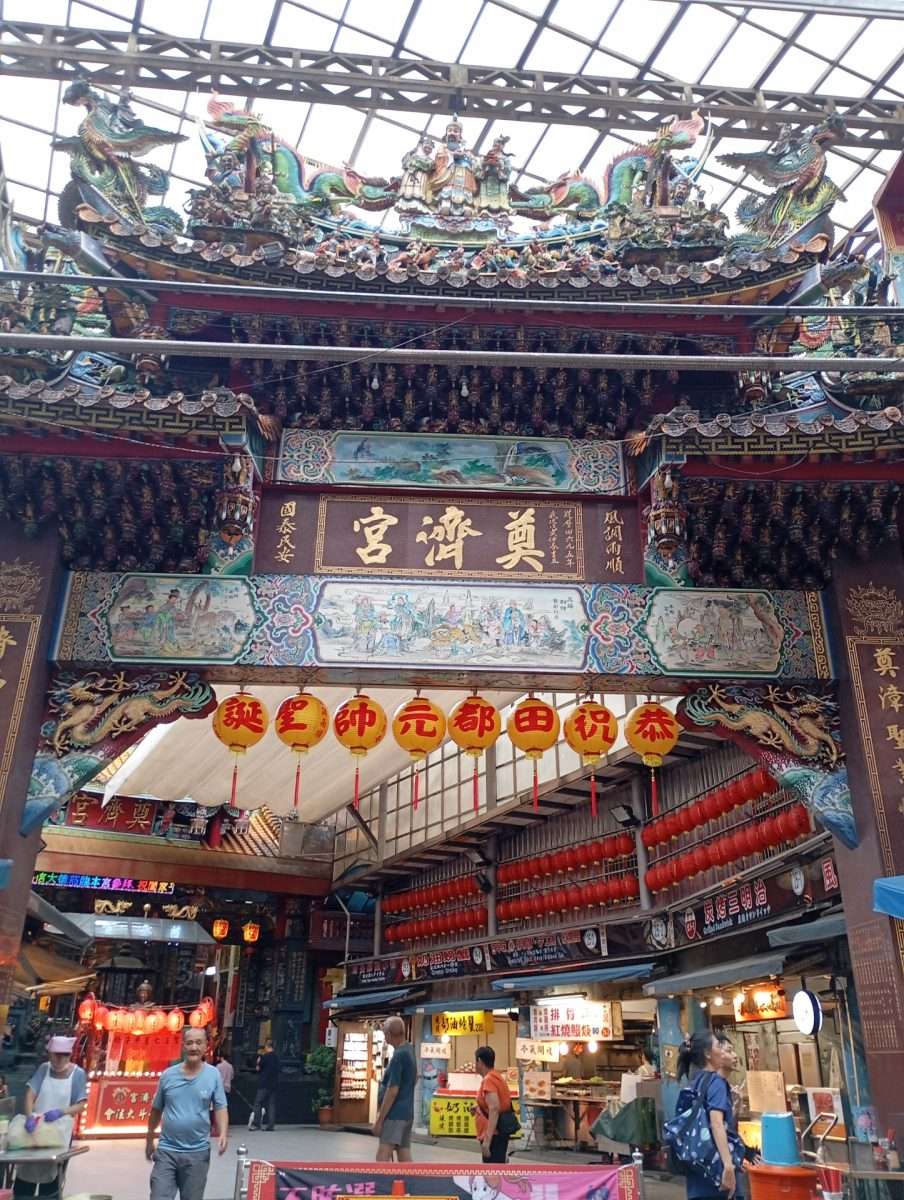
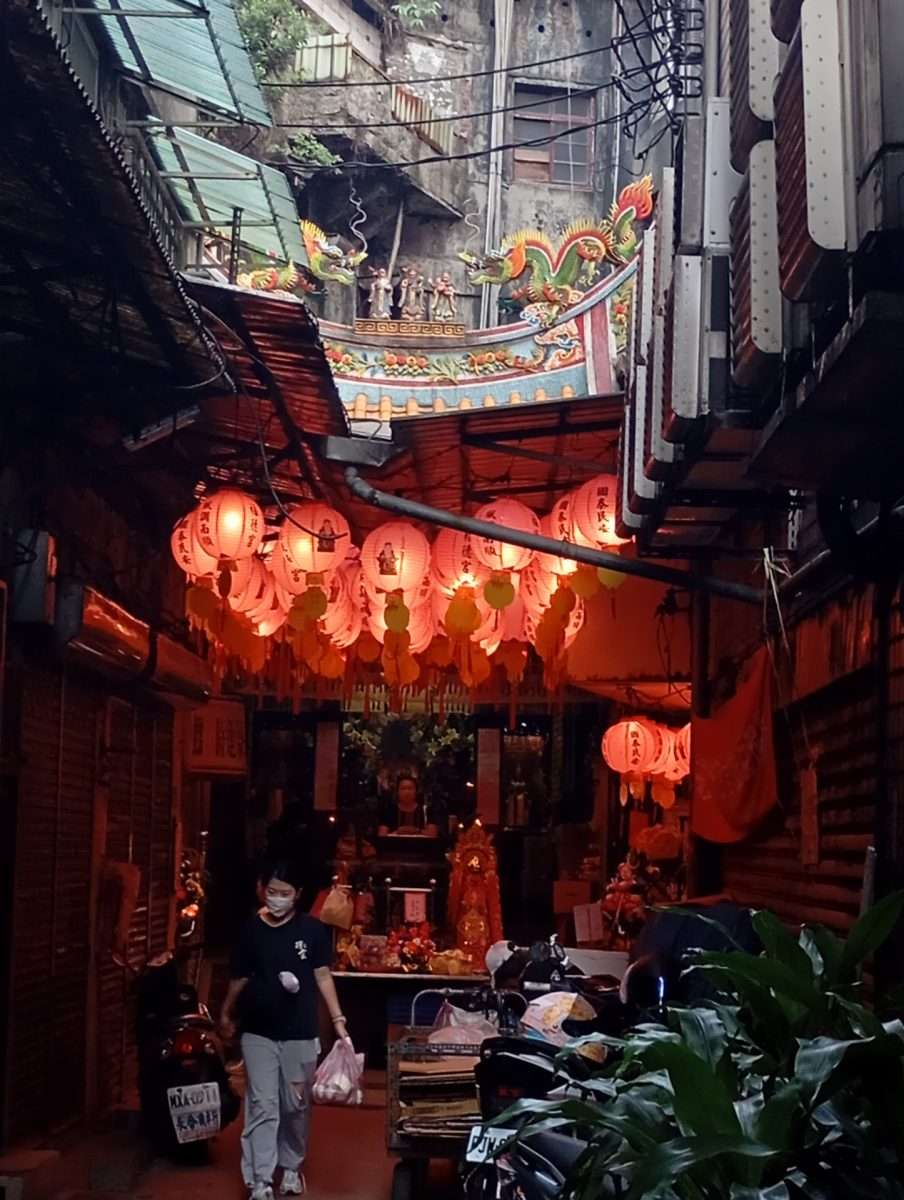
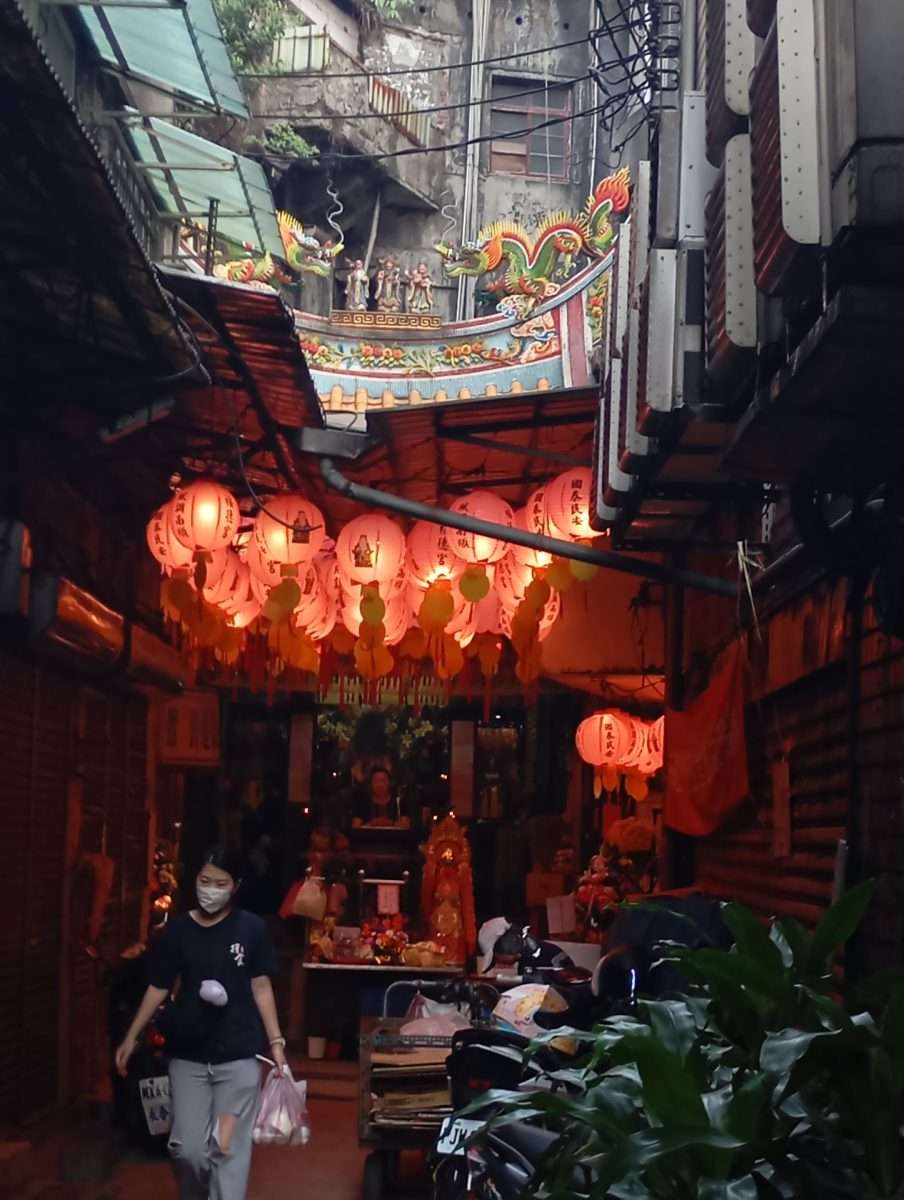
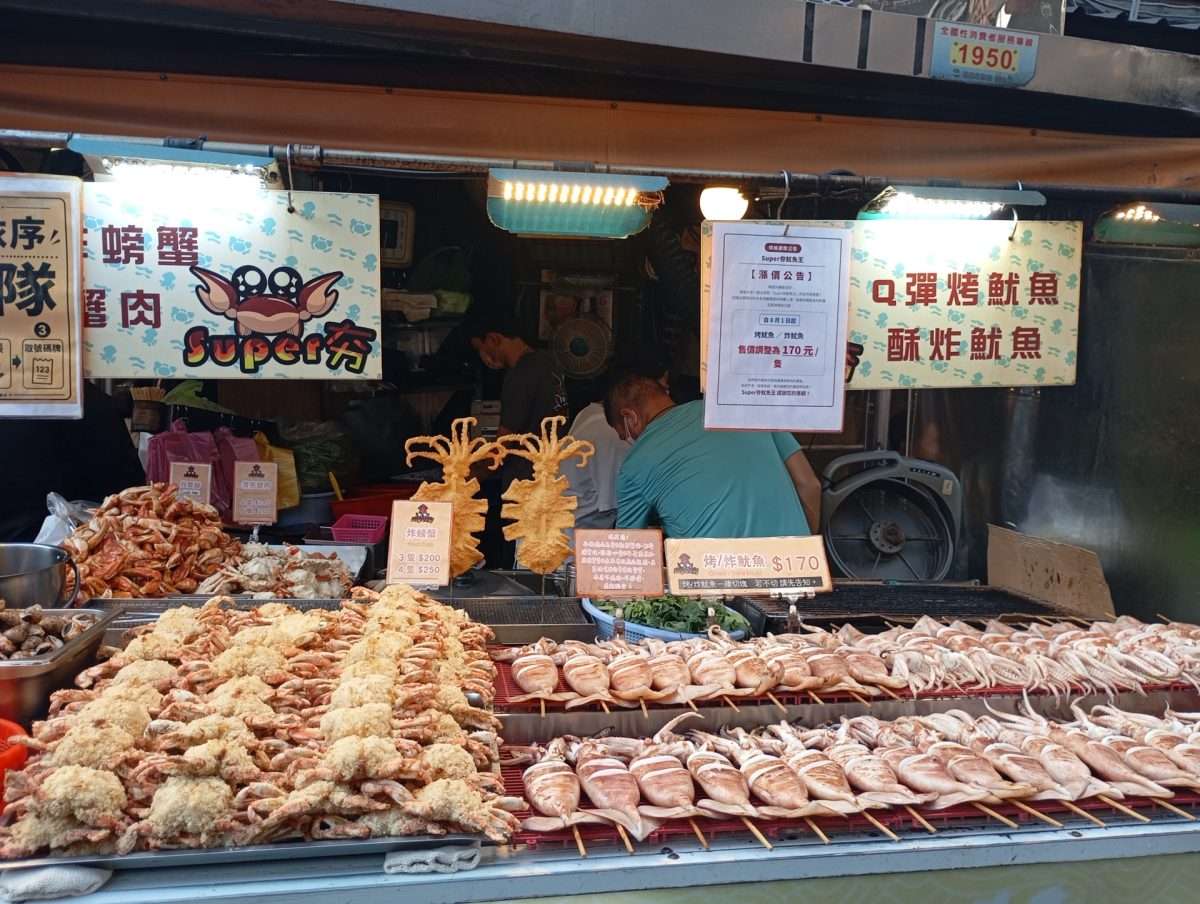
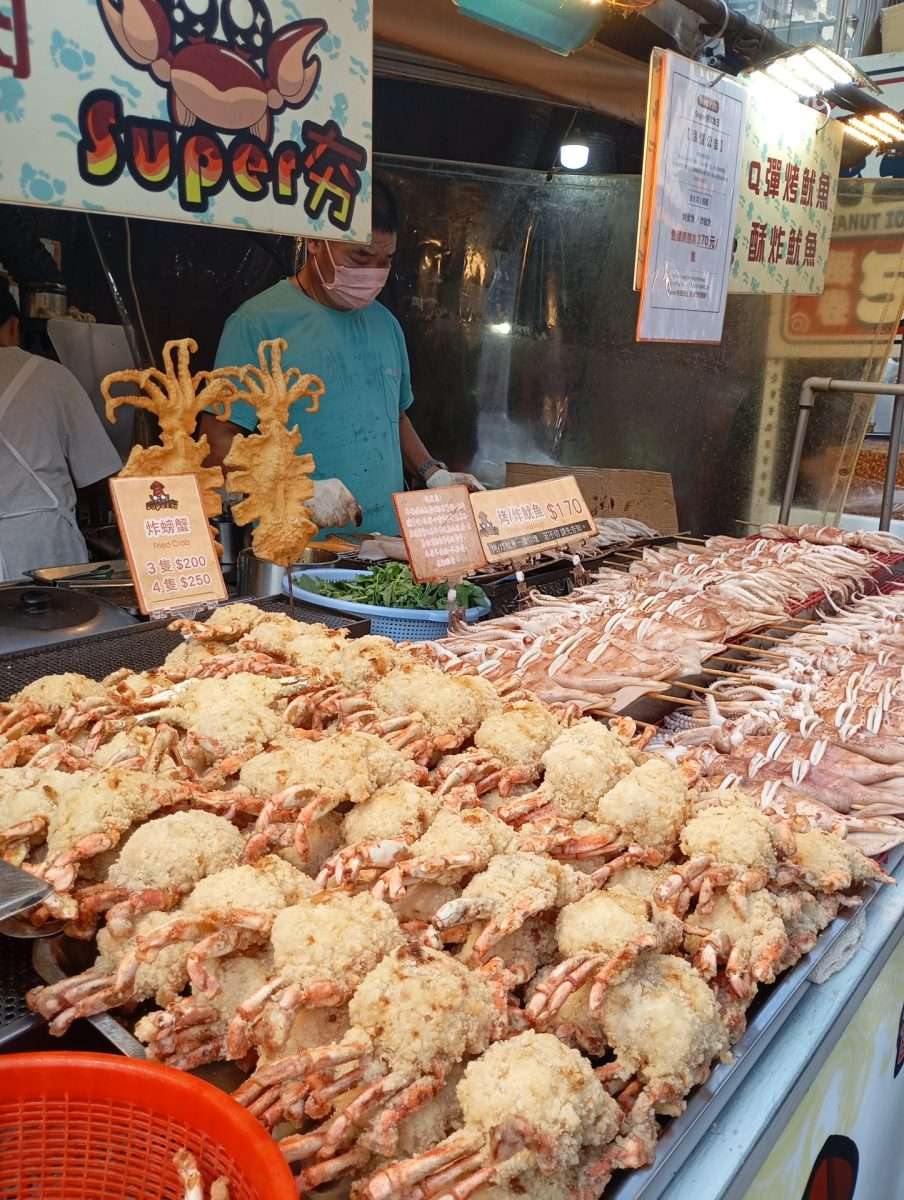
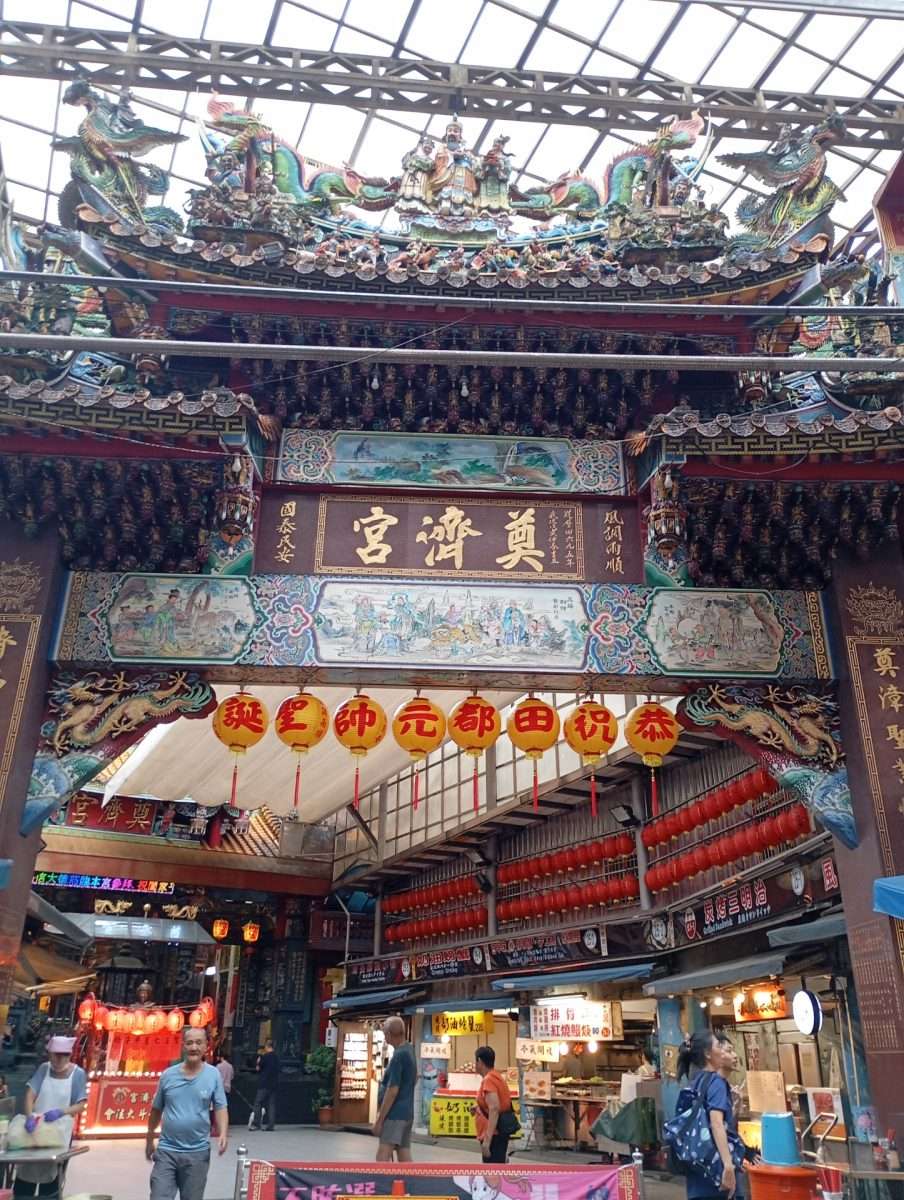
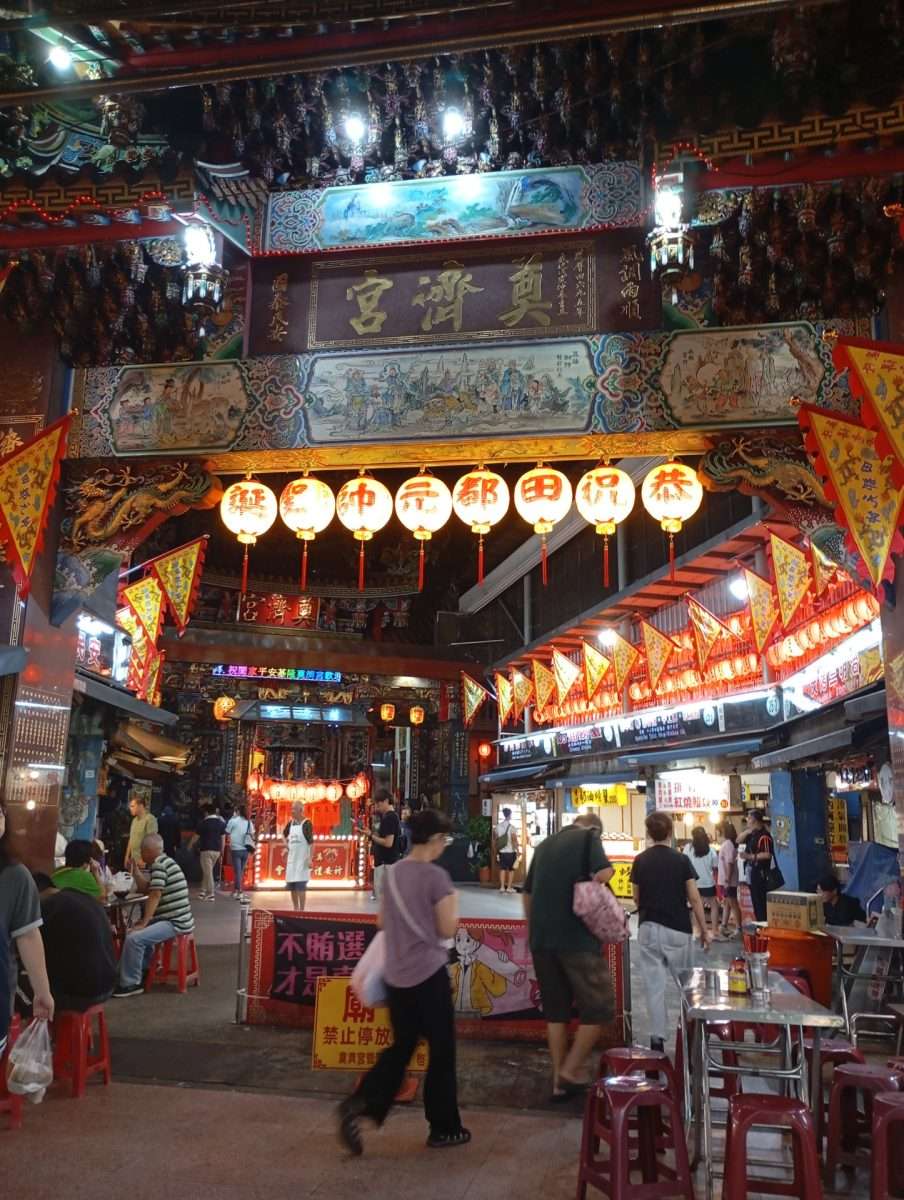
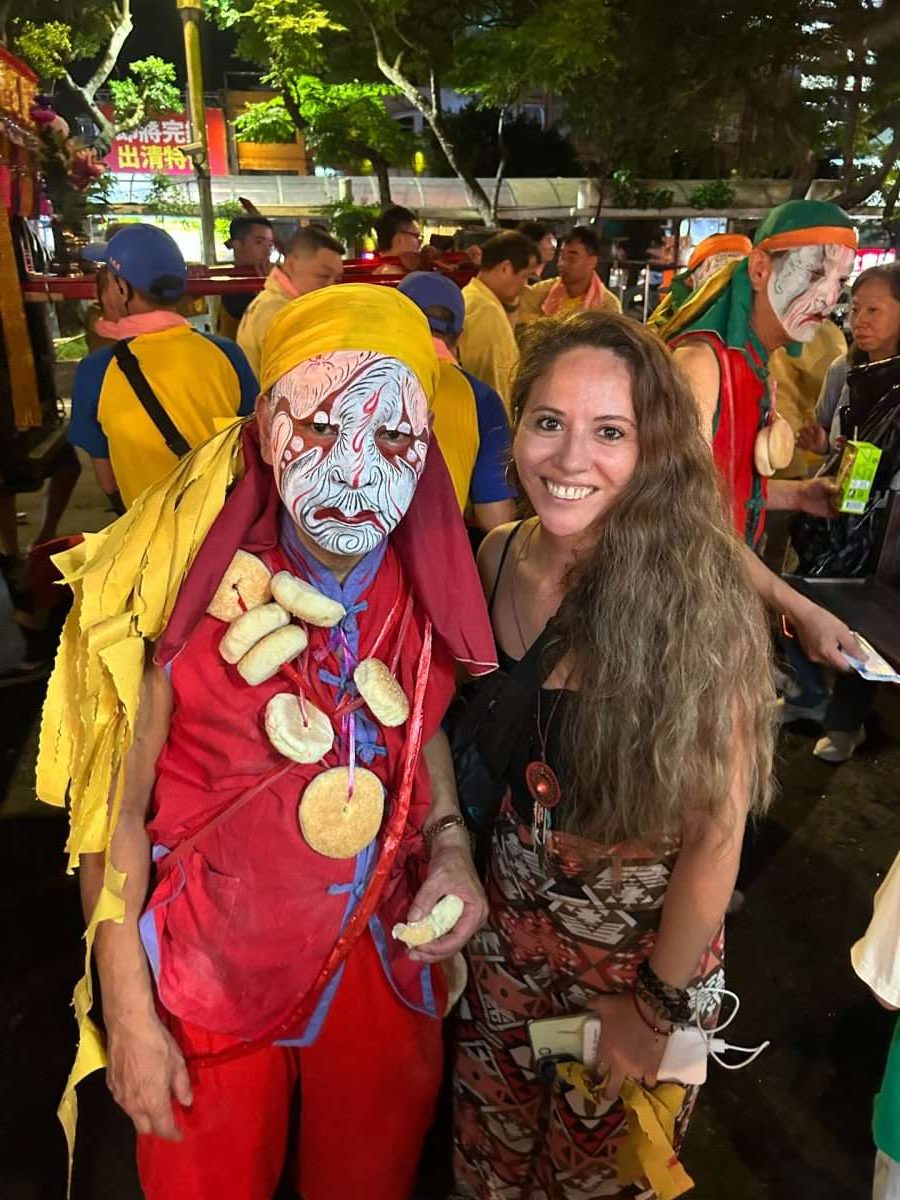
The temple is practically hidden inside the night market. And that is no coincidence. The name “Miaokou” refers precisely to the area in front of the temple: literally, the “temple entrance.”
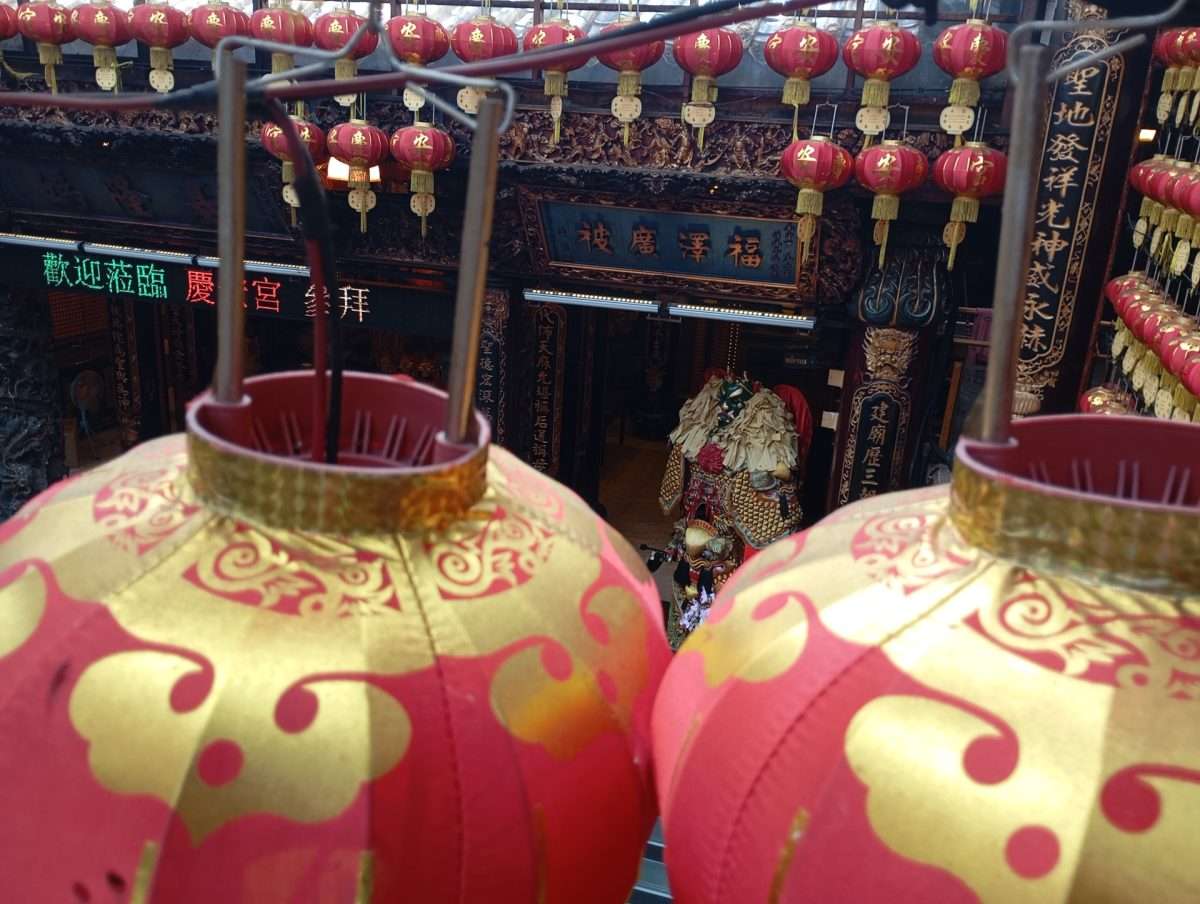
Dianji Temple was built in 1873 and is one of Keelung’s largest and most important temples. Its principal deity is Kaichang Shengwang, a figure deeply connected to Minnan communities and, particularly, to the history of Zhangzhou.
Here, one of the central themes of Keelung appears once again: Migration.
The people who arrived in Keelung did not arrive only with their belongings. They arrived with their families, associations, memories, customs, and deities.
That is why Kaichang Shengwang became an important figure for communities identifying with this heritage.
Fun fact: When you enter, the temple may feel small. But do not stop there. Take the time to discover its full scale: the temple has three floors.
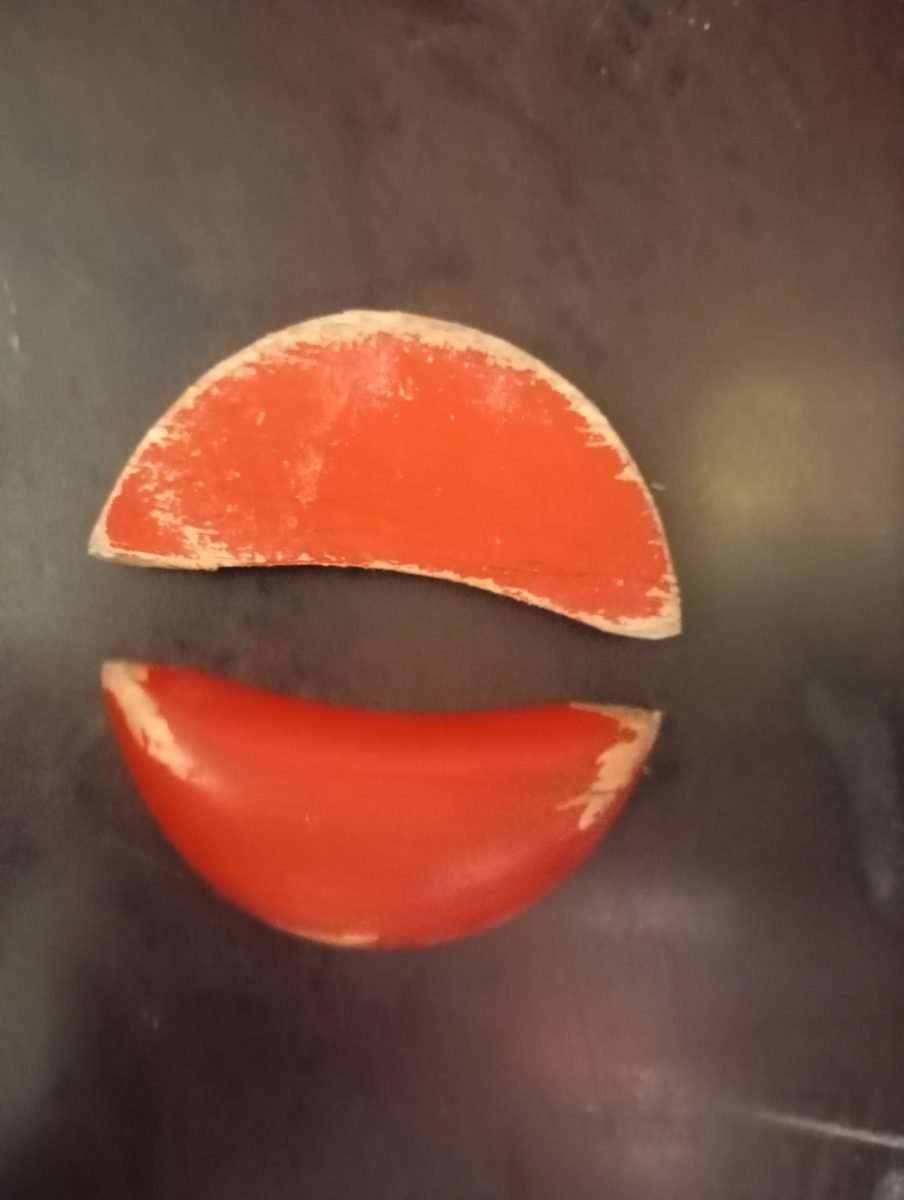
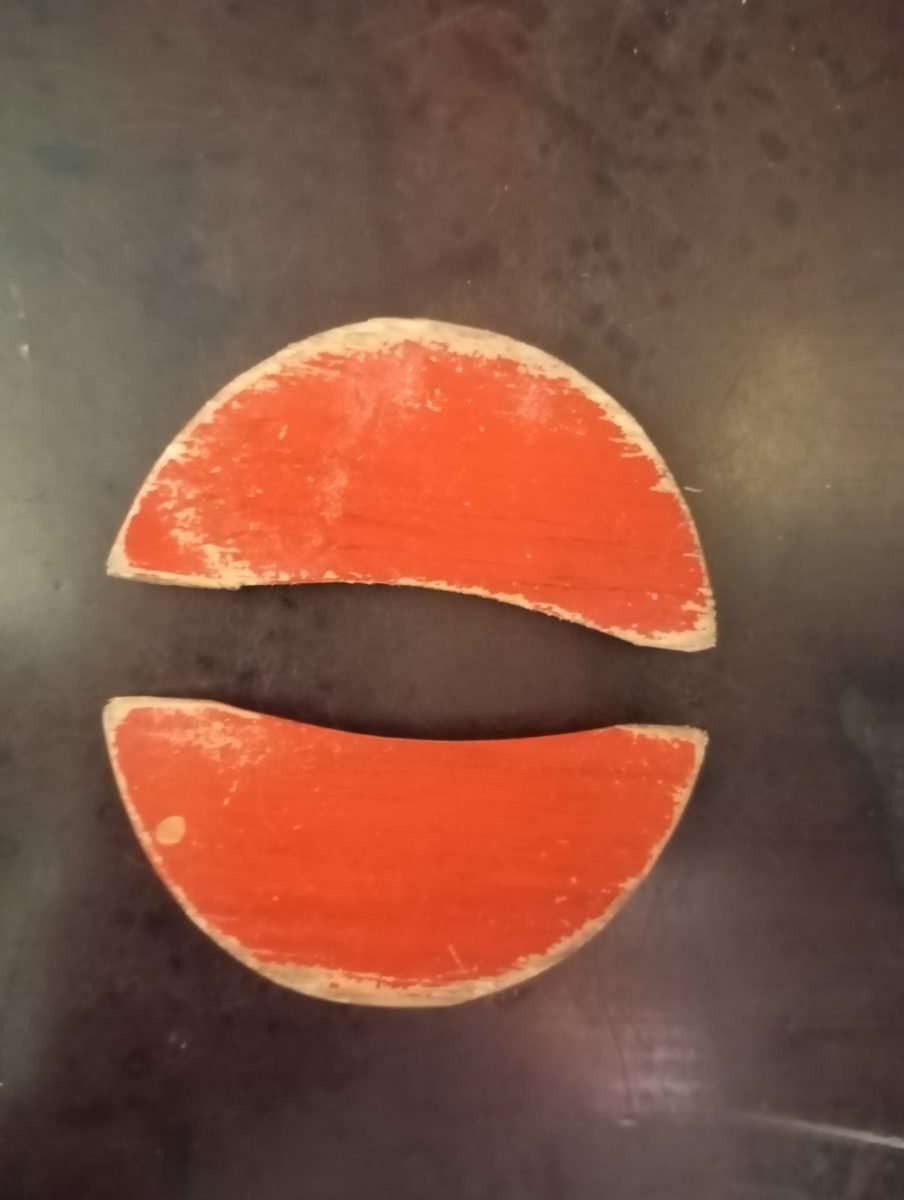
Want to consult a deity? The Jiaobei
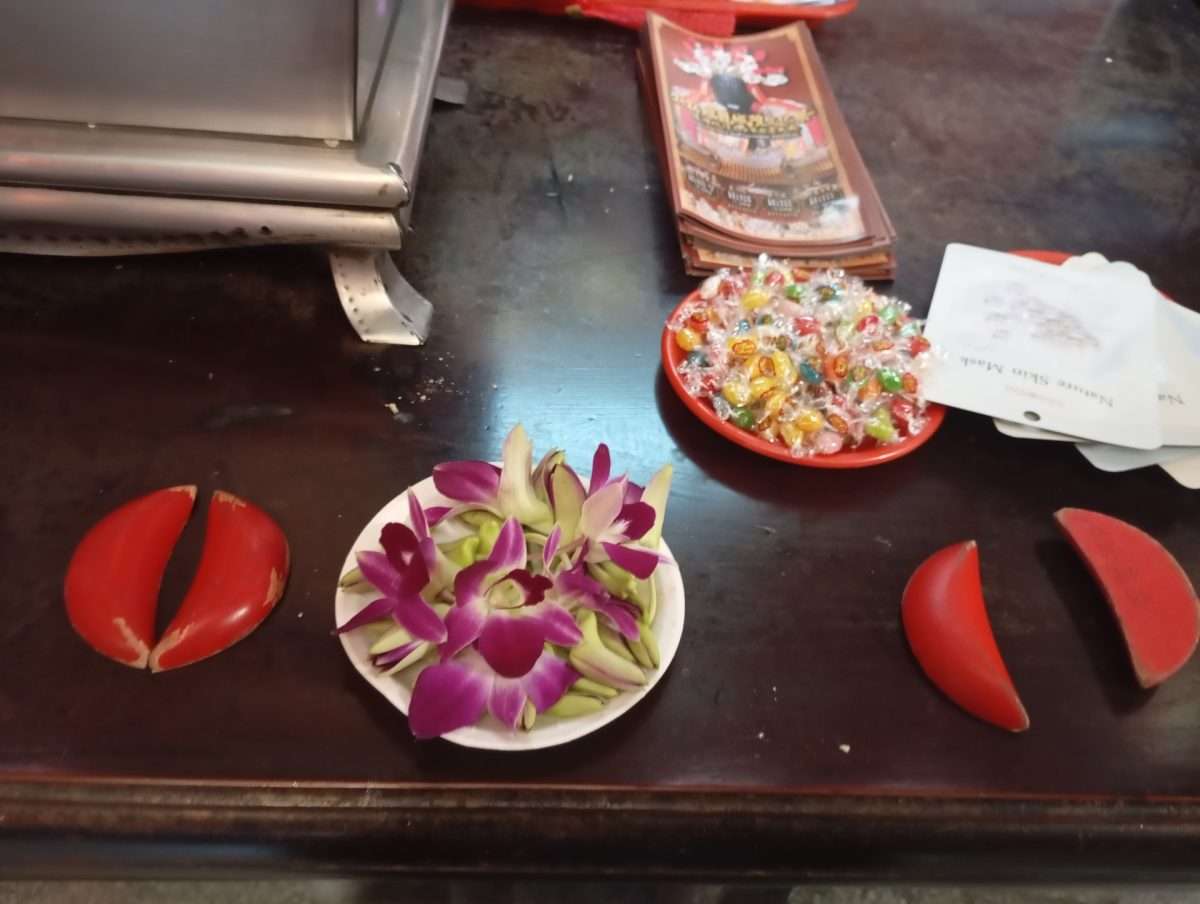
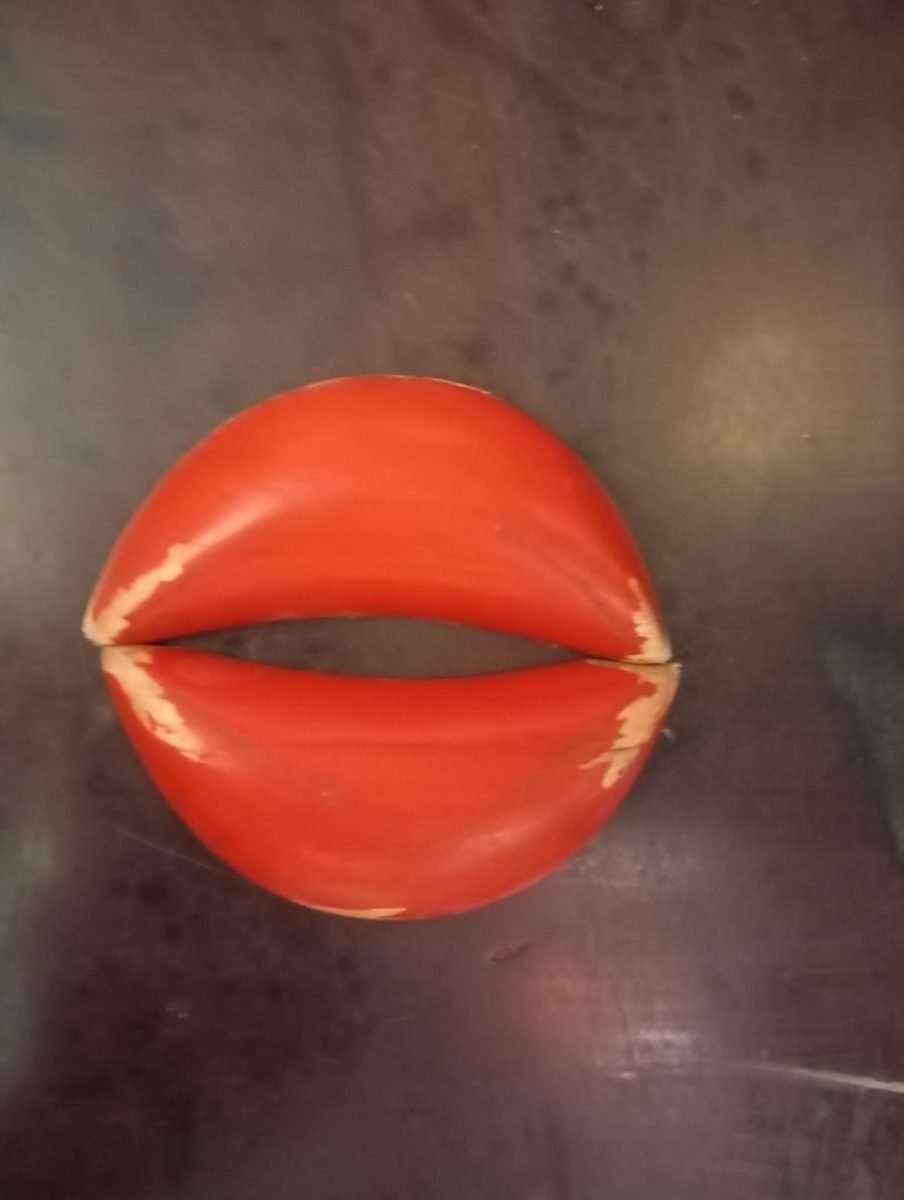
In some temples, you will find two small crescent-shaped blocks: These are Jiaobei –red moon blocks–, used in certain rituals for consulting the deities.
Each piece has one flat side and one curved side. When they are tossed, the resulting combination is interpreted as an answer.
The three main combinations have different names:
Sheng Jiao: one flat side and one curved side facing upward. It is generally interpreted as a favorable or affirmative answer.
Xiao Jiao: both flat sides facing upward. It is known as the “laughing answer” and does not constitute a clear confirmation.
Yin Jiao: both curved sides facing upward. It is generally interpreted as a negative or unfavorable answer.
In some procedures, an important question may require three consecutive favorable answers, although the exact way of conducting the consultation can vary from one temple to another.
Can I try it?
Yes, but observe first. Do not treat them as a game.
The person normally stands before the deity, formulates their question, and then throws the Jiaobei to receive an answer within the ritual framework.
And there is an important distinction here: You do not need to use the Jiaobei in order to visit a temple. You can simply observe the ritual without participating.
9. And now: Miaokou
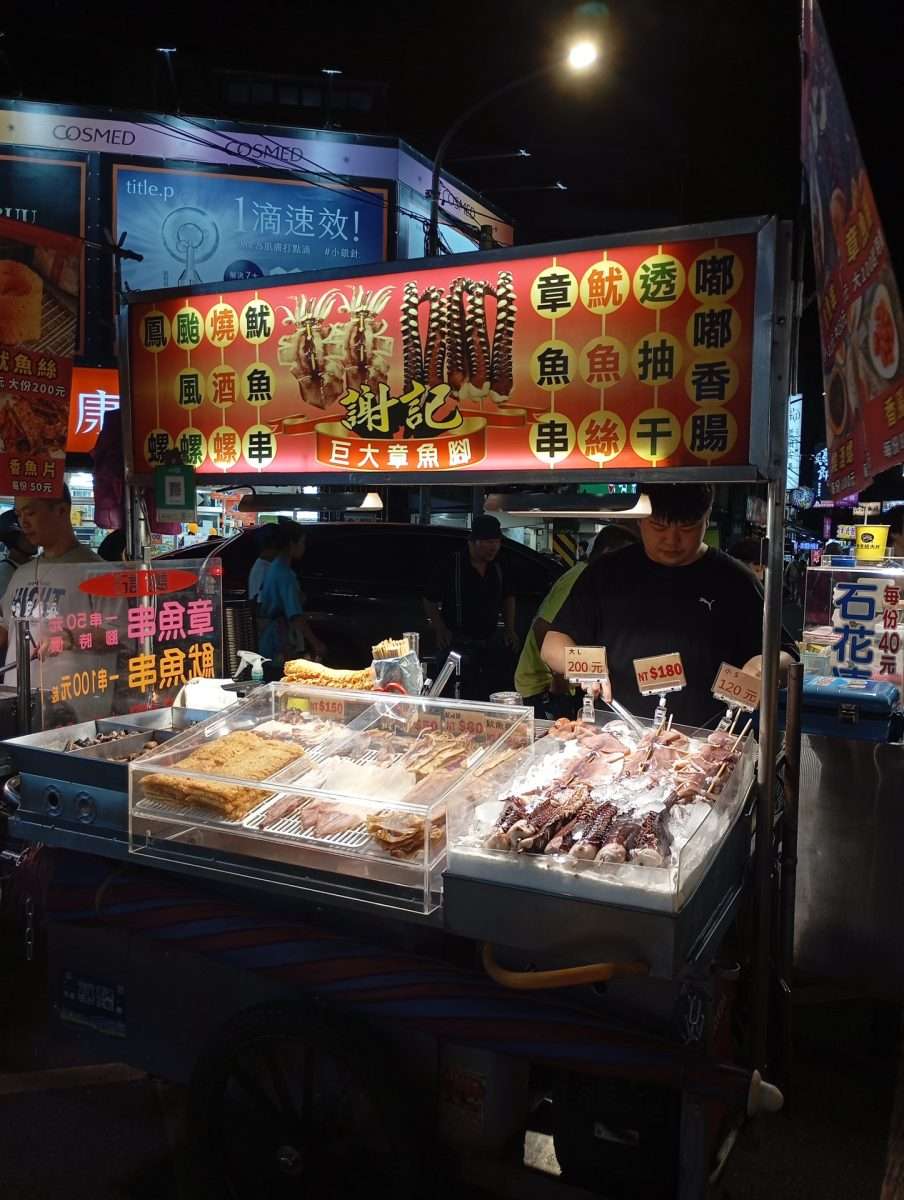
When you leave Dianji Temple, you will practically be inside Miaokou Night Market View Miaokou Night Market on Google Maps
And this is a good place to end the route.
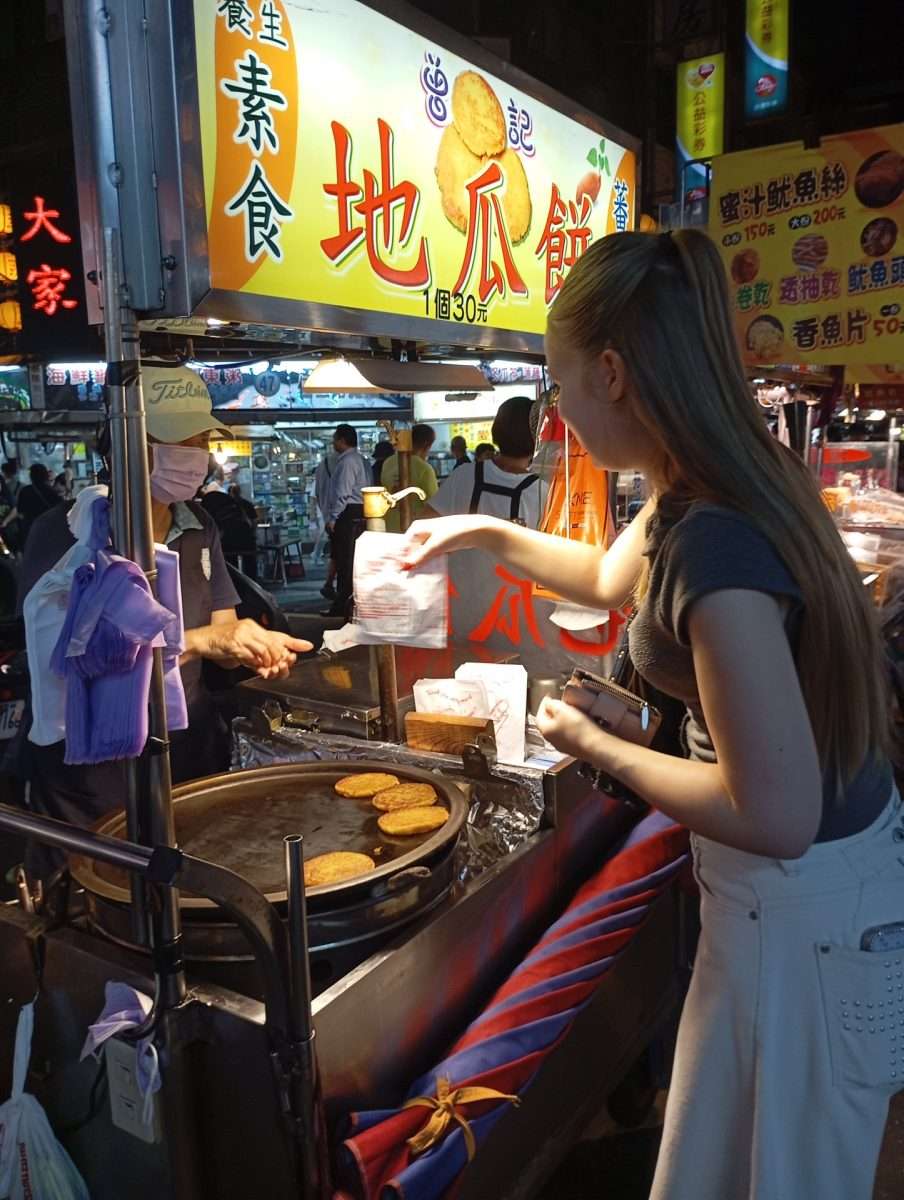
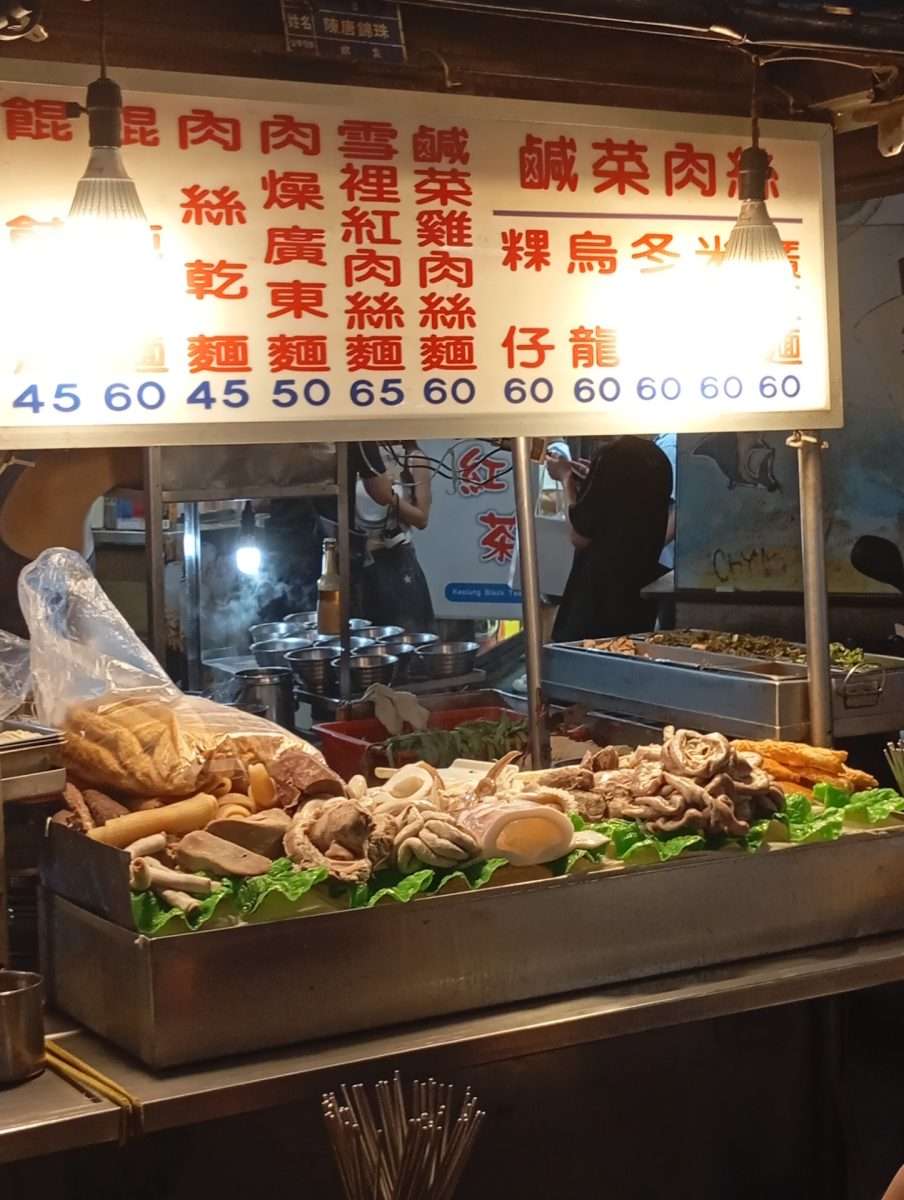
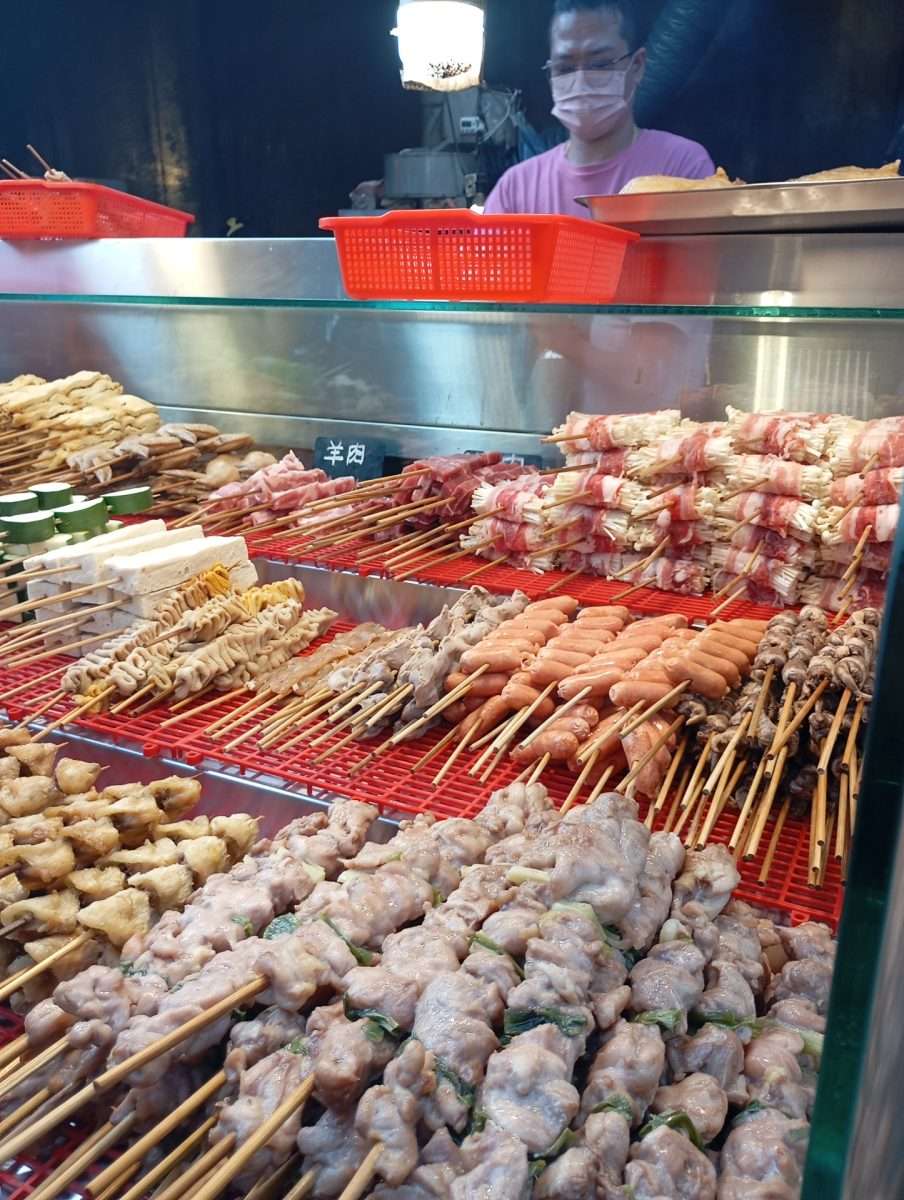
After climbing stairs, walking through the park, visiting temples, and observing all these details, you are probably going to be hungry. Perfect, because ending here also makes sense.
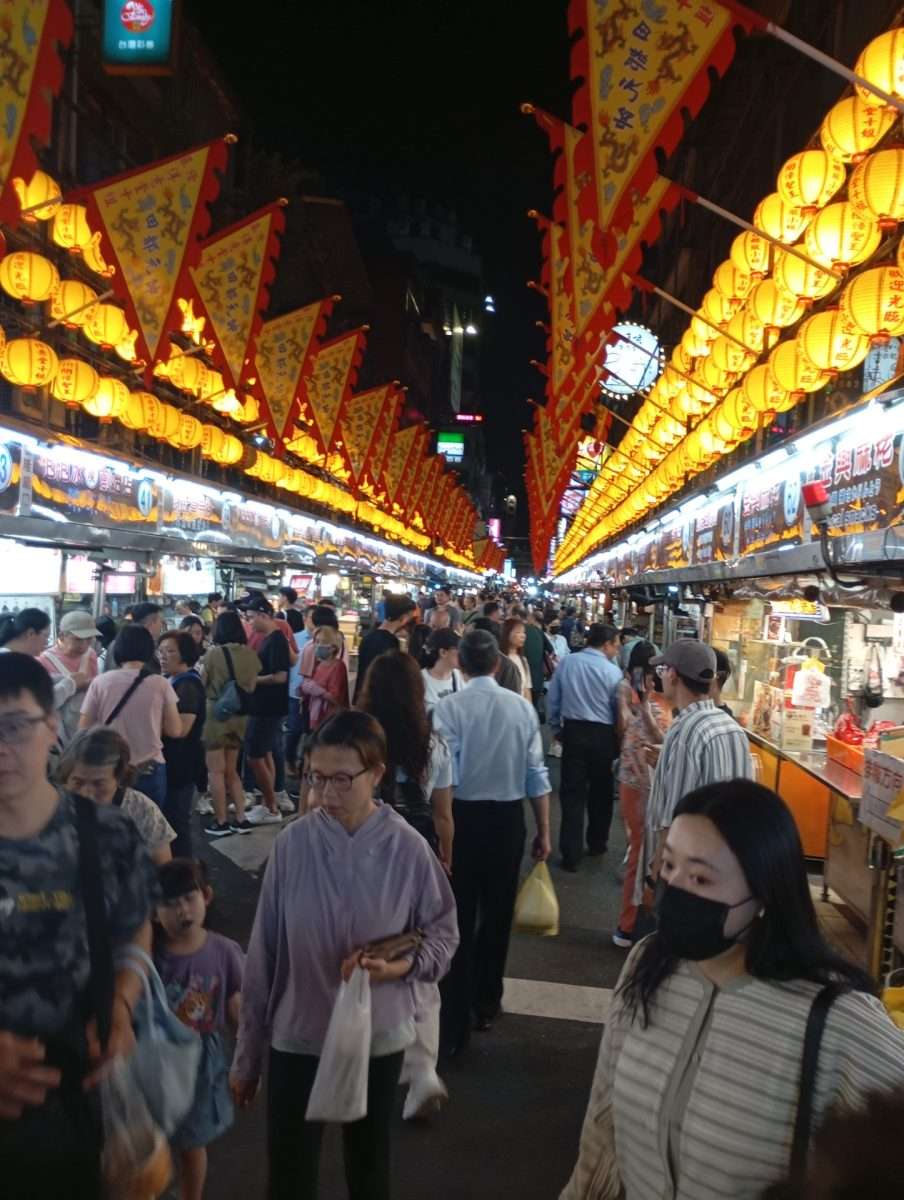
And even here, it is worth remembering what we saw at the beginning.
Miaokou is not separate from the temples.
Food, commerce, streets, and religion have coexisted for generations within this same urban space.
The temple is there.
The market surrounds it.
And the city continues to function.
Here, you can finish the route by doing something that is also part of learning how to observe a culture: Eating.
Fun fact: Miaokou Night Market is one of Taiwan’s most famous and traditional night markets, and is highly regarded for its incredible variety of local food.
Final Tips
Not all temples work in exactly the same way. Some practices vary depending on the tradition and the individual temple.
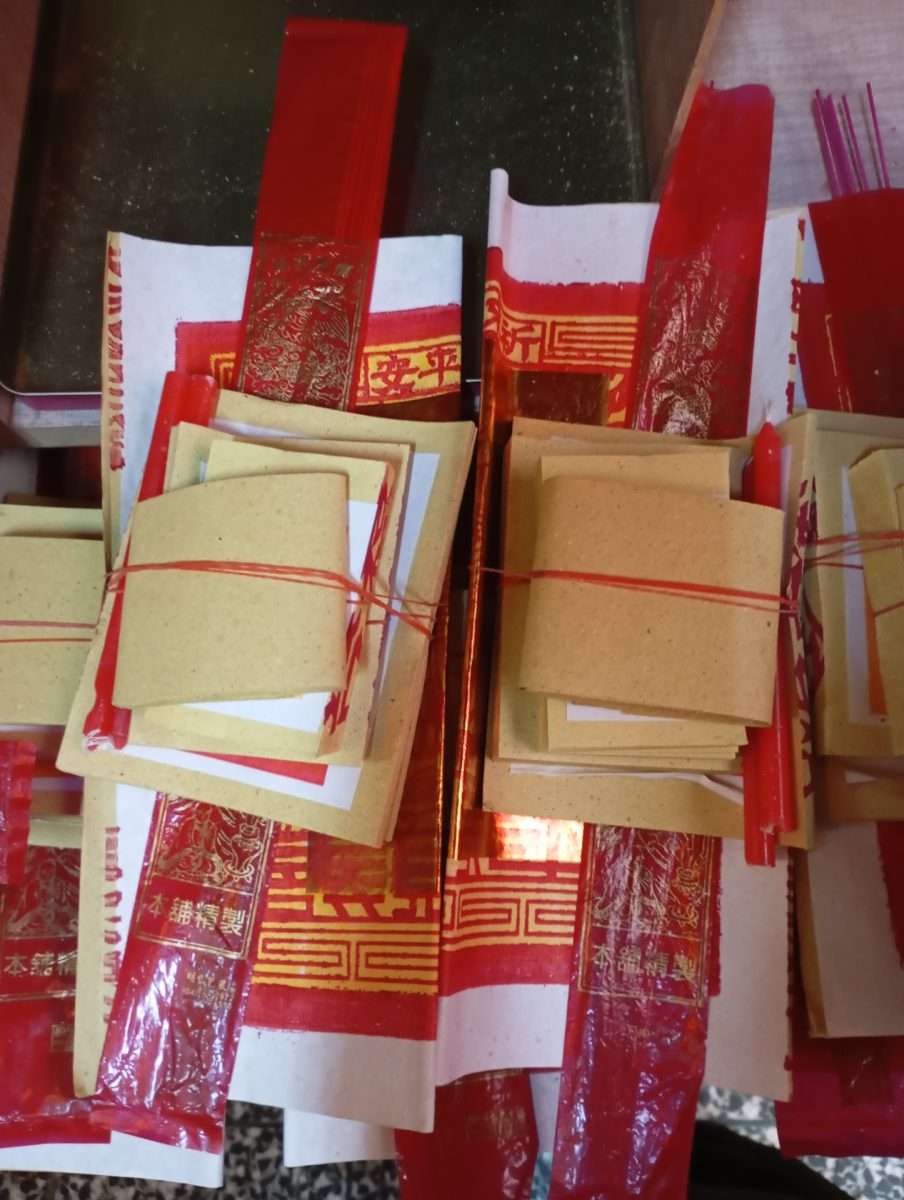
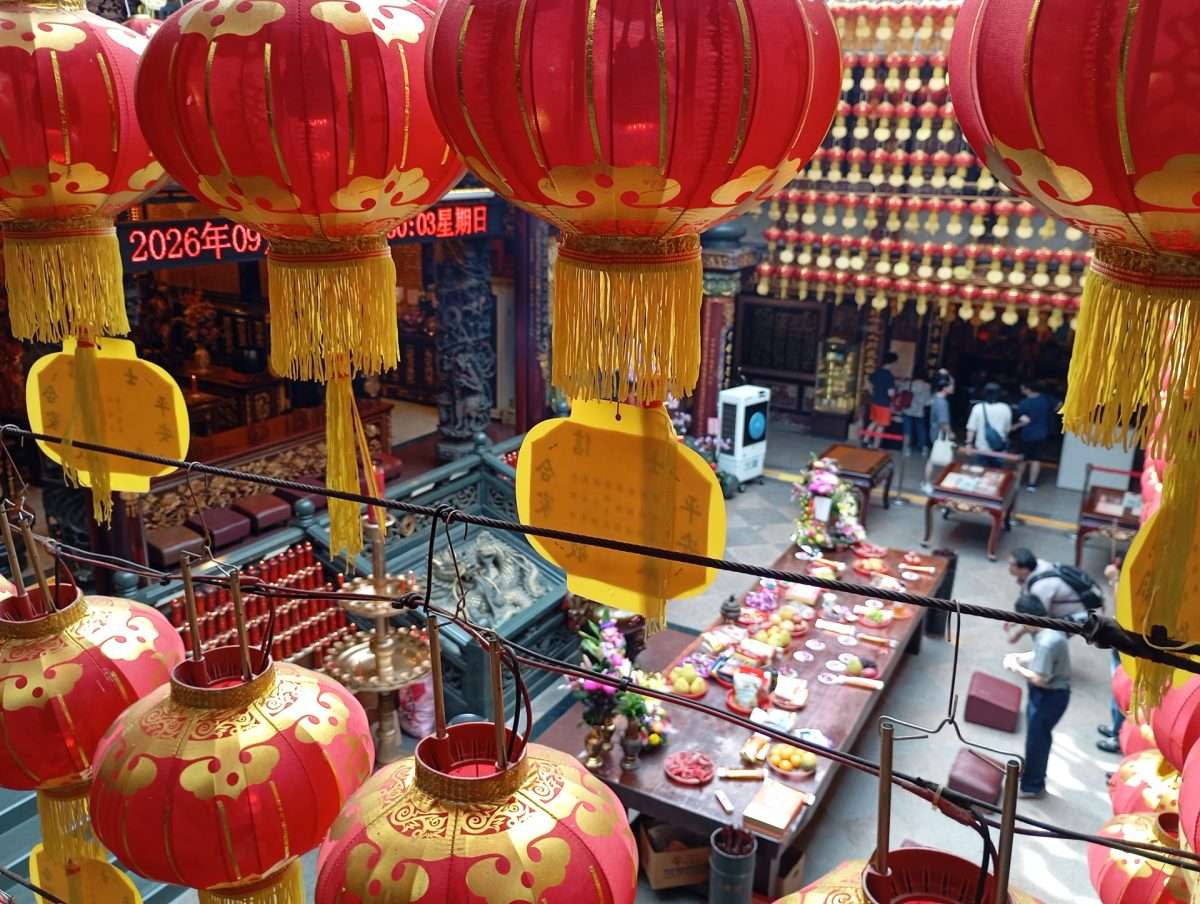
If you want to participate, first observe how other people do it and follow the temple’s instructions. At most temples, you will see tables with bundles of incense and ritual paper for burning. Beside them, there will usually be a donation box or red money box known as the “Oil and Rice Money Box” (Xiāngyóu qián). The proper thing to do is to leave a donation before taking your portion.
There is no mandatory amount. You can leave coins or small bills, for example 50 or 100 NTD.
If you visit larger and busier temple complexes, you may notice official stalls or counters. These are places where you can purchase a package containing incense sticks and ritual papers for a set fee, generally between 20 and 100 NTD.
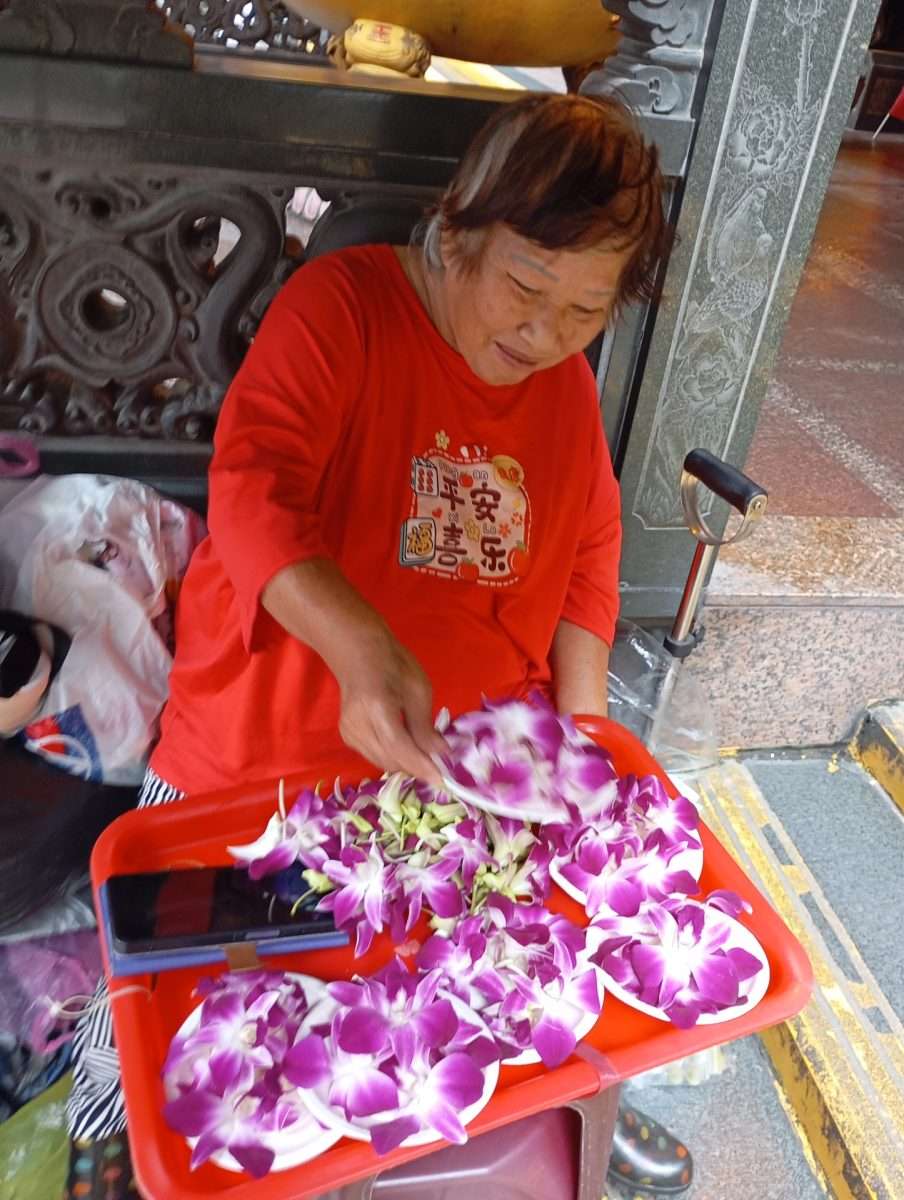
You will also find vendors outside the temples. It is common to see older people selling flower arrangements, incense, and ceremonial items. By purchasing from them beforehand, you can enter with your offerings already prepared.
What should I do if I don’t know what to do?
Nothing.
Observe. Sometimes the best way to respect a practice you do not know is simply to watch before participating.
And remember something important:
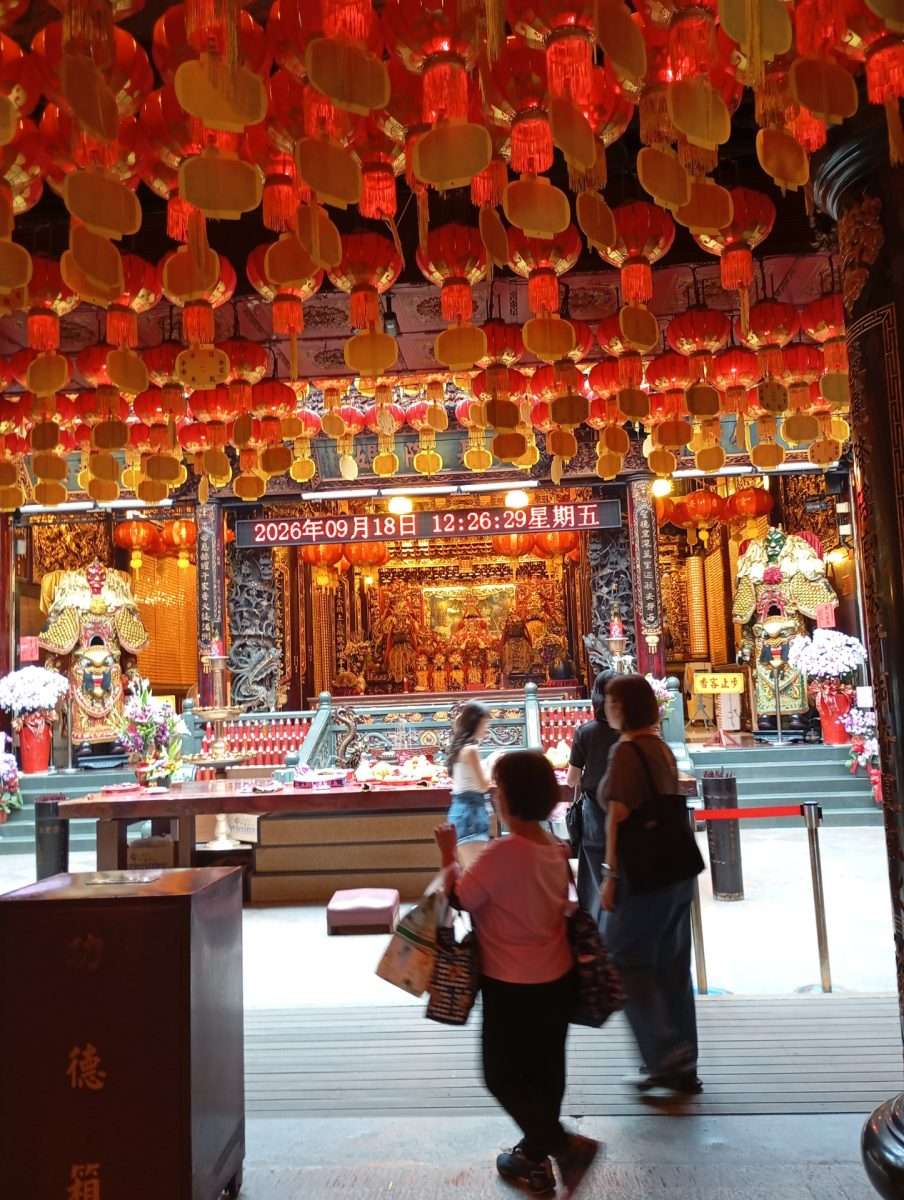
A temple is a living place. You are not entering a museum where everything has been arranged exclusively for visitors to observe.
There are people who come to pray, give thanks, ask for help, make an offering, participate in a ceremony, or simply be there.
The temples of Keelung are not a random collection of religious buildings.
They are places where we can find fragments of the city’s history: its communities, its migrations, its relationships with the environment, its ways of understanding protection, its dead, and also its everyday life.
Now you know what to look for
That is what makes exploring the temples of Keelung so interesting.
You do not need to know every deity.
You do not need to memorize every ritual.
You simply need to learn how to look.
Because once you understand who is represented, why they are there, who venerates them, and what story surrounds that place, a temple stops being simply a beautiful building.It becomes a way of reading Keelung.
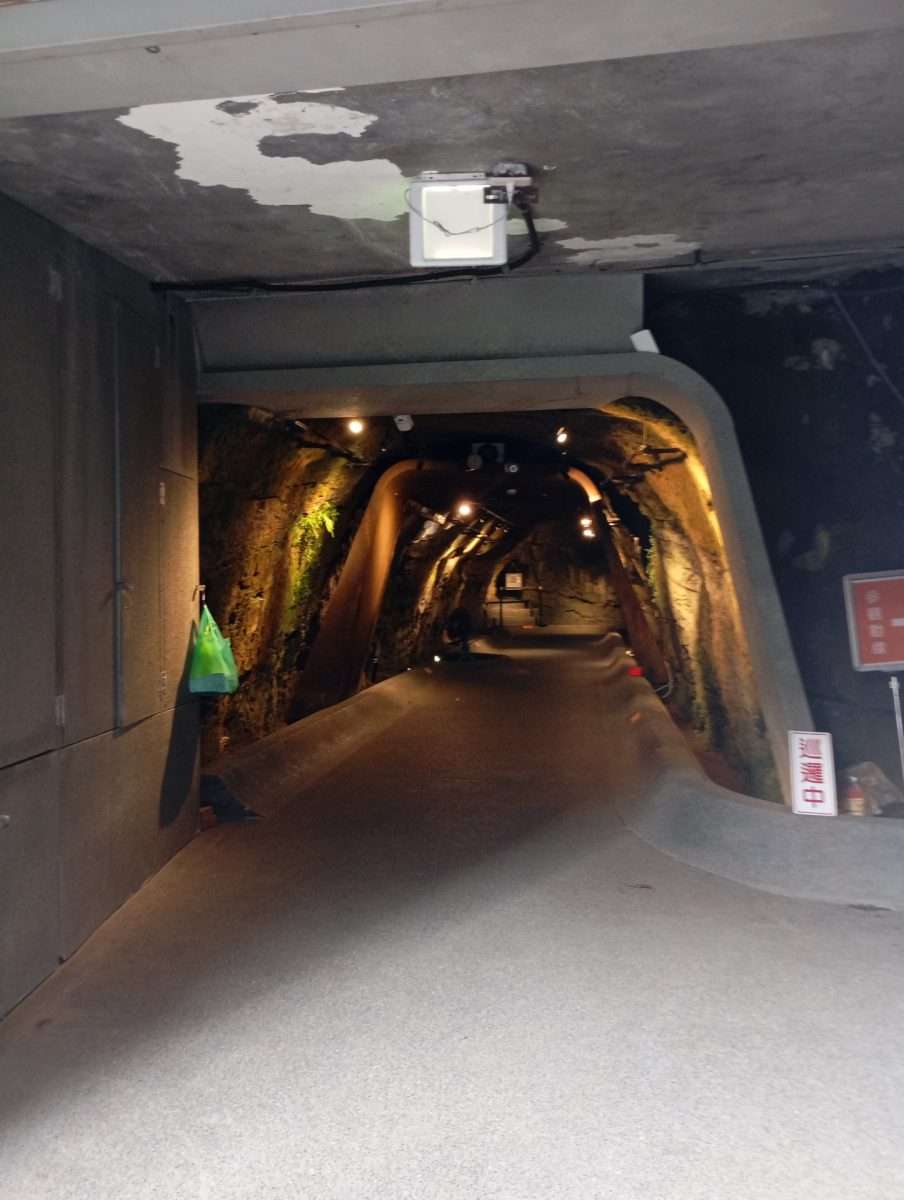
One more fun fact: Did you know there is a Buddhist temple inside a sea cave? Yes, and if you have more time and want to venture beyond this route, you can visit Xiandongyan Zuisheng Temple and Buddha’s Hand Cave. We did not include them in the main route because they require transportation: buses 301 or 302 will take you directly to the entrance. Location: Xiandongyan Zuisheng Temple — Google Maps
References
- Taiwan Cultural Memory Bank Link 1 Link 2
- Keelung Travel Link 1 Link 2 Link 3 Link 4
- Keelung City Government Link
- Keelung Ghost Festival Museum — Official Website Link
- Taiwan Tourism Administration Link
- Taiwan Religious Culture Map Link
- Taipei City Government Link
- Talent Taiwan Link
- Tainan Temple Museums Link
- Yi Cheng Tang — Official Website Link
- Ministry of Education Link 1 Link 2
- Taiwan Popular Culture Objects Dictionary Link 1 Link 2
- National Center for Traditional Arts Link
- National Museum of Taiwan History Link
- Taiwan Tourism Administration Link
- Keelung For A Walk Link 1 Link 2 Link 3 Link 4 Link 5 Link 6 Link 7 Link 8

Yazmin
Que detallado artículo! Que deseos de conocer en persona estos lugares maravillosos!!!