





Filipinos in Keelung: Struggles and Stories
Keelung’s Port and the Demand for Foreign Labor
Keelung’s prominence as a port city has attracted many immigrants and workers, including a growing community of Filipinos in Keelung, seeking opportunities for a better life. The industries associated with Keelung’s ports(i.e. tourism, trade) create a higher demand for labor. Consequently, these industries typically attract many Southeast Asians, like Filipinos, whose home countries suffer from high rates of economic inequality.
Perceptions of Southeast Asians in Taiwan
The perceptions of Southeast Asians in Taiwan skews negatively. Some common negative perceptions of Southeast Asians among the general public are that they are unskilled laborers that do not make an effort to blend into local Taiwanese culture. According to an article from the Diplomat, a survey of 1,000 Taiwanese citizens showed that only 8.4% of respondents agree that Taiwan should encourage Southeast Asian immigration. Furthermore, the same poll indicated that only 44.6% of respondents agree that Taiwan should encourage skilled immigrants from Southeast Asia. This indicates a bias against Southeast Asian workers, even skilled ones, likely rooted in ethnic homogeneity and limited exposure to foreign cultures.
Despite the economic benefits that Taiwan has seen from cheap overseas labor, its laws often discriminate against blue collar immigrants, many of whom are Southeast Asians. For example, live-in domestic workers are not covered by the Labor Standards Act and lack basic protections, such as a guaranteed minimum wage or time off. Additionally, there is a history of abuse within the fishing industries and it is common for Southeast Asian fishermen to experience contract violations, wage deductions, human trafficking, physical abuse, and other hazardous working conditions. Many Southeast Asians hesitate to take jobs in Taiwan due to misleading job offers, high job brokerage fees, harsh working conditions, and exploitation.
Cultural and Social Differences
Filipinos who immigrate or work in Taiwan face cultural, religious, and linguistic barriers. While a majority of Filipinos can speak and comprehend English, only 28.5% of Taiwanese can, which leads to challenges communicating. Additionally, Filipinos are predominantly Catholic and are a religious minority in Taiwan which has a 6% Christian population. Socially, Filipinos interact with others in a more direct and casual way than the Taiwanese.
However, the two cultures share some common ground. Both cuisines feature a variety of dishes with rice, noodles, meat, and seafood, reflecting Chinese culinary influences. They also hold similar values, such as strong family ties, multigenerational households, and respect for the elderly. Furthermore, they share similarities in terms of their work culture with both groups valuing strong work ethics, respect for authority and hierarchy, and collectivism and collaboration.
The Presence of Filipinos in Keelung
While there are no statistics on the population of Filipinos in Keelung specifically, there are estimates of more than 150,000 Filipinos in Taiwan according to Taiwan’s Ministry of Foreign Affairs (MOFA). In Keelung, there are many Filipinos working in the ports as fishermen, cruise workers, and cable cruise workers. Additionally, many Filipino immigrants also work in Keelung as factory workers and caregivers.
When I arrived at Keelung for a Walk, I was given the opportunity to interview and survey the local Filipino community because of my Filipino heritage. Initially, my assignment was to focus on Filipino cruise workers. However, as I met more local people, the scope and nuance of my interviews grew. This article is an exploration into the lives of Filipinos in Keelung and their experiences, stories, and difficulties while living abroad.
Wheng’s Pinoy Restaurant and Store
 Wheng’s Storefront
 Wheng’s Exterior
 Wheng’s Interior
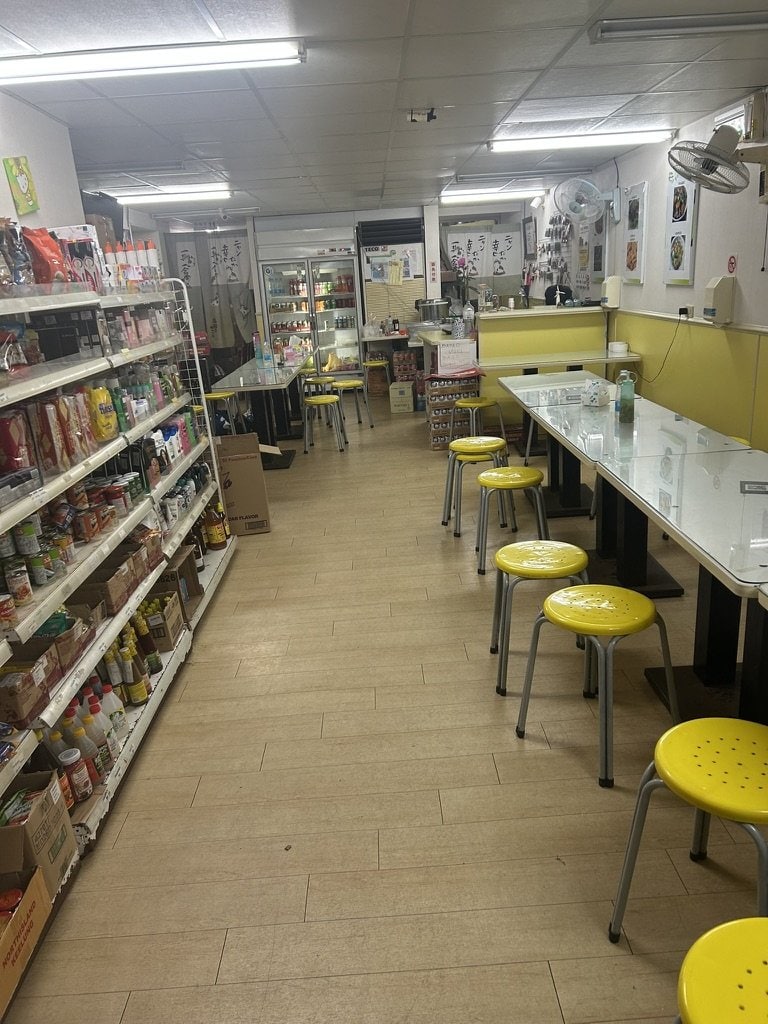
To begin my investigation, I went to Wheng’s Pinoy Restaurant and Store located near the Keelung Harbor building. Wheng’s restaurant is famous in the local Filipino community and amongst visiting contract workers(i.e. cruise workers, fishermen) for providing authentic Filipino cuisine and goods. Additionally, it is the only remaining Filipino restaurant in Keelung after COVID-19 closed four other Filipino restaurants in the local area.
From Immigrant to Entrepreneur: Rowena’s Life in Keelung
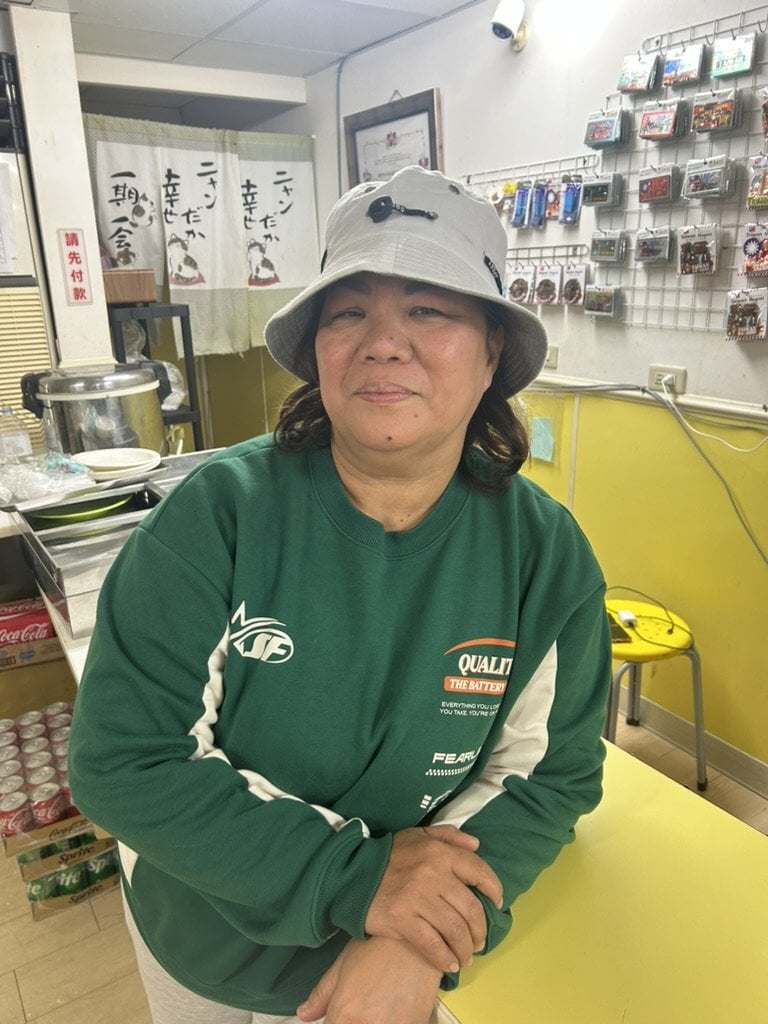
I interviewed Rowena, the owner of Wheng’s, on her experience and insights as an immigrant in Taiwan for 31 years and a restaurant owner for ten years. Originally, Rowena came to Keelung at 23 years old to work and send money back to her many siblings in the Philippines. One year later she met a Taiwanese man who would become her husband and they had two children together. Later on, Rowena decided to open Wheng’s to help financially support her husband’s unstable income and their children’s education. She is the only full time employee and hires one part time employee to help her business.
Rowena explained that each week’s restaurant schedule revolves around the upcoming cruises. Before a cruise arrives, she will spend about three days prior preparing inventory and food. When a cruise arrives in Keelung, Rowena will typically wake up from five to seven am and come home around six to seven pm. However, the majority of cruise workers will typically arrive in a small one to two hour window where the restaurant experiences its rush hour.
Wheng’s mainly caters to Filipinos who are looking for a place that reminds them of home. Rowena is committed to creating a variety of Filipino dishes using authentic ingredients. What makes Rowena feel satisfied is knowing that she is able to help feed people and make them full. Additionally, part of her philosophy is to make sure that people feel like family when they come to her restaurant. She says the key to the success of her restaurant is making sure that customers are smiling and feel welcome.
 Rowena (54), Restaurant Owner
Continued Exploration of Stories Abroad
During my series of visits to Wheng’s, I encountered a variety of individuals who found Wheng’s as a place to rest while in Keelung. These are a few of their stories.
Cable Cruise and Chito’s Story
One night during a birthday party at Wheng’s, I met a crew of cable cruise workers. Cable cruises are responsible for laying down and repairing internet cables in the ocean internationally. Their company was planning to stay in Taiwan for at least two months to fix three different internet cables. Cable cruise workers typically work about eight to twelve hours a day. The company hires the employees on contracts of four and six months. After their contract is over, most go to visit their families before they start a new job.
I interviewed one of the cable cruise’s supervisors, Chito. Chito is 50 years old and graduated with a degree in maritime transportation and has been a sailor since 1987. He told me that his company will send 80% of his salary to his family and 20% of his salary goes to himself. When they are staying in the harbor, Chito likes to enjoy normal life in the port, go shopping, and rest. One of the most difficult things about being a sailor is enduring the bad weather while at sea. The most rewarding part is being able to have the money to send his children to school.
 Chito (50), Cable Cruise Worker
Olive’s Search for Stability in Keelung
Many Filipino immigrants will come to Wheng’s regularly to get in touch with the local Filipino community. At the same birthday party, I met Olive, a 44 year old single mom living in Keelung for the last seven years. Her children still live in the Philippines and are taken care of by her mother. Before she came to Taiwan, Olive had a difficult time finding a stable job and decided to find work through an overseas employment agency. Now she works as a caregiver for the elderly. It was difficult for Olive to adjust when she first came to Taiwan because she does not know Chinese, but Wheng’s provides a place for her to connect with local people.
 Olive (44), Caregiver
Edwin’s Work and Life at Sea
Lastly, I interviewed one of the workers from a visiting cruise, Edwin. Edwin has been an electric engineer on a cruise for nine years and he is responsible for fixing and maintaining the navigational equipment, telephone systems, and satellite communications. He told me that he enjoys the opportunity to go travelling through his work. However, he says that his job can be stressful when something is malfunctioning because many people are affected if he makes a mistake.
When I asked him how often he sees his family, he told me that he sees his four children every day on video calls. After every four months, his contract expires and he can see his family in person. Usually, Edwin will stay at a port for a few days, but when he is in Keelung he will stay only for one day.
Conclusion
After learning more about the different stories of Filipinos in Keelung, I have observed several similarities. A key theme that I observed in their stories is their willingness and courage to work hard and sacrifice for their loved ones. They also view Taiwan as a peaceful country where they can live an easier life. Despite their distance from home, they keep their family close through the internet and social media.
The Challenge of Isolation and the Strength of Community
One of the struggles that these Filipinos face while living abroad is isolation. Filipino immigrants that are more successful in assimilating in Taiwan, like Rowena, have learned Mandarin and are able to facilitate relationships with local Taiwanese people. While some are primarily here in Taiwan for financial reasons, others have started families and become active members in their communities. In the case of ship workers like Chito and Edwin, they tend to form a close community with their crew mates and mostly engage amongst themselves or local Filipinos whenever they are docked.
In conclusion, Filipinos find community and support each other regardless of their location. They are hardworking and loyal both to their loved ones in the Philippines and to the connections they form abroad. Furthermore, they learn to support and show solidarity towards each other because of the discrimination they face while abroad. The people I have met in the Filipino community in Keelung embody the notion that our home is not just a place, but where we feel like we belong.


Leave a Reply