

Download Article PDF [link]
 Figure 1.] Cíyún (慈雲) Temple, Anyi Rd, Anle District, Keelung
Lunar New Year: The Astronomical Foundations of the Calendar System
The Luni-Solar Calendar (陰陽曆, Yīnyánglì): A Dual System of Time
The Lunar New Year (農曆新年, Nónglì Xīnnián) also known as Spring Festival (春節, Chūnjié) is derived from the luni-solar calendar (Yuan, 2016), also known as the yīnyánglì (陰陽曆)(McHenry, 1997). This dual-calendar system integrates both solar and lunar movements (Yuan, 2016). The Spring Festival generally occurs on the second new moon after the winter solstice (Aslaksen, 2002).
Yánglì (陽曆)
In the Northern hemisphere, the winter solstice—the shortest day of the year—is determined by the solar calendar, known as yánglì (陽曆) (Aslaksen, 2002; Tiquia, 2008). In the West, the solstice is regarded as the beginning of winter, while in Taiwan it represents the mid-point of the winter and is known as: dōngzhì (冬至)(Aslaksen, 2002), translating as the extreme of winter. As yīn (陰) energy reaches its peak, yáng (陽) energy begins to rise, marking the gradual lengthening of days (Tiquia, 2008).
Yīnlì (陰曆): Cycles of the Moon
The new moon is derived from the lunar calendar, known as nónglì (農曆) or yīnlì (陰曆)(Tiquia, 2008). A new moon is the first phase of a 29.5-day lunar cycle in which the moon orbits the earth (Aslaksen, 2002). This is when the moon sits directly between the sun and the earth thus, its shadow unlit side faces the earth and is invisible to the naked eye (Coco, 1994). While there are ordinarily 12 lunar months per year, this amounts to only 354 days hence, causing the lunar new year to be celebrated 11 days earlier each year (Yuan, 2016).
To keep the lunar new year aligned with spring, an intercalary month is periodically added to the calendar, ensuring that the new moon is always observed in spring (Yuan, 2016). This Lunar New Year of 2025 marks the entry to the year of the snake.
Why Do Buddhists Celebrate a Taoist Festival?
Although the above celestial and geological principles are essentially Chinese and Taoist in essence, due to their quantification in terms of yīnyáng (陰陽) as to is the shǔ (屬)(animal zodiac sign) of the snake, which metaphorically represents our current point of an astrological cycle (Tiquia, 2008; Yuan, 2016). We find the Taiwanese Buddhist community at Cíyún Temple celebrate and welcome in the new year as a major component of their culture and religion.
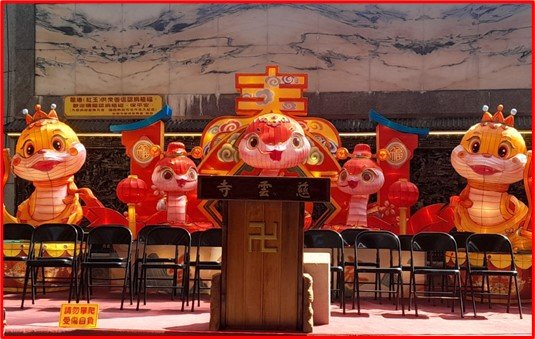 Fig 2.] Illuminating Snake Inflatables. Cíyún Temple, Keelung
The Lunar Calendar and the Mínguó (民國) Calendar in Taiwan
Nónglì Xīnnián (農曆新年)
Unlike the Solar New Year, which tends to be less than a two-day celebration—the New Year’s Eve for night time festivities, with only New Year’s Day taken as a national holiday in Taiwan. The Lunar New Year celebratory period tends to begin on the eve of the Lunar New Year (January 28, 2025) and lasts for just over two weeks until February 12, 2025.
National Taiwanese (Míngúo, 民國) Calendar
Tourists should note that the Taiwanese solar calender system utilises a different numerical system, representing the exact same time and dates as 01/28/114 and 02/12/114, respectively. In this system, the month is marked before the day and the year ‘114’ marks the years since the Republic of China was founded in 1911 (Harris, 2008).
The current Taiwanese calendar is termed the míngúo (民國) calendar, which is otherwise identical to the conventional Gregorian solar calendar. This national calendar was created early last century to replace the lunar calendar which was deemed impractical and was marginalised as regarded as superstitious (Harris, 2008).
Buddhism Versus the ROC in the Early 20th Century
However, the Buddhist community, among others, fought against the nationalist party of the Republic of China (ROC) in the early 20th century to have their lunar calendar and lunar festival reinstated. Although these ancient practices were temporarily abolished, they were later reestablished in both the Republic of China and mainland China (Harris, 2008). Taiwanese people today use both calendars: the míngúo calendar for governmental and business functions and the lunar calendar for festivals (Yuan, 2016).
Analysis
The Origins of the Spring Festival (Chūnjié, 春節)
While primitive ritual Lunar New Year celebrations trace back to the Shang dynasty (Shāngcháo, 商朝)(16th-11th century BC), the first formal celebrations of the Lunar New Year began under Emperor Wu (Wǔdì, 武帝, 156 – 87 BC) during the Hàn (漢) era (206 BC-220 AD). However, it was not until the Suí (隋) (581–618) and Táng (唐朝) (618–907) dynasties that the festival evolved into a national and unified cultural event with a functional calendrical system, as Chinese society developed materially and economically (Huang, 1991;Yuan, 2016), providing the opportunity for intellectual growth.
The Absorption of Buddhism into Hàn Culture
While I claim that Hàn culture is the dominant ideology in Keelung (see blog post). Buddhism, though originally an Indian tradition (Chen, 2000), does not hold a second place to Taoism (Dàojiào, 道教). For multiple millennia, Hàn Chinese culture absorbed elements of Indian culture, which impacted their philosophical, moral and religious viewpoints, as well as the Mandarin language (Guang, 2013).
To facilitate the successful absorption of Buddhism, the Mandarin language had to adapt and create new Mandarin characters to represent words and terms (Chen, 2000) to represent new concepts to think within.
The Reception of Hàn Culture in Taiwan
Taiwan, however, received both religions simultaneously, along with the Mandarin language and Confucianism (Rúxué, 儒學), centuries later in one assemblage (Zhu and Liu, 2019). Thus, from the perspective of the inheritor, this can be regarded as one tradition, and the hybridity observed at Cíyún (慈雲) Temple is tremendous. While a Buddhist temple dedicated to the worship of Kuanyin (Guānyīn, 觀音), Cíyún temple features an extensive pantheon of Taoist (Dàoshi, 道士) gods alongside Buddhist deities for daily worship e.g., the Jade Emperor (Yùdì, 玉帝) (Fig 3). Chanting (sòng jīng, 誦經) could be heard throughout the holiday period and attendees would offer incense (xiāng, 香) to deities indiscriminately.
 Figure 3.] The Jade Emperor. Cíyún Temple
The Jade Emperor
The legendary Yùdì is regarded as the highest deity in the Taoist pantheon (Stevens, 1989) and metaphorically represents the unfolding of celestial activity upon Earth (Olson, 2003). He is accredited with the creation of the 12 animal zodiac (shēngxiào, 生肖): rat, ox, tiger rabbit, dragon, snake, horse, goat, monkey rooster dog and pig (Yuan, 2016)(see blog post).
The Symbolism of Shēngxiào
In connection to the ancient Táng dynasty shēngxiào myths (Stevens, 1989; Yuan, 2016), traditional dragon and snake shēngxiào symbols were the centre of the display, as Cíyún Temple opted for illuminating inflatable animals. The dragon represents 2024/113 (Fig 4) and snakes (Fig 2) represents the year just arriving: 2025/114.
Lunar New Year: A Taoist & Buddhist Celebration
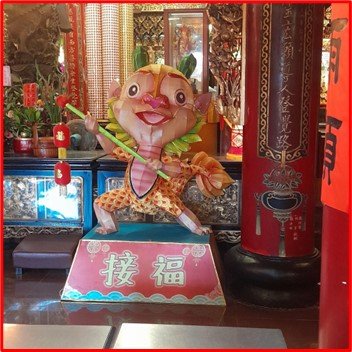 Figure 4.] Illuminating Dragon Inflatables. Cíyún Temple
The Traditional Red Lantern
The New Year celebration culminates with the Lantern Festival on the first full moon (February 12, 114 AD), following the new moon (January 28, 114 AD), Lunar New Year’s day (Splitter, 1950). The exterior festive season decor comprises hundreds of traditional red lanterns hanging at the temple entrance (Fig 1), as well as all around the perimeter of the temple courtyard wall.
Lanterns for the Buddha (Fó, 佛) during the Hàn dynasty (漢朝)
These hanging lanterns first emerged during the Han dynasty (Hàn cháo, 漢朝, 206 BC-220 AD)(Splitter, 1950), the same period in which Buddhist text were first translated into Mandarin (Chen, 2000). Shortly after the reign of Emperor Wǔ, Emperor Míng (Míngdì, 明帝, 27-75 AD) of the Hàn dynasty incorporated lanterns into the finale of the Lunar Festival to promote the Buddha Dharma (Fófǎ, 佛法).
This became a pivotal moment in Buddhist history as is heralded as influential to the success and spread of the Lantern Festival (Lu, 2024). Thus, the lantern has been a prominent feature within the Spring festival from its official origins. Whilst the calendrical basis of the lunar festival and the mythical shēngxiào narrative (the 12-animal river race) are clearly Chinese or Taoist in essence (Tiquia, 2008; Yuan, 2016), the lunar new year celebration has for millenia also been a Buddhist festival (Lu, 2024; Splitter, 1950).
 Figure 5.] Crafted Spring Festival Fruit Lanterns. Cíyún Temple
Renewal and Enlightenment
From a nature worshipping Taoist perspective, the lantern represents light and renewal, in reference to the physical celestial objects: the sun (spring) and the (full) moon (cycle)(Splitter, 1950; Huaiyu, 2014). Whilst within Buddhism light of the full moon interlinks with the Buddhist concept of light in reference to the enlightenment of the human body (Huaiyu, 2014). Hence, for over two millennia these two traditions have grown intertwined, thus the lantern festival represents both religions simultaneously.
Shēngxiào and the Lantern: A Symbolic Fusion
Dragon and Snake shēngxiào (animal zodiac) symbolism fused with the concept of the lantern, creating snake and dragon inflatables. While these may appear much less orthodox in comparison to the traditional lanterns, Lu (2024) points out that lanterns have always been made within a myriad of different materials and designs. Other ornaments included crafted spring festival fruit lanterns (Fig 5), mirroring the fruits placed upon the numerous altars as offerings (Fig 3). A practice which is quintessential of both Taoism and Buddhism.
Tibetan (Cáng, 藏) Buddhist Hybridity
 Figure 6.] New Years Lantern with Tibetan (Cáng, 藏) Iconography, Cíyún Temple
Taiwanese Buddhism is not only a fusion of Taoism and Buddhism but is also characterised by plurality between Hàn Chinese and Tibetan Buddhism (Jagou, 2018). For example, Figure 10 shows Tibetan Buddhist motifs, printed onto a hanging lantern in the main shrine room at Cíyún Temple, placed among an array of traditional circular red lanterns. These Tibetan symbols are referred to as the precious parasol, the conch shell, the two golden fish, the eternal knot, the treasure vase, the victory banner, the lotus flower, and the dharma wheel (Namgyal, 2016).
Golden Fish Symbolism in Lanterns
The Tibetan symbol of a pair of golden fish, referred to in Tibetan as Gser nya (གསེར་ཉ), could also be found displayed separately from the other seven symbols as a craft lantern (Fig 7). The fish represent fortune (Namgyal, 2016), much like the Chinese lantern (1950). Additionally, the fish are also symbolic of salvation, bravery, and freedom from what Tibetan Buddhists refer to as the ocean of suffering (Namgyal, 2016).
From a scholarly perspective, this demonstrates the fusion of two of the largest Buddhist traditions with traditional Taoism. Yet, this entirely diverges from the original Taoist New Year’s narrative of the 12-animal zodiac by introducing a 13th animal—the golden fish—placed next to the shēngxiào, which did not rank within the Jade emperor’s river race.
 Figure 7.] Tibetan Motif of Two Golden Fish Integrated into a New Year Lantern, Cíyún Temple
Conclusion
In Taiwan, the lunar new year is a Buddhist celebration (Huaiyu, 2014; Lu, 2024) just as much as a Taoist calendrical event (Tiquia, 2008; Yuan, 2016). The anti-governmental protests, from the ancestors of Taiwanese Buddhists during the early decades of the Republic of China, significantly contributed to such status (Harris, 2008).
The Lantern Festivals, functioning as a Buddhist ritual, significantly contributed to the success of Spring Festival as a national event and determined the lantern as an integral element of Hàn Buddhism (Lu, 2024). Following the amalgamation of multiple forms of Buddhism and Taoism, these traditions have merged into a unified cultural identity, encompassing a myriad of lineages (Huaiyu, 2014; Jagou, 2018).
Perspectives from Local Taiwanese
While I have cited the Tibetan fish as a divergence from the Taoist tradition, this may equally be considered an integration of Tibetan symbology into Hàn Buddhism. Scholars analyse and dissect traditions to comprehend the reception of religions and the adaptation of sociological behaviors. However, many locals in and around Keelung explain they are rather aloof to segregational classifications and show no strong preference; instead, they just regard the variety of imagery, deities and practices as Taiwanese culture today.
For more information on Buddhist and Taoist hybridity in Taiwan, see blog post:
Fo Guang Shan JiLe temple: Keelung’s cultural crossroads.
References
Aslaksen, H. (2002) When is Chinese new year? Griffith Observer, 66(2), pp. 1-17
Chen, S., F. (2000) A study of Sanskrit loanwords in Chinese. The Tsing Hua Journal of Chinese Studies, New Series. 30(3). pp. 375-426.
Coco, M., J. (1994) Not just another pretty phase. Astronomy. 76(1). Moon phases explained.
Guang, X. (2013) Buddhist impact on Chinese culture. Asian Philosophy, 23(4), pp. 305–322. doi:https://doi.org/10.1080/09552367.2013.831606.
Harris, L., J. (2008) Modern times: the meaning of dates and calendars in modern China, 1895-1935. International Institute for Asian studies. University of Leiden. IIAS Newsletter, 48, Summer.
Huaiyu, C. (2014) Chapter 11. Multiple traditions in one ritual: A reading of the lantern-lighting prayers in Dunhuang manuscripts. In: Sen, T. (ed). Buddhism Across Asia: Networks of Material, Intellectual and Cultural Exchange, volume 1. Singapore: ISEAS Publishing, pp. 233-25.
Huang, S. (1991) Chinese traditional festivals. The Journal of Popular Culture, 25(3), pp. 163–180. doi:https://doi.org/10.1111/j.0022-3840.1991.1633111.x.
Jagou, F. (2018) The hybridity of Buddhism: contemporary encounters between Tibetan and Chinese traditions in Taiwan and the mainland. Paris: PSL Research University.
Lu, H. (2024) From Festive to Everyday: Reintroducing Chinese Lanterns for the 21st-Century Home. [Masters Thesis, Pratt Institute ] ProQuest.
McHenry, R. (1997) The new Encyclopedia Britannica. Chicago: Encyclopaedia Britannica.
Namgyal, T. (2016) Significance of eight traditional Tibetan Buddhist auspicious symbols in day to day rite and rituals. The Tibet Journal. 41(2), pp. 29-51.
Olson, S., A. (2003) The Jade Emperor’s mind seal classic. New York. Simon and Schuster.
Splitter, H., W. (1950) The Chinese feast of lanterns. The Journal of American Folklore, 63(250). University of Illinois Press. pp. 438-443.
Stevens, K. (1989) The Jade emperor and his family. Journal of the Hong Kong Branch of the Royal Asiatic Society. 29(1), pp. 18-3
Tiquia, R. (2008) Reversing the flow of the Ancient Chinese calendrical subseasonal phases jie qi in Australia: The construction of a Chinese medical & agricultural lunisolar calendar. 山西中医学院学报, 9(1), pp. 2–4.
Yuan, H. (2016) The origin of Chinese new year. Western Kentucky University Public Library Service. Available at: https://digitalcommons.wku.edu/dlps_fac_pub/115 [Accessed 31/01/2025].
Zhu, B. and Liu, S. (2019) The marine cultures and customs in Taiwan: formation, development and characteristics. Proceedings of the 3rd International Conference on Art Studies: Science, Experience, Education (ICASSEE 2019).
Author: Tang Long
Photographs by Tang Long

Leave a Reply